
In today’s oversaturated inboxes, getting your email noticed — let alone opened — is no easy feat. In this article, we’ll explore the power of video in email campaigns, how to embed video content the right way, best practices to maximise performance, and how to track your results. Whether you’re a startup, marketer, or creative agency, using video in your emails can be a game-changer for audience retention and conversions.
Typical Corporate Video Production Timeline in Ireland
Every corporate video project is unique, but most standard videos follow a similar corporate video production timeline. Understanding this structure early helps businesses set realistic expectations, avoid last-minute stress, and ensure that the final video communicates the intended message effectively. Corporate videos play a crucial role in brand awareness, internal communications, recruitment campaigns, and marketing strategies. Therefore, planning every stage of production carefully ensures that businesses maximize the value of their investment while maintaining professional standards.

Pre-production: 3–7 days
Filming: 1–2 days
Editing & post-production: 5–10 days
Revisions: 1–3 days
For more complex projects, such as multi-location brand videos, product launches, or high-end marketing campaigns, timelines can extend to 4–8 weeks. These projects often involve additional locations, interviews, motion graphics, and multiple edit versions for various platforms. From experience working with Irish businesses — from SMEs to larger corporations — these ranges reflect what most organisations can realistically plan for. While faster turnarounds are possible, rushing any stage often compromises quality or adds hidden costs in reshoots and editing.
Step 1: Pre-Production — Setting the Foundation (3–7 Days)
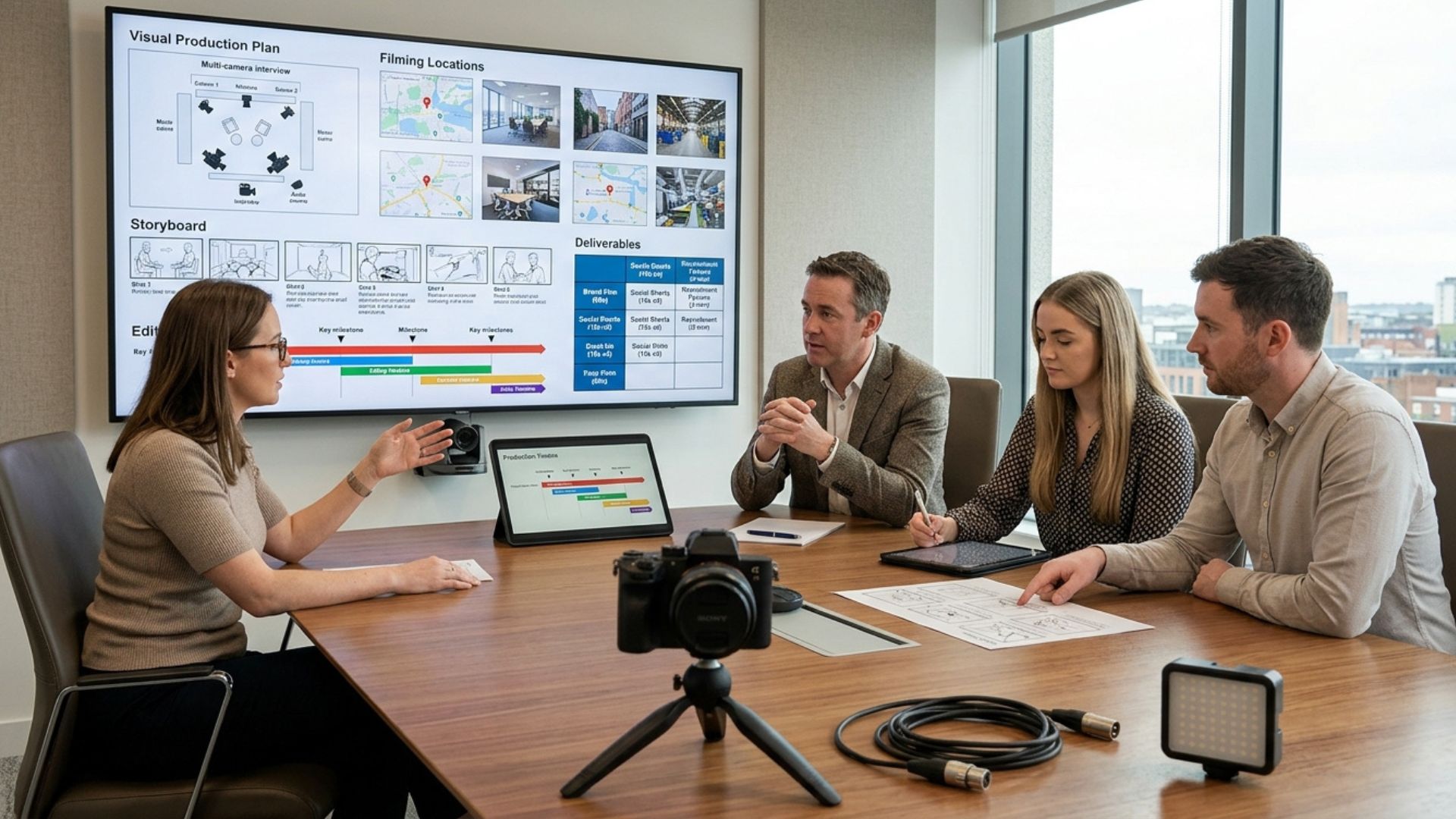
Pre-production is the cornerstone of a successful corporate video project. This phase establishes the groundwork for every other stage and ensures that all team members understand the objectives, messaging, and logistics. Businesses that rush pre-production often encounter unnecessary delays, unclear messaging, and misaligned expectations.

What Happens During Pre-Production?
Pre-production involves detailed planning and preparation. Key tasks include:
- Kickoff and Project Briefing
Align objectives, target audience, tone, and desired outcome. Clarifying these elements early ensures the video meets both marketing and corporate communication goals. For instance, a recruitment video aimed at millennials requires a different tone compared to an investor update video. - Script or Outline Development
Writing a script or structured outline clarifies narrative flow, ensures the message is concise, and highlights the key points. A well-prepared script also helps the filming crew know what shots are necessary and reduces wasted time on set. - Shot List Creation
A shot list details every scene, camera angle, and B-roll element. It serves as a blueprint for filming and ensures no essential shots are missed. For example, a corporate culture video might include shots of office teamwork, client interactions, and leadership interviews. - Location Planning and Permissions
Securing the right locations, whether offices, studios, or external sites, is essential. Pre-production addresses legal requirements, site access, and logistical issues such as parking or noise control. Failure to secure permissions can result in delays or even fines. - Scheduling Crew, Talent, and Equipment
Coordinating cameras, lighting, sound equipment, and crew availability ensures smooth execution on filming days. This includes arranging for backup equipment or additional crew members for complex shoots. - Talent Preparation
Employees, spokespeople, or professional actors are briefed on camera presence, speaking points, and wardrobe requirements. Prepared talent reduces filming errors and reshoots. - Logistics Planning
Organising transport, catering, parking, and contingency plans ensures the shoot day runs efficiently. For example, in Dublin, accounting for traffic between locations can save hours of delay.
Proper pre-production reduces wasted time during filming, ensures the project meets brand standards, and keeps costs under control.
Common Pre-Production Mistakes
Some of the most frequent pre-production mistakes include:
- Approving scripts too late, causing filming delays
- Overlooking B-roll coverage, forcing reshoots
- Failing to secure location permissions in advance
- Not confirming all decision-makers before sign-off
- Underestimating internal review timelines
For example, an SME in Dublin once planned a three-day shoot without confirming internal approvals. They ended up waiting an extra week for script sign-off, which pushed the post-production schedule and delayed a product launch campaign.
How to Speed Up Pre-Production
Businesses can streamline pre-production by:
- Sharing brand guidelines, logos, fonts, and assets early
- Providing example videos to align expectations
- Approving scripts promptly to avoid bottlenecks
- Confirming decision-makers before filming begins
- Setting internal deadlines clearly and communicating them
Investing time in proper pre-production makes filming and editing far smoother, reducing overall costs and producing a more professional video.
Step 2: Filming — Capturing the Content (1–2 Days)
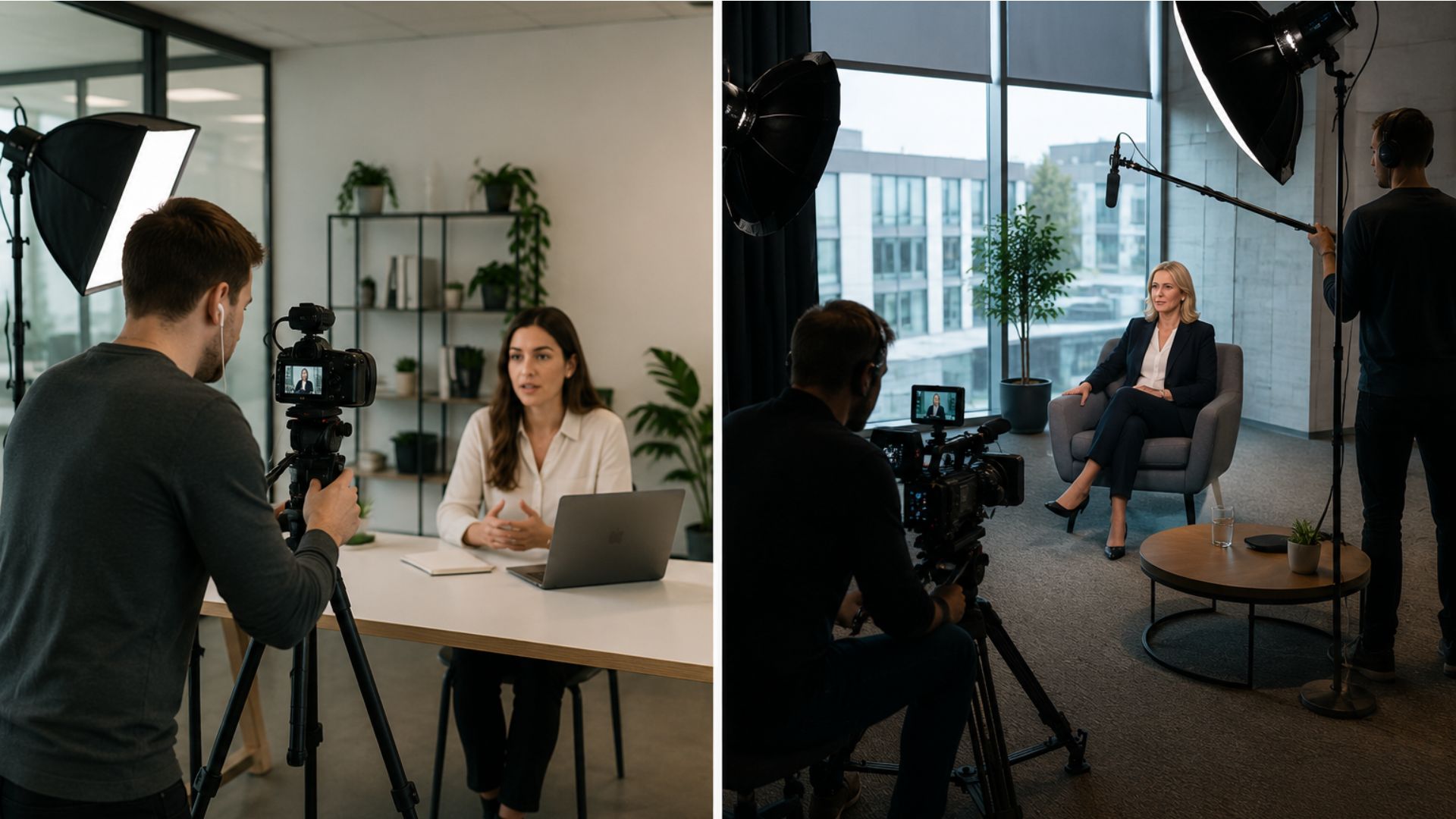
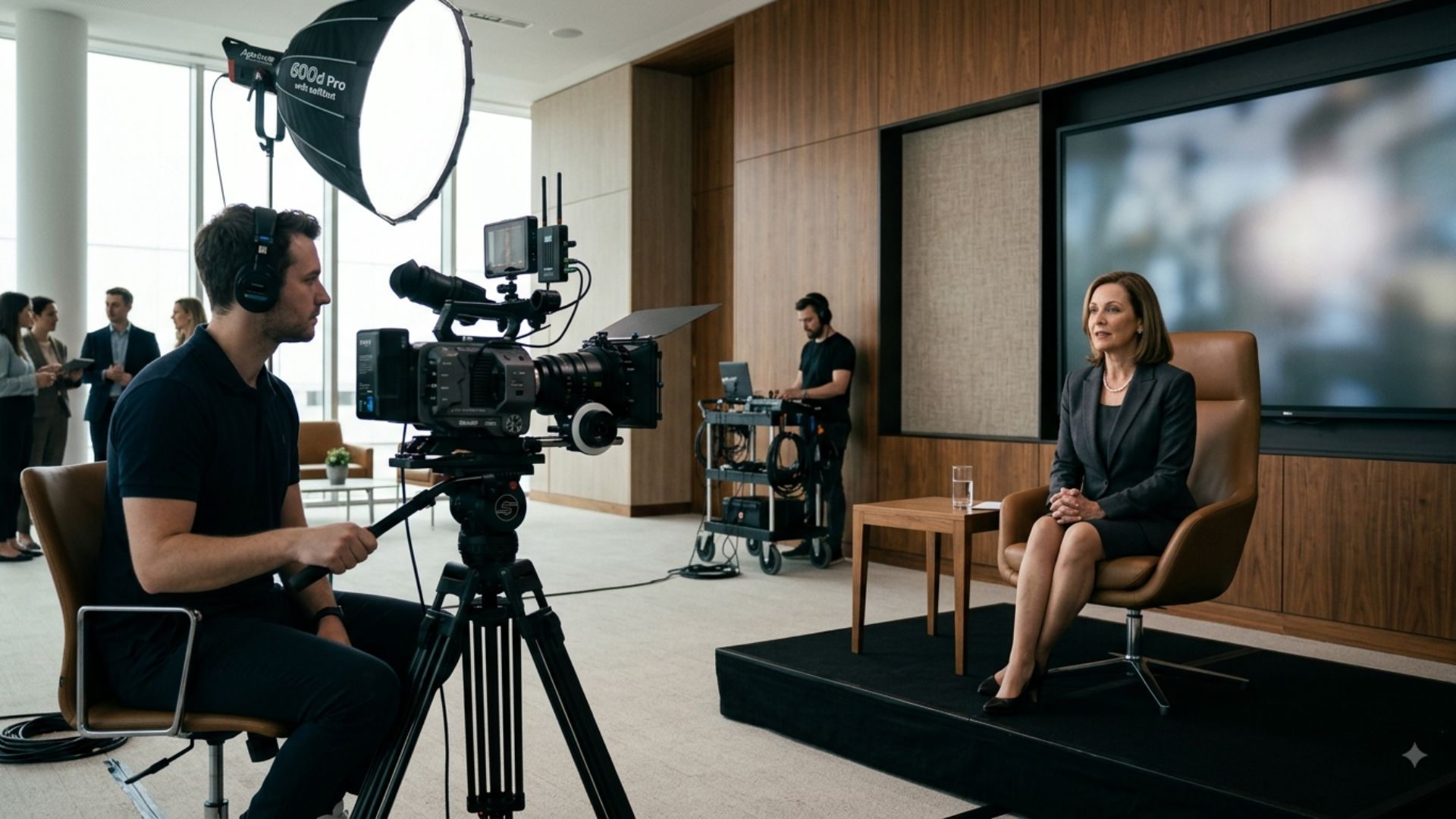
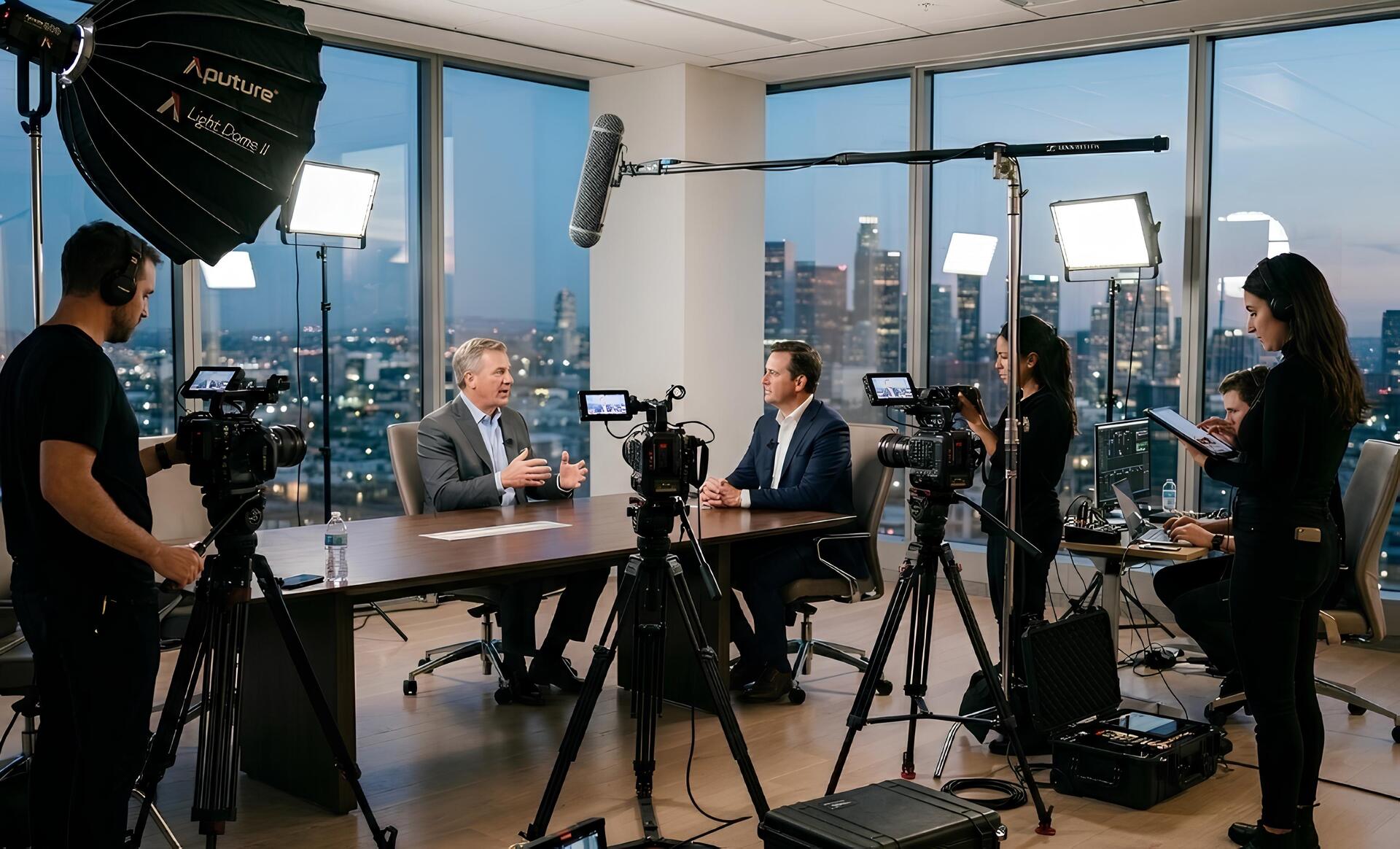
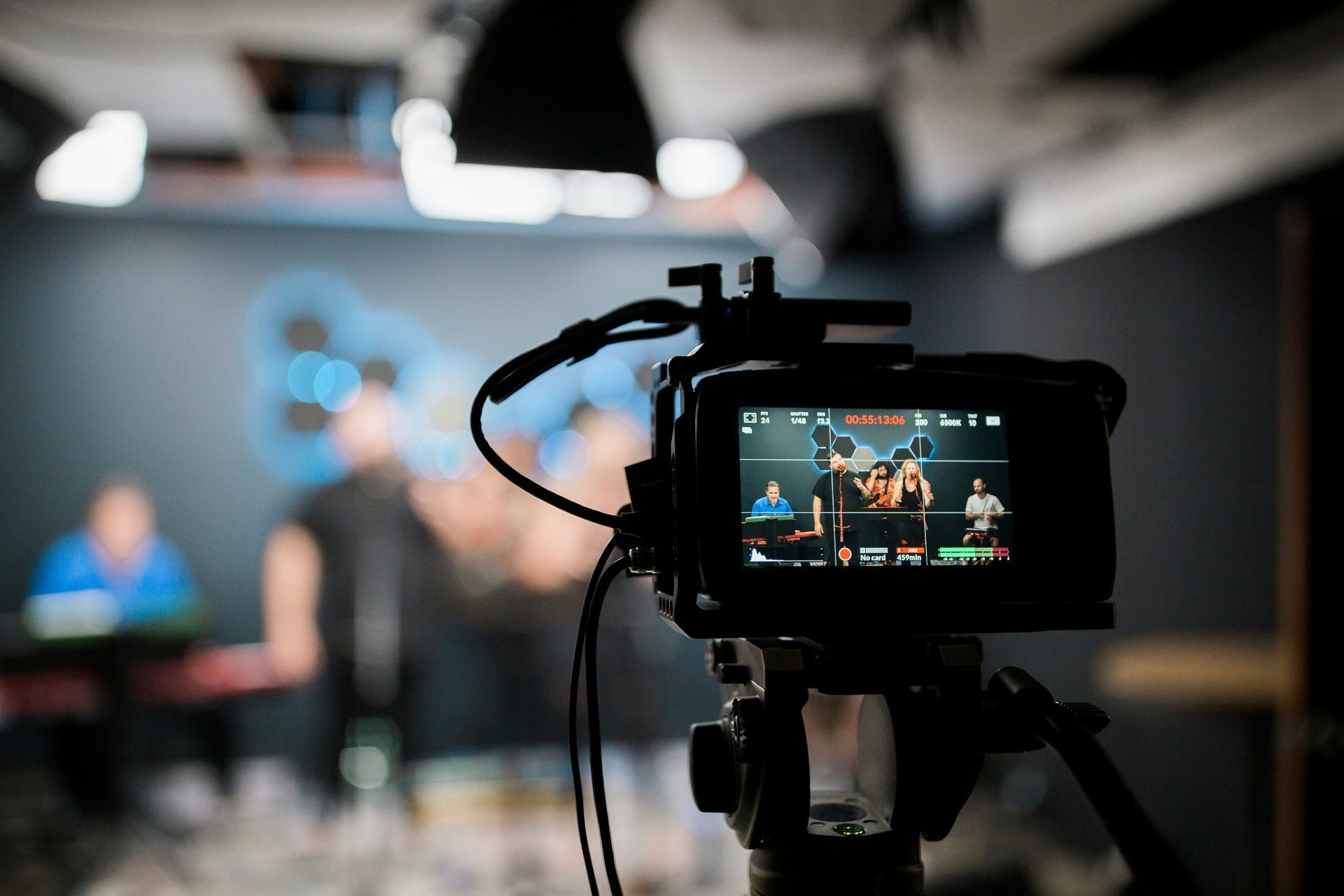
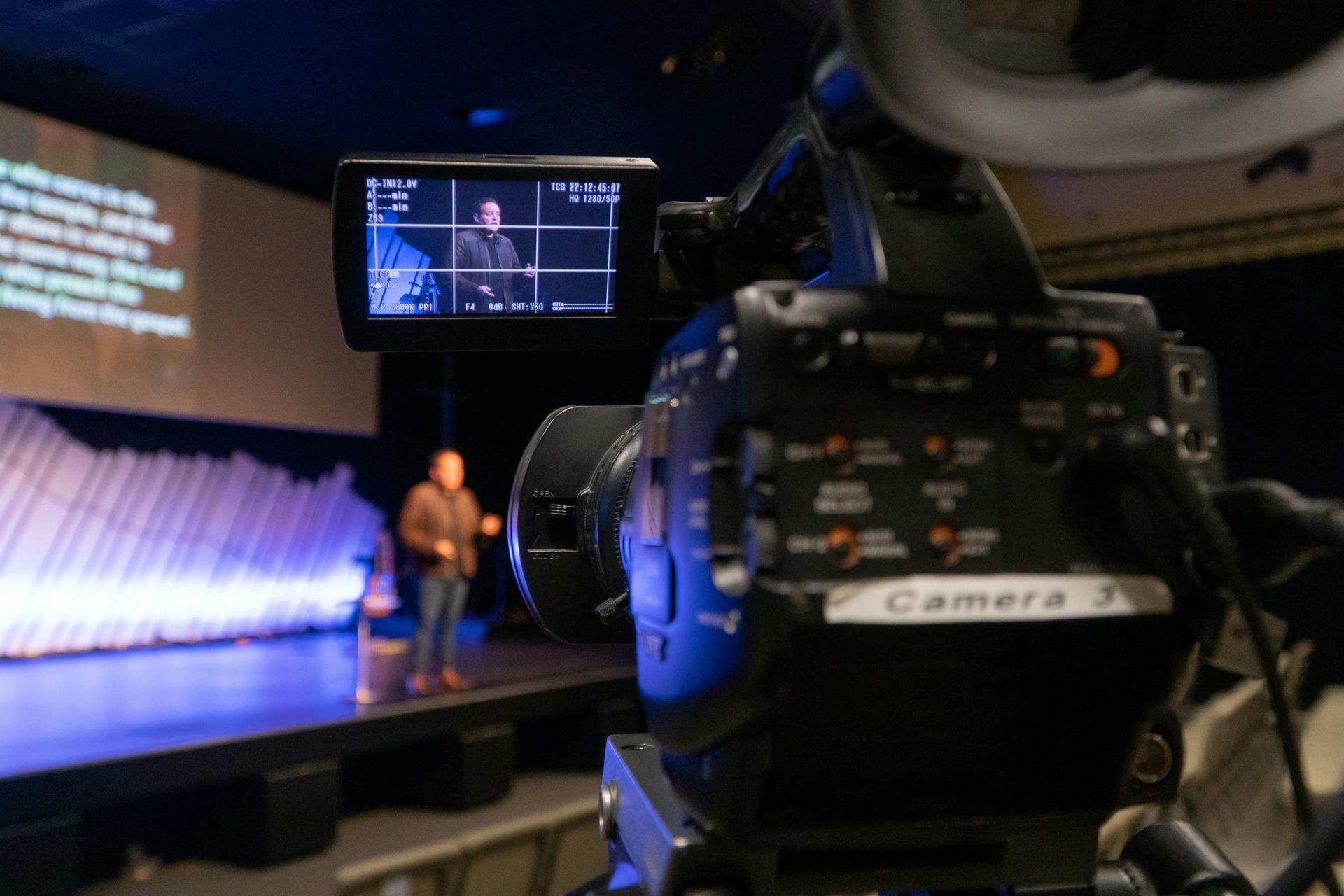
Filming is the stage where ideas become visual. Most corporate videos in Ireland can be filmed in a single day, especially if they involve one location and limited interviews. Multi-location projects, drone footage, or complex setups may require two or more days.

Typical Filming Day
A standard filming day generally includes:
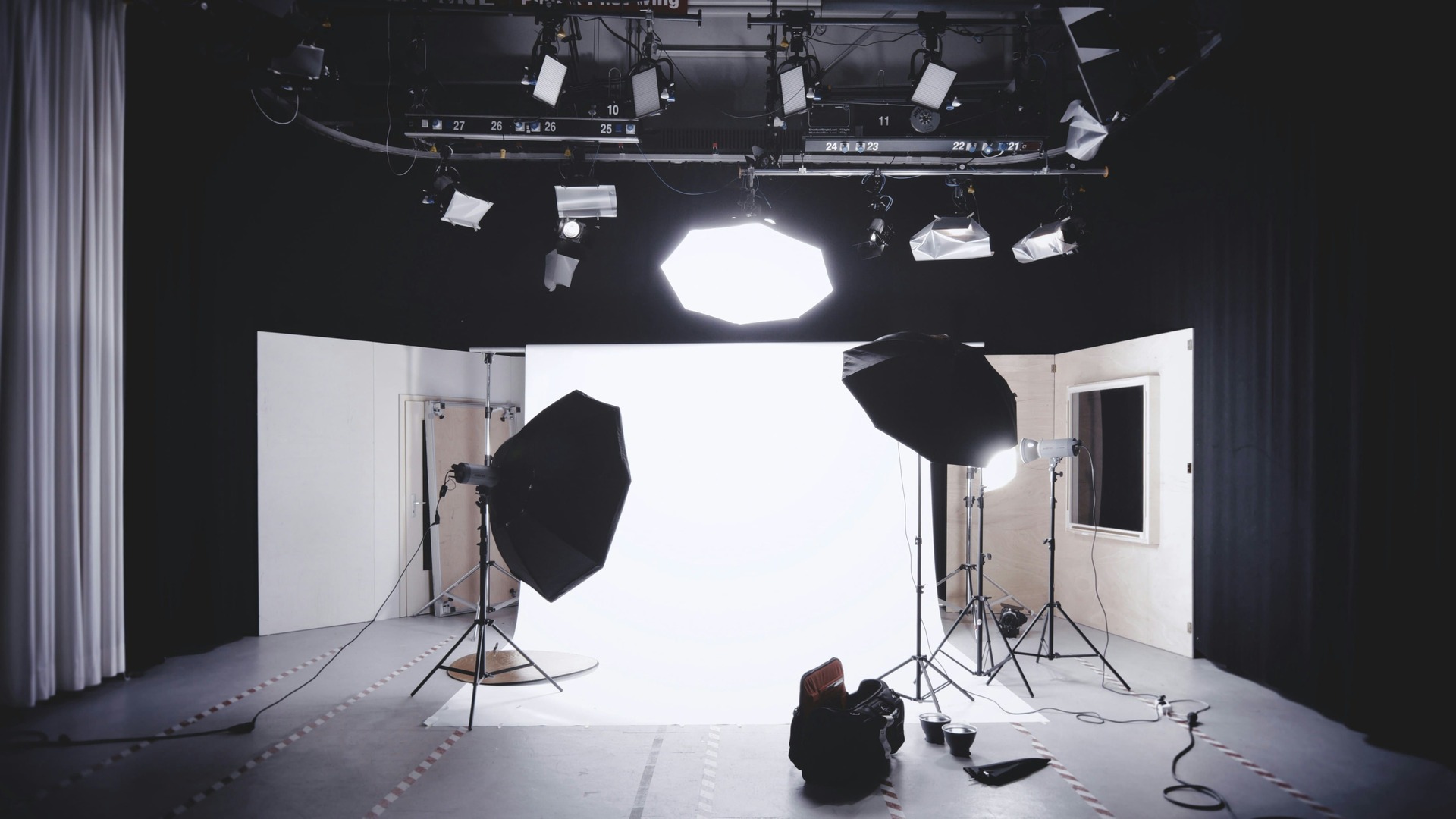
- Setup (30–45 minutes)
This includes lighting, cameras, audio checks, and framing each scene. Proper setup ensures consistent quality across all shots. - Interviews
Leadership, employees, or clients are recorded sharing key messages. Interview prep during pre-production ensures smooth delivery and reduces reshoots. - B-Roll Footage
These supplementary shots provide context, showcase products, and highlight office culture. B-roll is essential for storytelling and can include office activity, team interactions, or product demonstrations. - Additional Audio or Voiceover Recording
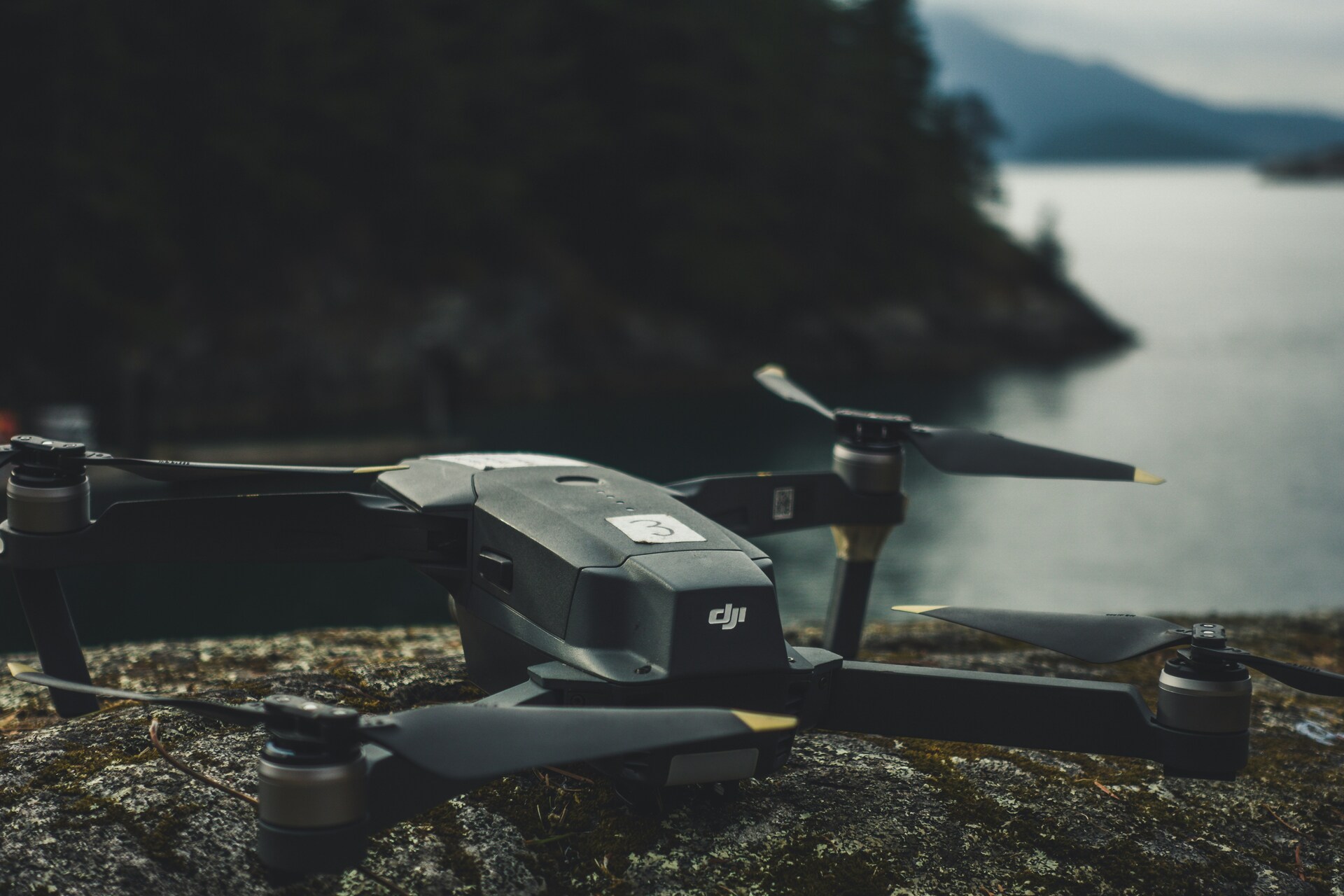
Optional narrations or live-recorded voiceovers are captured to enhance the narrative. - Drone Footage (Weather Dependent)
Drone shots can provide establishing visuals, external building shots, or dynamic movement sequences. Weather in Ireland can be unpredictable, so flexibility is key.
What Can Extend Filming Time?
Filming timelines can stretch due to:
- Multi-site shoots
- High-end lighting, multiple cameras, or advanced sound setups
- Large numbers of interviewees or contributors
- Multiple deliverables shot in a single day (social media clips, product videos, recruitment content)
- Travel or logistical issues between locations
For multi-location shoots, even short drives across Dublin traffic can add 30–60 minutes per location. Scheduling flexibility and backup plans help mitigate delays.
Tips for a Smooth Shoot
- Prepare interviewees with practice questions and talking points
- Check wardrobe choices to avoid busy patterns or distracting logos
- Ensure filming spaces are quiet, clean, and well-lit
- Schedule rest breaks, snacks, and hydration for talent and crew
- Conduct a quick run-through at each location to confirm lighting and framing
Drone shots in Ireland are weather-dependent, so having alternative B-roll locations ready can save valuable time.
Step 3: Editing & Post-Production — Bringing Your Video to Life (5–10 Days)
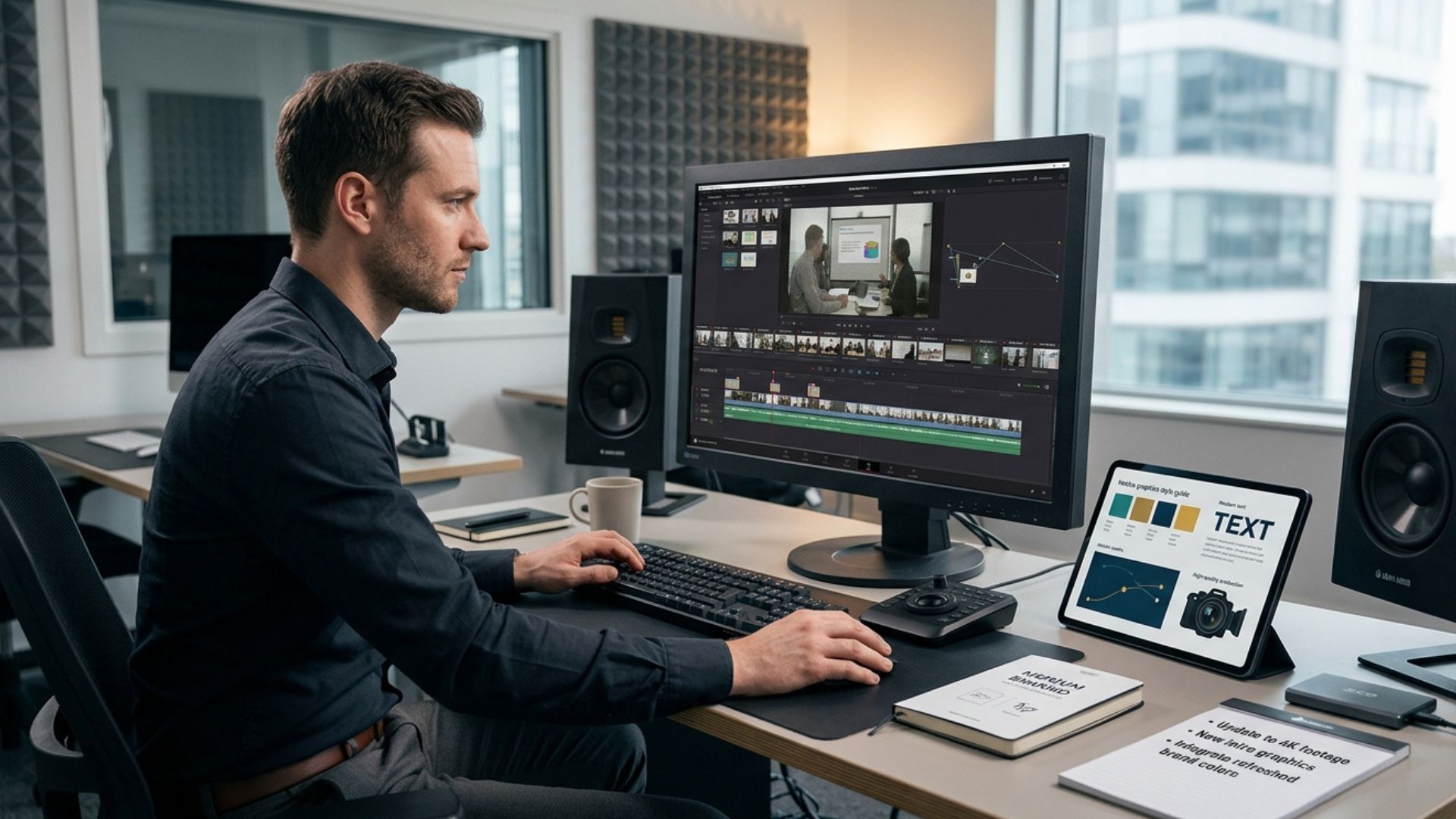
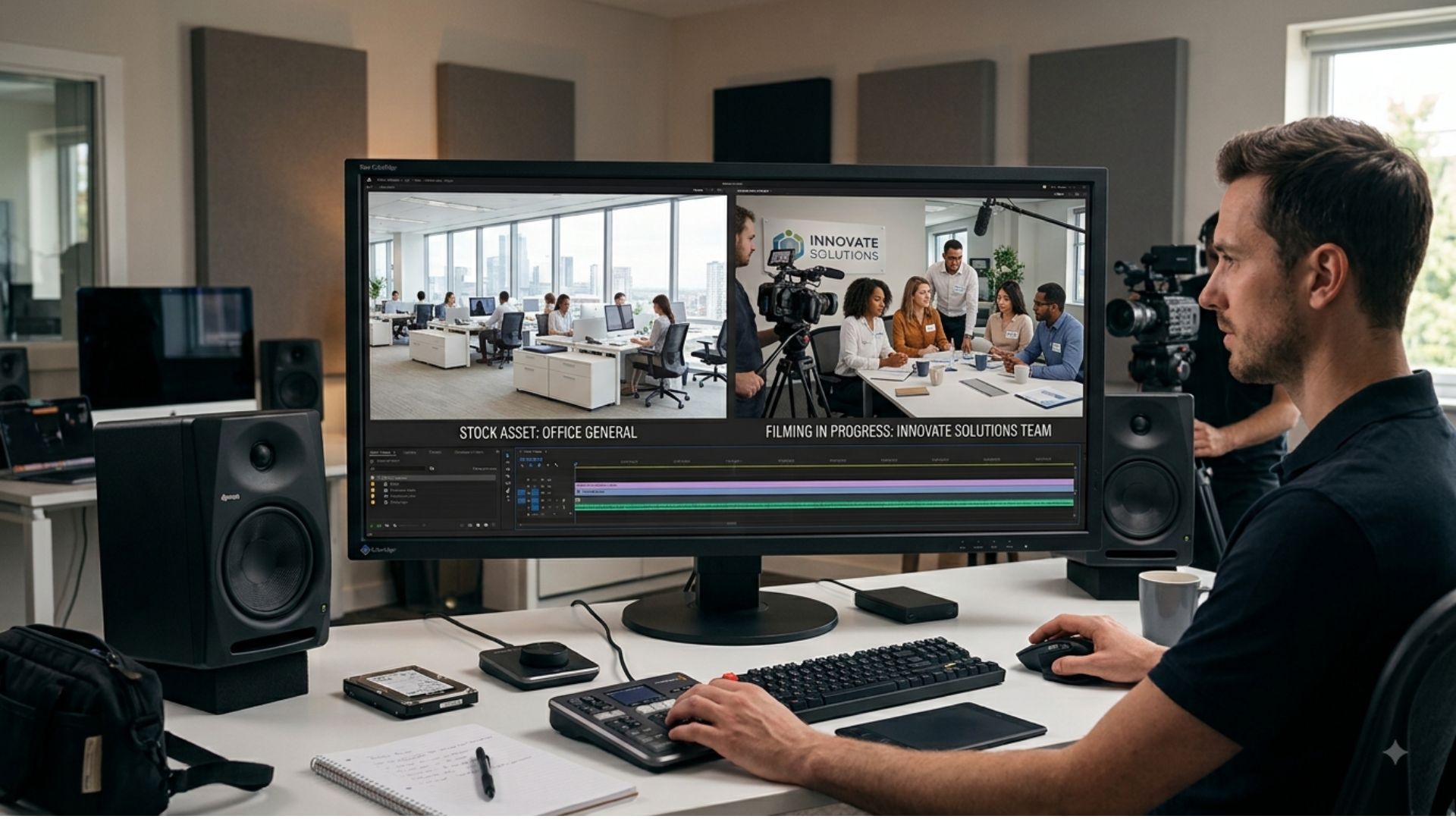
Post-production is where raw footage transforms into a polished corporate video. This stage combines technical precision with creative storytelling, and it often takes longer than expected.

Typical Post-Production Workflow
- Rough Cut
Footage is organised into a narrative structure. Editors select the best takes and assemble the initial sequence. - Fine Cut / Final Edit
Timing, transitions, and story flow are refined. The video starts to resemble the final product. - Motion Graphics & Branding
Titles, lower thirds, call-to-action graphics, and branded visuals are added. - Colour Grading
Ensures consistent lighting, mood, and brand alignment. - Audio Mixing
Dialogue, music, and sound effects are balanced for clarity and professional impact. - Platform Formatting
Videos are formatted for multiple channels, including websites, social media, LinkedIn, internal communications, or presentations.
What Affects Editing Timelines?
- Final video length
- Volume of raw footage
- Complexity of motion graphics or animation
- Number of revisions requested
- Multi-language subtitles or platform-specific formatting
For example, a Dublin-based financial client requested a series of motion-graphics overlays and social media clips alongside the main video. This extended post-production by two additional days.
How to Speed Up Post-Production
- Consolidate feedback from all stakeholders into a single document
- Provide reference videos for style, pacing, or motion graphics guidance
- Prepare all brand assets (logos, fonts, colour palettes) before editing begins
- Schedule post-production timelines with buffer for client review
Delays during post-production are almost always feedback-related, not technical. Clear communication and single-point approval contacts are key.
Step 4: Revisions — Final Adjustments (1–3 Days)
Revision rounds allow clients to make minor changes to ensure the video aligns with objectives.
Typical Revision Tasks
- Swapping or trimming clips
- Updating graphics, text overlays, or lower thirds
- Adjusting music or audio levels
- Reordering sequences for clarity
Pro Tip: Scheduling one review meeting with all decision-makers present drastically reduces multiple feedback cycles and speeds up approvals. Many Irish businesses underestimate the importance of prompt feedback, which can easily add several days to the overall timeline.
Common Causes of Corporate Video Delays

Most delays are caused by internal business processes rather than the production team. Frequent culprits include:
- Waiting for internal approvals or sign-off
- Scheduling conflicts for staff or talent
- Delays in script review
- Slow responses on edit drafts
- Restricted or unavailable locations
- Weather conditions affecting outdoor or drone shots
Solution: Treat video production like any other business project — assign clear responsibility, set deadlines, and communicate effectively.
How to Speed Up Corporate Video Production
Businesses can reduce production time by:
- Finalising the brief early to prevent back-and-forth
- Prepping staff and talent before filming
- Approving rough cuts promptly
- Bundling multiple deliverables into one shoot (social media clips, product videos, internal communications)
- Avoiding last-minute changes to project scope
Proper planning and communication save time and reduce costs, ensuring the video supports marketing strategies effectively.
Realistic Corporate Video Timeline Examples
Video TypeTotal TimelineNotesFast Turnaround Interview Video5–7 days1 day pre-production, 1 day filming, 2–3 days editing, 1 day revisionsStandard Corporate Promotional Video10–14 days2–4 days pre-production, 1 day filming, 5–7 days editing, 1–2 days revisionsMulti-Location Brand Video3–6 weeksMulti-day filming, advanced colour grading, multiple deliverables, extended client review cyclesRecruitment Video with Social Media Versions7–10 daysShorter versions for LinkedIn and Instagram includedProduct Demonstration Video10–12 daysIncludes scripting, product testing, and animation overlays
These examples reflect the range of corporate video production schedules in Ireland, giving businesses realistic expectations for planning.
Comparing Corporate Video Quotes the Right Way

Price alone rarely determines video quality. Two suppliers with similar budgets may deliver vastly different outcomes depending on:
- Depth of pre-production planning
- Experience and skill of the crew
- Quality of editing and post-production
- Number of revision rounds included
- Complexity of motion graphics or animation
- Delivery formats and platform-specific edits
Understanding what’s included helps businesses choose a production partner based on value and reliability, not just cost.
Additional Considerations for Irish Businesses
Location-Specific Factors
Ireland’s urban and rural environments affect corporate video production. Dublin traffic, narrow streets in Galway, or rural access to remote locations can influence scheduling. Drone operations may require permits and insurance, especially near airports or busy city centres.

Weather Planning
Irish weather is famously unpredictable. Outdoor shoots may require backup locations, flexible schedules, or additional lighting equipment to maintain consistency.
Multi-Language Projects
Businesses targeting both English and Irish-speaking audiences, or international clients, must account for subtitles, voiceovers, and translated scripts, which extend post-production timelines.
Legal and Compliance Considerations
Corporate videos may need to comply with GDPR, advertising standards, or industry-specific regulations. Pre-production should address consent forms for talent, usage rights for music, and branding approvals.
Multi-Platform Deliverables
Videos may be repurposed for social media, internal training, investor updates, or website landing pages. Pre-production should plan for multiple formats, aspect ratios, and lengths to avoid duplicated work later.
Conclusion
Planning a corporate video isn’t just about scheduling — it’s about giving your project the time it needs to succeed. Clear planning ensures smoother filming, faster editing, and better results. Focus on scope, deliverables, and realistic timelines, not just price. For guidance, explore our corporate video services or get an instant quote with our price calculator. You can also contact our team for tailored advice without any obligation.
Investing time in proper pre-production, efficient filming, meticulous post-production, and timely revisions ensures your corporate video aligns with your brand message, engages your audience, and delivers measurable results.
Frequently Asked Questions
How long does it take to make a corporate video in Ireland?
Most standard corporate videos take 2–4 weeks. Multi-location or high-end projects may take 4–8 weeks.
Can a corporate video be produced in one week?
Yes. Simple interview-style videos with fast approvals can sometimes be completed in 5–7 days.
Why does corporate video production sometimes take longer than expected?
Most delays come from internal approvals, scheduling conflicts, or slow feedback cycles rather than filming or editing.
Similar blogs:























![How to Write a Promo Video Script (Free Template Included) [2026 Guide]](https://cdn.prod.website-files.com/6226fcc37e2eb518b6e69a7f/69c3804c0b9ea78696bd89e0_covertab11.jpeg)


.jpg)
%20(1)%20(1).jpg)
.jpg)






We'd love to hear from you! Reach out to us today for a chat about our services, pricing, or just to say hello!


