On this page
Authenticity in video production means showing real people, real places and real stories, in their own words, rather than actors reading lines. It builds trust because viewers can tell when a message has been manufactured. Authentic doesn't mean low quality: good lighting, clear sound and careful editing let real people come across at their best.
Why does authenticity matter in business video?
People see a huge amount of advertising, and most of them have become good at spotting what's staged. When a video shows the real people behind a business, talking about work they genuinely know, it's easier to believe.
That matters most when the viewer is about to make a decision based on trust: hiring a firm, applying for a job, donating to a charity or choosing a supplier. A customer explaining what changed for them, or an employee describing a normal day, answers the question the viewer is actually asking: "Are these people like they say they are?"
Does authentic mean low budget?
No. Authenticity is about who appears and what they say, not about how rough the footage looks. Shaky, poorly lit video with muddy sound doesn't feel more honest; it just makes the business look careless.
Viewers notice production quality. In Wyzowl's 2026 video marketing survey, 89% of consumers said video quality affects how much they trust a brand. The aim is to use good craft to support a real story, not to cover it up.
In practice, that means:
- Light people well, but naturally. Soft light that flatters, not a glossy advert look.
- Get clean audio. Real people speaking clearly is the heart of an authentic film.
- Edit for clarity, not perfection. Keep the natural pauses, the laugh, the moment someone searches for the right word. Cut what's confusing, not what's human.
How do you make a video feel authentic?
Use real people instead of actors
Your staff, customers and partners are more convincing than a presenter, because they're talking about something they know. Most aren't natural performers, so the crew's job is to make them comfortable. Our guide on becoming more comfortable on camera helps people prepare.
Interview people, don't script them
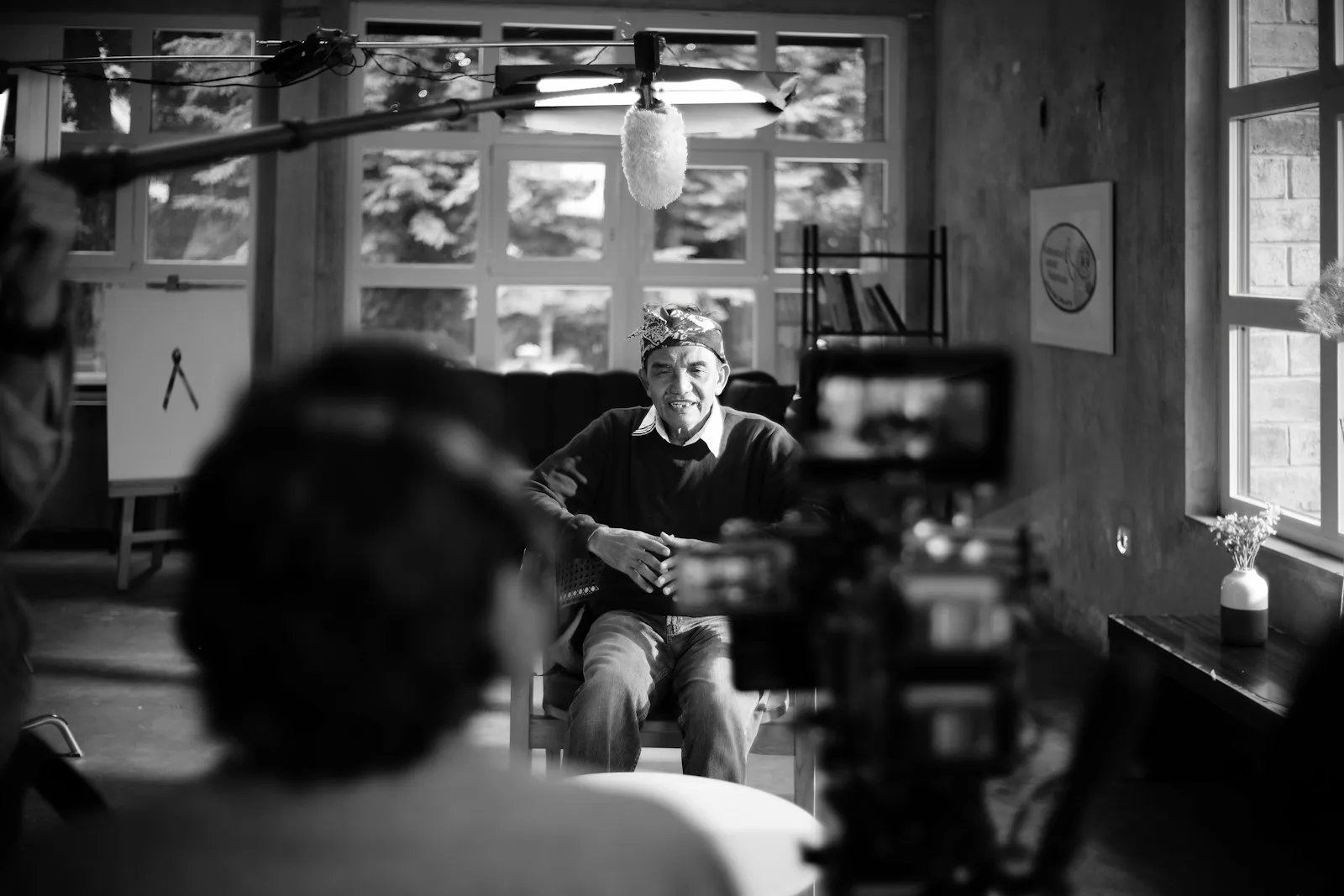
Scripted lines from non-actors almost always sound stiff. Instead, interview people with open questions and build the film from their answers. They should know the topics in advance, but not have words to memorise. The result sounds like them, because it is them.
Tell specific stories
"We care about our customers" is a claim. "When the storm took out our client's power, our engineer drove down that night" is a story. Specific moments, names (with permission) and details are what make a film believable. Ask interviewees for examples, not opinions.
Show the real place
Film where the work happens: the office, the site, the kitchen, the classroom. A real location with real people in the background tells the viewer more than a hired studio.
Show how things are made
Behind-the-scenes footage of your process, workspace or team shows the viewer what working with you is actually like. It suits social media, recruitment and anywhere you want to show your culture.
Give the viewer something useful
Videos that teach, explain or help tend to earn more trust than videos that only sell. A short explainer answering a question customers always ask is a good example.
What makes a video feel fake?
These are the most common reasons a business video comes across as staged:
- Over-scripting. Real people reading lines they'd never say.
- Stock footage of strangers standing in for your team or customers.
- Claims with nothing behind them. "Award-winning", "industry-leading", "world-class" with no proof on screen.
- Heavy effects and filters that draw attention to the edit instead of the people.
- Polishing out every imperfection, until nobody sounds like themselves.
Does social media reward authentic video?
Platforms don't rank videos by how "authentic" they are. They rank them on how viewers respond: whether people watch, rewatch, share and comment. Genuine, relatable content often does well on those measures because people stay to watch it, but a well-made film can do just as well. We cover how the platforms rank video in behind the algorithm.
Where does authentic video work best?
- Testimonials: customers explaining the result in their own words. See our post on video testimonials.
- Recruitment: current staff describing the job and the culture honestly.
- Charity and public sector films: the people the organisation serves, telling their own stories with care and consent.
- Brand films: founders and teams explaining why the business exists.
Next step
If you'd like to make a film around the real people in your organisation, see our corporate video production and brand films pages, or get an estimate in a few minutes from the instant quote calculator.
Written by Mango Media. Published , updated .
Add Mango Media as a preferred source on Google