
In today’s oversaturated inboxes, getting your email noticed — let alone opened — is no easy feat. In this article, we’ll explore the power of video in email campaigns, how to embed video content the right way, best practices to maximise performance, and how to track your results. Whether you’re a startup, marketer, or creative agency, using video in your emails can be a game-changer for audience retention and conversions.
Why Business Videos Fail More Often Than Companies Expect

Video has become one of the most valuable tools in modern marketing.
Businesses use video for:
- Brand awareness
- Recruitment
- Lead generation
- Product marketing
- Social media campaigns
- Website conversions
- Customer education
However, simply producing a video does not guarantee results.
Many businesses assume that good cameras, strong editing, or cinematic visuals automatically lead to success. In reality, the most effective business videos are usually driven by strategy, messaging, and audience understanding rather than production quality alone.
A visually impressive video without a clear purpose often becomes expensive content that generates very little commercial impact.
From working with Irish businesses across different industries, one common pattern is that companies often focus heavily on the production stage while underestimating the importance of planning, messaging, and distribution.
Understanding the most common mistakes early can help businesses create videos that support real marketing and business goals.

1. Creating a Video Without a Clear Goal
One of the biggest business video mistakes is starting production without defining what the video is supposed to achieve.
Before filming begins, businesses should understand:
- Who the video is for
- What action viewers should take
- Where the video will be used
- What problem the video solves
- How success will be measured
Without clear objectives, videos often become too broad or unfocused.
For example, a company may try to create a single video that:
- Explains services
- Builds brand awareness
- Generates leads
- Recruits employees
- Educates customers
Trying to achieve everything at once usually weakens the message.
The strongest business videos tend to focus on one primary objective.
For example:
- A testimonial video builds trust
- A recruitment video attracts candidates
- An explainer video simplifies a service
- A case study video supports sales conversations
Defining the goal early improves messaging, structure, and overall performance.

2. Focusing Too Much on the Business Instead of the Audience
Many corporate videos talk almost entirely about the company itself.
This is one of the fastest ways to lose viewer attention.
Potential customers are usually asking:
- How does this help me?
- What problem does this solve?
- Why should I care?
- What outcome can I expect?
Businesses often make the mistake of listing achievements, awards, company history, or internal information without connecting it back to customer value.
The most effective videos focus on the audience first.
Instead of saying:
“We are a leading company with years of experience.”
A stronger approach is:
“We help businesses reduce recruitment costs and attract stronger candidates through strategic video content.”
This shifts the focus toward outcomes and relevance.
Strong messaging is usually clear, specific, and customer-focused.
Audience-first communication is especially important because modern viewers have shorter attention spans and higher expectations.
People are more likely to continue watching when they quickly understand:
- What value the video offers
- Why the information matters
- How the company can help solve a problem
Customer-focused messaging often performs better because it feels more practical and relatable.
Businesses should focus less on sounding impressive and more on being useful.

3. Overloading the Video With Too Much Information
Another common mistake is trying to fit every detail into one video.
Businesses often worry that leaving information out means viewers will not fully understand the service or company.
The opposite is usually true.
Too much information can overwhelm viewers and reduce retention.
Strong business videos are usually:
- Focused
- Structured
- Concise
- Easy to follow
The goal of most business videos is not to explain everything.
The goal is to create enough clarity and interest for the viewer to take the next step.
This could include:
- Visiting a website
- Booking a call
- Submitting an enquiry
- Applying for a role
- Watching another video
Simplicity generally improves engagement.
In many cases, multiple shorter videos perform better than one long video covering too many topics.
This is particularly important for digital platforms where viewer attention drops quickly.
Businesses should prioritise:
- One clear message
- One primary objective
- One intended audience
- One main call-to-action
Trying to include too many ideas usually weakens clarity and makes videos harder to remember.
Shorter, more focused videos are often easier to repurpose across multiple platforms as well.
4. Ignoring Audience Intent
Different audiences respond to different types of messaging.
A recruitment video aimed at graduates should feel very different from a case study video targeting senior decision-makers.
Businesses often create generic videos that try to appeal to everyone.
This usually leads to content that resonates with nobody.
Audience understanding influences:
- Tone
- Structure
- Messaging
- Video length
- Platform choice
- Visual style
For example:
- LinkedIn audiences may respond well to thought leadership content
- Instagram audiences often prefer shorter visual content
- Website visitors may need more detailed explainer videos
- B2B buyers may prioritise trust and expertise
The strongest business videos are built around a clearly defined audience and purpose.
Businesses should think carefully about where viewers are in the buying journey.
For example:
Awareness Stage
Viewers may need:
- Educational content
- Brand awareness videos
- Short social content
Consideration Stage
Viewers may respond better to:
- Testimonials
- Case studies
- Service explainers
Decision Stage
Potential clients may need:
- Detailed demonstrations
- Pricing clarity
- Trust-building content
Understanding audience intent helps businesses create videos that feel more relevant and timely.

5. Prioritising Visuals Over Messaging
Professional visuals matter, but visuals alone are not enough.
Many businesses invest heavily in cinematic footage while giving very little attention to the actual message.
A visually impressive video with weak messaging often fails to convert viewers into customers.
The message should always come first.
Strong business video messaging usually includes:
- A clear problem
- A relevant solution
- Customer-focused benefits
- Practical outcomes
- A simple next step
Good production quality should support the message, not replace it.
The most effective videos balance both strategy and production value.
6. Making Videos Feel Overly Scripted
Authenticity has become increasingly important in modern marketing.
Viewers can often tell when a video feels too rehearsed or unnatural.
Over-scripted videos may appear polished, but they often struggle to create trust or emotional connection.
This is particularly common in:
- Employee interviews
- Testimonials
- Recruitment videos
- Founder messages
Natural conversation usually performs better than memorised dialogue.
Businesses should focus on guided communication rather than word-for-word scripts.
This helps people sound:
- More confident
- More genuine
- More relatable
- More trustworthy
Authenticity often increases audience engagement and retention.

7. Poor Audio Quality
Businesses often focus heavily on visuals while overlooking audio quality.
Poor sound is one of the quickest ways to make a video feel unprofessional.
Even strong visuals cannot compensate for:
- Echo
- Background noise
- Unclear speech
- Inconsistent volume
- Low-quality microphones
Clear audio significantly improves viewer experience and perceived professionalism.
In many cases, viewers are more forgiving of average visuals than poor sound quality.
Professional audio setup should always be prioritised during production.
Good audio helps viewers stay engaged because it reduces effort and frustration.
Businesses should also remember that many people watch videos through headphones or mobile devices where poor sound becomes even more noticeable.
Professional production teams usually prioritise:
- External microphones
- Controlled recording environments
- Audio monitoring
- Noise reduction
- Consistent sound levels
These details may seem small, but they significantly influence how professional a video feels overall.
8. Using the Same Video Everywhere
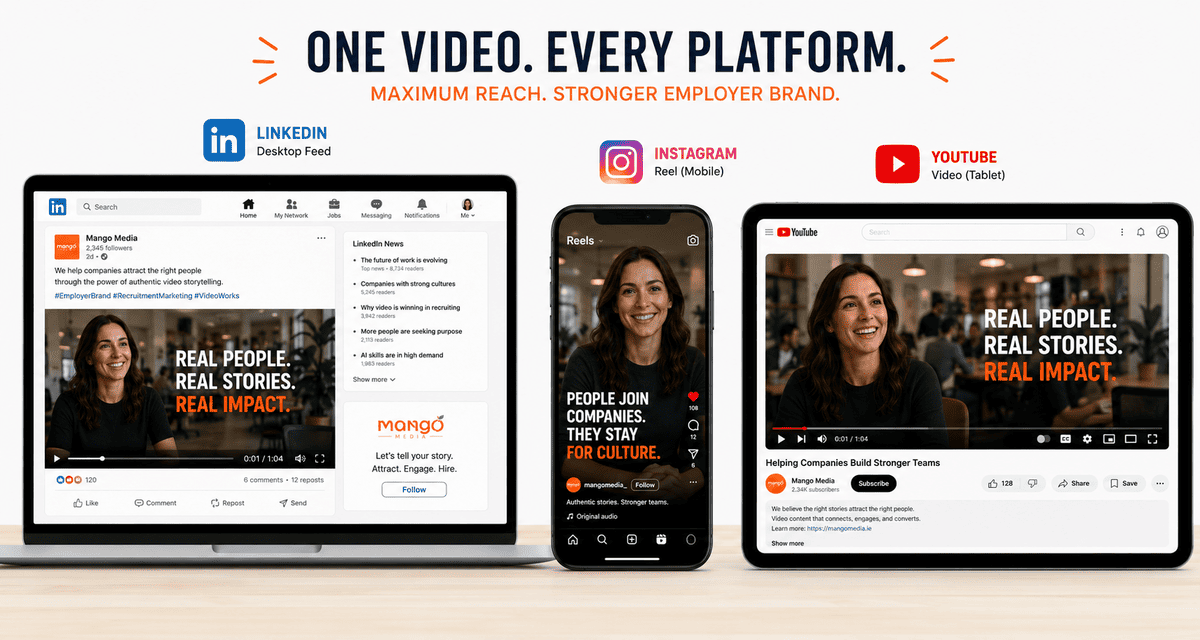
Not all platforms are designed for the same type of content.
One common mistake is uploading the exact same video format across every platform without optimisation.
Different platforms require different approaches.
For example:
- Professional tone
- Shorter attention windows
- Strong opening hook
Instagram & TikTok
- Vertical format
- Faster pacing
- Short-form edits
Website Videos
- More detailed messaging
- Strong trust-building
- Clear call-to-action
YouTube
- Longer educational content
- Search-friendly structure
- Strong retention pacing
Repurposing content strategically usually produces better results than using one generic version everywhere.
9. Forgetting About Distribution
Some businesses spend a significant budget producing a video but very little time planning how it will actually be distributed.
A strong video still needs visibility.
Businesses should plan:
- Where the video will be published
- How it will be promoted
- Which audience will see it
- How performance will be measured
Distribution channels may include:
- Websites
- Email campaigns
- Paid advertising
- Sales presentations
- Landing pages
- Recruitment campaigns
Even excellent content can underperform if nobody sees it.
The most successful business videos are usually part of a broader marketing strategy rather than standalone assets.
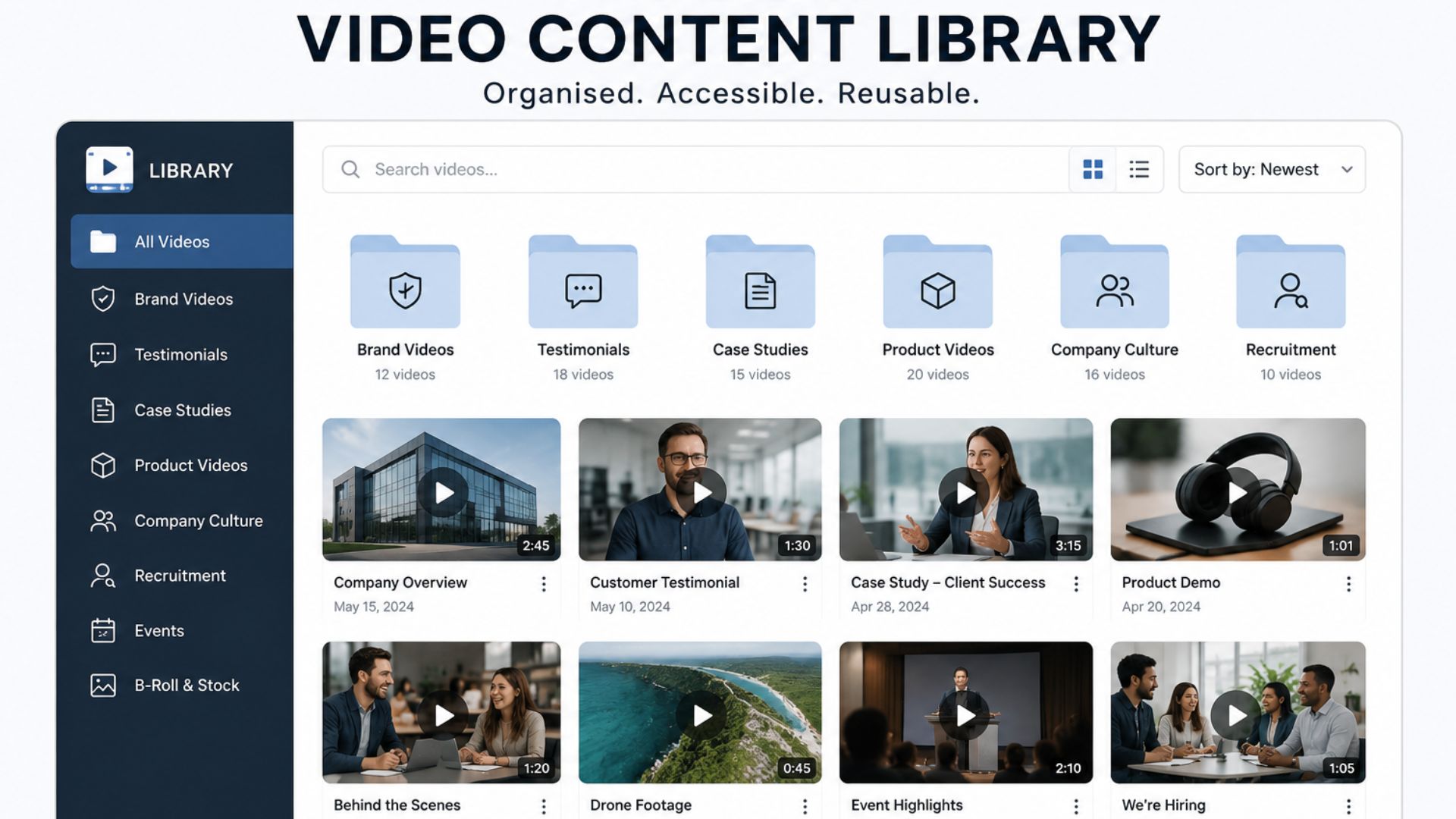
10. Not Repurposing Content
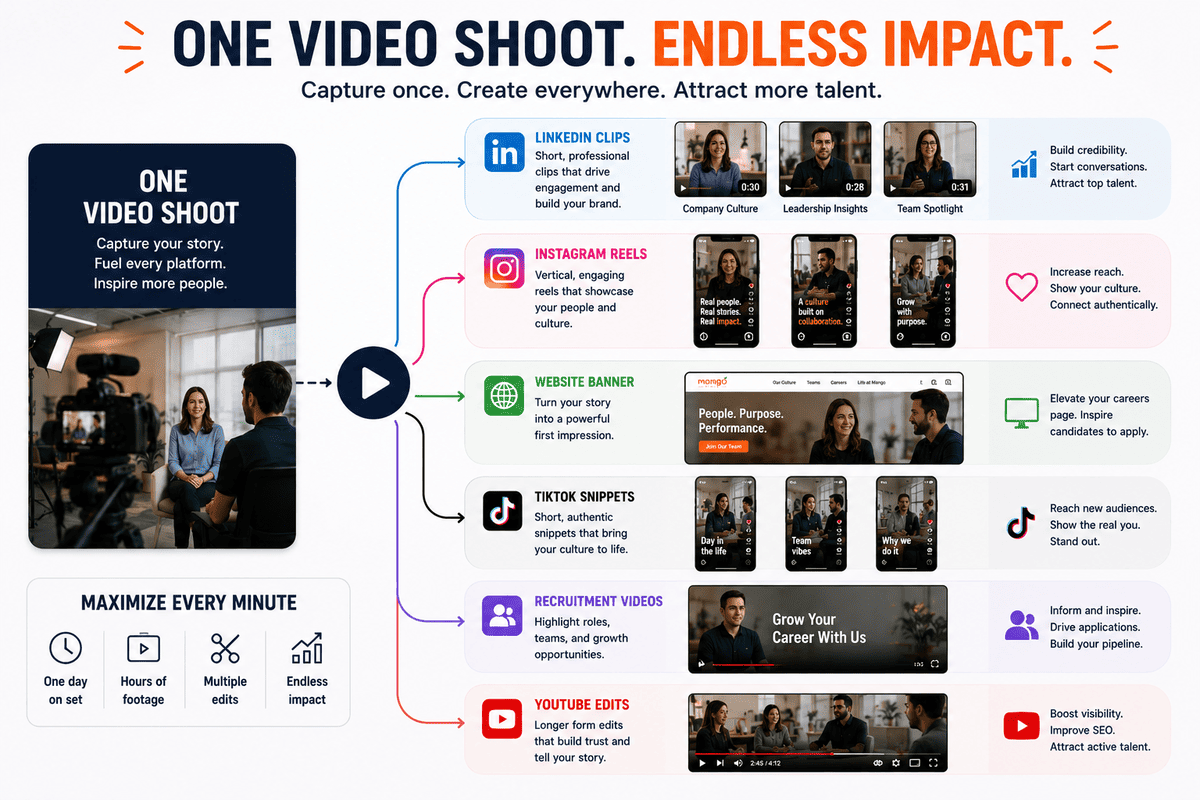
One of the biggest missed opportunities in business video production is failing to maximise content from a single shoot.
A single production day can often generate multiple pieces of content.
For example:
- A main brand video
- Social media clips
- Vertical short-form edits
- Behind-the-scenes footage
- Testimonial snippets
- Website banners
- Recruitment content
- LinkedIn posts
This approach improves long-term return on investment and creates a more consistent content pipeline.
Businesses that repurpose content effectively often maintain stronger visibility online without constantly organising new production shoots.
Repurposing also allows marketing teams to test different messages and content formats.
For example, a longer interview may produce:
- Educational clips
- Social quotes
- Recruitment content
- Website content
- Thought leadership material
This makes production more efficient and commercially valuable.

11. Weak Video Openings
The first few seconds of a business video are extremely important.
Many videos lose viewers immediately because the opening feels too slow or generic.
Weak openings often include:
- Long logo animations
- Generic drone shots
- Vague corporate statements
- Slow pacing
Modern audiences decide very quickly whether to continue watching.
Strong openings usually:
- Introduce a problem
- Create curiosity
- Address the audience directly
- Communicate relevance immediately
The opening should quickly answer:
“Why should I keep watching this?”
12. No Clear Call-to-Action
Some business videos end without giving viewers a clear next step.
A strong video should guide viewers toward an action.
Depending on the goal, this may include:
- Booking a consultation
- Visiting a landing page
- Applying for a role
- Contacting the company
- Watching another video
- Downloading a resource
The call-to-action should feel natural rather than overly sales-focused.
Even subtle guidance improves conversion potential.
What Makes Business Videos Actually Perform Well?
Avoiding mistakes is important, but strong performance also depends on getting several core fundamentals right.
Clear Strategy
Businesses should define:
- Goals
- Audience
- Platform
- Messaging
- Success metrics
before production begins.
Strong planning usually leads to stronger results.
Audience-Focused Messaging
The best business videos focus on viewer needs rather than internal company messaging.
This improves engagement and relevance.
Businesses should consistently ask:
- What does the audience care about?
- What problem are they trying to solve?
- What information is most valuable to them?
This keeps content practical and audience-driven.
Authentic Communication
Natural communication tends to outperform overly corporate language.
Viewers respond better to clarity, honesty, and personality.
Businesses that communicate naturally often appear more trustworthy and relatable.
Professional Production Standards
Businesses do not always need massive budgets, but they should prioritise:
- Clear audio
- Good lighting
- Stable footage
- Professional editing
- Consistent branding
These factors influence trust and perceived quality.
Strategic Distribution
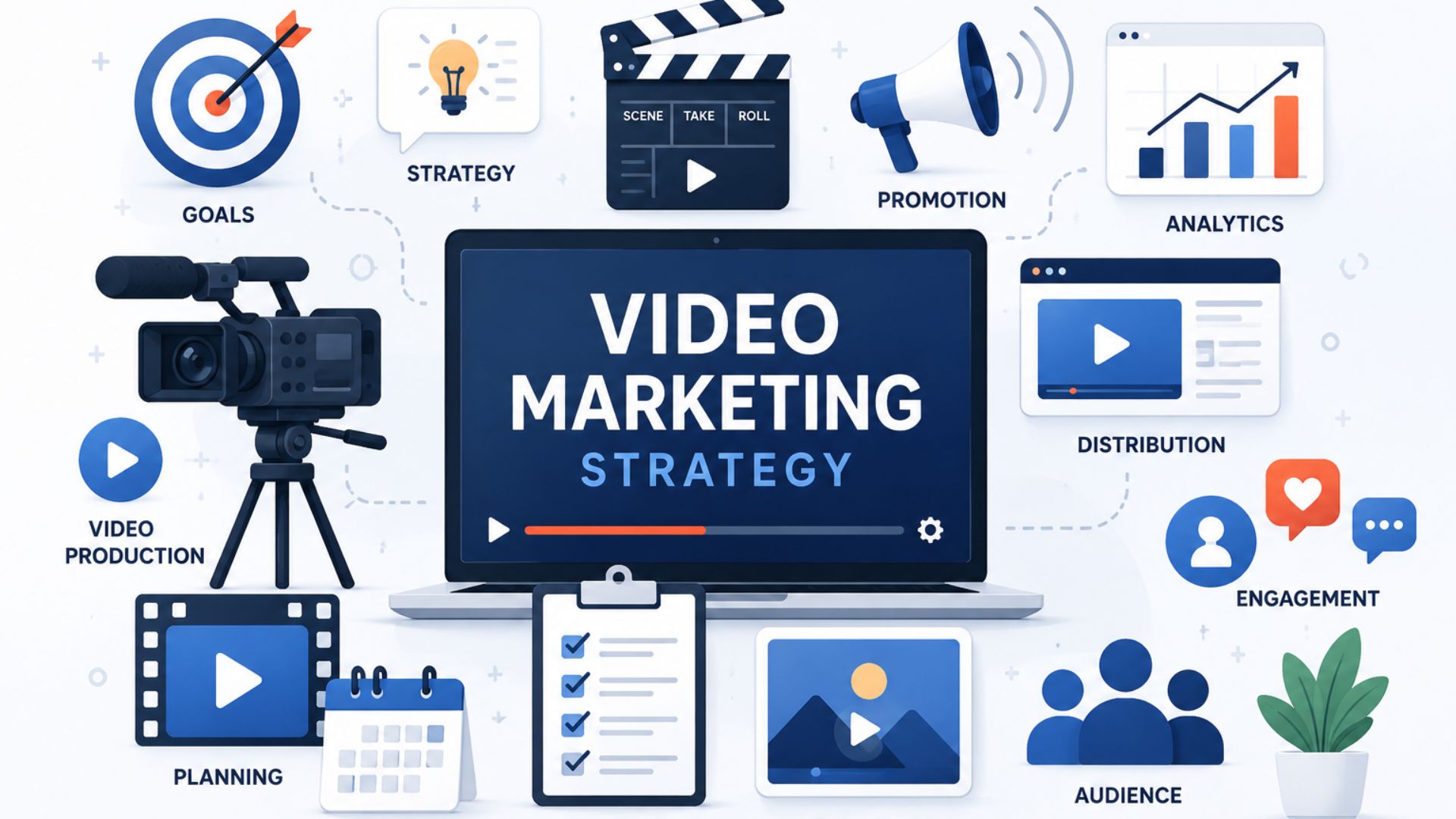
A strong video strategy includes both production and promotion.
Businesses should think carefully about how video content supports broader marketing goals.
Distribution, repurposing, and long-term consistency all contribute to stronger performance.

How Businesses Can Get More Value From Video Production
One of the most effective ways to improve return on investment is to plan content ecosystems rather than single videos.
For example, one production shoot can generate content for:
- TikTok
- Websites
- Recruitment campaigns
- Email marketing
- Sales presentations
This allows businesses to maintain consistency while maximising production efficiency.
It also creates more opportunities to test messaging and content performance across platforms.
Why Video Strategy Matters More in 2026
Video content continues to grow across nearly every digital platform.
However, competition for attention is also increasing.
Businesses are no longer competing simply by creating video.
They are competing based on:
- Clarity
- Relevance
- Authenticity
- Strategy
- Audience understanding
The companies achieving the strongest results are usually the ones treating video as a long-term business asset rather than a one-off creative project.
Turning Better Videos Into Better Business Results
The difference between an average business video and one that delivers measurable results often comes down to planning, messaging, and audience understanding. Businesses that approach video strategically are usually far more successful at generating trust, engagement, and long-term marketing value from their content.
Final Thoughts
Business video can be an extremely powerful marketing tool when approached strategically. The most effective videos are not just visually impressive — they are built around clear goals, strong messaging, and a genuine understanding of the audience.
Avoiding common mistakes can help businesses create video content that supports lead generation, recruitment, trust-building, and long-term brand growth.
If you’re planning your next business video project, explore our video production services, try our instant price calculator, or get in touch with the Mango Media team for a no-obligation conversation.
Frequently Asked Questions
What are the most common business video mistakes?
Some of the most common business video mistakes include unclear messaging, poor audience targeting, weak strategy, low-quality audio, and trying to include too much information in one video.
Why do business videos fail?
Business videos often fail because they prioritise visuals over strategy. Without clear goals, audience understanding, and strong messaging, even professionally produced videos may struggle to generate results.
How can businesses improve video marketing results?
Businesses can improve video performance by focusing on audience needs, simplifying messaging, improving production quality, and creating platform-specific content supported by a clear distribution strategy.
Similar blogs:






























![How to Write a Promo Video Script (Free Template Included) [2026 Guide]](https://cdn.prod.website-files.com/6226fcc37e2eb518b6e69a7f/69c3804c0b9ea78696bd89e0_covertab11.jpeg)






.jpg)
%20(1)%20(1).jpg)
.jpg)






We'd love to hear from you! Reach out to us today for a chat about our services, pricing, or just to say hello!


