
In today’s oversaturated inboxes, getting your email noticed — let alone opened — is no easy feat. In this article, we’ll explore the power of video in email campaigns, how to embed video content the right way, best practices to maximise performance, and how to track your results. Whether you’re a startup, marketer, or creative agency, using video in your emails can be a game-changer for audience retention and conversions.
Why Video Testimonials Work So Well
They Build Immediate Trust
People trust people — especially when they can see and hear them.
A well-produced testimonial allows potential customers to:
- See genuine emotion and tone of voice
- Pick up on authenticity and confidence
- Relate to someone in a similar situation
This helps answer the most important question every buyer has:
“Can I trust this company?”
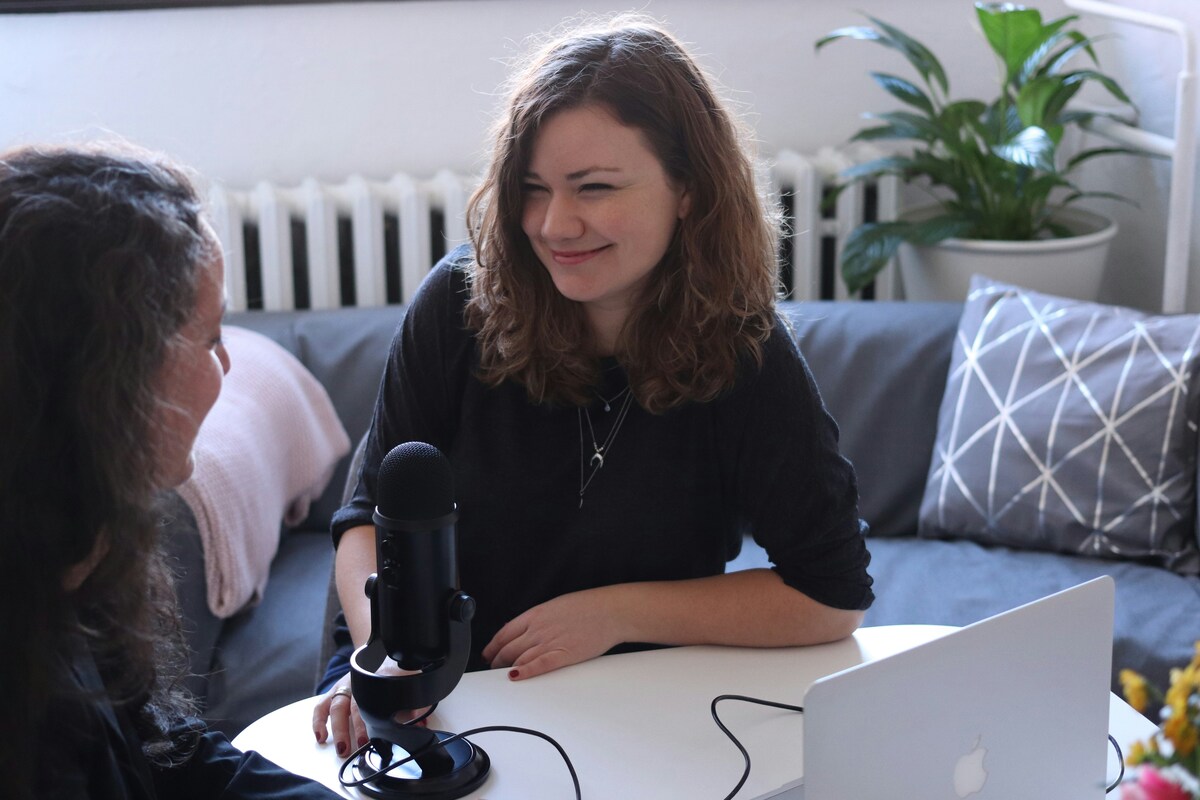
In our experience working with Irish businesses across different sectors, this is often the biggest shift — turning passive interest into real confidence.
What makes this particularly powerful is that trust is built without the business having to “sell” directly. Instead of relying on claims or marketing language, the credibility comes from a third party — the client themselves.
This is especially important in industries where:
- Services are high-value or long-term
- Buyers are comparing multiple providers
- Decision-making involves multiple stakeholders
In these cases, testimonial videos can reduce hesitation significantly by providing reassurance early in the decision process.
Beyond this, video adds an additional layer that written testimonials simply cannot match. Tone of voice, facial expressions, and body language all contribute to how believable and relatable a message feels.
For example:
- A confident tone reinforces credibility
- Natural pauses and expressions signal authenticity
- Enthusiasm or relief communicates real satisfaction
These subtle cues play a major role in influencing perception — often subconsciously.
In digital environments where users are constantly exposed to polished marketing messages, this kind of human, unscripted communication stands out immediately. It feels more honest, and therefore more trustworthy.
They Show Real Results, Not Just Claims
Unlike traditional marketing content, testimonials demonstrate outcomes through real experiences.
A strong testimonial clearly shows:
- The client’s starting point (problem or challenge)
- The process of working with your team
- The result or improvement achieved
This makes your service more tangible and easier to understand.
Instead of saying “we deliver great results”, you’re showing proof.
This shift from claims → evidence is what makes testimonials so effective.

For example, instead of generic statements, viewers can see:
- Specific improvements (e.g. increased enquiries, smoother operations)
- Real-world applications of your service
- Outcomes that feel achievable and relatable
This is particularly valuable for businesses offering services that may otherwise feel abstract or difficult to explain.
In many industries, especially service-based ones, the value of what you offer isn’t always immediately obvious. Testimonials help bridge that gap by translating your service into real-world impact.
They also provide context that typical marketing copy cannot:
- What the situation looked like before
- What changed during the process
- What measurable or visible results followed
This makes it easier for potential customers to visualise their own outcome.
For example, a viewer might think:
- “That’s exactly the problem I’m having”
- “That result is what I’m aiming for”
- “If it worked for them, it could work for me”
This mental connection is what drives action.
They Improve Conversion Rates
Video testimonials are consistently one of the highest-performing types of content for conversion.
They can:
- Increase time spent on your website
- Improve engagement on landing pages
- Reduce hesitation at the decision stage
- Boost enquiries and sales
They are particularly effective when placed on:
- Homepage sections
- Service-specific pages
- Paid ad landing pages
- Proposal or pitch materials
For many businesses, adding just one strong testimonial to a key page can make a noticeable difference in conversion performance.

This is because testimonials help bridge the gap between interest and action.
At the point where a user is considering:
- Submitting an enquiry
- Booking a call
- Requesting a quote
…a testimonial can provide the final reassurance needed to move forward.
In many cases, testimonial videos act as a risk-reduction tool, helping potential customers feel more confident in their decision.
They also help answer unspoken concerns, such as:
- “Will this actually work for me?”
- “Is this company reliable?”
- “What is the experience like?”
By addressing these questions indirectly, testimonials remove friction from the decision-making process.
Additionally, video testimonials can support different stages of the buyer journey:
- Awareness stage: Builds credibility early
- Consideration stage: Demonstrates real outcomes
- Decision stage: Reinforces trust and reduces risk
This makes them a versatile and valuable asset across your entire marketing funnel.
What Makes a Great Video Testimonial?
Not every testimonial is effective. The best ones follow a clear, simple structure that mirrors how people naturally make decisions.

The 3-Part Testimonial Structure
1. The Problem
What challenge was the client facing before working with you?
This section helps the viewer quickly identify whether the situation is relevant to them. It also creates context for everything that follows.
It’s important that this part is clear and specific. The more relatable the problem, the stronger the connection with the viewer.
2. The Experience
What was it like working with your company?
This is where trust is built. It gives insight into:
- Communication
- Process
- Professionalism
- Reliability
This section often differentiates you from competitors. Even if services are similar, the experience of working with your team can be a deciding factor.
3. The Result
What changed as a result of the project?
This is the most important part — it shows the outcome and reinforces the value of your service.
Strong results should ideally include:
- Tangible improvements
- Measurable outcomes (if available)
- Clear before-and-after comparisons
Why Structure Matters
Without a clear structure, testimonials often become vague or unfocused.
For example:
“They were great to work with”
…doesn’t carry much weight on its own.
A structured testimonial helps the viewer quickly understand:
- Whether they relate to the situation
- Whether your service is relevant
- Whether it’s likely to deliver results
It also makes the content easier to follow, especially for viewers who may only watch part of the video.
From an editing perspective, having a structured narrative also makes it easier to:
- Cut down footage efficiently
- Highlight key moments
- Repurpose clips for different platforms
In addition, structure improves retention. Viewers are more likely to stay engaged when the story progresses logically from problem → experience → result.
Who Should You Feature in a Testimonial?
Choosing the right client is one of the most important factors.

Look for clients who:
- Represent your ideal audience
- Had a clear and positive outcome
- Can speak naturally and confidently
- Are genuinely satisfied with your service
It’s also worth considering:
- Industry relevance (will your target audience relate?)
- Clarity of results (can they describe outcomes clearly?)
- Communication style (are they easy to understand on camera?)
Selecting the right person can significantly impact how effective the testimonial is.
Sometimes, the best testimonial subject isn’t the most high-profile client, but the one who can clearly communicate their experience in a relatable way.
Authenticity Over Perfection
One of the most common mistakes is over-polishing testimonials.
Instead:
- Encourage natural conversation
- Avoid scripts
- Keep responses genuine
Authenticity always performs better than perfection.
Small imperfections — such as pauses, natural phrasing, or slight hesitations — actually make testimonials feel more real and trustworthy.
Overly scripted responses, on the other hand, can feel rehearsed and reduce credibility.
In fact, audiences today are highly sensitive to overly produced content. They can quickly detect when something feels staged or forced.
Keeping things natural helps maintain trust and ensures the message resonates.
How to Film a Testimonial Video Properly
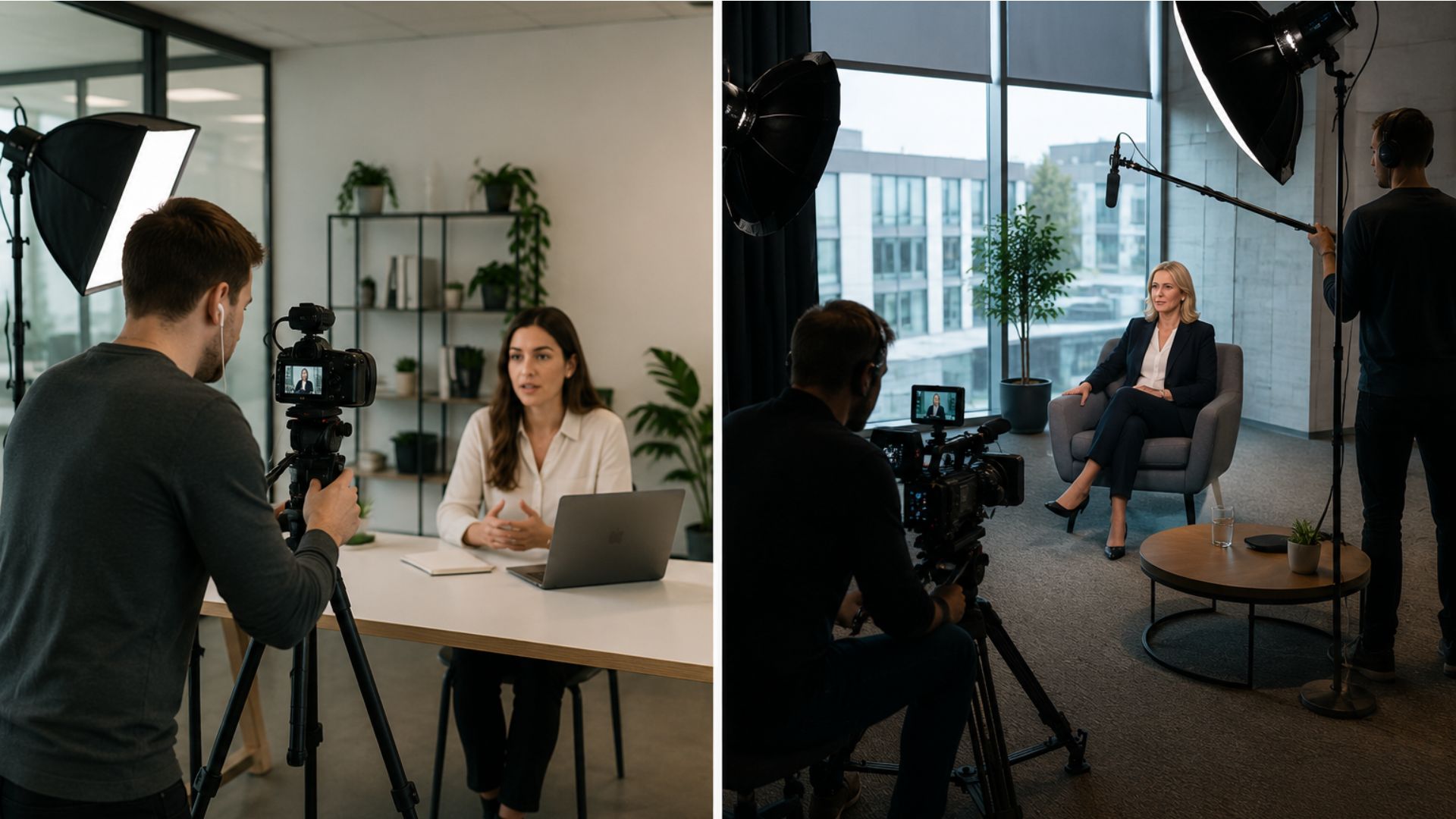
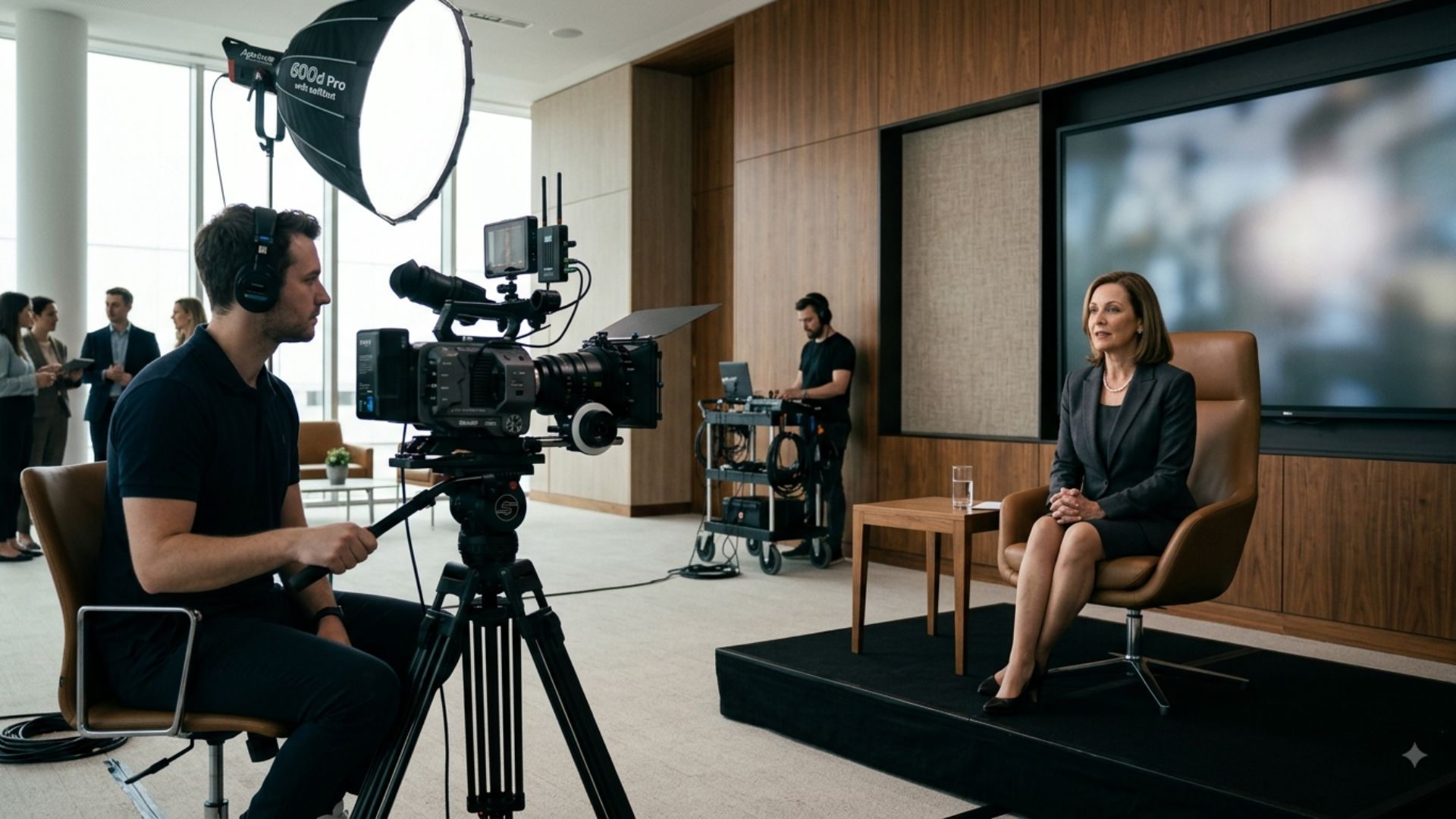
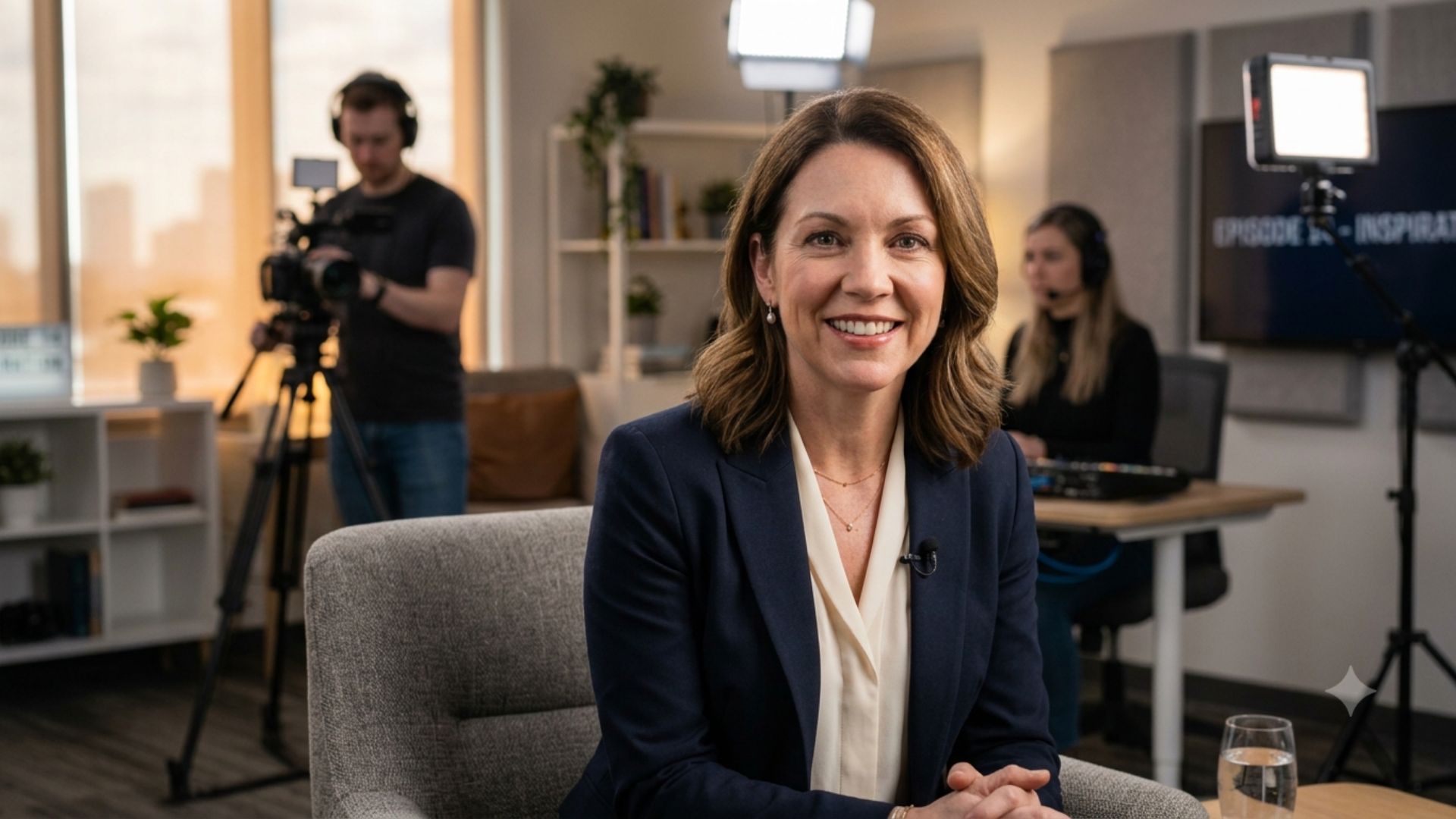
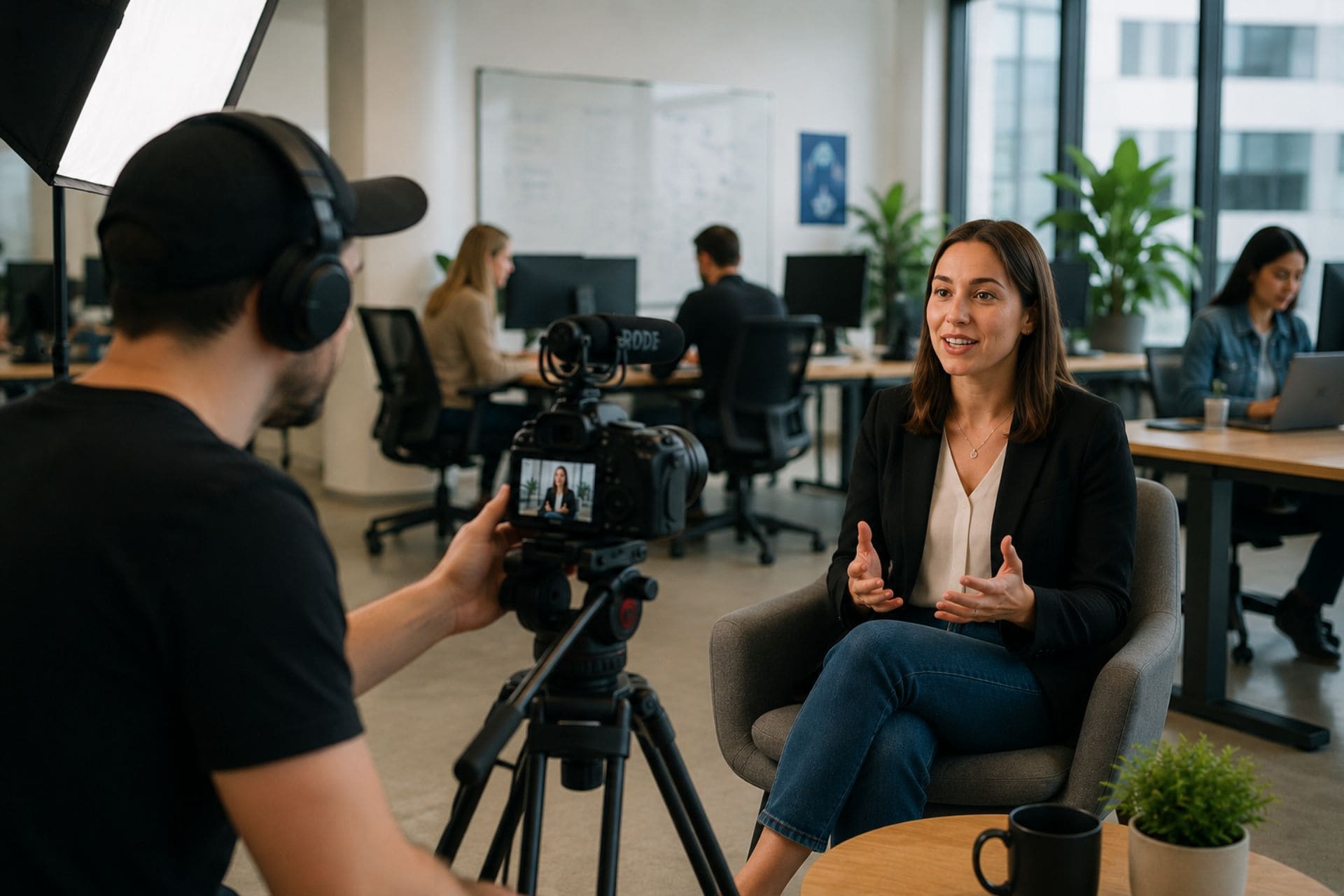
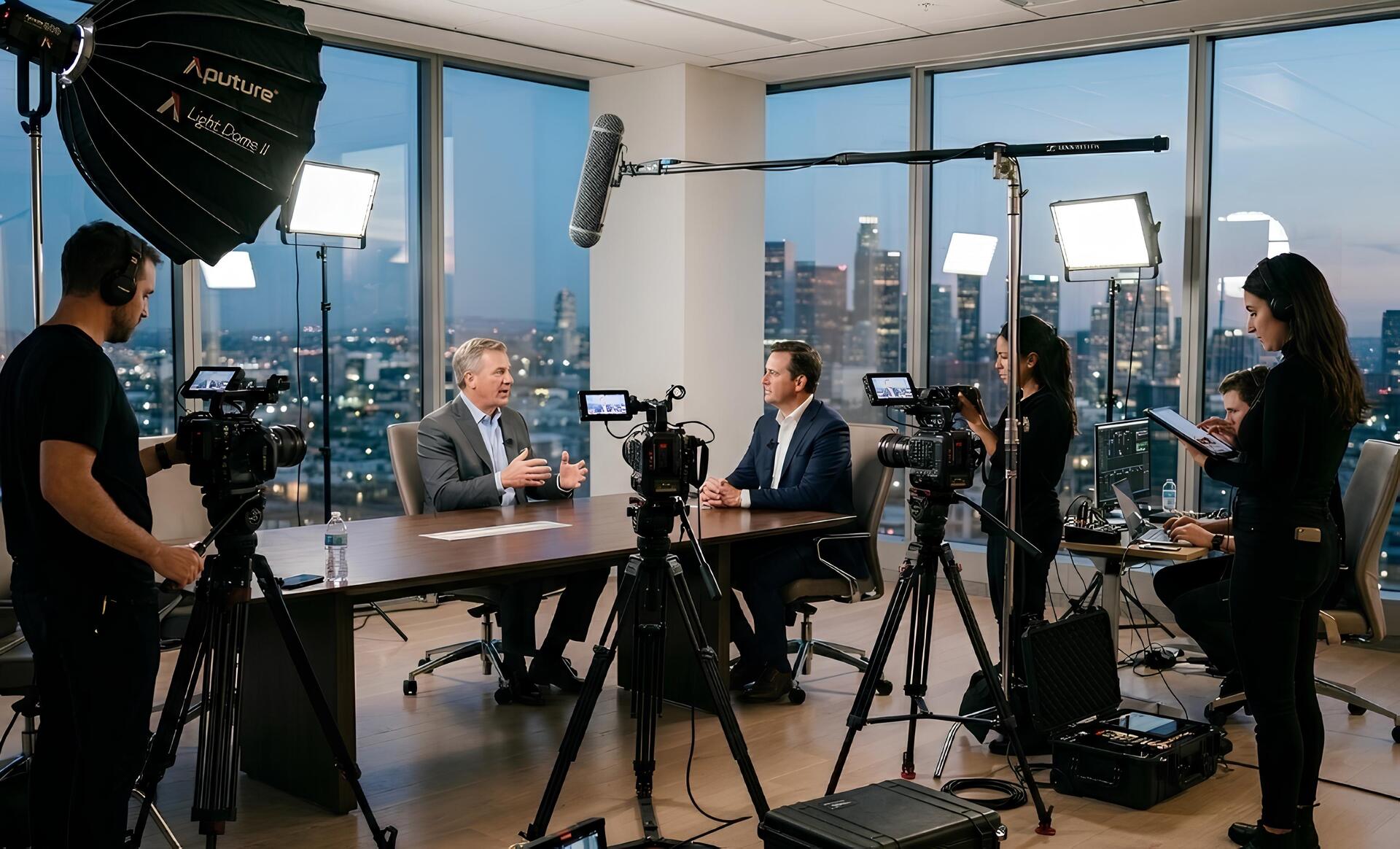
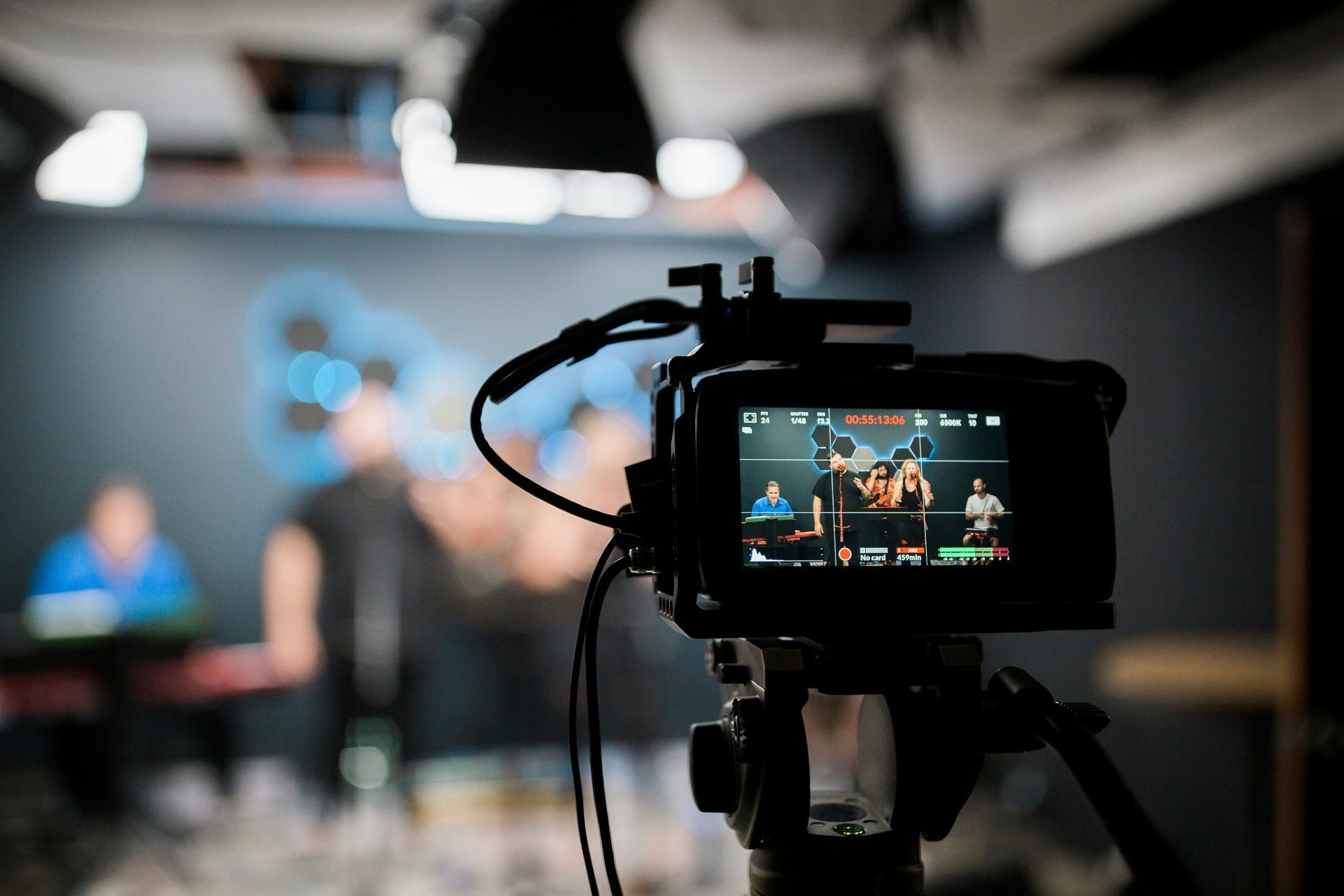
1. Use a Professional Interview Setup
A strong testimonial relies on:
- Good lighting
- Clear audio
- Clean framing

Poor production can reduce credibility — even if the message is strong.
In particular, audio quality is critical. Viewers are far more likely to tolerate imperfect visuals than unclear or distorted sound.
Basic improvements that make a big difference include:
- Using lapel or shotgun microphones
- Avoiding echo-heavy environments
- Positioning the subject correctly in frame
Additional considerations:
- Use natural light where possible
- Keep backgrounds simple and uncluttered
- Maintain consistent framing across shots
2. Ask the Right Questions
Instead of scripts, use guided questions like:
- What was your situation before working with us?
- What problem were you trying to solve?
- What was your experience like?
- What results did you see?
- Would you recommend us?
This keeps answers natural and conversational.
It also allows for follow-up questions, which often lead to the most valuable insights.
For example:
- “Can you expand on that?”
- “What difference did that make?”
These prompts help uncover more detailed and meaningful responses.
3. Capture Supporting Footage (B-roll)
B-roll makes testimonials more engaging.
Examples include:
- Your team working
- The client’s environment
- Product or service in action
This avoids a static “talking head” feel.
It also helps:
- Maintain viewer attention
- Visually demonstrate what’s being discussed
- Add context and depth to the story
4. Keep It Concise
Strong testimonial videos are typically:
- 60–90 seconds (ideal)
- Up to 2 minutes for detailed stories
Shorter videos perform better online.
This is especially important for:
- Social media platforms
- Mobile viewing
- Paid advertising
If needed, longer testimonials can be broken into shorter clips for different uses.
How Long Does It Take to Film?
Typical timelines:
- Single testimonial: 30–60 minutes
- Multiple testimonials: half-day shoot
- With B-roll: half to full day
Most of the time is spent helping the speaker feel comfortable.
It’s also worth allowing time for:
- Setting up equipment
- Adjusting lighting and sound
- Running through questions
- Capturing additional footage
Planning ahead can make the process smoother and more efficient on the day.
How Much Do Video Testimonials Cost in Ireland?
Typical pricing:
- Single testimonial: €800 – €1,500
- Multiple testimonials: €1,500 – €3,000
Costs can vary depending on factors such as:
- Number of locations
- Complexity of the shoot
- Editing requirements
- Additional deliverables (e.g. social clips)
How to Get Better Value
To maximise ROI:
- Film multiple testimonials in one day
- Capture extra content
- Repurpose clips for social
This reduces cost per video significantly.
It also ensures you get more usable content from a single shoot, which can be used across different channels over time.
Additionally, batching content allows for:
- Consistent branding across videos
- Efficient use of production resources
- A steady stream of content post-shoot
Common Mistakes to Avoid
- Over-scripting responses
- Poor audio quality
- Making videos too long
- Lack of structure
- No clear outcomes
- Distracting filming environments
Avoiding these issues can significantly improve performance.
Even small improvements — such as better sound or clearer messaging — can make a noticeable difference in how the video is received.
Where to Use Video Testimonials

Use them across:
- Homepage
- Service pages
- Landing pages
- LinkedIn and social media
- Sales presentations
You can also use testimonial clips in:
- Email campaigns
- Paid ads
- Retargeting campaigns
Using testimonials across multiple touchpoints reinforces trust consistently throughout the customer journey.
Strategic Placement Tip
Place testimonials near:
- Contact forms
- Pricing sections
- Key service benefits
This reinforces trust at decision points.
The goal is to position testimonials exactly where users may hesitate — helping them move forward with confidence.
How Video Testimonials Fit Into a Broader Strategy
One testimonial shoot can produce:

- Full videos
- Social clips
- Website content
- Case studies
- Ad creatives
This makes them highly cost-effective.
Over time, this content can support:
- Brand awareness
- Lead generation
- Sales enablement
It also creates a library of proof that can be reused across different campaigns and platforms.
Turning Insight Into Action
If you’ve been considering testimonial videos, the key step now is turning this into something practical.
That usually means identifying the right clients, planning a simple shoot, and focusing on clear, authentic storytelling rather than overcomplicating the process.
In most cases, starting small — with one or two strong testimonials — is enough to begin seeing results.
Consistency is more important than scale at the beginning. As you gather more testimonials, you can refine your approach and build a stronger library of content over time.
Measuring the Impact of Video Testimonials
While video testimonials are powerful, it’s equally important to track how they perform so you can refine your strategy over time. Key metrics to monitor include engagement (watch time, completion rate), conversion impact (form submissions, enquiries, or bookings), and on-page behavior (time spent on pages with testimonials vs. without). You can also A/B test pages with and without testimonial videos to clearly measure their influence on user actions. Over time, these insights help you identify which types of testimonials resonate most — whether that’s industry-specific stories, results-focused clips, or experience-driven narratives — allowing you to produce more of what actually drives results.
Conclusion
Video testimonials are one of the simplest ways to build trust and move potential customers closer to a decision.
When done right, they turn real client experiences into powerful proof — not just claims.
If you’re thinking about creating testimonial videos, you can explore our [video production services], get a quick idea of costs using our [instant price calculator], or [get in touch] for a no-obligation conversation.
Frequently Asked Questions
How long should a video testimonial be?
Most businesses aim for 60–90 seconds, as this length performs best on websites and social media.
How much does a video testimonial cost in Ireland?
Typically between €800 and €1,500 for a single video, with lower cost per video when filming multiple testimonials in one day.
What questions should you ask in a testimonial video?
Common questions include what problem the client had, why they chose your company, what the experience was like, and what results they achieved.
Similar blogs:

























![How to Write a Promo Video Script (Free Template Included) [2026 Guide]](https://cdn.prod.website-files.com/6226fcc37e2eb518b6e69a7f/69c3804c0b9ea78696bd89e0_covertab11.jpeg)



.jpg)
%20(1)%20(1).jpg)
.jpg)






We'd love to hear from you! Reach out to us today for a chat about our services, pricing, or just to say hello!


