
In today’s oversaturated inboxes, getting your email noticed — let alone opened — is no easy feat. In this article, we’ll explore the power of video in email campaigns, how to embed video content the right way, best practices to maximise performance, and how to track your results. Whether you’re a startup, marketer, or creative agency, using video in your emails can be a game-changer for audience retention and conversions.
Why Your B2B Video Marketing Isn't Delivering Results

If your videos aren't generating enquiries, building engagement or supporting sales, the problem isn't necessarily the quality of your content. More often than not, it's the lack of a clear strategy behind it.
Many businesses produce a promotional video, upload it to LinkedIn and their website, then expect it to drive leads on its own. While a professionally produced video is an excellent asset, it works best as part of a wider marketing plan.
A successful B2B video marketing strategy considers:
- Your business goals
- Your target audience
- The types of videos you need
- Where those videos will be published
- How you'll measure success
Many businesses create videos on an ad hoc basis, responding to immediate needs rather than following a long-term plan. While this can produce good individual pieces of content, it often results in inconsistent messaging and missed opportunities. A well-defined strategy ensures every video contributes to broader marketing and business goals, making it easier to build brand recognition and measure results over time.
When these elements work together, video becomes much more than content—it becomes a tool that supports business growth.
What Is a B2B Video Marketing Strategy?
A B2B video marketing strategy is a structured plan for using video to achieve specific business objectives.
Instead of creating videos whenever a need arises, it ensures every piece of content has a clear purpose and supports your wider marketing efforts.
Whether your goal is generating enquiries, educating prospects, recruiting talent or strengthening customer relationships, your strategy should define:
- Who you're trying to reach
- What you want viewers to do
- Which video formats you'll use
- Where you'll publish them
- How success will be measured
Think of your strategy as the roadmap that guides every video you create. Without one, even high-quality content can struggle to deliver meaningful business results.
Start With Clear Business Goals

Before planning your first video, decide exactly what success looks like.
Different objectives require different types of content, so it's important to identify one primary goal for each video rather than trying to achieve everything at once.
Your objective might be to:
- Increase brand awareness
- Generate qualified enquiries
- Explain a complex product or service
- Support recruitment
- Strengthen customer relationships
- Launch a new product
For example, a software company may prioritise educational explainer videos to simplify technical concepts, while a professional services firm might benefit more from client testimonials and thought leadership content.
Once you've established your goal, the next step is understanding exactly who you're trying to reach.
Know Your Audience
One of the most common mistakes in B2B marketing is trying to speak to everyone.
The more specific you are about your audience, the easier it becomes to create videos that genuinely resonate.
Ask yourself:
- Who are our ideal customers?
- What challenges do they face?
- What questions do they ask before choosing a supplier?
- What information would help them make a decision?
For example, a marketing manager looking for a video production partner is likely to be interested in return on investment, timelines and measurable results. A managing director, on the other hand, may be more concerned with business growth, credibility and long-term value.
Understanding these priorities allows you to create content that answers real questions instead of making assumptions.
Match Your Videos to the Buyer's Journey

Not every viewer is ready to become a customer straight away.
A strong video strategy supports people at each stage of their decision-making process.
Awareness: Help people understand a problem or discover your business through educational videos, industry insights and short social content.
Consideration: Build trust with case studies, service explainers, behind-the-scenes videos and FAQs that demonstrate your expertise.
Decision: Reinforce confidence with client testimonials, project showcases and team introductions that help prospects feel confident choosing your business.
By creating content for each stage, you stay relevant throughout the customer's journey rather than relying on a single promotional video.
Choose the Right Types of B2B Videos

Every business has different goals, so there isn't a one-size-fits-all approach to video marketing. Instead, choose formats that support your objectives and provide value to your audience.
Brand Videos
A brand video introduces your business, communicates your values and helps potential customers understand who you are. It's often the first impression people have of your company, making it an ideal addition to your homepage.
Customer Testimonial Videos
Testimonials build trust by allowing satisfied clients to share their experiences in their own words. Hearing directly from customers is often far more persuasive than reading marketing copy.
Case Study Videos
Case studies demonstrate how your business solved a real problem for a client. They combine storytelling with measurable results, making them particularly effective for businesses with longer sales cycles.
Explainer Videos
If your products or services are technical or complex, explainer videos simplify information into clear, engaging content that helps prospects understand your offering.
Educational Videos
Educational content answers common customer questions and positions your business as a trusted authority. These videos often perform well on your website, LinkedIn and YouTube because they provide genuine value rather than focusing on promotion.
Recruitment Videos
Video can also strengthen your employer brand. Showing your workplace, team and company culture gives potential candidates a better understanding of what it's like to work with your business.
Build a Video Content Funnel
One of the biggest misconceptions about video marketing is that every video should directly generate sales.
In reality, buyers need different information at different stages of their journey. Creating content that supports each stage makes your marketing far more effective.
At the top of the funnel, focus on building awareness with educational content, industry insights and thought leadership.
In the middle of the funnel, help prospects compare their options through service explainers, case studies and behind-the-scenes videos.
At the bottom of the funnel, strengthen confidence with testimonials, demonstrations and project showcases that reinforce your credibility.
For example, an engineering company might first publish educational videos explaining common industry challenges, then share project case studies before using customer testimonials to encourage prospective clients to get in touch.
This approach builds trust gradually rather than asking viewers to make a decision after watching a single promotional video.
Where Should You Publish Your Videos?
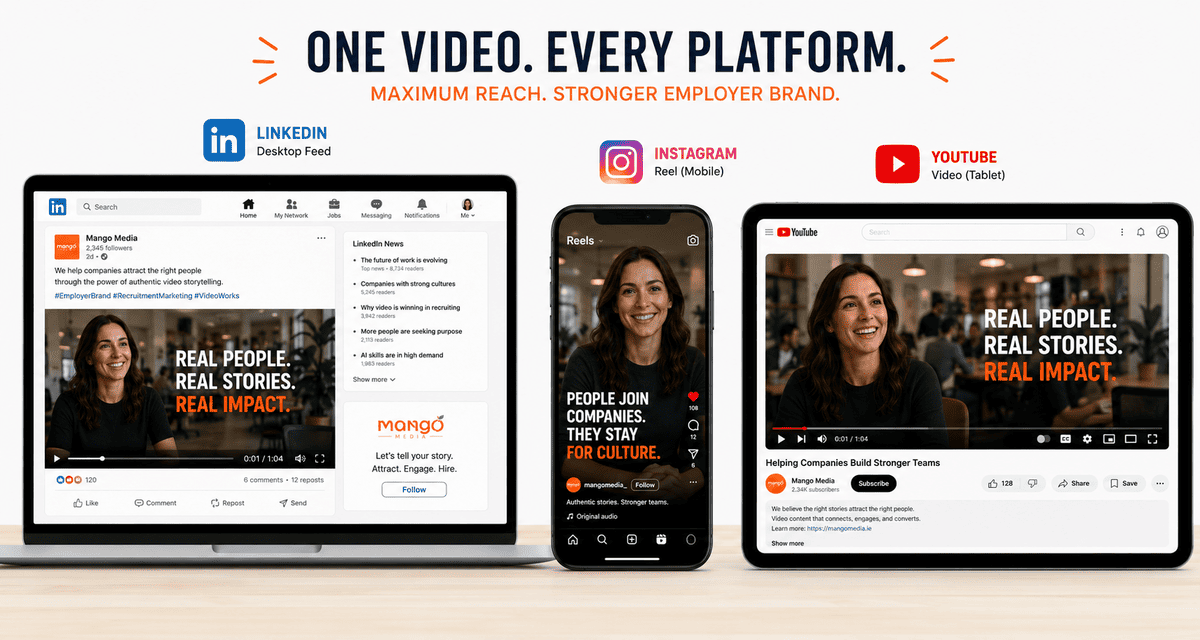
Creating a great video is only half the job. To get the best return on your investment, you also need a plan for where and how you'll share it.
Different platforms serve different purposes, so it's worth considering how your audience consumes content. Rather than uploading the same video everywhere without any changes, adapt your content to suit each channel. Short clips may perform well on LinkedIn, while longer educational videos are often better suited to YouTube or your website.
Rather than relying on a single platform, distribute your videos across the channels your audience already uses.
Your Website
Your website should be the home for your most valuable video content. Embedding videos on relevant pages can increase engagement, keep visitors on your site for longer and help explain your products or services more effectively.
For example:
- Place your brand video on the homepage.
- Add customer testimonials to service pages.
- Embed case studies within relevant industry pages.
- Include explainer videos alongside complex products or services.
Matching each video to the page's purpose creates a better user experience and helps visitors find the information they need.
For many Irish B2B businesses, LinkedIn is one of the most effective platforms for reaching decision-makers.
Instead of posting only promotional content, share videos that educate, solve common problems or offer industry insights. Consistently providing valuable content helps position your business as a trusted expert and keeps your brand visible to potential clients.
Email Marketing
Video can also strengthen your email campaigns. Whether you're introducing a new service, sharing a client success story or inviting prospects to an event, including video can make your emails more engaging and encourage more clicks.
YouTube
YouTube isn't just for consumer brands. It's also a valuable platform for B2B companies looking to increase their online visibility.
Publishing educational videos and optimising them with relevant keywords can help your content appear in search results, driving long-term traffic back to your website.
Maximise Every Video Shoot

One of the most cost-effective ways to improve your video marketing is to get more from every filming day.
Instead of producing one finished video, think about everything else you could create while the cameras are rolling.
A single shoot could produce:
- A brand film
- Customer testimonial videos
- Short LinkedIn clips
- Recruitment content
- Behind-the-scenes footage
- Website header videos
- Still images for your marketing materials
Planning multiple pieces of content in advance helps you maximise your investment and ensures you have a steady stream of assets to use throughout the year.
How to Measure Success

A successful video strategy isn't measured by views alone.
While high view counts can indicate strong reach, they don't always translate into meaningful business results. The most useful metrics are those that align with your original objectives.
Depending on your goals, you might track:
- Website traffic
- Watch time
- Engagement (likes, comments and shares)
- Click-through rates
- Lead generation
- Contact form submissions
- Conversion rates
- Recruitment applications
Review and Refine
Tracking results isn't just about reporting performance—it's about improving future campaigns.
Look for trends over time rather than focusing on individual videos. If certain topics, formats or platforms consistently outperform others, use those insights to guide your future content planning. Small improvements made consistently can have a significant impact over the long term.
Common Mistakes to Avoid
Even well-produced videos can underperform if the strategy behind them isn't right. Here are four common mistakes to avoid.
Creating Videos Without a Clear Goal
Every video should support a specific objective. Without a clear purpose, it's difficult to measure success or know what to create next.
Being Too Sales-Focused
Business buyers are looking for expertise, not constant sales pitches. Educational and informative content often builds more trust than promotional messaging alone.
Poor Distribution
Publishing a video once and hoping people find it isn't a strategy. Plan how you'll share each video across your website, LinkedIn, email campaigns and other relevant channels.
Not Measuring Results
If you're not reviewing performance, you're missing valuable opportunities to improve. Regular analysis helps you understand what resonates with your audience and where you should focus your efforts.
Avoiding these common mistakes doesn't require a bigger budget—just better planning. Businesses that take the time to define clear goals, understand their audience and review performance are far more likely to create videos that continue delivering value long after they're published.
A Simple Framework for Building Your B2B Video Strategy

If you're just getting started, keep things simple.
A successful B2B video marketing strategy often follows these five steps:
- Set one clear business goal.
- Understand your target audience.
- Choose the right video formats.
- Distribute your content consistently.
- Measure results and refine your strategy.
Following this framework will help ensure every video supports a wider business objective rather than becoming a one-off marketing activity.
Thinking About Your Next Video?
A successful video strategy doesn't begin with a camera—it begins with a plan.
By understanding your audience, setting clear objectives and creating content that supports each stage of the buyer's journey, you can turn video into a long-term marketing asset rather than a one-off project. Even starting with a small number of well-planned videos can make a meaningful difference when they're created with a clear purpose.
How Mango Media Can Help
At Mango Media, we work with businesses across Ireland to create video content that supports real business objectives—not just views.
Whether you're producing your first brand film, building a library of customer testimonials or developing a long-term content strategy, our team can help you create videos that engage your audience and deliver lasting value.
If you're exploring how video could support your marketing, we'd be happy to discuss your goals and help you identify the best approach for your business.
Final Thoughts
A successful B2B video marketing strategy isn't about creating more videos—it's about creating the right ones with a clear purpose.
Whether you're looking to build brand awareness, generate leads or strengthen customer relationships, a strategic approach will help every video work harder for your business.
If you're ready to take the next step, explore our video production services, get an instant estimate with our Instant Price Calculator, or get in touch for a no-obligation conversation.
Frequently Asked Questions
How do you create a B2B video marketing strategy?
Start by defining your business goals and identifying your target audience. From there, choose the types of videos that support each stage of the buyer's journey, decide where you'll publish them and measure success using metrics such as engagement, leads and conversions.
What types of videos work best for B2B businesses?
The most effective B2B videos depend on your objectives, but common formats include brand videos, customer testimonials, case studies, explainer videos, educational content and recruitment videos. A balanced mix of these formats can help attract, engage and convert potential customers.
Is video marketing worth it for small businesses?
Yes. Video marketing can help small businesses build credibility, explain their services more effectively and generate qualified enquiries. A small number of well-planned, high-quality videos often delivers better long-term results than producing large volumes of content without a clear strategy.
Similar blogs:




















![How to Write a Promo Video Script (Free Template Included) [2026 Guide]](https://cdn.prod.website-files.com/6226fcc37e2eb518b6e69a7f/69c3804c0b9ea78696bd89e0_covertab11.jpeg)







.jpg)
%20(1)%20(1).jpg)
.jpg)






We'd love to hear from you! Reach out to us today for a chat about our services, pricing, or just to say hello!


