
In today’s oversaturated inboxes, getting your email noticed — let alone opened — is no easy feat. In this article, we’ll explore the power of video in email campaigns, how to embed video content the right way, best practices to maximise performance, and how to track your results. Whether you’re a startup, marketer, or creative agency, using video in your emails can be a game-changer for audience retention and conversions.
What Is a Video Content Audit?
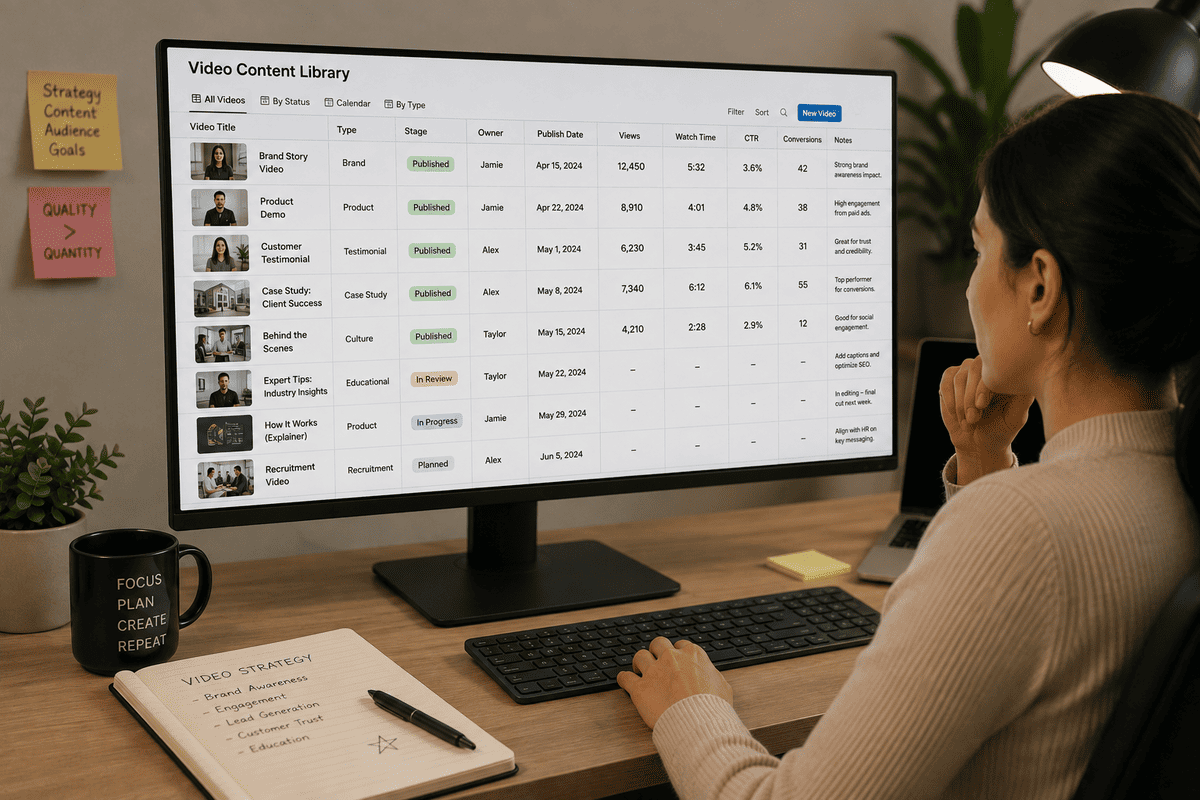
A video content audit is a structured review of every video your business has published across its website, social media channels, email campaigns, and other marketing platforms.
Rather than focusing solely on production quality, an audit looks at how each video performs against your business objectives.
Questions you might ask include:
- Is this video still accurate?
- Does it reflect our current brand?
- Is it reaching the right audience?
- Does it encourage viewers to take action?
- Is it generating measurable results?
The purpose isn't to criticise your existing content. Instead, it's about identifying opportunities to improve, update, repurpose, or replace videos so they continue to support your business.
Why Every Business Should Audit Its Video Content
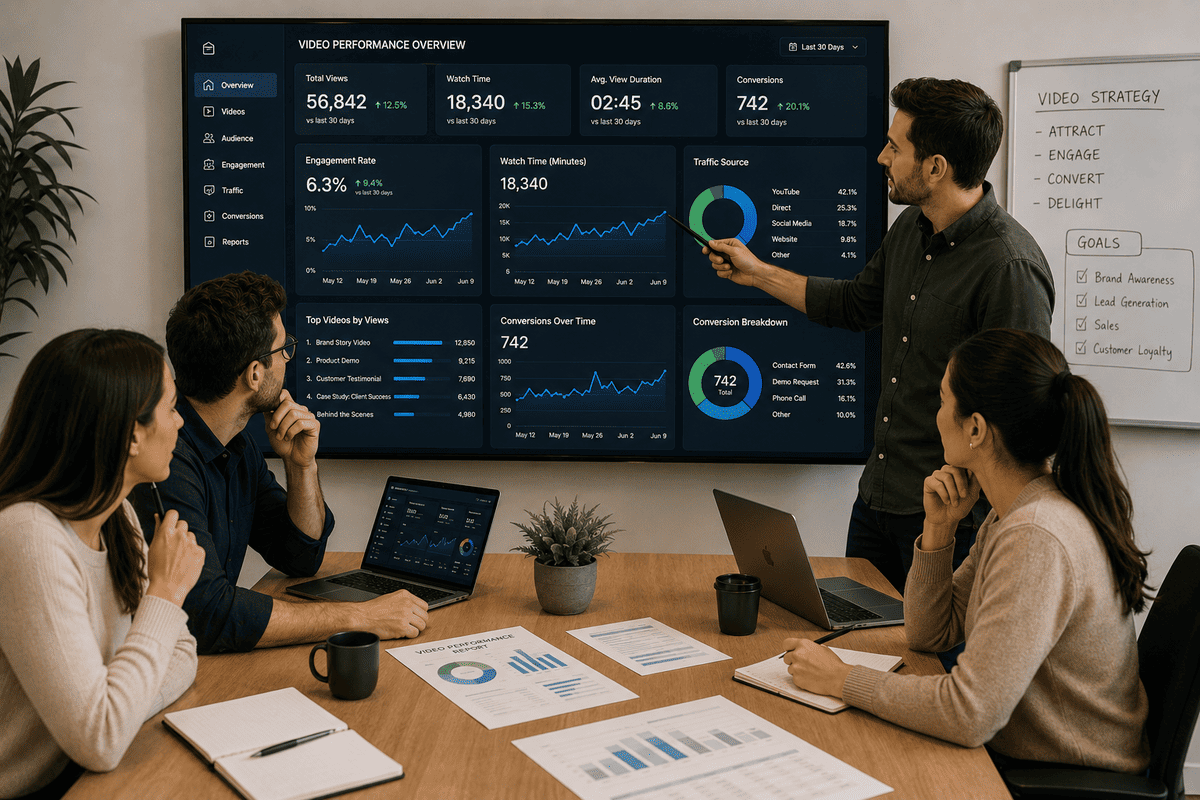
Many businesses invest time and money into creating video content, only to leave it untouched for years.
During that time, your business may have changed significantly.
You might have:
- Updated your branding
- Expanded your services
- Changed your messaging
- Entered new markets
- Introduced new products
- Refined your target audience
If your videos no longer reflect your business, they can create confusion rather than confidence.
An outdated video doesn't just miss opportunities—it can actively damage your credibility by giving potential customers the wrong impression.
Regular audits help ensure every video continues to represent your business accurately and supports your wider marketing strategy.
Why Old Videos Can Cost You Customers
Many businesses assume that once a video is published, its job is done.
In reality, every video continues to shape how potential customers perceive your business.
A visitor watching an outdated company overview or poorly optimised product video may question whether your business is active, professional, or keeping pace with its industry. Even if your products or services are excellent, an old or ineffective video can create unnecessary doubt before you've had the chance to speak with a prospective customer.
A video content audit helps you spot these issues early, ensuring your content continues to build trust rather than undermine it.
First Impressions Happen Faster Than You Think
For many potential customers, your video may be one of the first interactions they have with your business. Within moments, they're making assumptions about your professionalism, credibility, and attention to detail based on the quality of your visuals, messaging, and overall presentation. If your content feels outdated, confusing, or no longer reflects who you are today, viewers may lose confidence before they've even explored your services. Regularly reviewing your videos helps ensure those first impressions accurately represent the quality and expertise your business offers.
Across the Irish businesses we've worked with, we've found that many companies already have valuable video content—they're simply not getting the most from it. Often, small improvements such as updating messaging, improving distribution, or repurposing existing footage can extend the life of a video and significantly increase its impact without starting from scratch.
10 Signs Your Business Videos Are Costing You Customers
1. Your Branding Is Out of Date
Has your logo changed?
Have your colours, messaging, or visual identity evolved?
If your videos still reflect an old version of your business, they can make your brand feel inconsistent.
Consistency across your website, social media, and video content helps reinforce professionalism and trust.
2. The Information Is No Longer Accurate
Businesses evolve.
Services change.
Products improve.
Team members move on.
If your videos contain outdated pricing, discontinued services, old statistics, or references to past events, they may confuse viewers or reduce confidence in your business.
A regular review ensures your content remains relevant and accurate.
3. The Production Quality No Longer Reflects Your Brand
Video production standards continue to improve.
A video that looked professional five years ago may now appear dated because of:
- Poor lighting
- Low-resolution footage
- Weak audio
- Slow editing
- Outdated graphics
You don't always need to replace older videos, but it's worth considering whether they still represent the level of quality your business wants to communicate.
4. There's No Clear Call to Action
Every business video should guide viewers towards a logical next step.
Ask yourself:
After watching this video, what should someone do?
Examples include:
- Book a consultation
- Request a quote
- Visit a service page
- Contact your team
- Download a guide
Without a clear call to action, even an engaging video may fail to generate meaningful business results.
5. You're Speaking to the Wrong Audience
Businesses often grow beyond their original target market.
If your videos still focus on customers you no longer prioritise, your messaging may no longer resonate.
Review whether each video speaks directly to your current audience, their challenges, and the solutions they're looking for today.
6. Your Videos Feel Too Promotional
Modern audiences respond better to helpful, informative, and authentic content than constant sales messaging.
If every video focuses solely on why your business is the best, viewers may disengage before understanding the value you offer.
Instead, ask whether your videos:
- Solve a problem
- Answer common questions
- Demonstrate expertise
- Share customer experiences
- Educate your audience
Providing value first often builds greater trust than leading with a sales pitch.
7. They're Not Optimised for Mobile Viewing
Many business videos are now watched on smartphones rather than desktop computers.
Consider whether your videos include:
- Readable text
- Clear captions
- Mobile-friendly framing
- Fast pacing
- Appropriate aspect ratios for different platforms
A poor mobile viewing experience can reduce engagement and limit the effectiveness of your content.
8. Your Videos Aren't Easy to Find
Even an excellent video won't deliver results if nobody sees it.
Check whether your videos have:
- Descriptive titles
- Relevant keywords
- Clear thumbnails
- Optimised descriptions
- Appropriate tags
- Logical placement on your website
Improving discoverability can increase both visibility and long-term value.
9. You're Not Measuring Performance
Many businesses publish videos without ever reviewing how they perform.
Useful metrics include:
- Watch time
- Audience retention
- Click-through rate
- Website visits
- Lead generation
- Conversion rate
Understanding what's working—and what isn't—helps inform future content decisions.
10. Your Videos No Longer Support Your Business Goals
Perhaps the most important question of all is:
If we created this video today, would we make it the same way?
If the answer is no, it may be time for an update.
Your business objectives should evolve, and your video content should evolve with them.
Whether you're focusing on recruitment, lead generation, employer branding, or thought leadership, your videos should actively support those priorities rather than reflect goals you've since outgrown.
Not Every Video Needs Replacing
A common misconception is that a video audit always leads to a complete re-shoot.
In many cases, existing footage still has plenty of value.
Simple updates such as adding new graphics, refreshing calls to action, editing shorter clips for social media, or improving video descriptions can significantly improve performance without the cost of producing entirely new content.
A thorough audit helps identify where small improvements are enough and where creating fresh content will deliver the greatest return on investment.
How to Conduct a Video Content Audit
A video content audit doesn't need to be complicated. By reviewing your videos against a consistent set of criteria, you can quickly identify which ones are performing well, which need updating, and which no longer support your business goals.
Use the following checklist as a starting point.
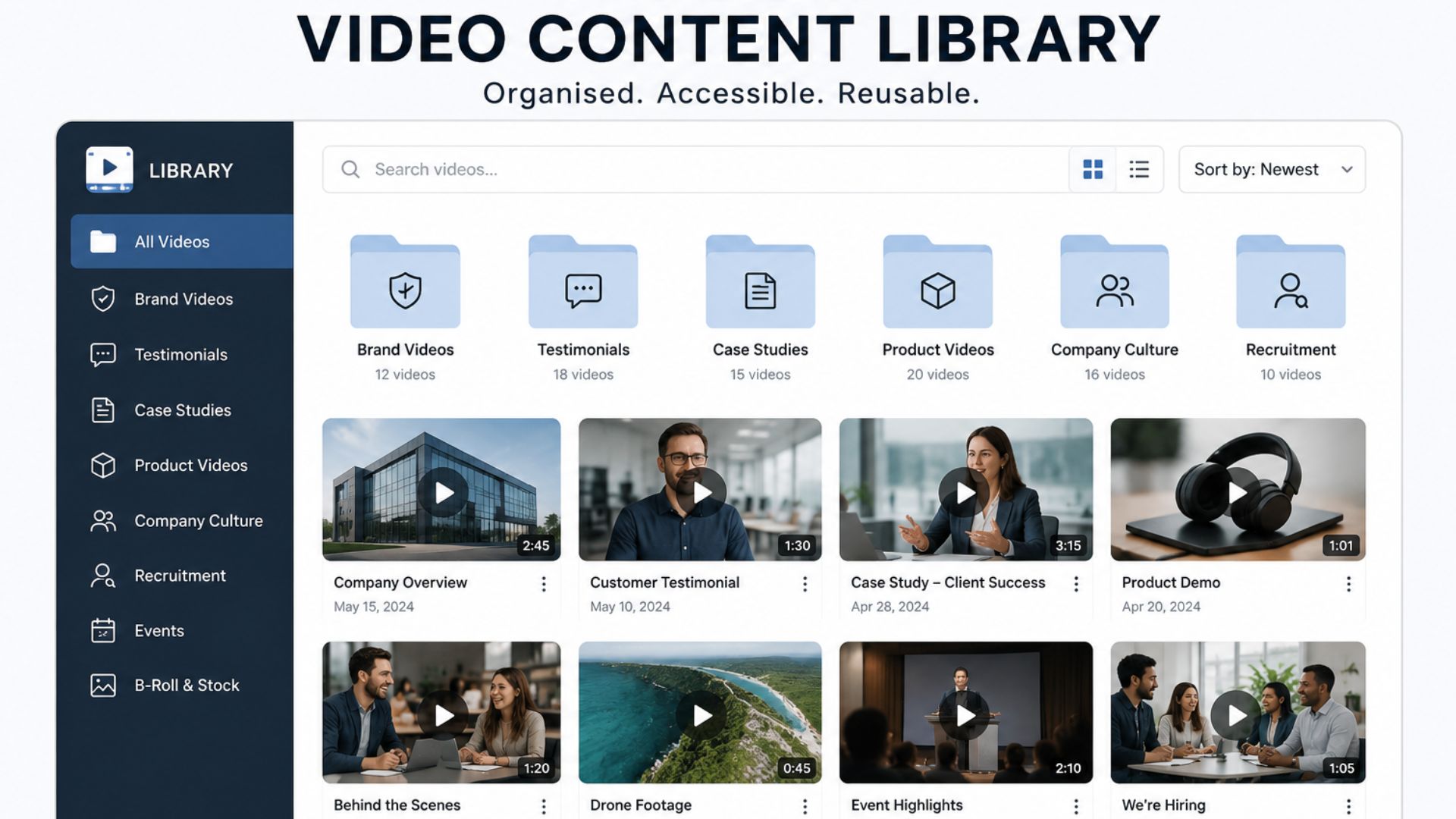
Step 1: Gather All Your Videos
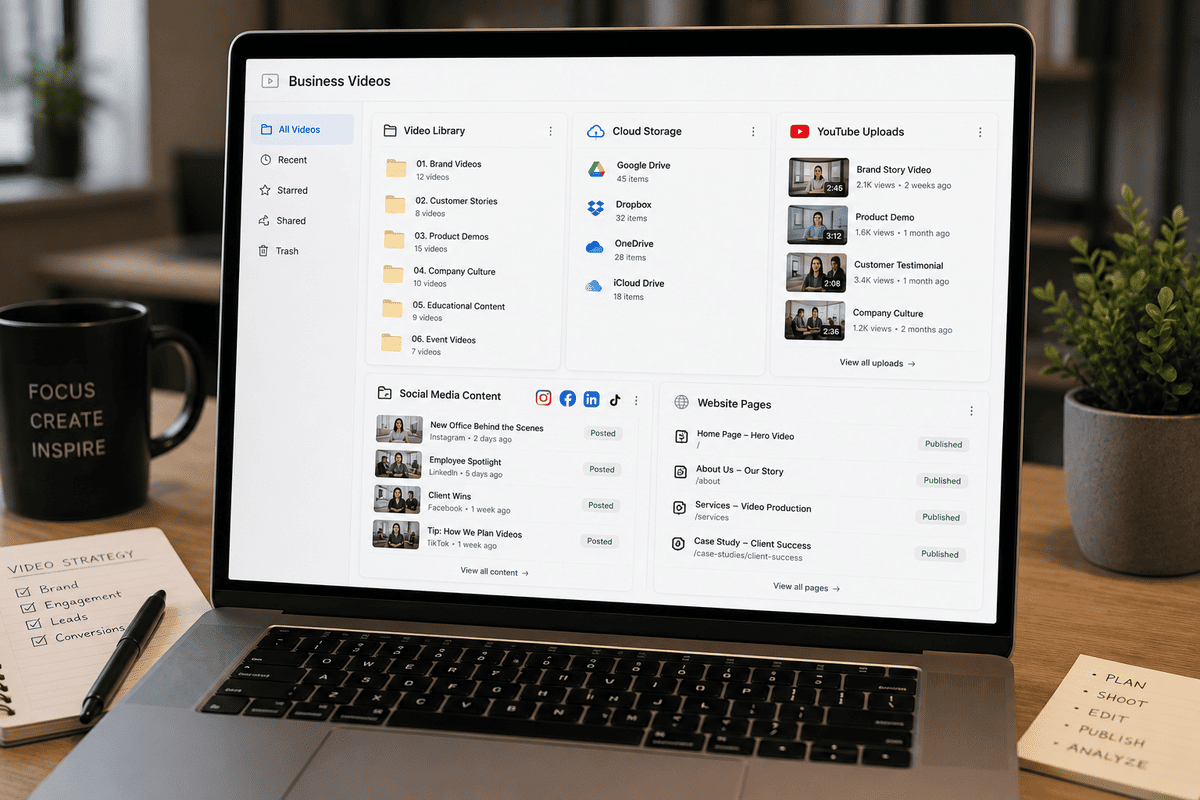
Begin by creating a list of every business video you currently use, including those on your:
- Website
- YouTube
- Vimeo
- Email campaigns
- Sales presentations
- Internal communications
Having everything in one place makes it easier to spot duplicate content, outdated assets, or gaps in your video library.
Step 2: Review Each Video Individually
Watch every video from the perspective of a potential customer.
Ask yourself:
- Is the information still accurate?
- Does the branding reflect our business today?
- Is the production quality still appropriate?
- Is the messaging clear?
- Does the video answer a customer question or solve a problem?
- Is there a clear call to action?
- Would this still make a strong first impression?
Sometimes the biggest opportunities become obvious once you view your content with fresh eyes.
Step 3: Check Performance Data
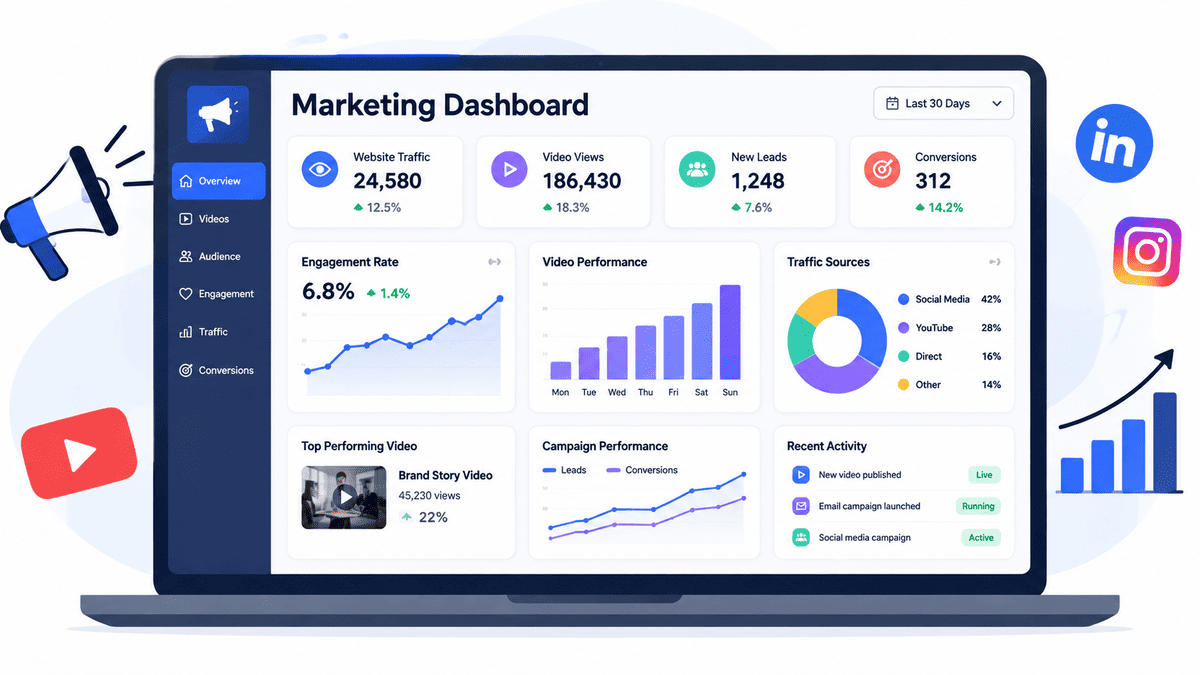
Your analytics can reveal which videos are delivering value and which are underperforming.
Review metrics such as:
- Watch time
- Audience retention
- Engagement
- Website traffic
- Click-through rate
- Leads or enquiries generated
- Conversions
If a video has high views but low engagement, it may need stronger storytelling or a clearer call to action.
Step 4: Decide What to Keep, Update, or Replace
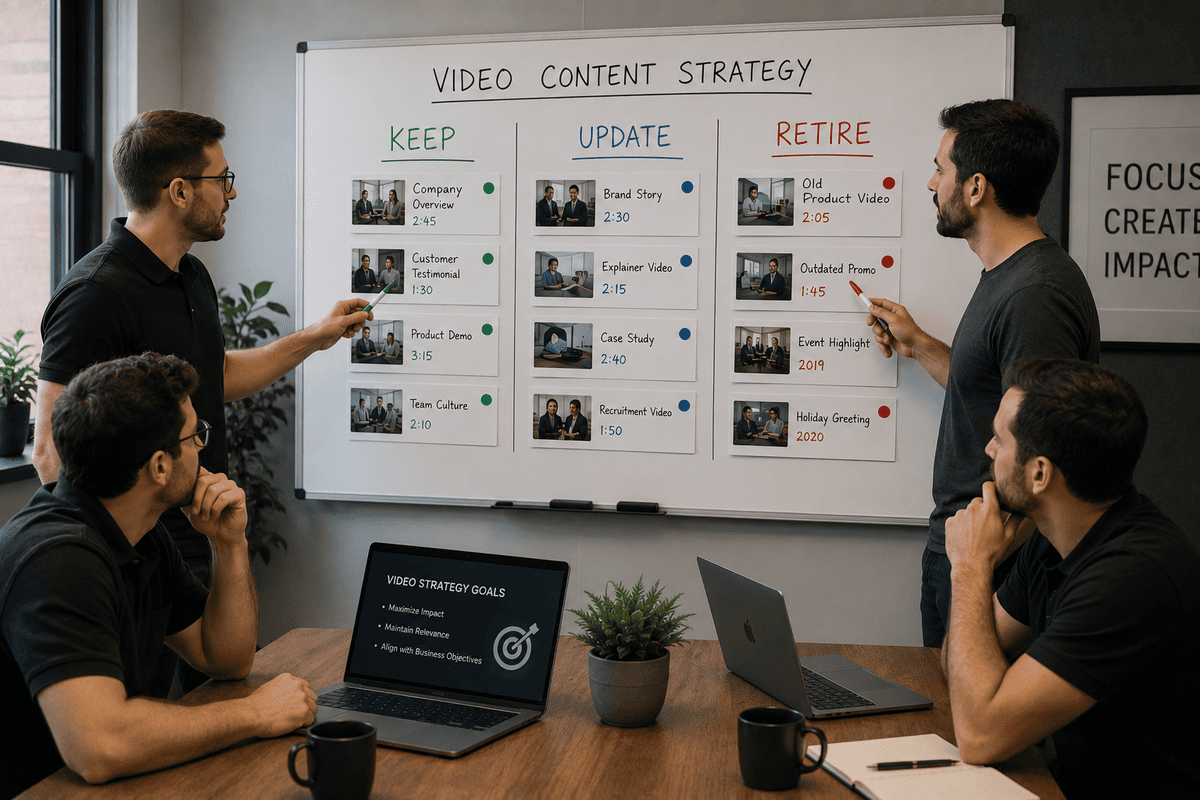
Once you've completed your review, group your videos into three categories:
Keep
These videos still reflect your brand, perform well, and support your current business goals.
Update
These videos have strong foundations but could benefit from refreshed branding, new graphics, revised messaging, improved captions, or updated calls to action.
Replace
Some videos may no longer represent your business, contain outdated information, or fail to meet today's production standards. In these cases, producing new content is often the better long-term investment.
What Can You Improve Without Filming Again?
Not every improvement requires a camera crew.
Many businesses can increase the effectiveness of existing videos by making relatively simple updates, such as:
- Adding subtitles or captions
- Creating shorter versions for social media
- Updating titles and descriptions for SEO
- Refreshing thumbnails
- Adding stronger calls to action
- Embedding videos on more relevant website pages
- Repurposing footage for email campaigns or presentations
These changes can often extend the lifespan of your content while improving its visibility and engagement.
Build an Ongoing Review Process
A video content audit shouldn't be a one-off exercise. As your business evolves, your video library should evolve with it.
Setting aside time to review your content once or twice a year can help you identify outdated messaging, refresh high-performing videos, and ensure every piece of content continues to support your marketing objectives.
Treating your video library as an active business asset, rather than a collection of completed projects, will help you get greater long-term value from every production.
Common Video Content Audit Mistakes
Even with the best intentions, businesses can overlook opportunities during a video audit. Here are a few common mistakes to avoid.
Focusing Only on Views
High view counts don't always mean a video is effective. A video that generates enquiries or supports conversions is often far more valuable than one with thousands of views but little business impact.
Ignoring Older Videos
Older content can still perform well, but it should be reviewed regularly. An outdated company overview or service video could be creating the wrong first impression without you realising it.
Forgetting About SEO
Video titles, descriptions, thumbnails, and placement all influence how easily people can discover your content.
Improving these elements can increase visibility without changing the video itself.
Not Aligning Videos with Current Goals
Your business priorities may have changed since your videos were first created.
A video that once supported brand awareness might now be more valuable as a recruitment asset—or vice versa.
Every video should have a clear purpose that aligns with your current objectives.
Why Regular Video Audits Support Long-Term Growth

The strongest video strategies aren't built by constantly producing new content—they're built by making better use of the content you already have.
Regular audits help businesses understand what's working, identify opportunities for improvement, and make informed decisions about future investments. Instead of creating videos simply to keep up with trends, you can focus on producing and maintaining content that delivers measurable value over time.
Turning Insights into Action
If you've invested in business videos over the years, now is the ideal time to assess whether they're still working as hard as they should. A structured video content audit can uncover opportunities to refresh existing assets, strengthen your messaging, and ensure every video supports your current business goals instead of simply sitting unnoticed in your content library.
Conclusion
A video content audit isn't just about identifying outdated videos—it's about making sure every piece of content contributes to your business goals. By regularly reviewing your videos, updating what still has value, and replacing what no longer reflects your brand, you can improve engagement, build trust, and maximise the return on your investment.
If you're unsure where to start, the team at Mango Media can help. Explore our video production services, use our instant price calculator for a quick estimate, or get in touch for a no-obligation conversation.
Frequently Asked Questions
What is a video content audit?
A video content audit is the process of reviewing your existing business videos to assess their quality, accuracy, performance, and relevance. It helps identify which videos should be kept, updated, repurposed, or replaced to better support your current marketing goals.
How often should businesses conduct a video content audit?
Most businesses should review their video content at least once a year. However, if you've recently rebranded, launched new services, changed your messaging, or updated your marketing strategy, it's worth carrying out an audit sooner to ensure your videos remain accurate and effective.
What should I look for during a video content audit?
Focus on whether each video reflects your current brand, contains accurate information, speaks to your target audience, includes a clear call to action, performs well, and supports your business objectives. It's also important to review production quality, mobile optimisation, and SEO elements such as titles and descriptions.
Similar blogs:





































![How to Write a Promo Video Script (Free Template Included) [2026 Guide]](https://cdn.prod.website-files.com/6226fcc37e2eb518b6e69a7f/69c3804c0b9ea78696bd89e0_covertab11.jpeg)






.jpg)
%20(1)%20(1).jpg)
.jpg)






We'd love to hear from you! Reach out to us today for a chat about our services, pricing, or just to say hello!


