
In today’s oversaturated inboxes, getting your email noticed — let alone opened — is no easy feat. In this article, we’ll explore the power of video in email campaigns, how to embed video content the right way, best practices to maximise performance, and how to track your results. Whether you’re a startup, marketer, or creative agency, using video in your emails can be a game-changer for audience retention and conversions.
What Is Video Content for Sales Teams?
Video content for sales teams refers to videos that help educate prospects, build trust, answer common questions, and support the sales process.
Unlike traditional marketing videos that focus on attracting a broad audience, sales videos are designed to help potential customers move closer to making a buying decision. They give prospects the information they need at the right time, making sales conversations more productive and reducing the need to repeat the same explanations.
Businesses use sales videos in a variety of ways, including:
- Introducing the company.
- Explaining products or services.
- Sharing customer success stories.
- Answering frequently asked questions.
- Demonstrating how a solution works.
- Following up after meetings.
- Supporting proposals and presentations.
- Onboarding new customers.
When used strategically, video becomes an extension of your sales team—working around the clock to educate, reassure, and engage potential customers.
Why Video Helps Sales Teams Close More Deals

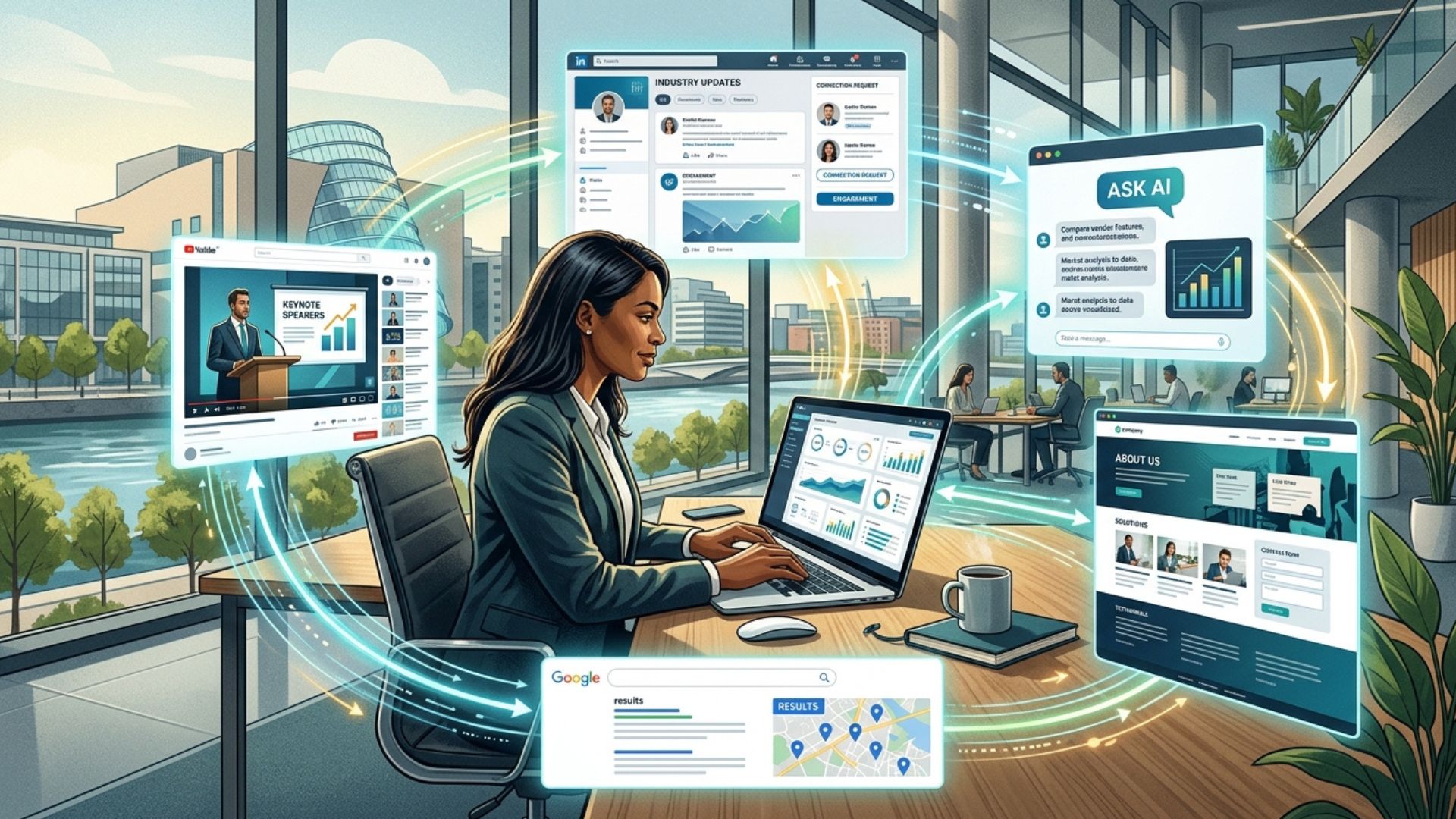
Modern buyers often complete much of their research before speaking to a salesperson.
By the time someone fills in a contact form or books a meeting, they've likely visited your website, compared competitors, read reviews, and watched videos about your business.
Providing useful video content throughout this journey helps answer questions early, builds confidence, and allows sales teams to focus on solving customer problems instead of repeating basic information.
It Builds Trust Before the First Meeting
Trust is one of the biggest factors influencing purchasing decisions, particularly for high-value products and services.
Seeing real people explain how your business works, introduce the team, or discuss customer challenges creates a stronger connection than written content alone.
From our experience working with businesses across Ireland, we've seen that prospects often arrive at sales meetings feeling more informed and confident when they've already watched relevant video content. Whether it's a customer testimonial, a product demonstration, or a company introduction, the right video can answer key questions early and help create more productive sales conversations.
It Explains Complex Products and Services

Some products and services are difficult to explain through text alone.
Video allows businesses to demonstrate processes, show products in action, and break down complex ideas into clear, engaging explanations.
Instead of reading several pages of information, prospects can often understand your solution in just a few minutes.
It Creates a Consistent Sales Message
Every salesperson has their own communication style, but it's important that key messages remain consistent.
Sales videos help ensure that every prospect receives the same explanation of your:
- Products
- Services
- Company values
- Unique selling points
- Customer benefits
This consistency strengthens your brand and reduces the risk of important information being missed during conversations.
It Helps Prospects Make Decisions Faster
One of the biggest reasons sales opportunities stall is uncertainty.
Prospects may be unsure about:
- Whether your solution is the right fit.
- How your process works.
- What results they can expect.
- What happens after they buy.
Well-planned video content can answer these questions before objections arise, helping buyers feel more confident and reducing delays in the decision-making process.
It Supports Every Stage of the Buyer's Journey
Video isn't just useful at the beginning of the sales process.
Different types of videos can help prospects throughout their journey, from discovering your business to becoming long-term customers.
For example:
- Awareness: Brand videos and educational content introduce your business.
- Consideration: Product demos and case studies help prospects compare solutions.
- Decision: Customer testimonials, proposal videos, and FAQs reinforce confidence.
- Post-sale: Onboarding videos improve the customer experience and strengthen long-term relationships.
Using video across multiple stages creates a smoother buying journey while helping sales teams spend more time on meaningful conversations.
Why Sales and Marketing Should Work Together

The most effective sales videos aren't created by the sales team alone.
Marketing understands the brand, messaging, and customer journey, while sales teams know the questions, objections, and concerns prospects raise every day.
By working together, both teams can create video content that addresses real customer needs while supporting broader marketing goals.
Rather than producing videos simply because they look impressive, focus on creating content that solves problems, answers questions, and helps prospects move forward with confidence.
That's where video delivers its greatest value—not just as a marketing asset, but as a practical tool that helps businesses build trust and close more deals.
The Best Types of Video Content for Sales Teams (With Examples)

Not every sales video serves the same purpose. Some help generate trust before the first conversation, while others answer questions, overcome objections, or reinforce a buying decision.
The most effective sales strategy uses a mix of video content to support prospects throughout their journey.
1. Company Introduction Videos
A company introduction video is often one of the first videos a prospective customer watches.
Rather than listing services, it introduces who you are, what your business does, and why customers should choose you.
For example, a construction company could use a short introduction video on its homepage to explain its experience, showcase completed projects, and highlight its commitment to quality.
These videos are ideal for:
- Homepages
- About Us pages
- Sales presentations
- Email introductions
2. Customer Testimonial Videos
Customer testimonials provide social proof by allowing satisfied clients to share their experiences in their own words.
Hearing directly from real customers helps reduce uncertainty and reassures prospects that your business delivers on its promises.
For example, an IT company might feature a client explaining how its managed services reduced downtime and improved productivity.
These videos work particularly well:
- Before sales meetings
- On service pages
- In proposal follow-ups
- Within email campaigns
3. Case Study Videos
While testimonial videos focus on customer experiences, case study videos go a step further by showing how a specific challenge was solved.
A typical case study video covers:
- The customer's problem.
- The solution provided.
- The implementation process.
- The measurable results.
For businesses selling higher-value services or complex solutions, case study videos can be one of the most persuasive tools in the sales process.
4. Product or Service Demo Videos
Many prospects want to understand exactly how a product or service works before committing.
Demo videos provide a clear, visual explanation that is often easier to understand than written descriptions.
For example, a software company might create a short walkthrough demonstrating key features, while a manufacturing business could show how its equipment operates in a real-world environment.
These videos help answer common questions before prospects even speak to your sales team.
5. Frequently Asked Question (FAQ) Videos
Sales teams often find themselves answering the same questions repeatedly.
Turning those answers into short FAQ videos saves time while giving prospects quick access to useful information whenever they need it.
Topics might include:
- Pricing
- Project timelines
- What's included in a service
- Delivery processes
- Support options
- Common misconceptions
FAQ videos are particularly effective when embedded on service pages or shared after an initial enquiry.
6. Founder and Leadership Videos
People often buy from people before they buy from businesses.
Founder videos allow prospects to hear directly from the business owner or leadership team, helping establish trust and credibility early in the sales process.
These videos might include:
- Company values
- Industry insights
- Business philosophy
- Leadership perspectives
- Company updates
For many SMEs, founder-led content helps create a more personal connection that sets the business apart from competitors.
7. Proposal and Personalised Sales Videos
Instead of sending a standard email after a meeting, many sales teams now record short personalised videos.
A simple two-minute video can:
- Thank the prospect for their time.
- Summarise key discussion points.
- Explain the proposed solution.
- Highlight the next steps.
These videos add a personal touch that helps keep your business front of mind during the decision-making process.
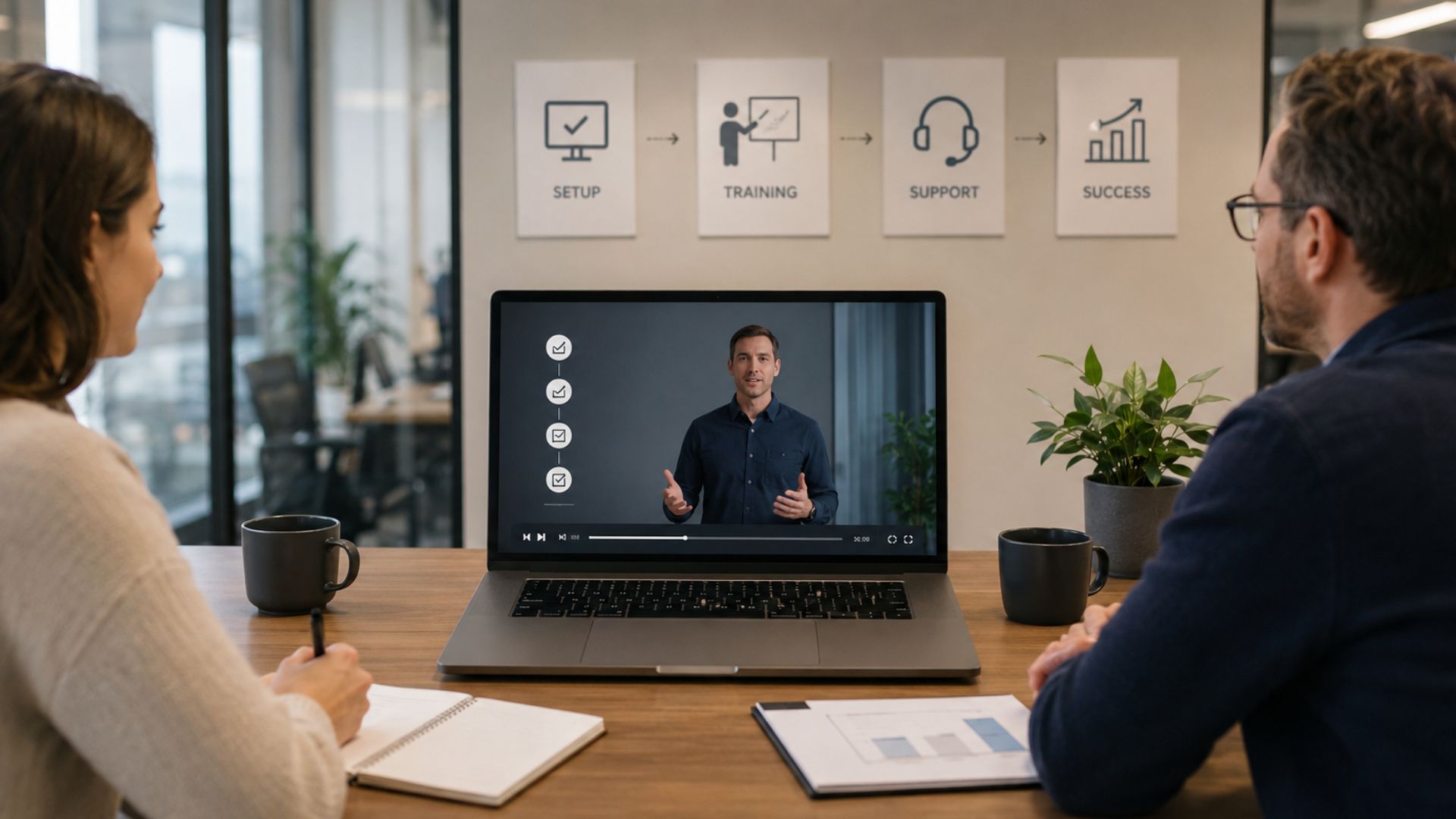
8. Onboarding Videos
Sales doesn't end when a customer signs the contract.
Onboarding videos help new customers understand what happens next, making the transition smoother while reducing the workload on your team.
Examples include:
- Welcome videos
- Setup instructions
- Training content
- Frequently asked questions
- Customer success guidance
A positive onboarding experience can increase customer satisfaction and encourage long-term loyalty.
When Should Sales Teams Use Video?
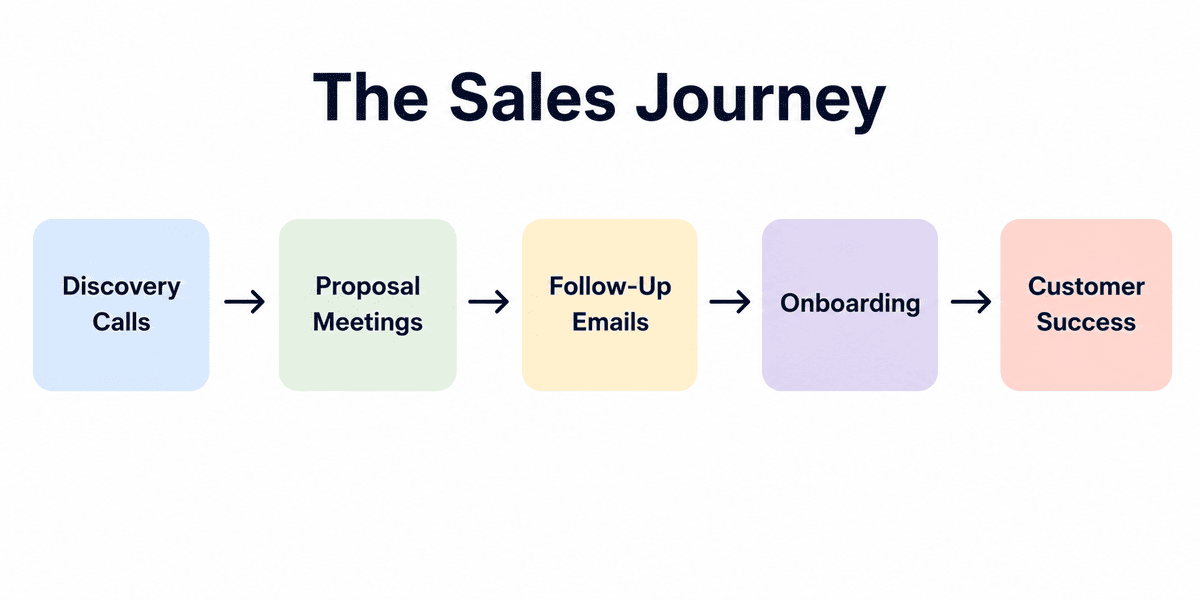
Many businesses think of video as something to publish on their website or social media channels.
In reality, sales videos can support almost every stage of the customer journey.
Consider using video:
- Before a discovery call to introduce your business.
- After a meeting to reinforce key discussion points.
- Within proposals to explain recommendations.
- On landing pages to build credibility.
- In follow-up emails to answer additional questions.
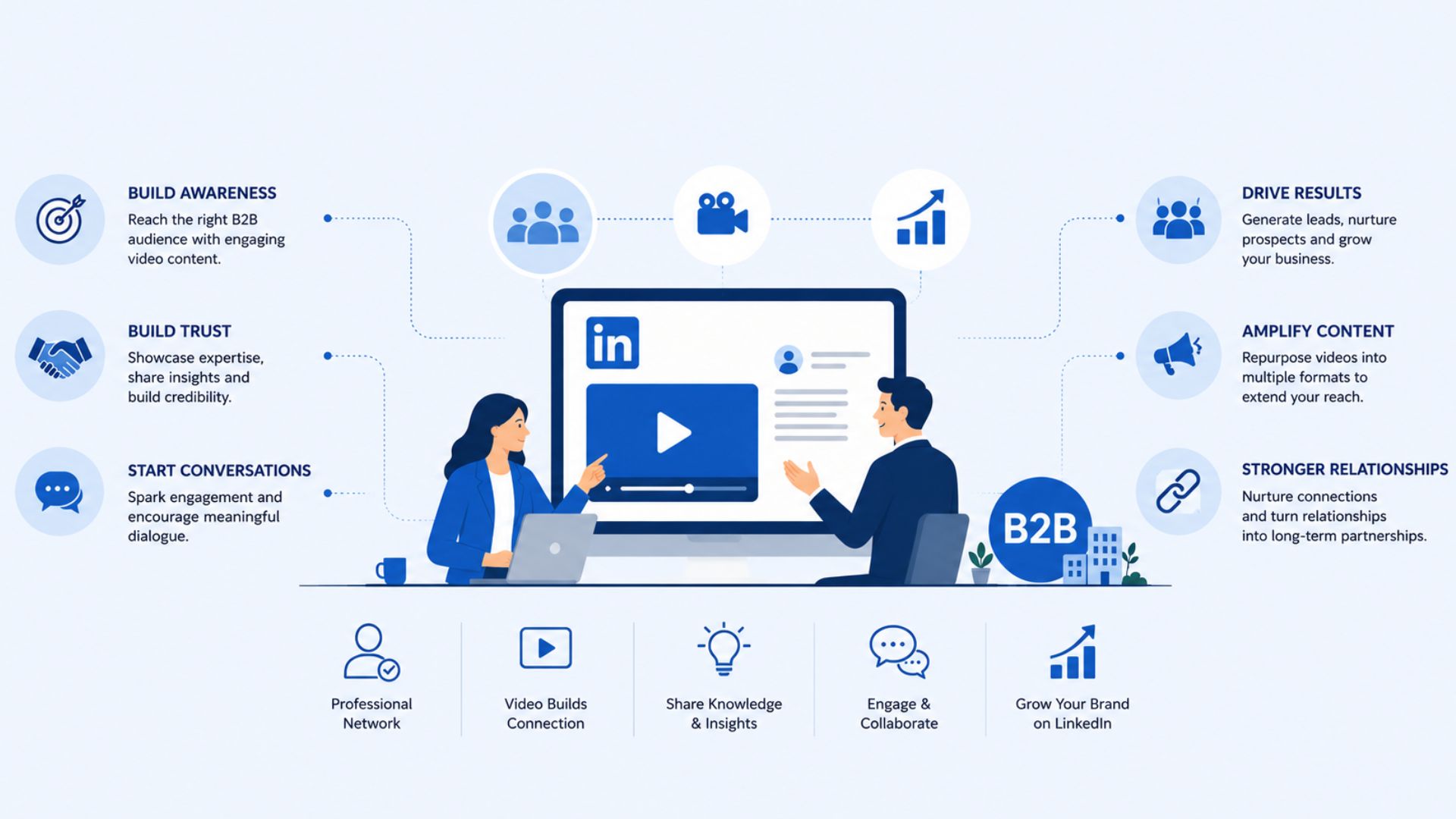
- On LinkedIn to demonstrate expertise.
- During customer onboarding to improve the post-sale experience.
The goal isn't to replace personal conversations but to make them more productive.
In many B2B sales processes, prospects aren't making decisions on their own—they're sharing information with colleagues and other stakeholders before moving forward. Providing clear, professional video content makes it easier for your key messages to be shared internally, helping decision-makers understand your offering even if they haven't spoken directly with your sales team.
When prospects already understand your business and have answers to common questions, sales meetings can focus on solving their specific needs rather than covering the basics.
Common Mistakes to Avoid

Simply creating video content isn't enough. To support your sales team effectively, every video should have a clear purpose and provide genuine value.
Here are some common mistakes businesses should avoid.
Making Every Video a Sales Pitch
Prospects rarely want to watch a video that's purely promotional.
Instead, focus on educating, informing, or helping your audience make better decisions.
When viewers find your content useful, they're more likely to trust your business.
Creating Videos That Are Too Long
Long videos often lose viewers before the key message is delivered.
Whenever possible, keep videos concise and focused on a single objective.
If a topic requires more detail, consider breaking it into a series of shorter videos.
Ignoring Production Quality
Poor audio, distracting visuals, or inconsistent branding can undermine credibility.
Professional production helps ensure your videos reflect the quality of your business while keeping viewers engaged.
Forgetting a Clear Call to Action
Every sales video should guide viewers towards the next step.
That might be:
- Booking a consultation.
- Requesting a quote.
- Downloading a guide.
- Contacting your team.
- Watching another relevant video.
Without a clear next step, even an excellent video may fail to generate results.
Creating Videos Without a Strategy
Producing a single video and hoping it transforms your sales process is unlikely to deliver lasting results.
The strongest sales enablement strategies use a collection of videos that support different stages of the buyer's journey and work together as part of a wider marketing and sales plan.
Measuring the Success of Sales Videos

Like any marketing or sales activity, video content should support measurable business outcomes.
While metrics such as views and likes can provide useful insights, they don't always show whether a video is helping your sales team achieve its goals.
Instead, focus on metrics that indicate how video is influencing the sales process, such as:
- Qualified enquiries generated
- Meeting or demo bookings
- Proposal acceptance rates
- Sales conversion rates
- Customer engagement and watch time
- Click-through rates from emails or landing pages
- Sales cycle length
- Customer retention and repeat business
Reviewing these metrics regularly will help you identify which videos are performing well and where there are opportunities to improve your content strategy.
Give Your Sales Team the Right Tools to Succeed

Think about the questions your sales team answers every day. If prospects are asking the same questions, requesting the same information, or raising the same concerns, there's a good chance those conversations could be supported by video.
The right mix of sales videos won't replace your sales team—it will help them spend less time repeating information and more time building relationships, solving problems, and closing deals.
Conclusion
The best sales teams don't rely on conversations alone—they use the right content to educate prospects, build trust, and remove barriers before a meeting even begins. By investing in strategic video content, your business can create a smoother buying journey, strengthen customer confidence, and help your sales team close more deals.
At Mango Media, we help businesses create professional sales videos that support every stage of the customer journey. Explore our video production services, use our instant price calculator for a quick estimate, or get in touch for a no-obligation conversation.
Frequently Asked Questions
How can video help sales teams close more deals?
Video helps sales teams build trust, explain products or services more clearly, and answer common questions before prospects speak to a salesperson. This allows sales conversations to focus on the customer's specific needs rather than covering basic information, helping buyers make decisions with greater confidence.
What types of videos should a sales team use?
The most effective sales teams use a combination of company introduction videos, customer testimonial videos, case study videos, product demonstrations, FAQ videos, founder videos, and onboarding videos. Each type supports a different stage of the buyer's journey and helps move prospects closer to making a purchase.
Should sales videos be personalised or generic?
Both have their place. General sales videos, such as company introductions and product demos, can be used repeatedly across your website and marketing channels. Personalised videos are often more effective for proposal follow-ups, responding to enquiries, or reconnecting with high-value prospects, as they create a more personal experience.
Similar blogs:











































![How to Write a Promo Video Script (Free Template Included) [2026 Guide]](https://cdn.prod.website-files.com/6226fcc37e2eb518b6e69a7f/69c3804c0b9ea78696bd89e0_covertab11.jpeg)






.jpg)
%20(1)%20(1).jpg)
.jpg)






We'd love to hear from you! Reach out to us today for a chat about our services, pricing, or just to say hello!


