
In today’s oversaturated inboxes, getting your email noticed — let alone opened — is no easy feat. In this article, we’ll explore the power of video in email campaigns, how to embed video content the right way, best practices to maximise performance, and how to track your results. Whether you’re a startup, marketer, or creative agency, using video in your emails can be a game-changer for audience retention and conversions.
Why Choosing the Right Video Matters

Creating a professional video is only part of the process. The real challenge is choosing the type of video that aligns with what your business is trying to achieve.
For example, a company looking to increase brand awareness will need a different approach from one trying to generate qualified leads or recruit new employees. While both may benefit from video, the content, messaging, and distribution strategy should be tailored to support their specific objectives.
Starting with your business goals helps you:
- Invest your budget more effectively.
- Create content with a clear purpose.
- Reach the right audience.
- Support your wider marketing and sales strategy.
- Measure success more accurately.
Rather than asking, "What type of video should we make?", the better question is, "What do we want this video to achieve?"
From our experience working with businesses across Ireland, the most successful video projects begin with a clear objective rather than a specific format. Once the desired outcome is defined, it's much easier to choose the type of video that will deliver the greatest impact.
Start With Your Business Goal

Every business has different priorities, and the right video should support those priorities.
Before deciding on a format, think about the result you're hoping to achieve. For example, are you trying to introduce your business to new audiences, generate more enquiries, support your sales team, recruit talented employees, or strengthen relationships with existing customers?
Once you understand your objective, choosing the right type of video becomes much more straightforward.
Here are some of the most common business goals and the types of videos that support them.
Increase Brand Awareness
If your goal is to introduce your business to new audiences, focus on videos that communicate who you are, what you do, and what makes your brand different.
These videos are often the first impression potential customers have of your business, so they should clearly communicate your values, personality, and expertise.
Common choices include:
- Brand videos
- Founder videos
- Company overview videos
- Behind-the-scenes videos
These formats help people get to know your business before they're ready to enquire.
Generate More Leads
When your objective is to encourage enquiries or website conversions, your videos should answer questions, demonstrate value, and build trust.
Rather than simply promoting your services, focus on helping potential customers understand how your business solves their problems.
Videos that support lead generation include:
- Customer testimonial videos
- Case study videos
- Product or service demonstration videos
- Frequently asked question (FAQ) videos
These videos give prospects the confidence they need to take the next step, whether that's requesting a quote or booking a consultation.
Support Your Sales Team
Sales conversations are often more effective when prospects already understand your business.
Video content can answer common questions, explain your services, and reinforce trust before or after meetings, allowing your sales team to spend more time discussing solutions rather than repeating the same information.
Useful sales videos include:
- Product demonstrations
- Proposal videos
- Customer success stories
- Founder insights
- Personalised follow-up videos
The right content helps prospects make informed decisions while creating a smoother sales process.
Recruit the Right People
Video isn't just for attracting customers—it can also help attract the right employees.
Recruitment and company culture videos allow candidates to understand your workplace, values, and team before they apply.
Examples include:
- Company culture videos
- Recruitment videos
- Employee interviews
- Behind-the-scenes workplace content
These videos give potential candidates a more authentic view of your business than a written job description alone.
Educate Your Audience
Educational videos position your business as a trusted source of information while helping potential customers solve problems and answer questions.
Rather than focusing on selling, these videos demonstrate expertise and build credibility over time.
Popular formats include:
- How-to videos
- Industry insights
- Thought leadership videos
- Webinars
- Educational livestreams
Educational content often continues attracting viewers long after it's published, making it one of the most valuable long-term investments within a video marketing strategy.
Goal: Increase Brand Awareness
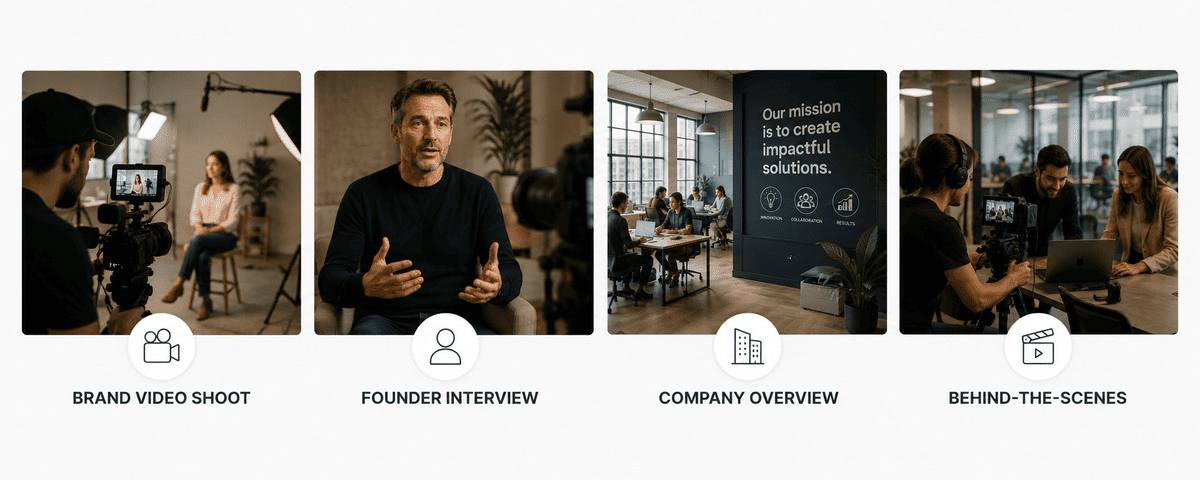
If your priority is introducing your business to new audiences, your videos should focus on creating a strong first impression.
At this stage, potential customers may know little about your company. Rather than explaining every product or service you offer, the goal is to communicate who you are, what you stand for, and why people should trust your business.
Recommended Video Types
Brand Videos
A brand video tells the story behind your business and gives viewers an understanding of your mission, values, and personality. It's often the centrepiece of a company's website and one of the first videos potential customers watch.
Brand videos work particularly well for:
- Homepages
- About pages
- Company presentations
- Social media campaigns
Founder Videos
People connect with people more than logos.
Founder videos allow business owners and company leaders to share their expertise, explain why the business exists, and build a more personal connection with potential customers. They're particularly effective for service-based businesses where trust plays a significant role in the buying decision.
Behind-the-Scenes Videos
Giving audiences a glimpse behind the scenes helps make your business feel more authentic.
Whether you're showcasing your team, your workplace, or your creative process, these videos help build familiarity and demonstrate the people behind the brand.
Best for businesses that want to:
- Build trust
- Increase brand recognition
- Differentiate themselves from competitors
- Create a stronger emotional connection
Goal: Generate More Leads
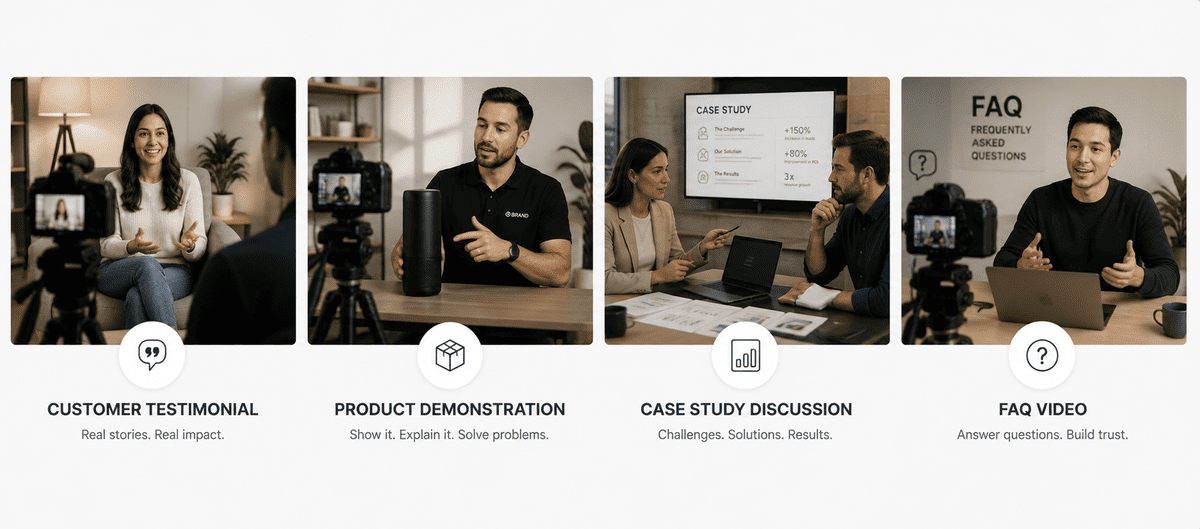
If your goal is to turn website visitors into enquiries, your videos should answer questions and reduce uncertainty.
Prospective customers are often comparing several businesses before making contact. The more clearly you demonstrate your expertise and explain how you can help, the easier it becomes for them to take the next step.
Recommended Video Types
Customer Testimonial Videos
One of the most effective ways to build trust is by letting satisfied customers tell your story.
Hearing real experiences from previous clients provides valuable social proof and reassures potential customers that your business delivers results.
Case Study Videos
Case study videos explain how you've helped a client solve a specific problem.
By combining customer interviews with measurable outcomes, these videos demonstrate the real-world value of your products or services.
Product or Service Demonstration Videos
Some businesses offer products or services that are difficult to explain through text alone.
Demonstration videos simplify complex information by showing how something works, what customers can expect, and the benefits it provides.
FAQ Videos
Every business receives similar questions from prospective customers.
Creating short videos that answer these questions saves time, supports your sales team, and helps customers feel more confident before making an enquiry.
Best for businesses that want to:
- Increase website enquiries
- Improve conversion rates
- Build credibility
- Reduce common sales objections
Goal: Support Your Sales Team

Marketing may generate leads, but the right videos can help convert those leads into customers.
Instead of asking sales teams to explain the same information repeatedly, businesses can use video to educate prospects before meetings, reinforce key messages afterwards, or support proposals.
In many B2B buying journeys, decisions involve multiple stakeholders. Sharing relevant video content makes it easier for your message to be passed between decision-makers, helping everyone understand your offering—even if they haven't spoken directly with your sales team.
Recommended Video Types
Product Demonstration Videos
Product demonstrations show exactly how your solution works and answer practical questions before prospects commit.
Proposal Videos
Adding a short personalised video alongside a proposal can make your business feel more approachable while reinforcing your key recommendations.
Customer Success Stories
Success stories combine storytelling with measurable outcomes, helping prospects see how businesses similar to theirs have achieved positive results.
Founder Insights
Thought leadership and founder videos can strengthen confidence in your expertise, particularly when selling professional services or high-value solutions.
Best for businesses that want to:
- Shorten the sales cycle
- Build trust before meetings
- Support complex buying decisions
- Improve close rates
Goal: Recruit the Right People

Video is just as valuable for attracting employees as it is for attracting customers.
Today's candidates want to understand what it's like to work for your business before applying. Showing your workplace, team, and culture helps applicants decide whether your organisation is the right fit.
Recommended Video Types
Company Culture Videos
Company culture videos highlight your values, working environment, and the people behind your business.
Rather than listing benefits, they help candidates experience your culture before applying.
Recruitment Videos
Recruitment videos explain available opportunities while showcasing the purpose and impact of working within your organisation.
Employee Stories
Featuring employees sharing their experiences adds authenticity and helps candidates relate to your team on a personal level.
Best for businesses that want to:
- Attract quality applicants
- Improve employer branding
- Reduce recruitment challenges
- Showcase workplace culture
Goal: Educate Your Audience
Not every video needs to sell.
Some of the most valuable business videos simply help people learn something useful.
Educational content positions your business as a trusted authority while answering the questions your audience is already searching for online. It also continues delivering value long after publication, making it an excellent long-term investment.
Recommended Video Types
How-To Videos
Practical tutorials solve common customer problems while demonstrating your expertise.
Thought Leadership Videos
Share industry trends, professional insights, and expert opinions that help your audience make informed decisions.
Webinar Recordings
Long-form educational sessions provide deeper value while creating content that can be repurposed into shorter clips.
Educational Livestreams
Live events allow businesses to engage directly with their audience, answer questions, and build credibility in real time.
Best for businesses that want to:
- Build authority
- Improve SEO
- Grow organic traffic
- Nurture long-term customer relationships
One Goal Doesn't Mean One Video
It's worth remembering that a single business objective doesn't always require just one video.
For example, a company focused on generating more leads may benefit from a combination of a brand video, customer testimonials, service demonstrations, and educational content. Together, these videos answer different questions throughout the customer journey and provide prospects with the information they need to make confident decisions.
Rather than relying on one "perfect" video, think about building a collection of complementary content that supports your goals over time.
Questions to Ask Before Choosing a Business Video

Before committing to any type of video, it's worth taking a step back and asking a few key questions. The answers will help ensure your investment supports your wider business objectives rather than becoming a one-off marketing asset.
What is the primary goal?
Every successful video starts with a clear objective.
Ask yourself:
- Do we want to increase brand awareness?
- Generate more enquiries?
- Support the sales process?
- Recruit new employees?
- Educate our audience?
Trying to achieve every objective with a single video often leads to a message that's too broad to be effective. It's usually better to create focused videos, each with a clear purpose.
Who is the target audience?
A video for first-time website visitors should look very different from one created for existing customers or prospective employees.
Understanding who you're speaking to will influence:
- The message
- The tone
- The length
- The format
- Where the video is shared
The more relevant your content is to its intended audience, the more effective it's likely to be.
Where will the video be used?
Distribution should be considered before filming begins.
For example:
- A homepage brand video may need a polished, cinematic feel.
- A LinkedIn video may work best when it's short and thought-provoking.
- A product demonstration may benefit from longer, more detailed explanations.
- A recruitment video should showcase both your people and workplace.
Planning for distribution early helps ensure you capture the right footage and create versions suitable for different platforms.
How will success be measured?
Before production starts, decide what success looks like.
Depending on your objective, you might measure:
- Website enquiries
- Qualified leads
- Sales conversions
- Job applications
- Watch time
- Customer engagement
Clear success metrics make it easier to evaluate your investment and refine future video projects.
Common Mistakes When Choosing a Business Video

Even well-produced videos can underperform if they're chosen for the wrong reasons.
Here are some common mistakes businesses should avoid.
Choosing a Format Before Defining the Goal
It's easy to say, "We need a brand video."
A better question is:
"What are we trying to achieve?"
Once the objective is clear, selecting the right format becomes much simpler.
Following Trends Instead of Business Needs
A video style that's popular on social media isn't always the right fit for your audience.
Choose formats that support your goals rather than simply following the latest trends.
Trying to Say Everything at Once
Businesses sometimes try to fit every service, every message, and every audience into a single video.
In most cases, it's more effective to create shorter, focused videos that each address one objective.
Forgetting About Distribution
A great video deserves a great distribution plan.
Think about how your content will be used across your website, social media, email marketing, presentations, and sales materials before production begins.
Choosing the Right Video Starts With the Right Strategy
The best business videos aren't chosen because they're popular—they're chosen because they solve a specific business challenge.
Before planning your next production, think about the outcome you want to achieve. Once that's clear, selecting the right type of video becomes a strategic decision rather than a creative guess.
Conclusion
Choosing the right business video isn't about following trends or producing the most expensive content—it's about creating videos that support your goals and deliver measurable results. Whether you're looking to build brand awareness, generate more leads, support your sales team, or attract top talent, the right strategy will help every video work harder for your business.
If you're planning your next video project, explore our video production services, use our instant price calculator for a quick estimate, or get in touch for a no-obligation conversation.
Frequently Asked Questions
What type of business video should I create first?
If you're creating your first business video, start with the objective rather than the format. A brand video is often a good starting point for building awareness, while testimonial, product demonstration, or recruitment videos may be more suitable if your goals are focused on sales or hiring.
How do I know which video is right for my business?
The right video depends on what you're trying to achieve. Consider your audience, your business goals, and where the video will be used. Choosing a format that aligns with these factors will usually deliver better results than following trends.
Can one business video achieve multiple goals?
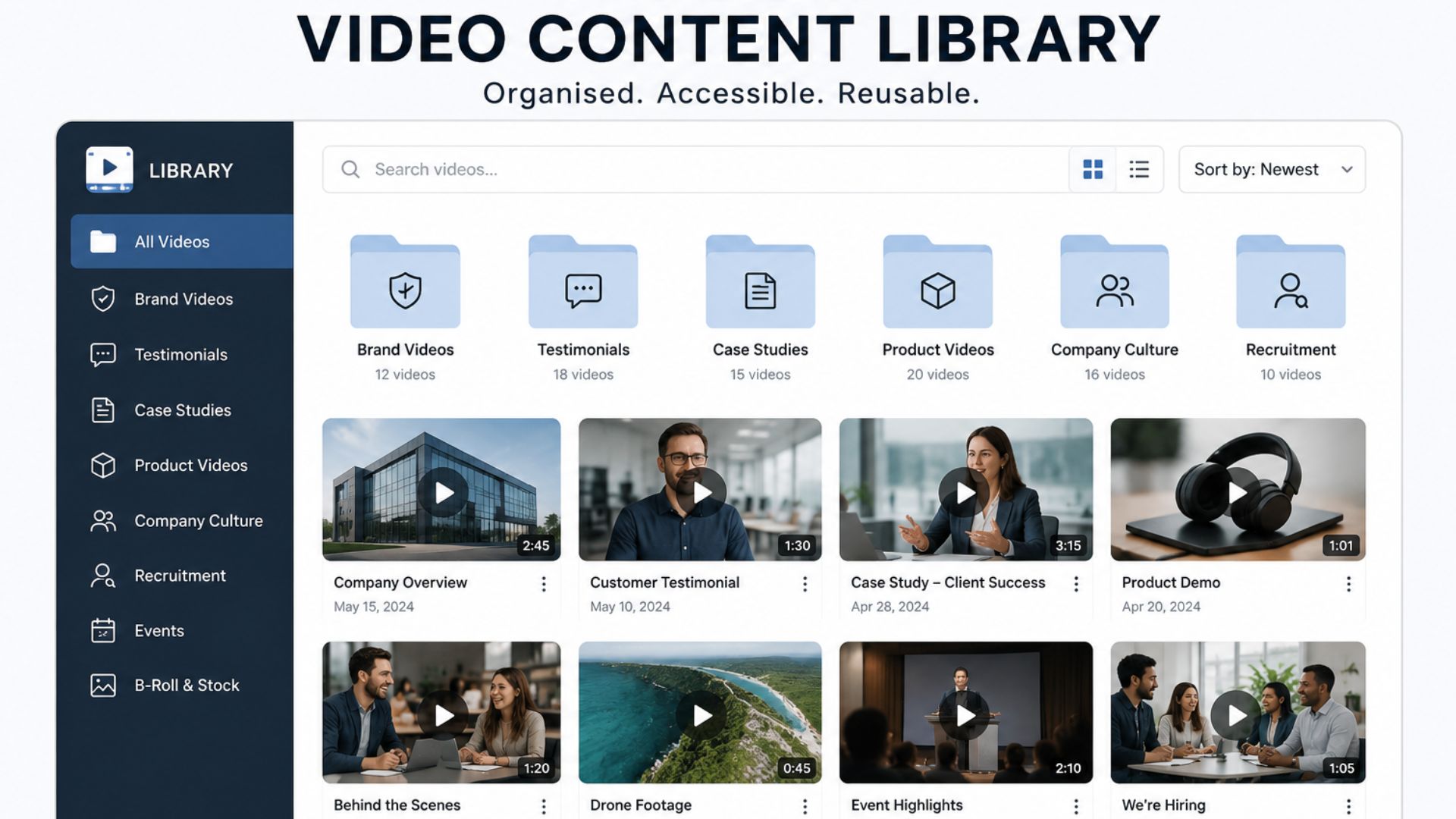
A single video can support more than one objective, but it's usually most effective when it has one primary focus. Businesses often achieve better long-term results by building a library of videos, each designed to support a specific stage of the customer journey.
Similar blogs:




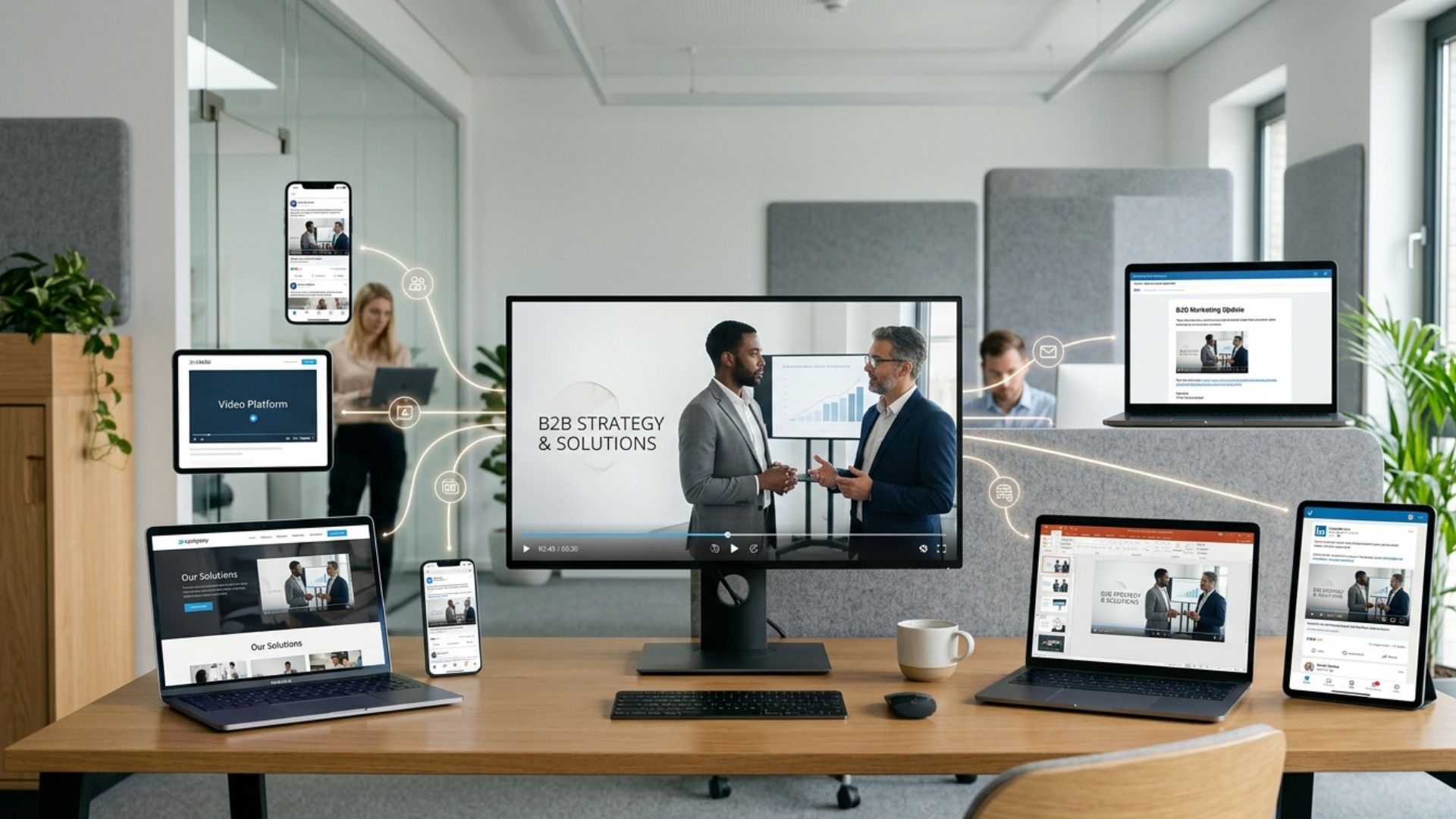





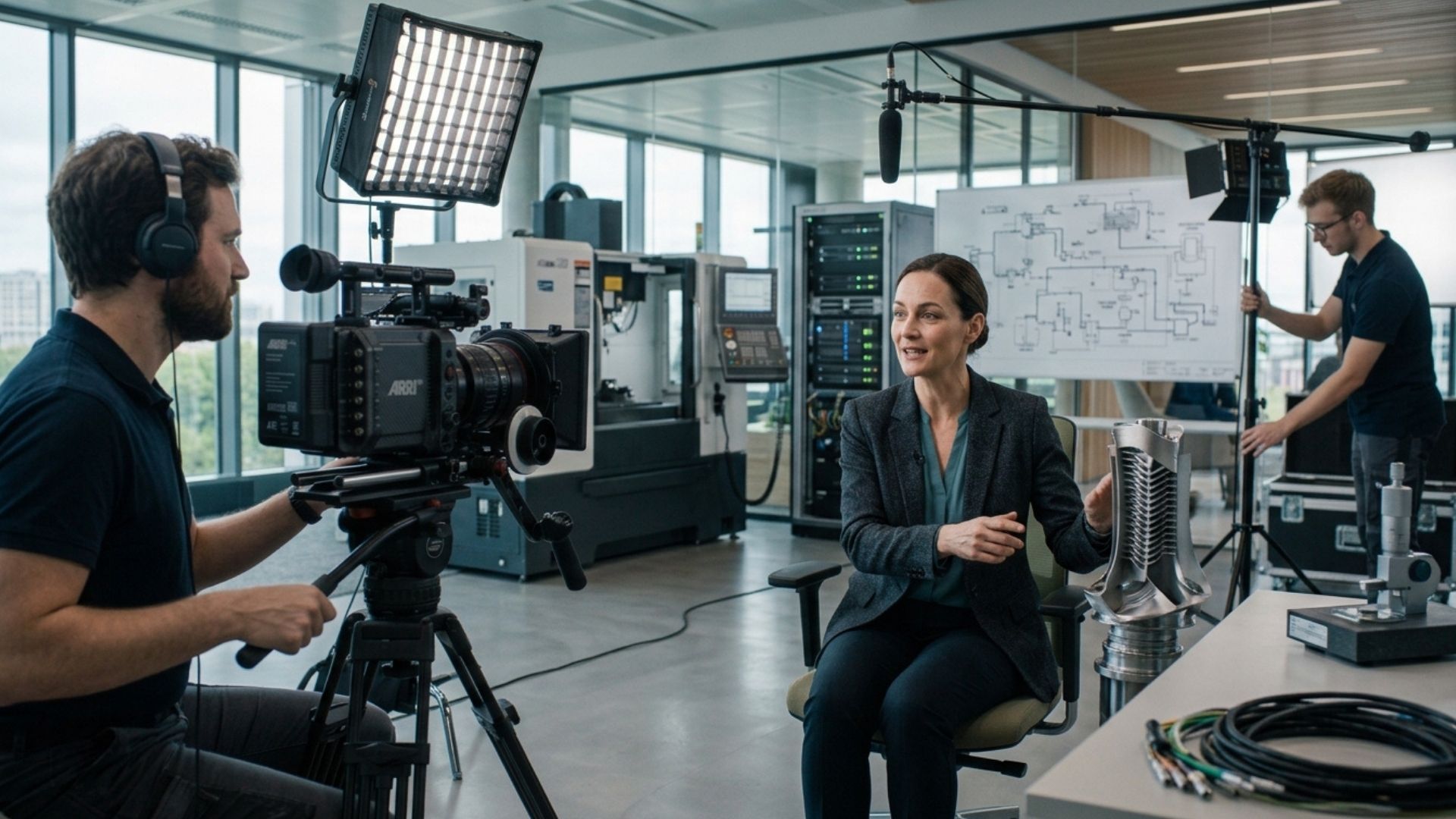































![How to Write a Promo Video Script (Free Template Included) [2026 Guide]](https://cdn.prod.website-files.com/6226fcc37e2eb518b6e69a7f/69c3804c0b9ea78696bd89e0_covertab11.jpeg)






.jpg)
%20(1)%20(1).jpg)
.jpg)






We'd love to hear from you! Reach out to us today for a chat about our services, pricing, or just to say hello!


