
In today’s oversaturated inboxes, getting your email noticed — let alone opened — is no easy feat. In this article, we’ll explore the power of video in email campaigns, how to embed video content the right way, best practices to maximise performance, and how to track your results. Whether you’re a startup, marketer, or creative agency, using video in your emails can be a game-changer for audience retention and conversions.
What Is a Video Marketing Strategy?
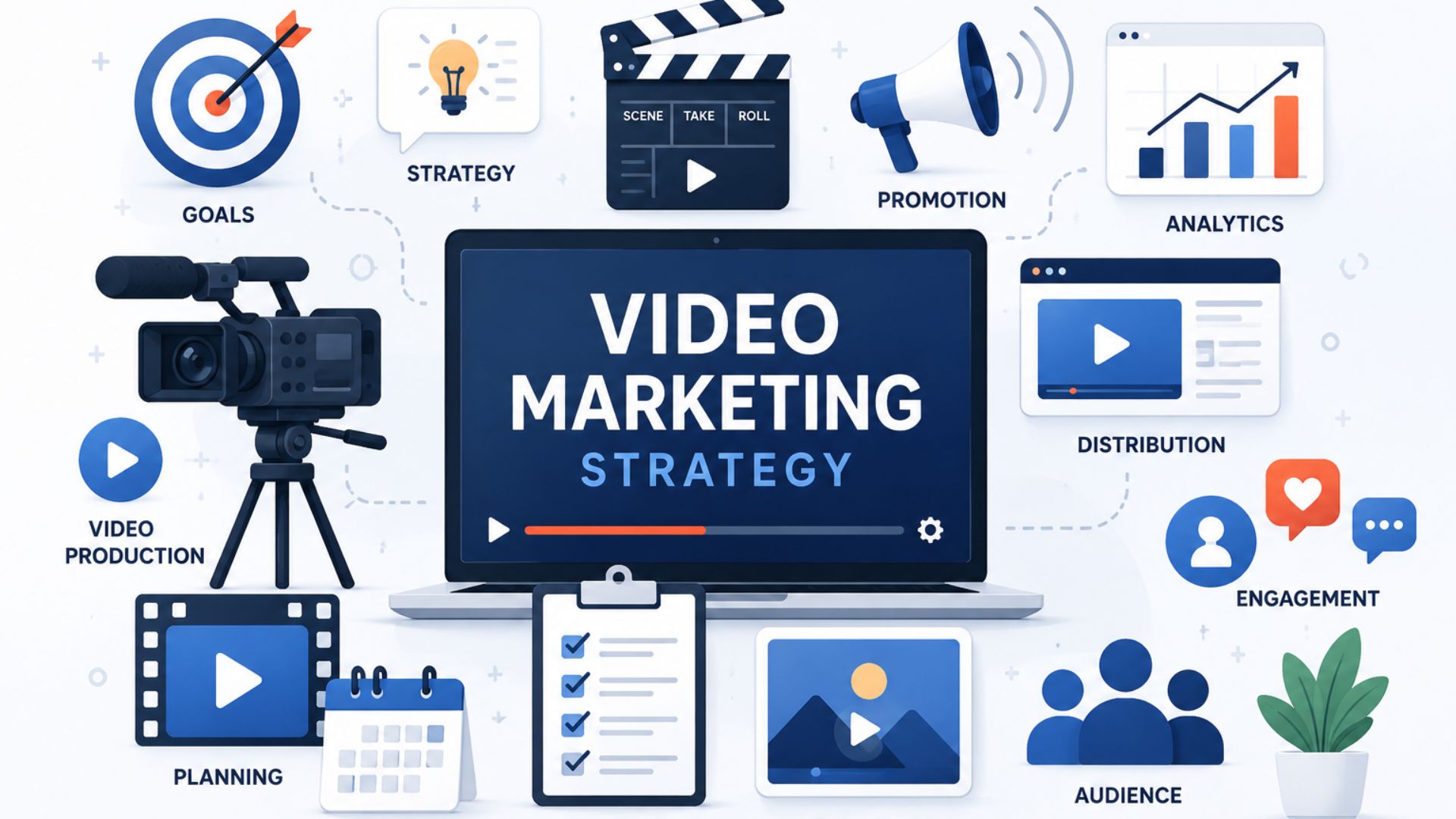
A video marketing strategy is a structured plan that outlines how your business will use video content to achieve specific goals.
Rather than creating videos whenever a new idea comes to mind, a strategy ensures every piece of content has a clear purpose, a defined audience, and a role within the customer journey.
A strong strategy considers questions such as:
- What are we trying to achieve?
- Who are we trying to reach?
- What types of videos will support those goals?
- Where will the videos be shared?
- How will success be measured?
When these elements work together, video becomes more than just content—it becomes a tool that supports marketing, sales, recruitment, customer education, and brand growth.
It's also important to understand that a video marketing strategy isn't the same as a content calendar.
A content calendar focuses on when videos will be published, while a strategy explains why you're creating them in the first place. Without that strategic foundation, even well-produced videos can struggle to deliver meaningful results.
Why Every Business Needs a Video Marketing Strategy

Producing high-quality videos is only part of the equation.
Without a clear strategy, businesses often create content that looks professional but fails to support wider business goals. A video marketing strategy helps ensure every investment in video has a purpose and contributes to measurable outcomes.
It Aligns Video With Business Goals
Every video should support a specific objective.
For example, your business might want to:
- Increase brand awareness.
- Generate more qualified leads.
- Support the sales process.
- Recruit new employees.
- Improve customer retention.
When goals are clearly defined from the start, it's much easier to decide what type of content to create and how success should be measured.
It Helps You Create More Relevant Content
The most effective videos are built around your audience's needs rather than your own assumptions.
Instead of creating content simply because it's popular, a strategy encourages you to think about:
- The questions your customers ask.
- The challenges they face.
- The information they need before making a decision.
From our experience working with businesses across Ireland, the strongest-performing video strategies are those that address genuine customer questions and provide useful information at the right stage of the buying journey. This approach helps businesses build trust while creating content that remains valuable long after it's published.
It Makes Better Use of Your Budget
Video production is an investment, and like any investment, it should deliver value over time.
A clear strategy helps you prioritise the content that will have the greatest impact, reducing unnecessary projects and making it easier to plan future production.
It also encourages businesses to think beyond individual campaigns by creating videos that can be repurposed across websites, social media, email marketing, sales presentations, and recruitment activities.
It Creates a More Consistent Brand
Consistency builds recognition and trust.
When videos share a consistent tone, message, and visual identity, they reinforce your brand across every platform where customers interact with your business.
Whether someone watches a product demonstration, a founder interview, or a customer testimonial, each video should contribute to the same overall brand experience.
It Helps You Measure What Matters
Without a strategy, it's difficult to know whether your videos are actually supporting your business.
Rather than focusing solely on views or likes, a well-planned video marketing strategy identifies the metrics that matter most to your objectives, such as:
- Website enquiries
- Qualified leads
- Sales conversions
- Customer engagement
- Recruitment applications
- Customer retention
Tracking these outcomes makes it easier to refine your approach over time and invest in the types of content that deliver the greatest return.
A Strategy Is More Than Just Creating Videos
One of the biggest misconceptions about video marketing is that success comes from producing more content.
In reality, businesses often achieve better results by creating fewer, more purposeful videos that support clear objectives and fit within a wider marketing strategy.
Instead of asking, "What video should we make next?", start by asking, "What business problem are we trying to solve?"
That simple shift in thinking lays the foundation for a strategy that delivers long-term value rather than short-term activity.
Step 1: Define Your Business Goals

Before deciding what videos to create, it's important to understand what you want them to achieve.
Many businesses make the mistake of starting with the format—such as a brand video, product demo, or social media clip—without first identifying the business objective. While those videos may look professional, they won't always deliver meaningful results if they aren't tied to a clear goal.
Start by asking questions such as:
- What challenge are we trying to solve?
- What action do we want viewers to take?
- How will we measure success?
- Which stage of the customer journey are we supporting?
Common business goals include:
- Building brand awareness.
- Generating qualified leads.
- Supporting the sales process.
- Recruiting new employees.
- Improving customer onboarding and retention.
- Positioning your business as an industry leader.
When every video has a defined purpose, it's much easier to create content that contributes to measurable business growth.
Step 2: Understand Your Audience

A successful video marketing strategy starts with understanding the people you're trying to reach.
Rather than creating content for everyone, focus on the specific audience most likely to benefit from your products or services. Think about their goals, challenges, and the information they need before making a decision.
Consider questions such as:
- Who is our ideal customer?
- What problems are they trying to solve?
- What questions do they ask before getting in touch?
- What concerns might stop them from buying?
- Which platforms do they use to research businesses?
The answers will help you create videos that feel relevant and genuinely useful instead of overly promotional.
Create Content That Answers Real Questions
One of the simplest ways to plan valuable video content is to look at the questions your team receives every day.
For example, prospects may ask:
- How does your service work?
- How much does it cost?
- How long will the project take?
- What makes your business different?
- Can you show examples of previous work?
Each of these questions could become a dedicated video that saves time for your team while giving potential customers the information they need to move forward with confidence.
Step 3: Map Videos to the Customer Journey
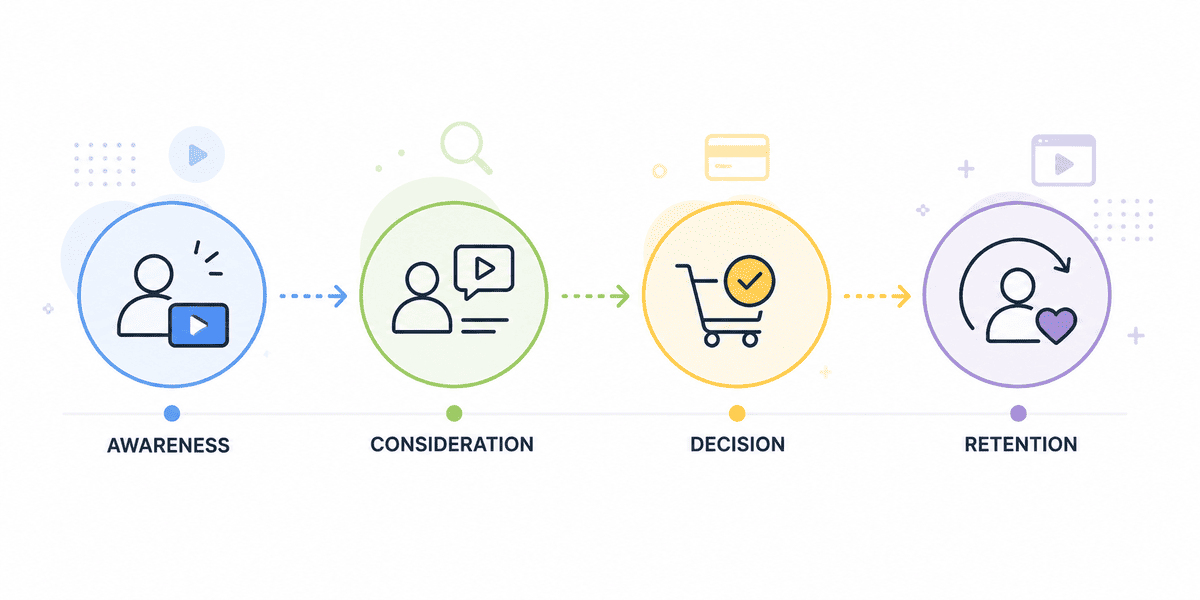
Not every prospect is ready to buy straight away.
Some are only discovering your business, while others are actively comparing suppliers or preparing to make a final decision. A strong video marketing strategy recognises these different stages and provides the right content at the right time.
Awareness
At the awareness stage, your goal is to introduce your business and build credibility.
Useful videos include:
- Brand videos
- Educational videos
- Founder videos
- Behind-the-scenes content
- Social media videos
These videos help potential customers understand who you are and what your business stands for.
Consideration
Once prospects are evaluating their options, they need more detailed information about your products, services, and expertise.
Effective videos include:
- Product demonstrations
- Service explainers
- Case study videos
- Customer testimonial videos
- Frequently asked questions
These videos answer common questions and help prospects understand why your solution may be the right fit.
Decision
At this stage, buyers are close to making a choice but may still need reassurance.
Videos that support decision-making include:
- Personalised proposal videos
- Team introduction videos
- Customer success stories
- Detailed product walkthroughs
These videos reinforce trust and give prospects the confidence to move forward.
Retention and Advocacy
Your relationship with the customer shouldn't end once a sale is made.
Videos can continue to add value by helping customers get the most from your products or services while encouraging long-term loyalty.
Examples include:
- Welcome videos
- Onboarding tutorials
- Training videos
- Product update videos
- Customer education content
Businesses that continue to engage customers after the sale are often better positioned to encourage repeat business and referrals.
Step 4: Choose the Right Types of Videos

Every business is different, which means there isn't a single video that works for everyone.
The most effective video marketing strategies combine different types of content, each designed to support a specific objective and stage of the customer journey.
Brand Videos
Brand videos introduce your business, communicate your values, and help potential customers understand what makes you different.
They're particularly effective for websites, presentations, and awareness campaigns.
Founder Videos
Founder-led videos help audiences connect with the people behind the business.
Sharing your experience, expertise, and company vision can build trust and create a stronger emotional connection with potential customers.
Customer Testimonial Videos
There's no substitute for hearing directly from satisfied customers.
Testimonial videos provide social proof by demonstrating how your business has helped real clients overcome challenges and achieve positive outcomes.
Case Study Videos
Case study videos take testimonials a step further by showing the problem, solution, and measurable results.
They're especially valuable for businesses selling complex services or higher-value solutions.
Product and Service Demonstration Videos
Demonstration videos explain how your products or services work, making complex information easier to understand.
They help reduce uncertainty and answer questions before prospects speak with your sales team.
Recruitment and Company Culture Videos
Video isn't only for attracting customers.
Recruitment and company culture videos help potential employees understand your workplace, values, and team, making them a valuable part of any hiring strategy.
Educational Videos
Educational content positions your business as a helpful resource rather than simply promoting your services.
Examples include:
- How-to videos
- Industry insights
- Frequently asked questions
- Expert advice
- Thought leadership content
These videos often continue attracting viewers long after they're published, making them valuable long-term marketing assets.
Think Like a Library, Not a Campaign
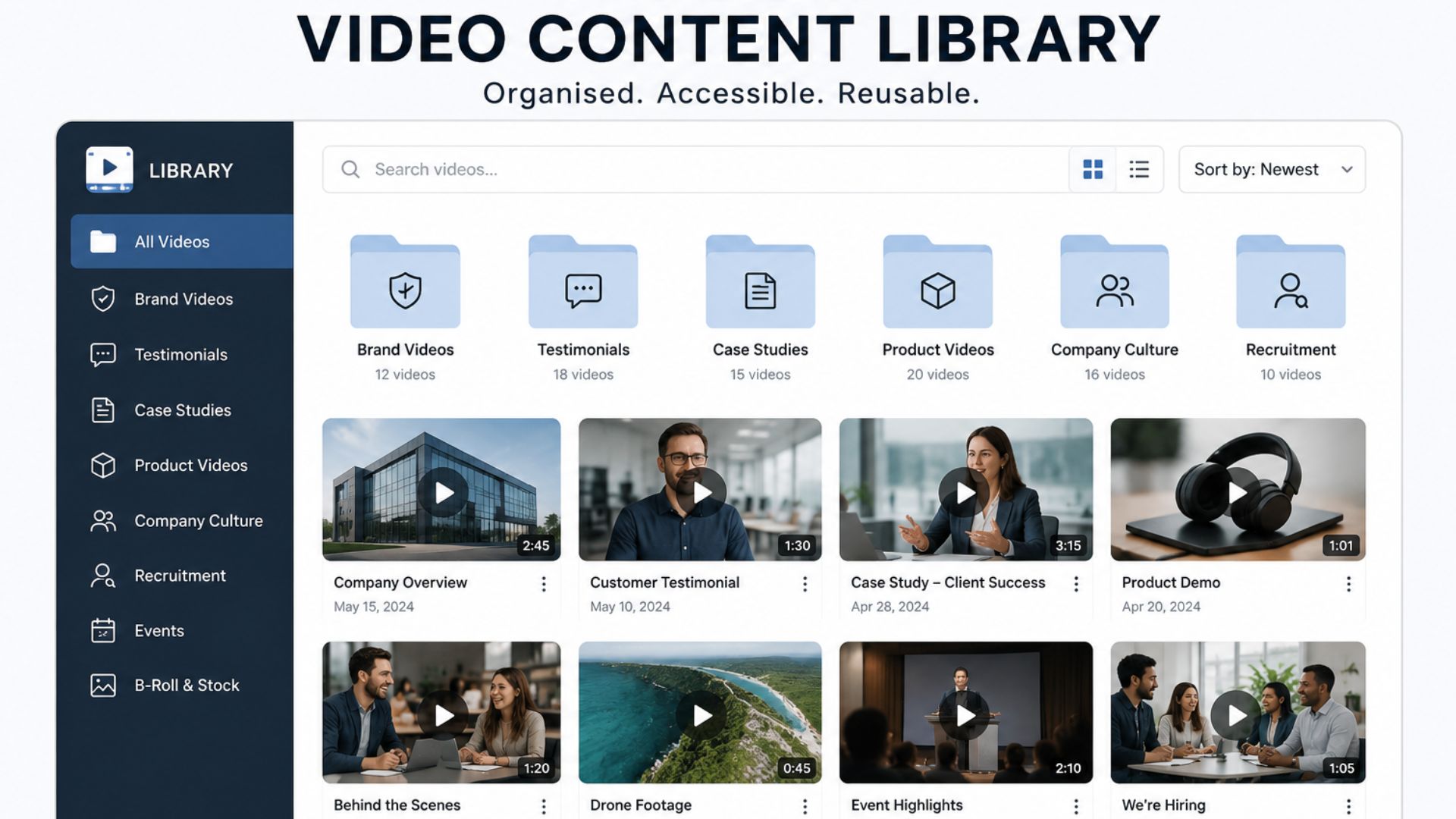
One of the biggest mindset shifts businesses can make is to stop thinking about individual videos and start thinking about building a video library.
Instead of creating one video for one campaign, develop a collection of content that supports different audiences, business goals, and stages of the customer journey. Over time, this approach creates a more flexible marketing resource that your sales, marketing, and recruitment teams can all use in different ways.
Step 5: Plan Your Distribution

Creating great video content is only half the job. To maximise its impact, you also need a plan for how and where each video will be shared.
Different platforms serve different purposes, so your distribution strategy should reflect how your audience discovers and consumes content.
Consider using your videos across:
- Your website – Feature brand videos, service explainers, and customer testimonials on key landing pages.
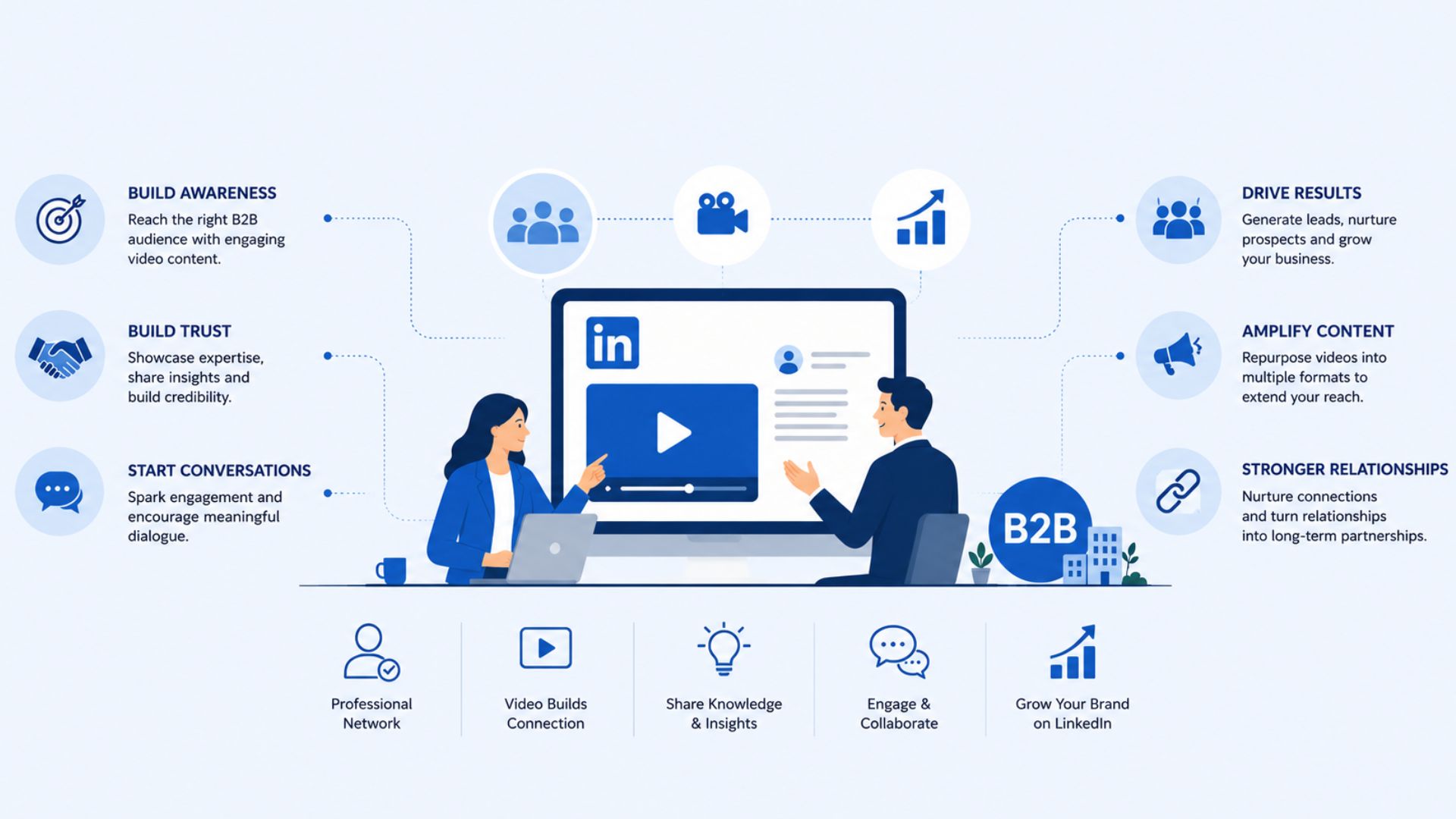
- LinkedIn – Share thought leadership, founder videos, company updates, and case studies to engage professional audiences.
- Email marketing – Include relevant videos in newsletters, lead nurturing campaigns, and sales follow-ups.
- Sales presentations and proposals – Reinforce your message with product demonstrations, customer success stories, or personalised videos.
- YouTube – Create a searchable library of educational content and evergreen resources.
- Paid advertising – Use short, engaging videos to increase awareness and drive qualified traffic.
Rather than publishing a video once and moving on, look for opportunities to reuse and repurpose it across multiple channels. This helps you reach more people while getting greater value from every production.
Step 6: Measure Success

An effective video marketing strategy doesn't end when a video is published. Measuring performance helps you understand what's working, what can be improved, and where to invest your time and budget.
The right metrics will depend on your business goals, but they may include:
- Website traffic
- Qualified enquiries
- Lead generation
- Sales conversions
- Watch time and audience retention
- Click-through rates
- Customer engagement
- Recruitment applications
Avoid focusing solely on vanity metrics such as views or likes. While they can indicate reach, they don't always reflect whether your videos are helping your business grow.
Review your results regularly and use those insights to refine future content. Over time, this continuous improvement will help your strategy become more effective.
Common Video Marketing Strategy Mistakes

Even businesses that invest in high-quality production can struggle to achieve results if the underlying strategy isn't right.
Here are some of the most common mistakes to avoid.
Creating Videos Without a Clear Objective
Every video should support a specific business goal. If you can't explain why a video is being made or what success looks like, it's worth revisiting your strategy before production begins.
Focusing on Your Business Instead of Your Audience
Customers are more interested in how you can solve their problems than hearing about your achievements.
Create videos that answer questions, address challenges, and provide genuine value.
Trying to Be Everywhere at Once
You don't need to publish on every platform.
Focus on the channels your audience already uses, then expand as your strategy develops.
Measuring the Wrong Metrics
High view counts don't always lead to business growth.
Instead, prioritise metrics that align with your goals, such as enquiries, conversions, and customer engagement.
Treating Video as a One-Off Project
The most successful businesses see video as an ongoing part of their marketing strategy rather than a single campaign.
Building a library of evergreen content allows your videos to continue supporting your business long after they're published.
Is Your Current Video Strategy Helping Your Business Grow?
Before planning your next video, take a step back and ask whether your existing content supports your business goals or simply adds to your content library.
The most effective video marketing strategies aren't built around producing more videos—they're built around creating the right videos for the right audience at the right time.
Conclusion
A successful video marketing strategy isn't about creating more content—it's about creating purposeful content that supports your business goals, strengthens customer relationships, and delivers measurable results.
Whether you're just getting started or refining an existing approach, having the right strategy in place will help every video work harder for your business. Explore our video production services, use our instant price calculator for a quick estimate, or get in touch for a no-obligation conversation.
Frequently Asked Questions
What is a video marketing strategy?
A video marketing strategy is a plan for creating, publishing, and measuring video content that supports specific business objectives. It helps ensure every video has a clear purpose, reaches the right audience, and contributes to measurable results.
How do you create a video marketing strategy?
Start by defining your business goals, understanding your audience, mapping content to the customer journey, choosing the right types of videos, planning how they'll be distributed, and measuring their performance. A clear strategy ensures your video content works together to support long-term growth.
How often should a business create video content?
There's no one-size-fits-all answer. The right frequency depends on your goals, audience, and resources. For many businesses, creating a smaller number of high-quality, evergreen videos that can be reused across multiple channels delivers better long-term value than producing frequent content without a clear strategy.
Similar blogs:


















































![How to Write a Promo Video Script (Free Template Included) [2026 Guide]](https://cdn.prod.website-files.com/6226fcc37e2eb518b6e69a7f/69c3804c0b9ea78696bd89e0_covertab11.jpeg)







.jpg)
%20(1)%20(1).jpg)
.jpg)






We'd love to hear from you! Reach out to us today for a chat about our services, pricing, or just to say hello!


