
In today’s oversaturated inboxes, getting your email noticed — let alone opened — is no easy feat. In this article, we’ll explore the power of video in email campaigns, how to embed video content the right way, best practices to maximise performance, and how to track your results. Whether you’re a startup, marketer, or creative agency, using video in your emails can be a game-changer for audience retention and conversions.
Stock Footage vs Original Video: What's the Difference?
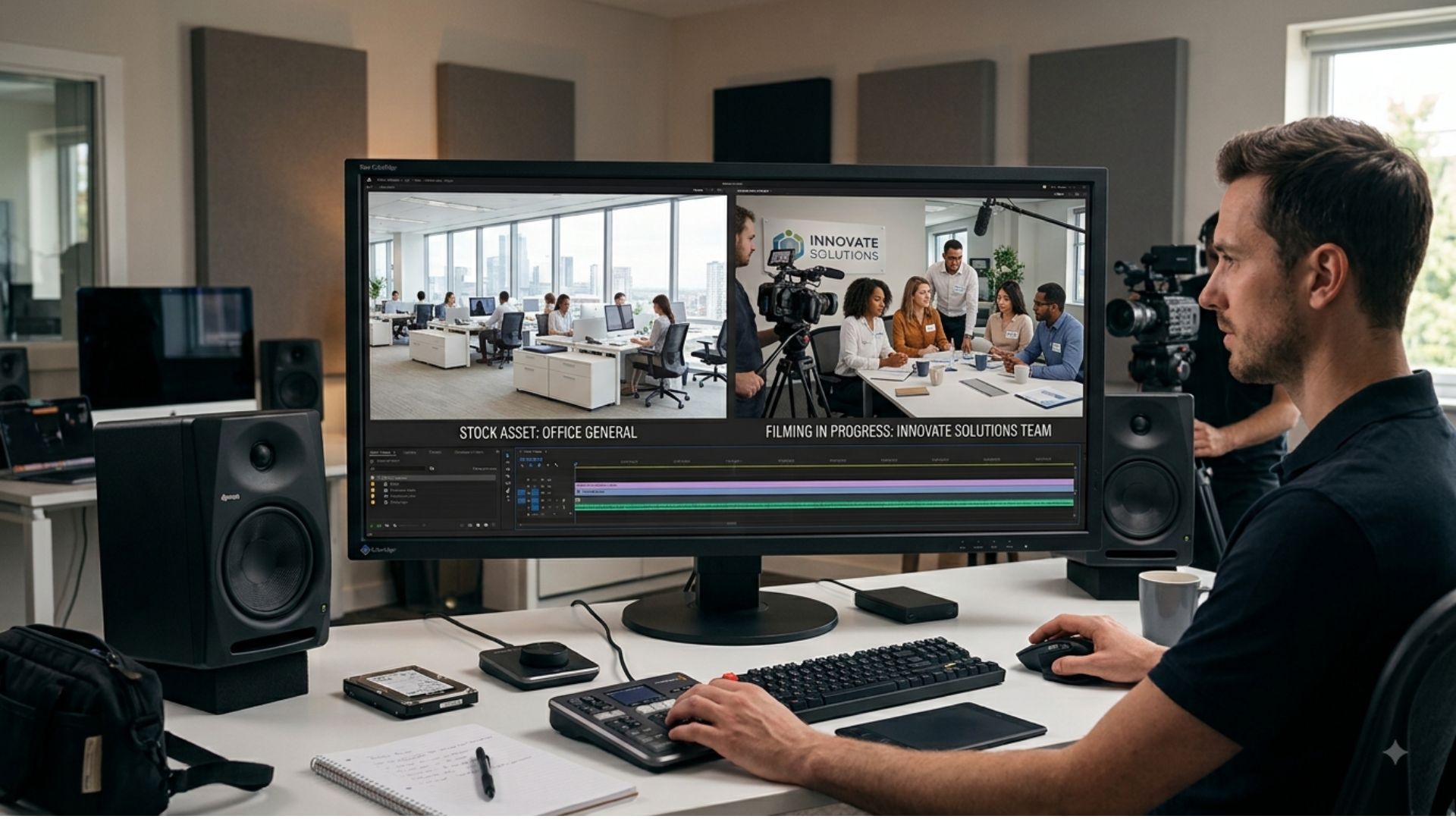
The basic difference is simple.
Stock footage is pre-recorded video that you license for use in your own project. It can show anything from people working in an office to city skylines, landscapes, technology, meetings or everyday activities.
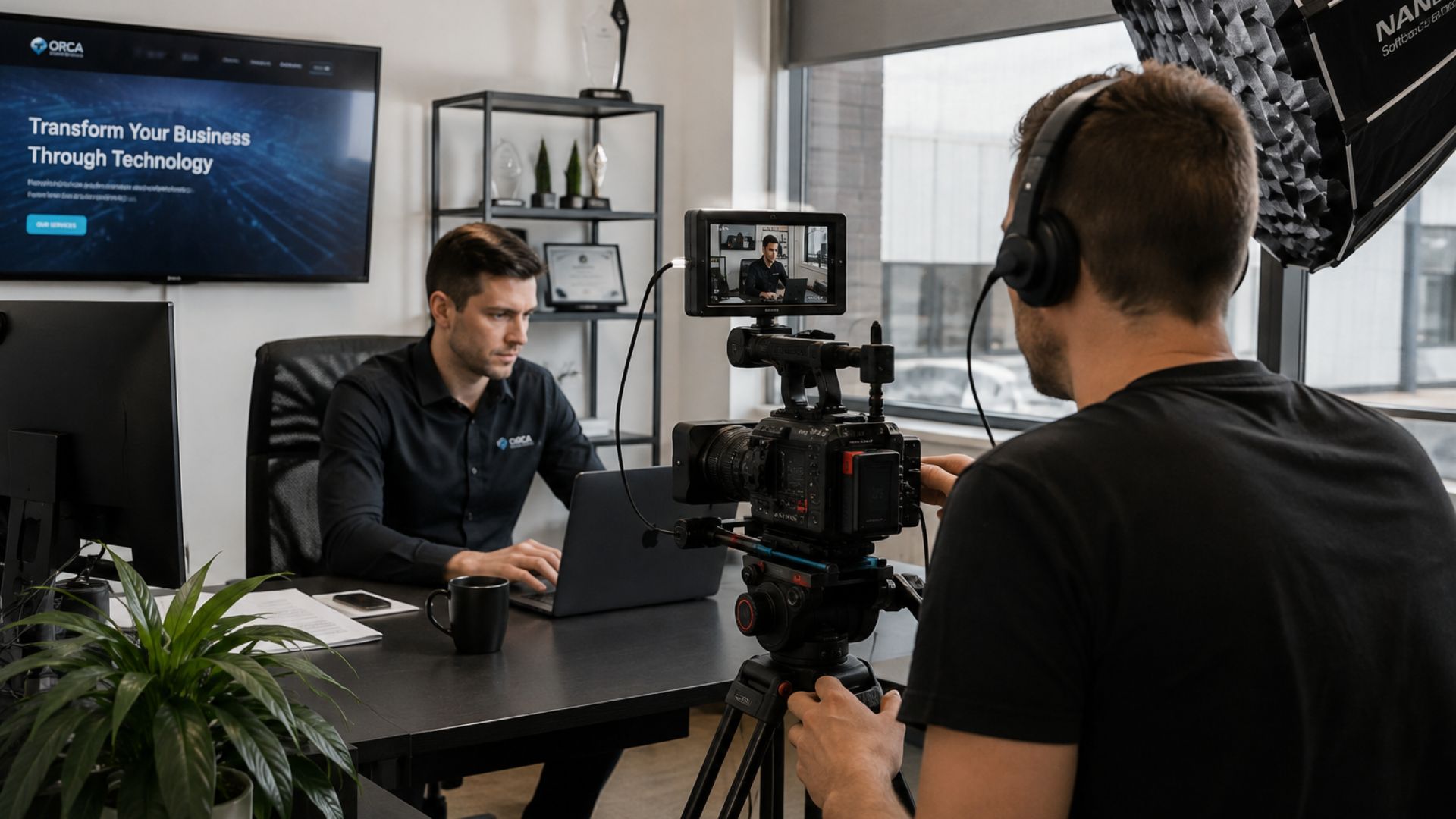
Original video, sometimes called custom or bespoke footage, is filmed specifically for your business. It could feature your team, customers, products, workplace, facilities, projects or processes.
Neither option is automatically better.
Stock footage can be incredibly useful when the visual you need is generic or difficult to capture yourself. Original video becomes more valuable when the thing you're trying to show is unique to your business.
The decision should therefore begin with a simple question:
Does your audience need to see something that only your business can show?
If the answer is yes, original footage is likely to have a stronger role.
Why Does the Choice Matter for Your Brand?

Video is often one of the most visible forms of content a business produces.
It can appear on your website, social media channels, advertisements, presentations, recruitment campaigns, landing pages and sales materials.
That means the footage you use contributes to how people perceive your business.
A generic stock clip of employees having a meeting might communicate “professional workplace”. But it cannot show your actual team, your office, your culture or the way your business operates.
Original footage can.
That distinction becomes particularly important when your competitive advantage is something that needs to be seen rather than simply described.
A manufacturer may need to show its production facility.
A construction company may need to show a project taking shape.
A professional services firm may want potential clients to meet its people.
A product company may need to demonstrate exactly how its product works.
In these situations, original footage can make the video feel much more specific and relevant.
What Is Stock Footage?
Stock footage is existing video content created by filmmakers, production companies or specialist libraries and licensed for use by other businesses.
It can cover an enormous range of subjects.
For example, a business might use stock footage to show:
- A city or location
- People using technology
- General workplace activity
- Travel
- Nature
- Abstract concepts
- Transport
- Lifestyle scenes
- Generic business interactions
One of the biggest advantages is speed.
If you need a shot of a busy city street, you may be able to find suitable footage immediately rather than organising a shoot.
Stock footage can therefore be a useful production tool when used selectively.
The advantages of stock footage
It can save time.
You don't need to organise a location, crew, talent or filming schedule for every shot.
It can reduce production requirements.
For simple projects, stock footage can help create a finished video without requiring every visual to be filmed from scratch.
It provides access to difficult locations.
You may need footage of a location, environment or situation that would be impractical to film yourself.
It works well for generic concepts.
If you're illustrating an abstract idea such as global connectivity, productivity or changing technology, stock footage may provide exactly what you need.
It can supplement original footage.
Stock doesn't have to replace a production shoot. It can fill visual gaps and add variety to a larger project.
What Are the Limitations of Stock Footage?
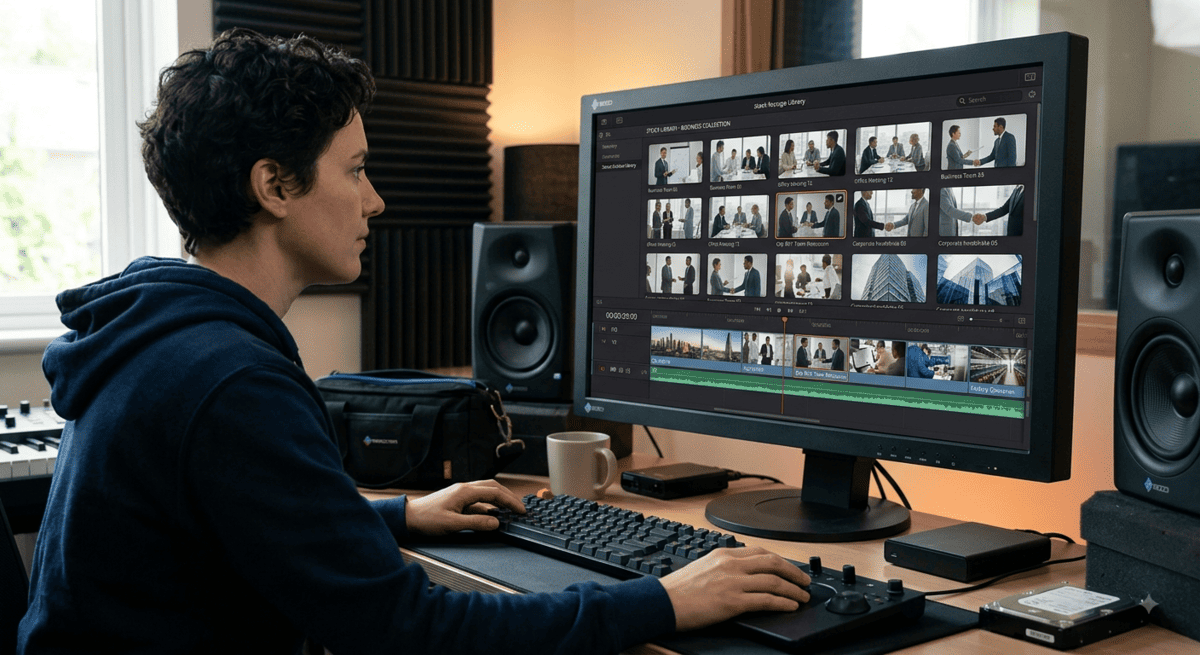
The biggest limitation is also the most obvious:
It isn't unique to your business.
The same clip you select may be available to other companies.
That doesn't automatically make stock footage ineffective. But if your video relies heavily on generic visuals, it can become harder to create a distinctive identity.
There can also be practical limitations.
You may find the perfect concept but not the exact person, environment, action or composition you need.
A stock clip may show “an employee working on a laptop”, for example, but it won't necessarily show the software your business uses, the environment your employees work in or the way your team actually operates.
There is also the risk of visual inconsistency.
Different stock clips can have noticeably different lighting, colour grading, camera movement and production styles. A skilled editor can often minimise these differences, but they still need to be considered.
What Is Original Video?
Original video is footage captured specifically for your brand, campaign or project.
Instead of searching for a generic representation of your business, you create footage that shows the real thing.
That could include:
- Your employees
- Your leadership team
- Your customers
- Your products
- Your facilities
- Your workplace
- Your projects
- Your production process
- Your company culture
- Your locations
- Your day-to-day operations
This gives you far more control over what appears on screen.
It also means the footage can be planned around your actual marketing goals.
If you're launching a product, you can film the product from the angles and perspectives that matter.
If you're recruiting, you can capture your real workplace and employees.
If you're building trust with potential customers, you can film genuine customer experiences.
The Advantages of Original Video
It makes your brand more distinctive
Your business is unique.
Your people, workplace, products and processes aren't available in a stock library.
Showing them gives your audience something they cannot see in a competitor's generic video.
It builds authenticity
Audiences can increasingly recognise when marketing content feels generic.
Real employees speaking naturally, real customers sharing experiences and real locations can make a business feel more human.
Mango Media's current discussion of video marketing trends similarly highlights the growing importance of authentic, human-led content and real employees rather than overly polished or synthetic communication.
It gives you more creative control
With original footage, you can decide:
- Where the scene takes place
- Who appears in it
- What they do
- How the camera moves
- What the environment looks like
- Which products or processes are shown
- How the footage fits your brand
That control can make a significant difference when the video has an important commercial purpose.
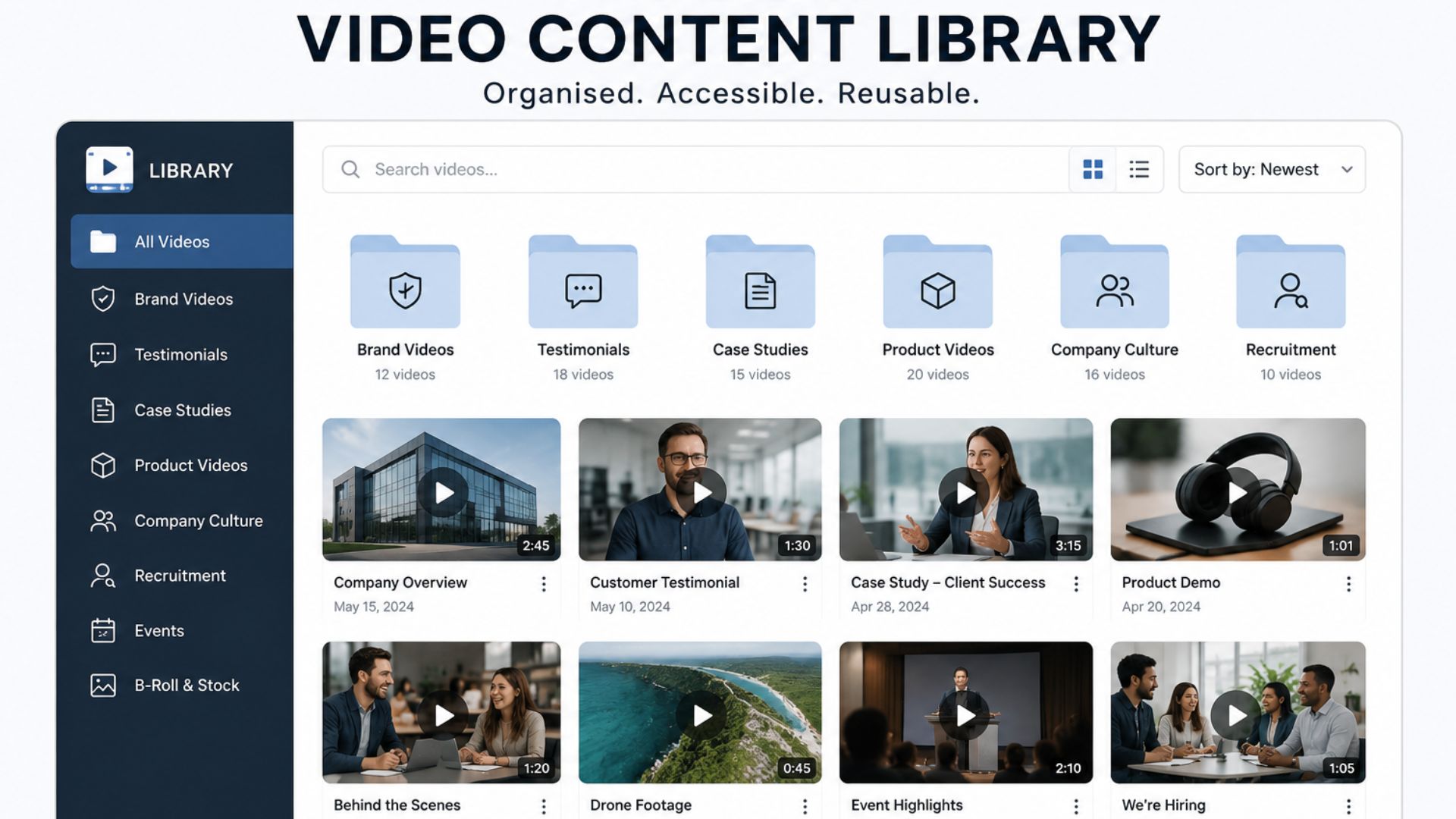
It creates reusable content
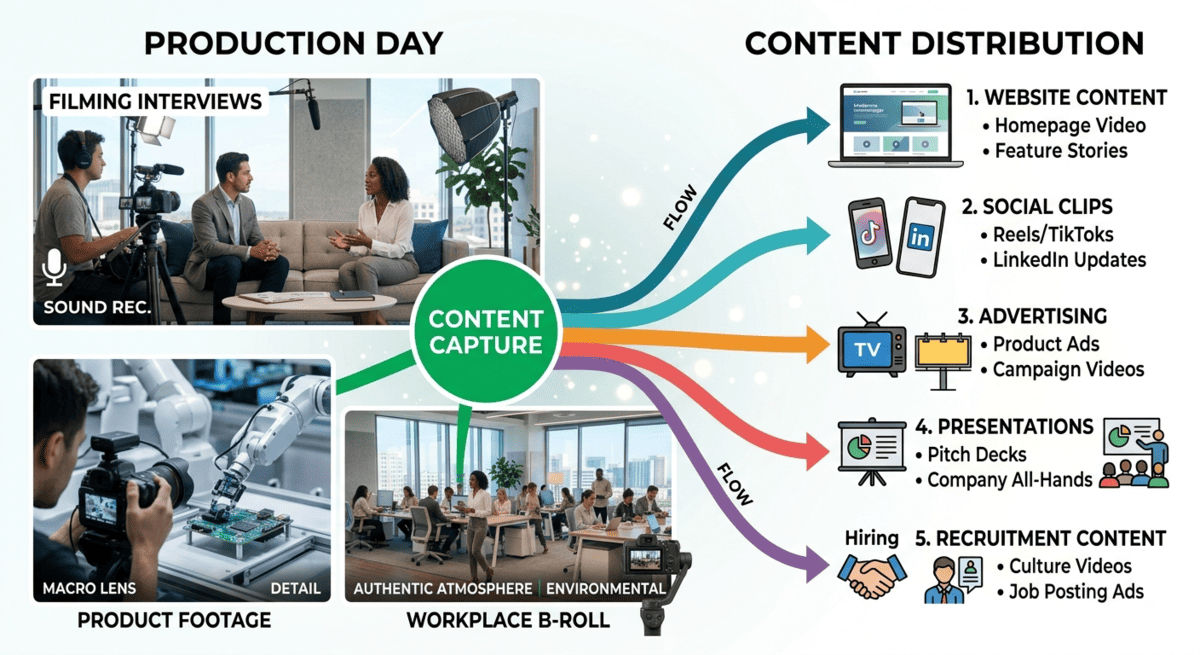
A single production can produce far more than one finished video.
You might capture interviews, B-roll, product demonstrations, photographs and short clips during the same shoot.
Those assets can then potentially be adapted for websites, social media, advertising, presentations and other marketing activity.
Modern production increasingly considers this multi-platform use from the beginning rather than treating the main video as the only deliverable.
Stock Footage vs Original Video: The Key Differences
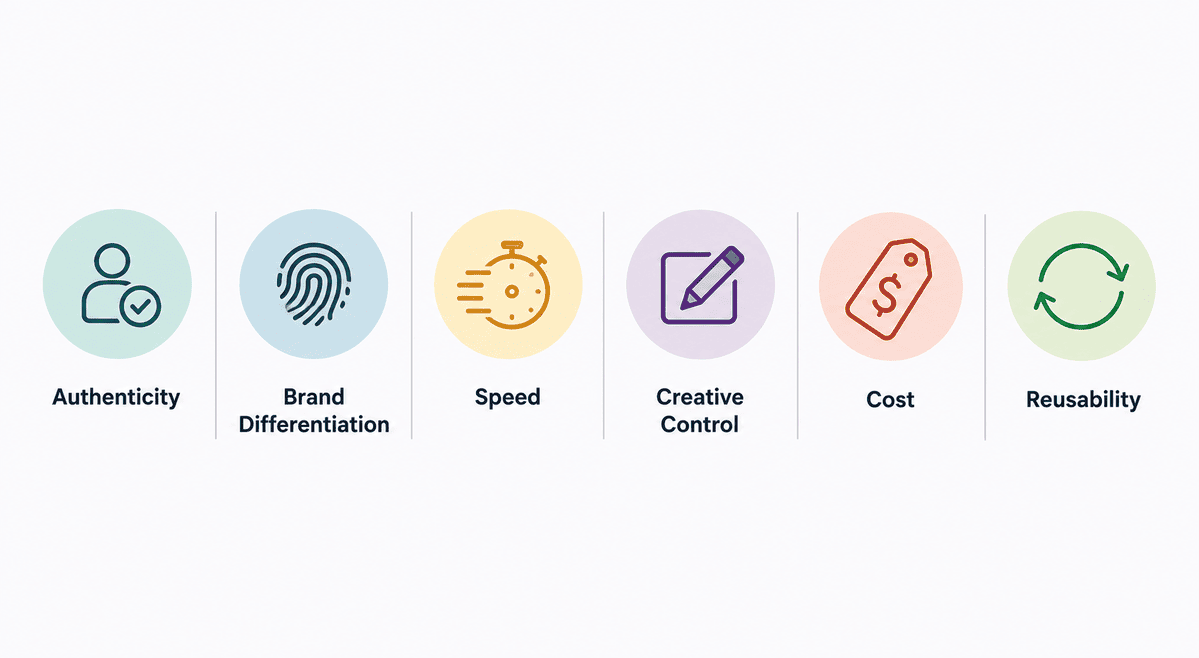
The right choice depends on what you need your video to achieve. Here's how stock footage and original video compare across the factors that matter most to businesses.
Authenticity
Stock footage:
Can look polished and professional, but the people, locations and situations aren't specific to your business. The same or similar footage may also appear in other brands' content.
Original video:
Shows your actual people, products, workplace and processes, giving audiences a more genuine view of your business.
Brand Differentiation
Stock footage:
Useful for communicating broad or generic ideas, but it can make your content feel less distinctive if it's used heavily.
Original video:
Creates visuals that are unique to your business and can help reinforce your brand identity.
Speed & Convenience
Stock footage:
Can be sourced quickly without organising a shoot, making it useful for fast-turnaround projects or supporting visuals.
Original video:
Requires planning, filming and post-production, so it generally takes more time to produce.
Creative Control
Stock footage:
You're limited to what's available in the footage library. You may find something close to what you need, but not necessarily the exact scene or action.
Original video:
You control the location, people, camera angles, actions and overall visual direction, allowing the footage to be created around your specific message.
Cost
Stock footage:
Can reduce filming costs, although licensing, editing and other production expenses still need to be considered.
Original video:
Usually requires a larger upfront investment because it involves planning, filming and post-production.
Reusability
Stock footage:
Can be used effectively within individual projects, but the footage itself isn't exclusive to your brand.
Original video:
Can create a library of brand-specific footage that can be reused across websites, social media, advertising, presentations and future campaigns.
Best Use
Stock footage:
Best suited to generic concepts, supporting B-roll, abstract ideas, quick-turnaround content and situations where filming the subject yourself isn't necessary.
Original video:
Best suited to brand stories, customer testimonials, product demonstrations, recruitment, company culture, case studies and anything that needs to showcase the real business.
The Bottom Line
Stock footage is about finding the right visual. Original video is about creating the right visual for your brand.
And you don't necessarily have to choose one over the other. A well-planned production can combine original footage with carefully selected stock footage, using each where it adds the most value.
When Should Businesses Use Stock Footage?
Stock footage can make sense when the visual itself isn't central to your brand story.
For example, imagine you're producing a video about the importance of digital transformation.
You might need a quick visual representation of:
- Technology
- Data
- Connectivity
- People using devices
- Global business
There may be little benefit in organising a full shoot simply to capture a generic laptop or cityscape.
Stock footage could handle those supporting visuals efficiently.
It's also useful when:
- The budget is limited
- The deadline is short
- You need supplementary B-roll
- The concept is abstract
- The footage is only a small part of the finished video
- A specific location is difficult to access
The important point is that using stock footage isn't a sign of poor production.
The quality depends on how thoughtfully it is selected, edited and integrated into the overall story.
When Should Businesses Invest in Original Video?
Original footage becomes much more valuable when your business itself is the story.
If you're saying:
“Our people are what make us different.”
Show your people.
If you're saying:
“Our manufacturing process sets us apart.”
Show the process.
If you're saying:
“Customers trust us because of the way we work.”
Show real customer experiences.
If you're launching a product that has a particular design or functionality, show the actual product rather than a generic representation of it.
Original video is particularly useful for:
- Corporate brand films
- Customer testimonials
- Recruitment campaigns
- Product demonstrations
- Case studies
- Company culture videos
- Advertising campaigns
- Facility tours
- Project showcases
- Founder and leadership videos
These are situations where specificity matters.
Can You Combine Stock Footage and Original Video?
Absolutely.
In many cases, the best approach isn't stock versus original. It's stock plus original.
A professionally produced video can use original footage for the most important brand-specific moments and stock footage where a generic visual makes more sense.
For example, a corporate video might use:
Original footage for:
- The company's team
- Its office
- Customer interviews
- Products
- Manufacturing processes
Stock footage for:
- Global locations
- Generic technology concepts
- Transitional shots
- Abstract ideas
This hybrid approach can give you the authenticity of original production without requiring every single frame to be filmed from scratch.
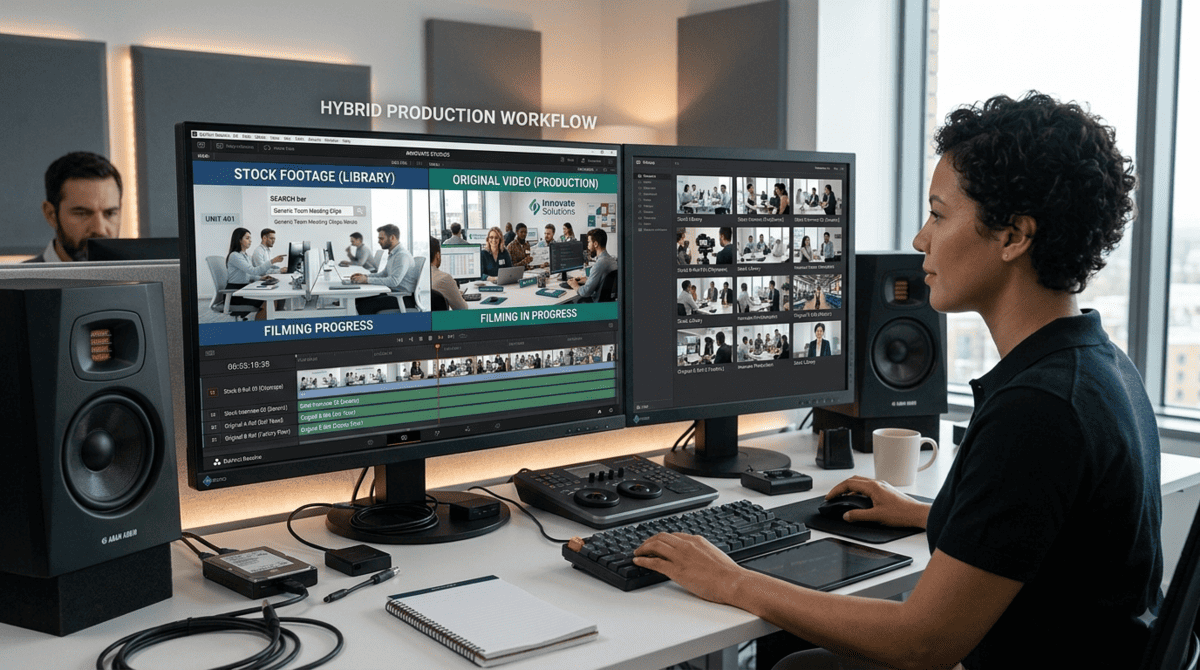
Mango's own 2026 video marketing trends article identifies hybrid production models, including stock footage integration, as one way businesses can scale content production.
What About Cost?
Cost is naturally one of the biggest considerations.
Stock footage may appear cheaper because you aren't paying for a dedicated shoot, but the total cost of a video isn't determined by footage alone.
You still need to consider:
- Licensing
- Sourcing suitable footage
- Editing
- Voiceover
- Music
- Graphics
- Colour correction
- Captions
- Revisions
- Distribution versions
With original production, the investment can be higher because you're paying for the planning, people, equipment, filming and post-production required to create something specifically for your business.
But it's important to think beyond the initial production price.
If the footage can be used across your website, social channels, advertising, sales presentations and future campaigns, the value of the production can extend well beyond the original video.
The question isn't simply:
“Which option costs less?”
It should be:
“Which option gives us the right visual assets for what we're trying to achieve?”

Which Option Is Better for Different Business Videos?
There isn't one answer for every type of video.
Corporate brand videos
Original video is usually the stronger choice.
Your people, culture, workplace and story are what make the film specific to your organisation.
Product videos
Original footage is generally preferable.
Customers need to see the actual product and how it works.
Customer testimonials
Original video is essential.
The value comes from hearing and seeing a real customer explain their experience.
Social media content
Either can work.
Short-form content can combine original footage, graphics and selected stock depending on the objective.
Educational videos
A combination can work well.
Original presenters and demonstrations can be supported with stock footage where appropriate.
Brand advertising
Original footage is often more valuable.
Advertising relies heavily on distinctive visual identity, storytelling and brand recognition.
Recruitment videos
Original footage is the clear choice.
Potential employees want to see the people and environment they may actually be joining.
How to Decide Which Approach Is Right for Your Brand
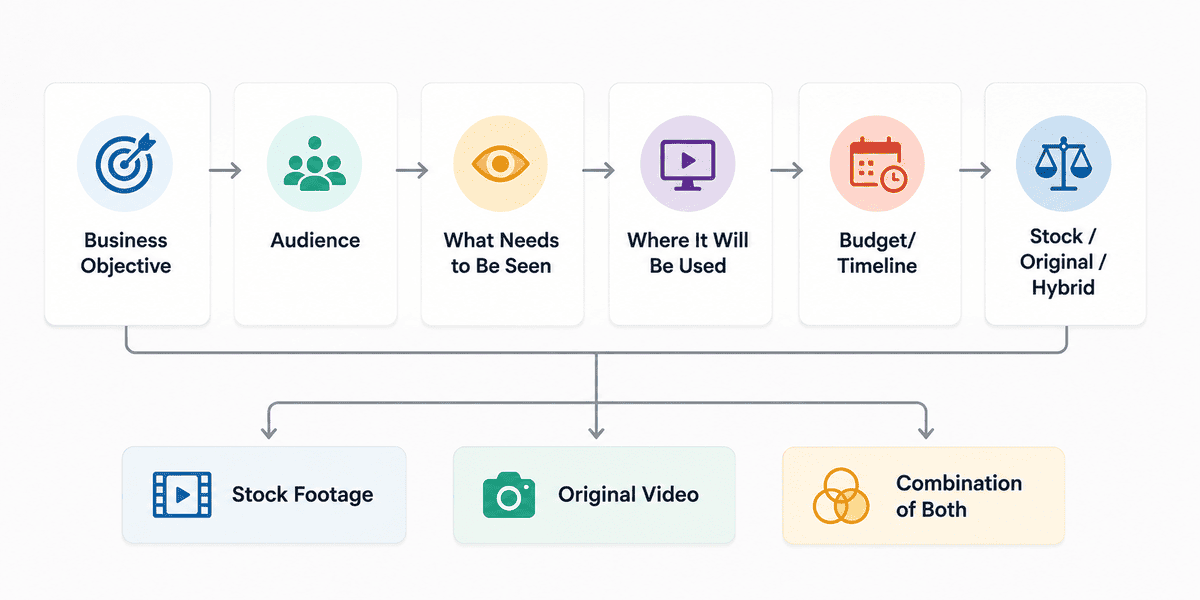
Before choosing stock or original footage, ask yourself these questions.
1. Does the audience need to see our actual business?
If yes, prioritise original footage.
2. Is the visual generic or brand-specific?
Generic concepts may be suitable for stock.
Unique products, people and processes usually need original footage.
3. How important is authenticity?
If trust and human connection are central to the campaign, real people and real environments can make a stronger impression.
4. Where will the video be used?
A one-off internal presentation may have different requirements from a flagship homepage video or national advertising campaign.
5. Will we need more content later?
If you expect to produce multiple videos, it may make sense to capture a wider range of original footage during one production.
6. What is the real objective?
Don't choose footage based purely on what looks good.
Start with what the video needs to accomplish.
A strong production process begins with questions about purpose, audience, distribution and desired action before moving into filming.
Don't Let Budget Alone Make the Decision
It's understandable to compare stock footage and original video primarily on price.
But choosing the cheapest option isn't necessarily the same as choosing the most cost-effective option.
Imagine a company spends weeks creating a marketing campaign around its brand, only to use generic stock footage that doesn't accurately represent the business.
The production may have been inexpensive, but the visual result could make the campaign less distinctive.
On the other hand, paying to film every possible visual isn't always sensible either.
If a generic stock shot communicates an idea perfectly, there's no reason to organise an expensive shoot simply to recreate it.
The smarter approach is to ask:
Where will original footage add real value, and where will stock footage do the job just as well?
That is where good production planning matters.
The Real Value of Original Video
The strongest argument for original video isn't simply that it looks better.
It's that it can show something only your business can show.
A competitor can download a similar stock office scene.
They can't download your team.
They can't download your manufacturing process.
They can't recreate your customer's genuine experience.
They can't reproduce the exact environment where your work happens.
That makes original footage particularly powerful for brands whose people, products, expertise or process are central to their competitive advantage.
And when a production is planned properly, the value doesn't end when the main video is delivered.
A well-planned shoot can create a bank of footage that can be turned into multiple pieces of content over time. Professional production teams already treat B-roll and supporting footage as important assets because they can improve storytelling, provide editing flexibility and support additional content formats.
From Choosing Footage to Choosing the Right Production Approach
If you're deciding between stock footage and original video, the next step isn't necessarily to book a shoot or start searching a stock library. First, look at the message you need to communicate, the audience you're trying to reach and the parts of your business that are worth showing; from there, it becomes much easier to determine where original footage will add value and where stock can fill the gaps.
Conclusion
Stock footage can be an efficient and valuable part of video production, particularly when you're illustrating generic ideas or adding supporting visuals. But when your people, products, customers, locations or processes are central to the story, original footage gives your brand something stock footage can't: a visual identity that belongs to you.
If you're unsure whether your next project needs original footage, stock footage or a combination of both, the team at Mango Media can help you choose an approach that fits your goals, audience and budget. Explore our video production services, use our instant price calculator for a quick estimate, or get in touch for a free consultation.
Frequently Asked Questions
Is stock footage better than original video?
Neither is universally better. Stock footage can be useful for generic visuals, quick-turnaround projects and supplementary B-roll, while original video is usually more valuable when a business needs to showcase its people, products, locations or processes. Many projects can benefit from combining both.
Is original video worth the cost for a business?
Original video can be worth the investment when the footage needs to communicate something unique about your business or support an important marketing, recruitment, advertising or brand objective. The value also increases when footage can be repurposed across multiple channels and campaigns.
Can businesses use stock footage in professional videos?
Yes. Stock footage can be used effectively in professional business videos when it is appropriately licensed, carefully selected and integrated into the wider visual style. It can work particularly well as supporting footage alongside original video, graphics, interviews and other brand-specific content.
Similar blogs:
























![How to Write a Promo Video Script (Free Template Included) [2026 Guide]](https://cdn.prod.website-files.com/6226fcc37e2eb518b6e69a7f/69c3804c0b9ea78696bd89e0_covertab11.jpeg)


.jpg)
%20(1)%20(1).jpg)
.jpg)






We'd love to hear from you! Reach out to us today for a chat about our services, pricing, or just to say hello!


