
In today’s oversaturated inboxes, getting your email noticed — let alone opened — is no easy feat. In this article, we’ll explore the power of video in email campaigns, how to embed video content the right way, best practices to maximise performance, and how to track your results. Whether you’re a startup, marketer, or creative agency, using video in your emails can be a game-changer for audience retention and conversions.
The B2B Buyer Journey Has Changed
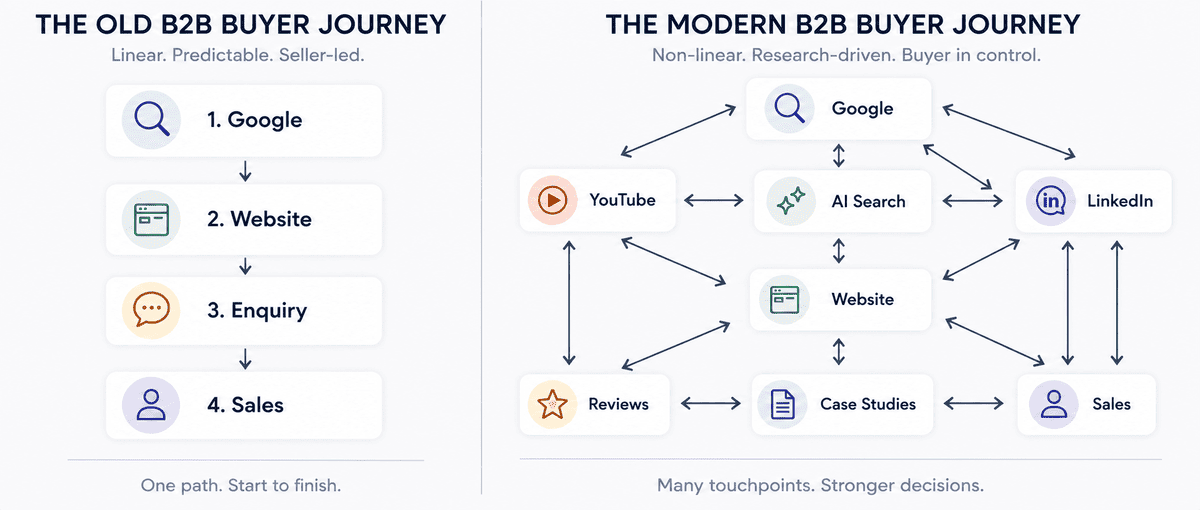
For years, the typical B2B journey looked something like this:
Google → Website → Enquiry → Sales
A potential customer had a problem, searched for a solution, found your website and eventually contacted your sales team.
That journey still happens. But buyers now have far more ways to research a business before they ever make contact.
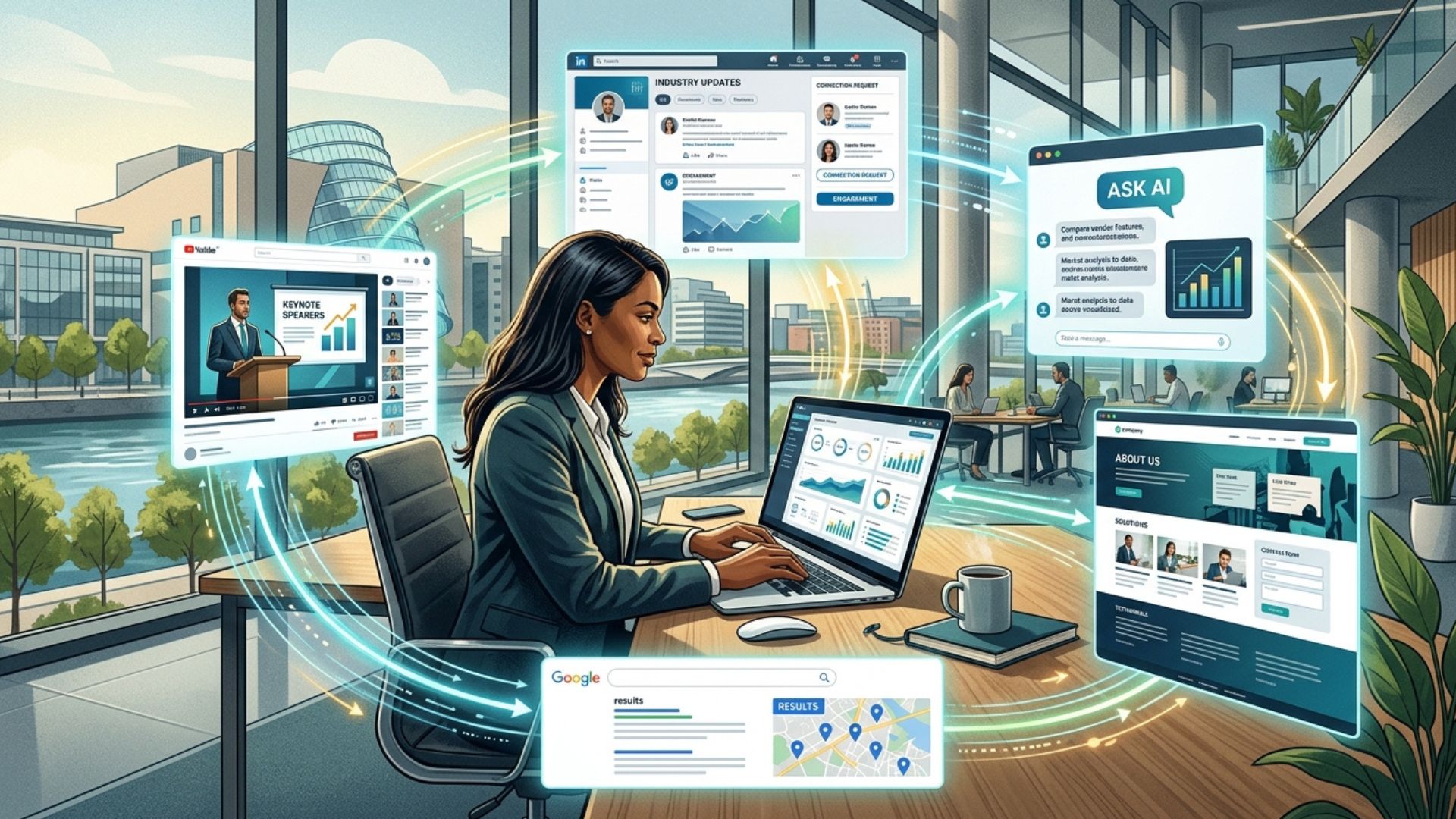
A potential customer might discover your company through Google, watch an expert video on YouTube, look up the people behind the business on LinkedIn, read a customer case study and then use an AI search tool to compare different options.
They might do this over several days or weeks, and not necessarily in that order.
LinkedIn's 2026 B2B research reports that 94% of B2B buyers use AI tools during research, while 63% say short-form social video helps inform buying decisions. It also reports that around 60% of the buying journey is complete before vendor contact.
The implication for businesses is simple:
Your marketing needs to help buyers before they are ready to talk to you.
What Does the New B2B Buyer Journey Look Like?
There isn't one fixed path that every buyer follows.
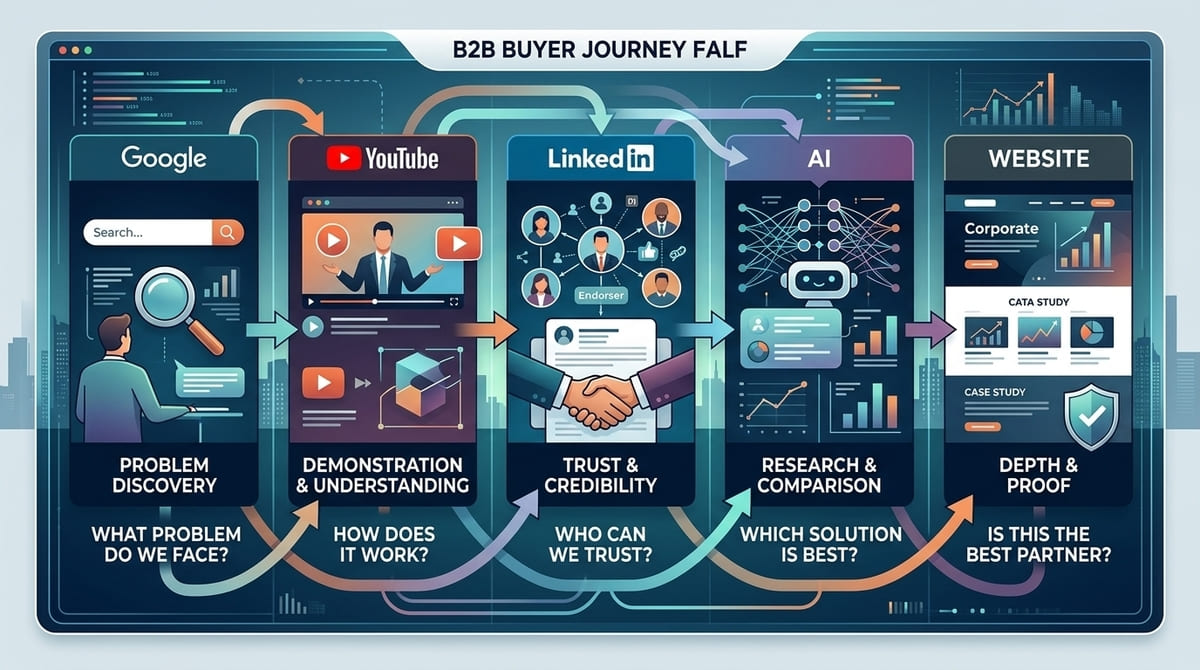
Instead, think about the journey as a series of questions.
Google: "I have a problem."
The buyer is trying to understand what they need.
YouTube: "Show me."
They want to see how something works or hear someone explain it.
LinkedIn: "Can I trust you?"
They are checking expertise, reputation and the people behind the business.
AI: "Help me decide."
They want to explore a complicated question, compare options or understand what to look for.
Your website: "Tell me more."
They are looking for services, evidence, case studies and more detail.
The platforms aren't necessarily stages that happen in this exact order. They're different places where the same buyer can look for answers.
Your goal isn't to force people through a fixed funnel.
It's to make sure your business has something useful to say wherever they choose to research.
Google: "I Have a Problem"
Google is often where B2B research starts.
A potential customer may not know your company yet. They may not even know exactly which service they need.
They're simply trying to solve a problem.
For example:
- How much does corporate video production cost?
- How do I create better recruitment videos?
- What should I look for in a video production company?
- How can video improve B2B marketing?
- What makes a good product demonstration?
These searches reveal intent.
The person isn't necessarily ready to buy. But they're trying to understand something that could eventually lead to a purchase.
This is where educational content can do a lot of work.
Businesses can create:
- How-to guides
- Expert explainers
- FAQs
- Comparison content
- Case studies
- Product demonstrations
- Industry insights
Video is particularly useful when a subject is easier to understand when someone explains or demonstrates it.
Mango's existing guide on using video for Google SEO explores how video can support search visibility and website content.
But ranking on Google is only the beginning.
Answer the Next Question Too
Imagine someone searches:
"How much does a corporate video cost?"
You answer the question.
But what do they ask next?
"What affects the price?"
Then:
"What should I expect from a production company?"
Then:
"How do I choose the right company?"
Strong B2B content anticipates those next questions.
Instead of producing isolated articles and videos, you build a trail of useful information that helps a buyer move from curiosity towards confidence.
YouTube: "Show Me"
At some point, reading isn't enough.
The buyer wants to see something.
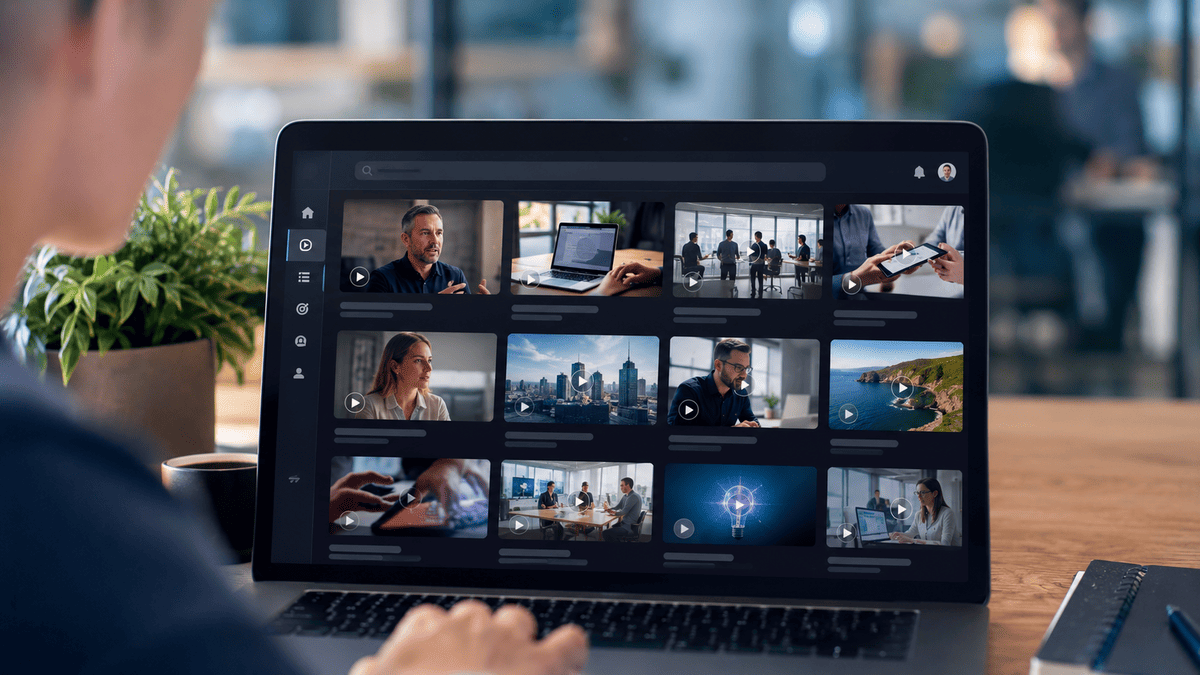
They might want to understand a technical process, see a product in action, hear directly from an expert or learn how a service works.
That's where YouTube becomes particularly valuable.
For B2B businesses, the opportunity isn't simply to upload polished promotional videos. It's to answer the questions buyers are actually asking.
Useful B2B YouTube Content Includes:
Expert explainers
Put a knowledgeable person in front of the camera and answer a question customers regularly ask.
Product demonstrations
Show how a product works rather than relying entirely on written descriptions.
Process videos
Walk viewers through something complicated.
Customer stories
Show how another business approached a real problem.
Tutorials
Help potential customers understand how to do something.
Industry commentary
Give your perspective on developments affecting your customers.
FAQs
Turn common sales questions into useful evergreen videos.
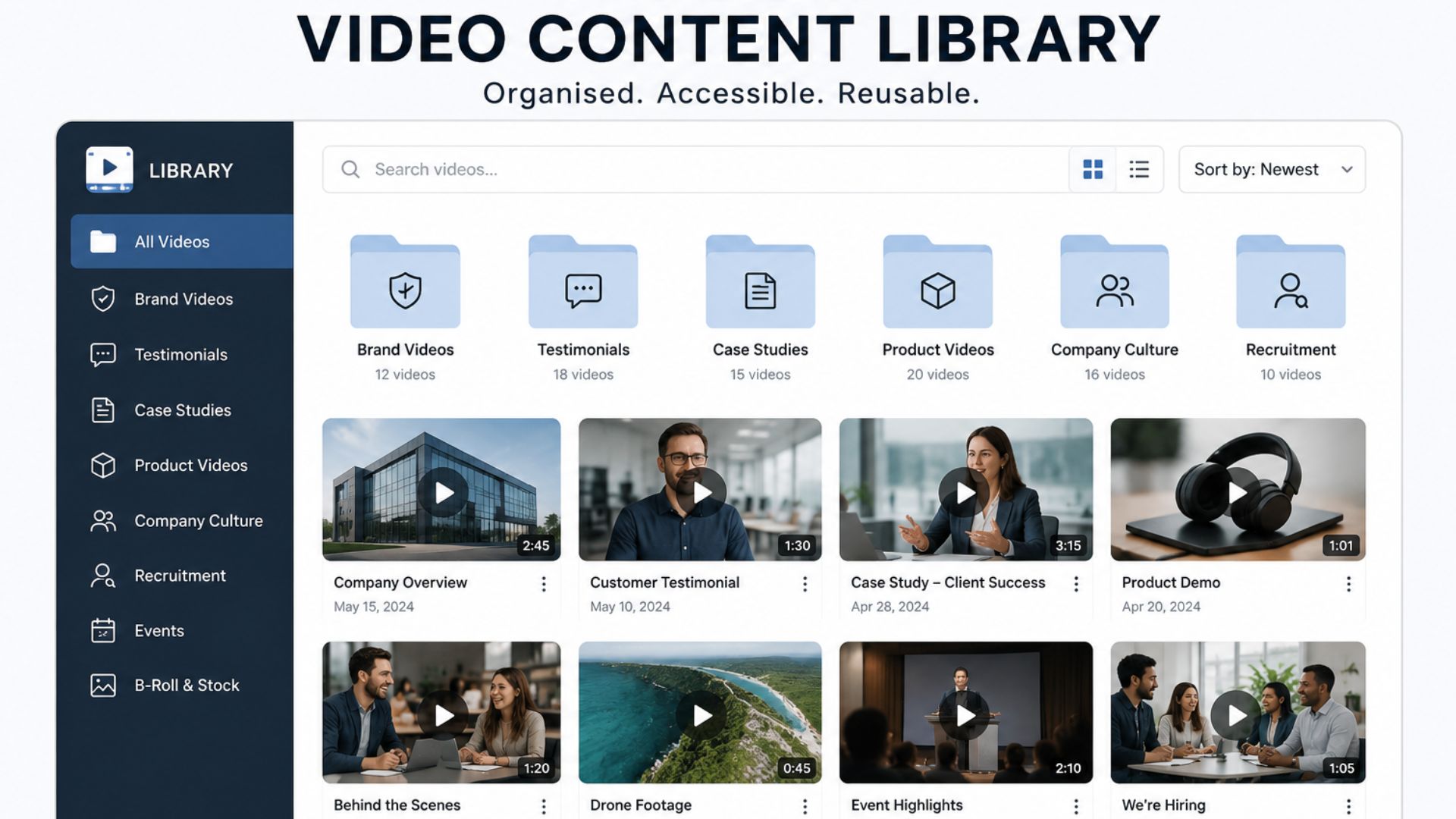
The aim is to create a resource library, not just a collection of adverts.
A buyer may not remember your latest promotional campaign. They may remember the company that clearly explained the problem they were trying to solve.
LinkedIn: "Can I Trust You?"
Imagine a potential customer has watched one of your videos.
They understand what you do.
But they're still not ready to contact you.
So they look you up on LinkedIn.
They may check:
- Who runs the company?
- What does the leadership team talk about?
- Do the company's experts understand the industry?
- Have they worked with businesses like mine?
- Does the company appear credible?
- Are there real people behind the brand?
This is a different question from the one they asked on Google.
Google can help answer "Can you help me?"
LinkedIn can help answer "Can I trust you?"
That's one reason LinkedIn is particularly relevant to B2B businesses.
Mango's existing content on video marketing trends highlights LinkedIn as an important channel for B2B video, including founder insights, industry commentary, client stories and recruitment content.
The content doesn't need to be a stream of corporate announcements.
It can show the thinking behind the business.
For example:
"Here's the biggest mistake we're seeing businesses make with..."
Or:
"Three things businesses should consider before..."
Or:
"Here's what we'd recommend if you're planning..."
This gives potential customers a reason to recognise your expertise before they've ever spoken to your sales team.

AI Search: "Help Me Decide"
This is the newest part of the journey.
Instead of searching for a list of companies, a buyer can increasingly ask an AI-powered search experience a more detailed question.
For example:
"What should I look for when choosing a corporate video production company?"
Or:
"What type of video would work best for a B2B technology company?"
Or:
"What should I consider before hiring a video production company in Ireland?"
The question is often longer and more conversational than a traditional search query.
The user isn't simply looking for a webpage. They're asking for help researching a decision.
Google's current Search direction reflects this shift. Its AI Mode is designed for more complex questions, follow-ups and exploration, with Google reporting that AI Mode queries are significantly longer than traditional searches.
Don't Try to "Write for AI"
It can be tempting to ask:
"How do we get AI to recommend our business?"
But that's not the best starting point.
Instead, ask:
"Does our online presence contain enough useful information for someone — or an AI system — to understand our business properly?"
That means clearly communicating:
- What you do
- Who you work with
- What problems you solve
- What industries you understand
- What makes your approach different
- What projects you've delivered
- What your customers say
- What your experts know
This is where original expertise becomes particularly valuable.
Generic information is easy to generate.
First-hand knowledge is much harder to replicate.
One Content Strategy, Not Four
Businesses can easily look at this and think:
Google strategy
plus
YouTube strategy
plus
LinkedIn strategy
plus
AI strategy
equals four times the workload.
It doesn't have to.
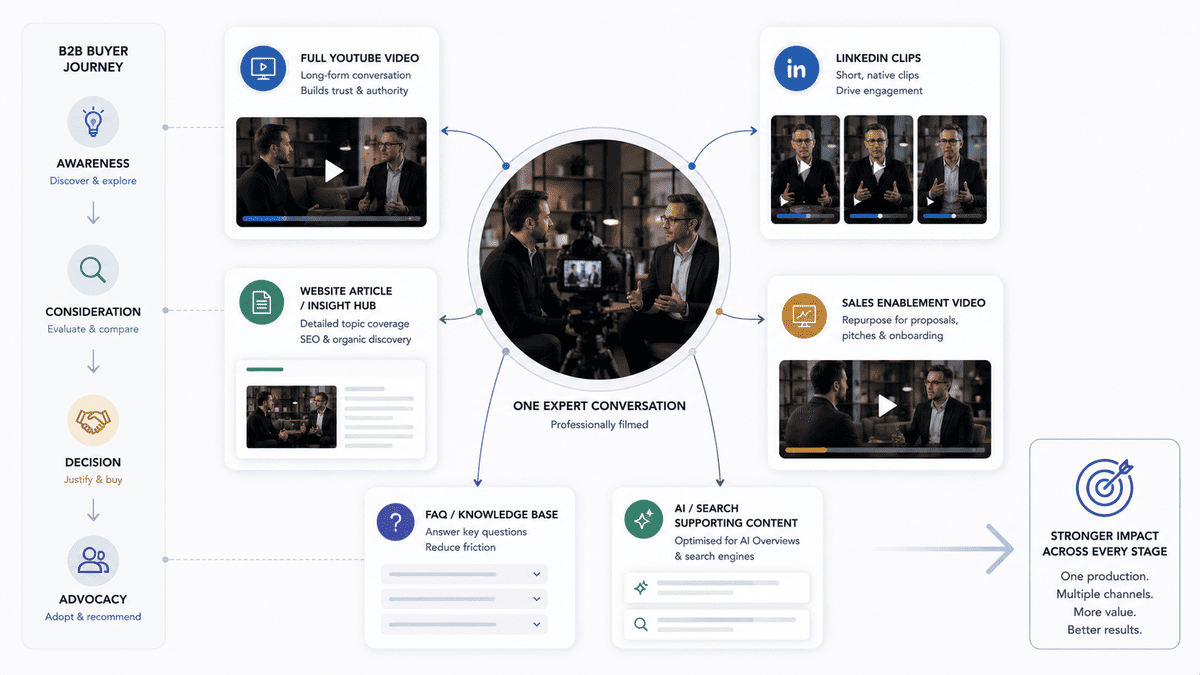
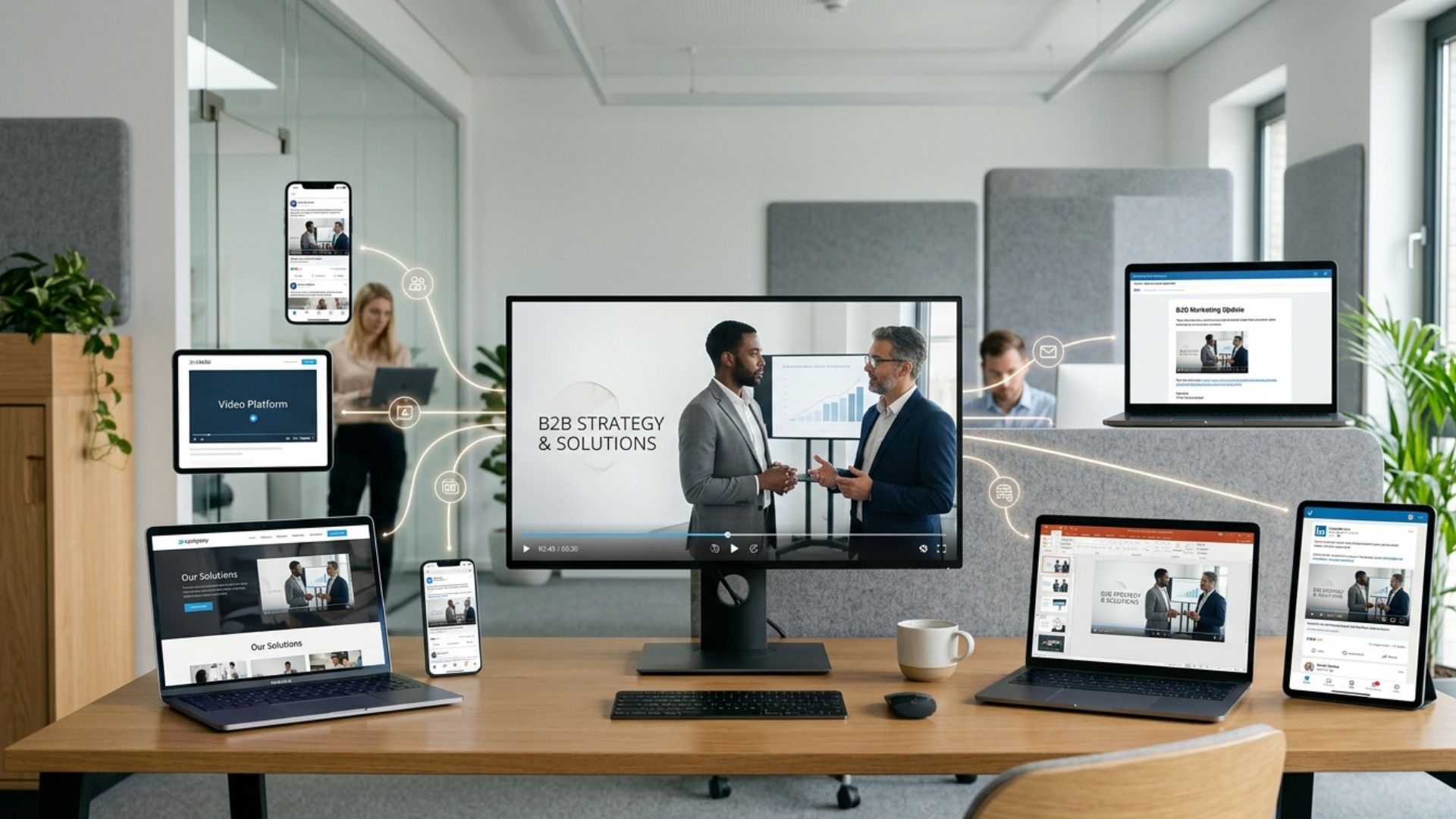
The better approach is to create one strong core piece of content and adapt it for different parts of the buyer journey.
Imagine an Irish engineering company has an expert who can explain a complicated industry issue better than anyone else in the business.
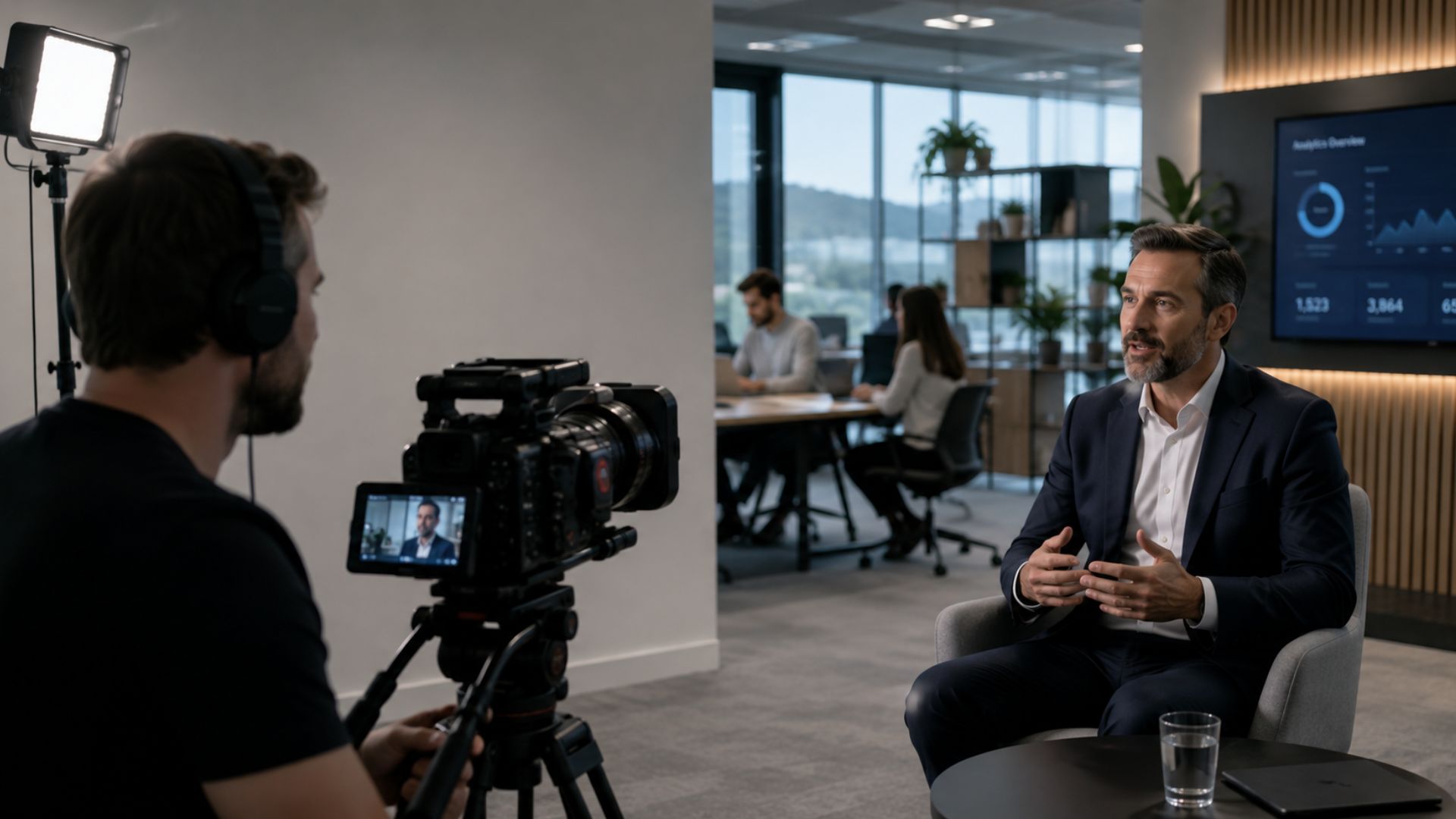
Film a 30-minute conversation.
That could become:
YouTube
A full expert discussion.
Website
A detailed article answering the main topic.
Several short clips featuring the strongest insights.
AI and search visibility
Supporting FAQs, expert information and case studies that provide context around the subject.
Sales
A shorter version that a salesperson can send to a prospect.
One production can therefore become the foundation of a much larger content ecosystem.
And when working with businesses, it is often worth planning these uses before filming begins. The more clearly you know what the footage needs to achieve, the more value you can get from the production afterwards.
Start With Buyer Questions, Not a Content Calendar
A content calendar is useful for scheduling.
But starting with:
"What should we post this week?"
can lead to disconnected content.
Instead, ask:
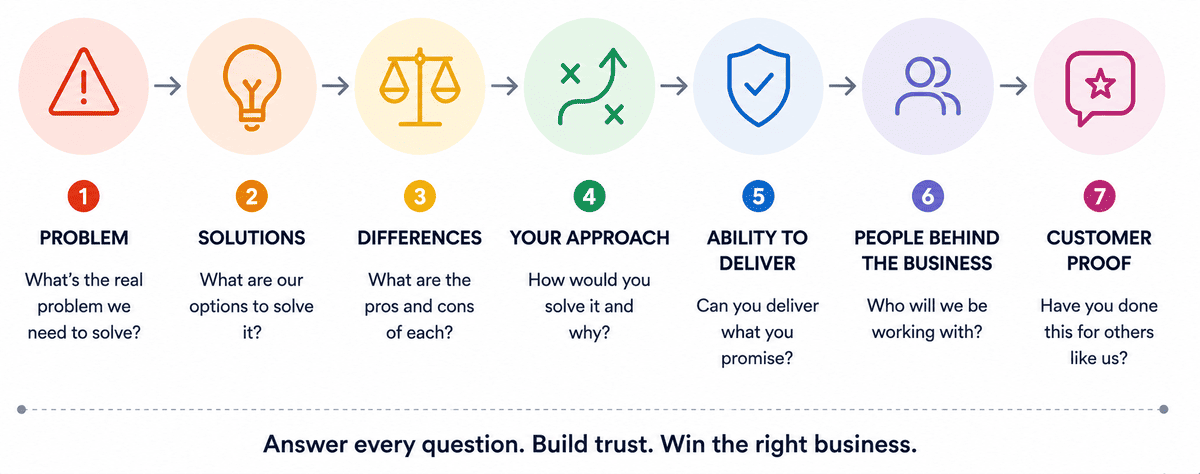
"What does our customer need to know before they're comfortable choosing us?"
Perhaps they need to understand:
The problem
↓
The possible solutions
↓
How those solutions differ
↓
Your approach
↓
Whether you can deliver
↓
Who is behind the business
↓
What your customers think
Those questions can then become blogs, videos, LinkedIn posts, case studies, FAQs and sales content.
That is a much stronger foundation for a B2B content strategy than simply trying to fill a publishing schedule.
What Video Content Should B2B Businesses Create?
You don't need hundreds of videos.
A focused library can cover several important buyer questions.
1. Educational Videos
Answer questions people ask before they know which supplier they need.
Best for: discovery and early research.
Examples:
- How does X work?
- What does X cost?
- What should businesses consider before doing X?
2. Expert Videos
Let people inside your business share their knowledge.
Best for: authority and trust.
Examples include expert interviews, industry commentary, predictions and advice.
3. Product or Service Demonstrations
Show what your business actually does.
Best for: consideration.
This could include product walkthroughs, service explainers or process demonstrations.
4. Customer Stories
Give buyers evidence rather than claims.
Best for: evaluation and trust.
Show the customer's problem, the approach taken and the result.
5. People and Brand Content
Show the people and environment behind the business.
Best for: familiarity and credibility.
This can be particularly useful when several businesses offer similar services.
6. Sales Enablement Content
Give salespeople videos they can actually use.
Best for: later-stage evaluation.
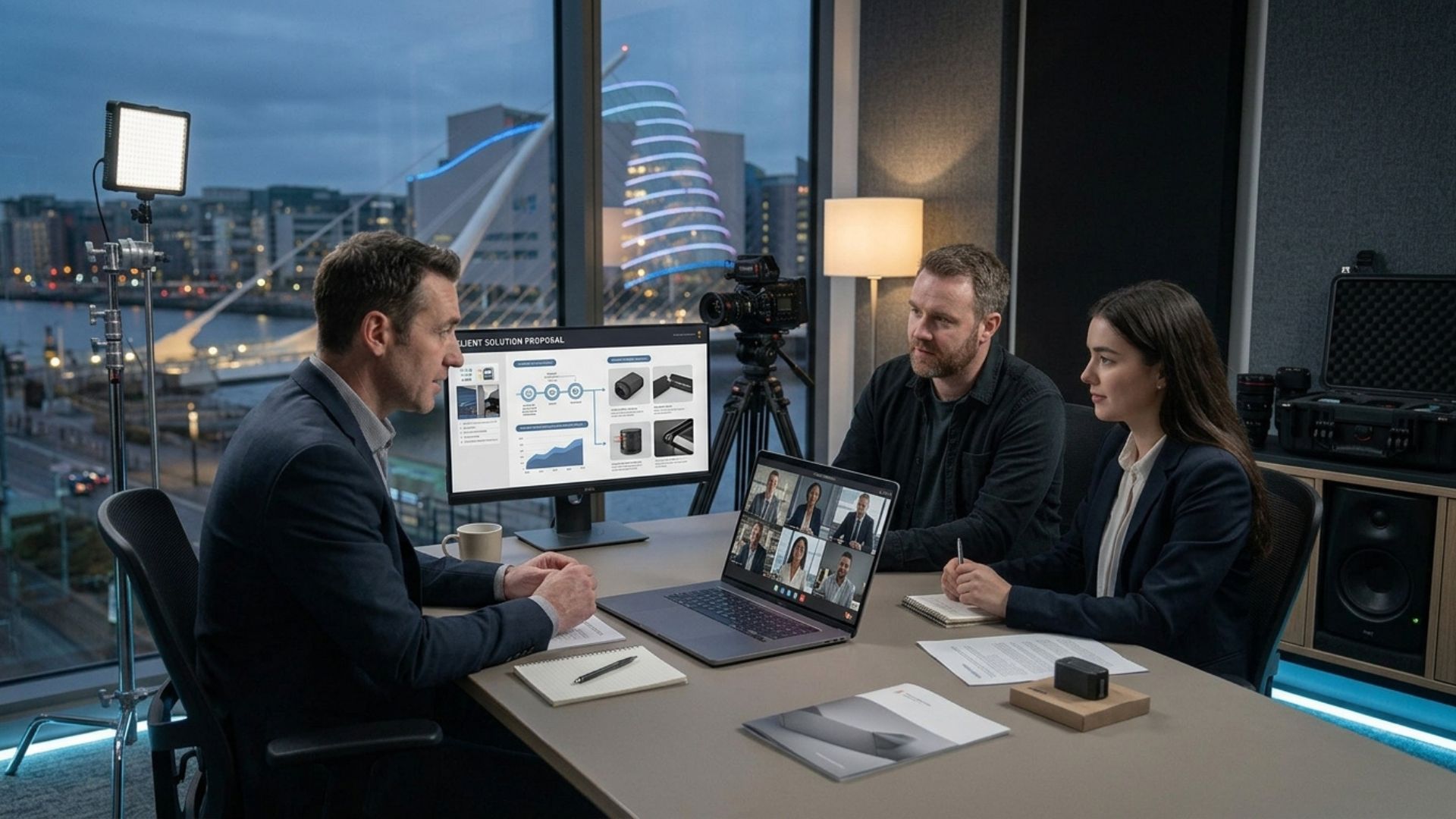
This could include FAQs, product demonstrations, case studies or proposal-support videos.
Mango's existing sales enablement guide covers how video can support different stages of the sales process, from prospecting through to proposals and follow-up.
The Biggest Mistakes to Avoid
Creating content without a buyer question
A video can look impressive but still have little value if nobody knows what problem it solves.
Before producing it, ask:
What question does this answer?
Treating every platform the same
A long expert interview might work well on YouTube.
On LinkedIn, it may work better as several shorter clips.
The core idea can stay the same while the format changes.
Making everything promotional
Not every video needs to say:
"Get in touch today."
Sometimes the most valuable content is simply useful.
That can build familiarity long before someone becomes a lead.
Creating content in silos
Marketing knows the channels.
Sales knows the questions buyers ask.
Leadership has expertise.
Production turns that expertise into useful content.
Bring those perspectives together instead of creating content separately.
Chasing AI visibility instead of building authority
Rather than trying to manipulate AI recommendations, focus on making your business genuinely easy to understand.
Clear expertise, useful information, customer evidence and a strong digital presence are more sustainable than chasing a particular algorithm.
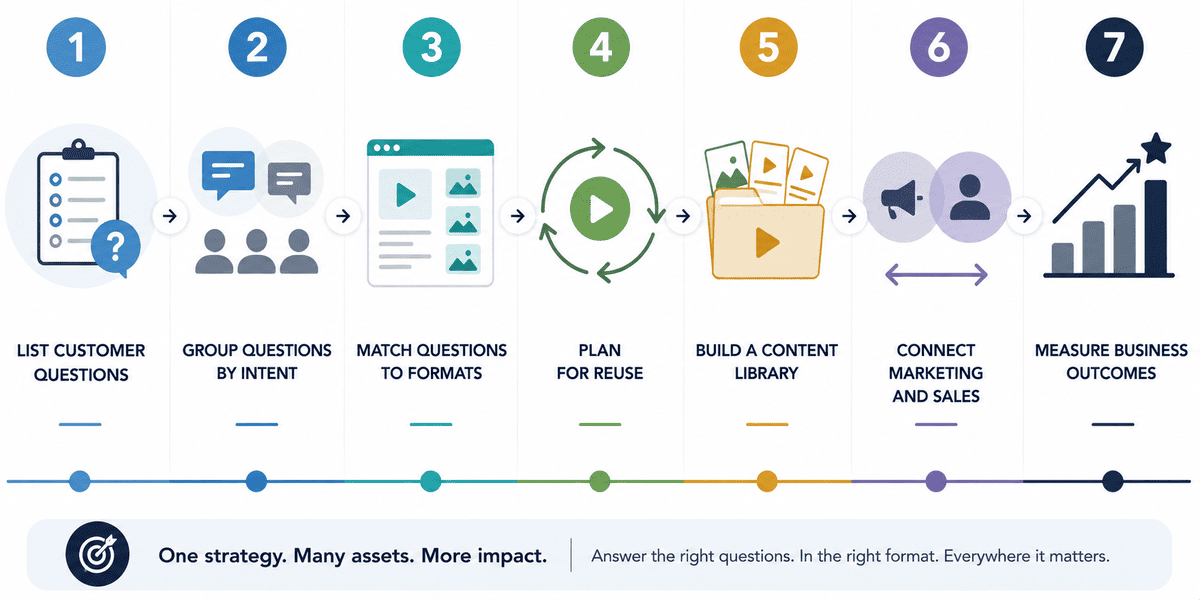
A Practical B2B Video Framework
If you're starting from scratch, keep it simple.
Step 1: List your customers' biggest questions
Ask your sales and customer-facing teams what they hear repeatedly.
Step 2: Group those questions by intent
For example:
Discovery: What's the problem?
Education: How does the solution work?
Consideration: Which option is right?
Trust: Can I trust this company?
Decision: Why should I choose them?
Step 3: Match each question to a format
Some questions need an article.
Others are better answered with an expert video, demonstration, customer story or short social clip.
Step 4: Plan for reuse
Before filming, identify where the footage could eventually be used.
Step 5: Build a content library
Don't think only about the next campaign. Capture material that can remain useful for months or years.
Step 6: Connect marketing and sales
Ask sales which videos would genuinely help move opportunities forward.
Step 7: Measure more than views
Look at relevant traffic, engagement, enquiries, qualified leads and how sales teams actually use the content.
Mango's existing guidance on measuring video ROI also recommends looking beyond view counts and considering meaningful business outcomes.
What This Means for B2B Marketing in 2026
The answer isn't to create more content simply because there are more channels.
It's to create better-connected content.
Your Google content should answer genuine questions.
Your YouTube content should demonstrate and explain.
Your LinkedIn content should show expertise and personality.
Your website should provide depth and proof.
Your customer stories should reduce uncertainty.
Your sales content should help prospects make decisions.
And your overall online presence should make it easy for people — and increasingly AI-powered search tools — to understand what your business actually does.
The businesses that adapt won't necessarily be the ones publishing the most.
They'll be the ones making their expertise easy to discover, easy to understand and easy to trust.
The New B2B Search Journey Starts With Better Questions
The old question was:
"What should we post?"
The better question is:
"What does our buyer need to know next?"
That shift can transform your content strategy.
Instead of creating isolated posts, you build a connected library of answers. Instead of making one video and moving on, you capture footage that can support multiple channels. And instead of treating Google, YouTube, LinkedIn and AI as completely separate worlds, you make them different entry points into the same body of expertise.
Google helps buyers discover.
YouTube helps them understand.
LinkedIn helps them build familiarity.
AI helps them research and compare.
Your website provides the proof.
And when they're ready, your sales team can take the conversation from there.
From Research to Your Next Step
You don't need to be everywhere at once. Start by identifying the questions your customers ask before they become leads, then create useful content that answers those questions across the places they are most likely to research.
A well-planned video can become far more than one finished film. With the right approach, the footage can become expert content, social clips, website material, customer stories and sales assets that continue
Turn One Production Into More of the Buyer Journey
This is where strategic video production can make a difference. Instead of treating each video as a standalone project, businesses can plan filming around the questions their buyers ask, the expertise they need to demonstrate and the assets their marketing and sales teams will actually use. The result is not simply more footage — it's a reusable content ecosystem built around the buyer journey.
Whether you need a flagship brand film, expert-led content, customer stories, product demonstrations or a collection of assets from one filming day, Mango can help. Explore Mango Media's video production services. You can also use the instant price calculator to get an initial idea of your project, or get in touch with Mango Media to discuss what your business could create.
Frequently Asked Questions
How has the B2B buyer journey changed in 2026?
The B2B buyer journey has become more fragmented. Buyers can now research businesses through Google, YouTube, LinkedIn, AI-powered search, websites, reviews and other sources before speaking to a supplier. They may move between these channels several times rather than follow a fixed path.
How can video help the B2B buyer journey?
Video can answer questions at different stages of the journey. Educational videos can support early research, demonstrations can help buyers understand a solution, expert videos can build authority, and customer stories can provide proof and reassurance.
Should B2B businesses create different content for Google, YouTube, LinkedIn and AI search?
Not necessarily. A better approach is to create strong core content around genuine customer questions and adapt it for different channels. One expert interview, customer story or production shoot can generate content for a website, YouTube, LinkedIn and sales activity.
Similar blogs:
























![How to Write a Promo Video Script (Free Template Included) [2026 Guide]](https://cdn.prod.website-files.com/6226fcc37e2eb518b6e69a7f/69c3804c0b9ea78696bd89e0_covertab11.jpeg)





.jpg)
%20(1)%20(1).jpg)
.jpg)





We'd love to hear from you! Reach out to us today for a chat about our services, pricing, or just to say hello!


