
In today’s oversaturated inboxes, getting your email noticed — let alone opened — is no easy feat. In this article, we’ll explore the power of video in email campaigns, how to embed video content the right way, best practices to maximise performance, and how to track your results. Whether you’re a startup, marketer, or creative agency, using video in your emails can be a game-changer for audience retention and conversions.
LinkedIn Isn't Television
Television advertising is built around interruption.
A programme is playing. An advert appears. The brand has a limited amount of time to capture attention, communicate a message and leave an impression.
LinkedIn works differently.
Someone might open LinkedIn to see what people in their industry are talking about. They might check an update from a colleague, read an industry opinion, look at a job opportunity or catch up on business news.
They're scrolling through a feed.
That changes what a successful video needs to do.
A television advert can essentially say:
"Here's our company. Here's what we sell. Here's why you should buy it."
A useful LinkedIn video is more likely to say:
"Here's something you should know."
That difference sounds small, but it changes the entire approach to content.
Mango's existing research into social video notes that LinkedIn is particularly suited to B2B thought leadership, founder insights, industry commentary, client stories and recruitment content.
The opportunity isn't to make LinkedIn look like television.
It's to use video in a way that suits how people actually use LinkedIn.
The Problem With "Corporate Video, But Shorter"
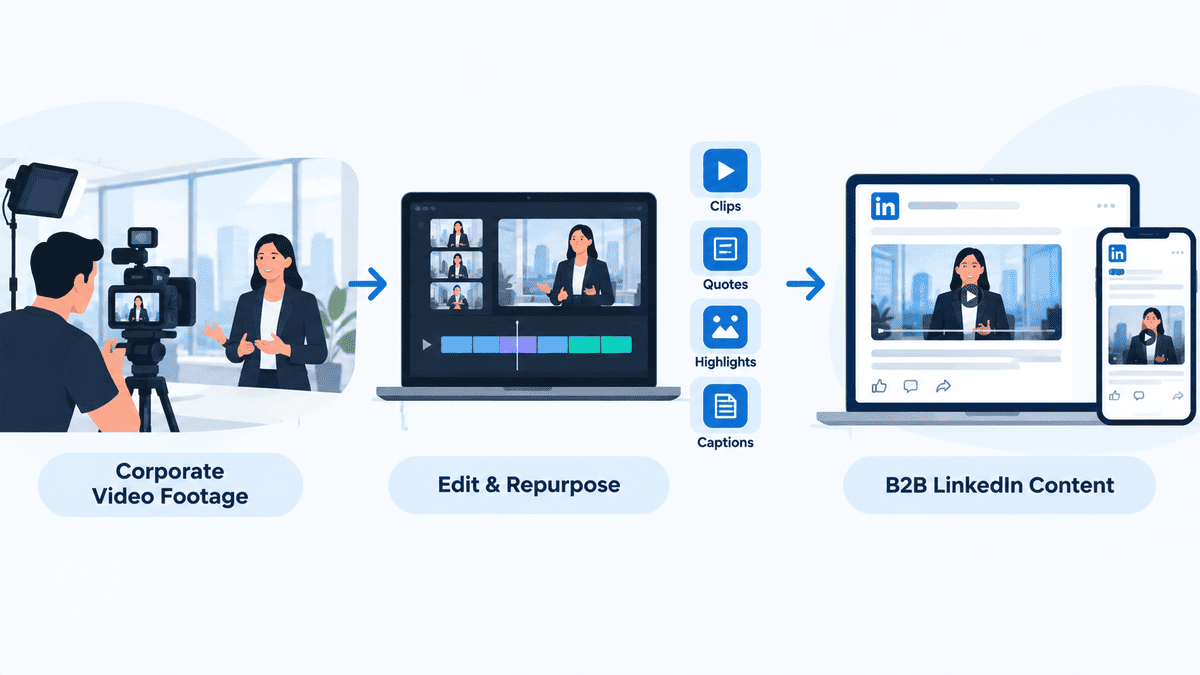
One of the easiest ways for a business to start making LinkedIn video is to take an existing corporate video and cut it into shorter pieces.
It seems sensible.
You already paid for the production. You have the footage. Why not turn the five-minute corporate film into ten 30-second clips?
Sometimes that works.
But there's a problem.
A shorter corporate advert is still a corporate advert.
If the original video is mostly about:
- Who the company is
- What services it offers
- How long it has been operating
- How great its team is
- Why customers should choose it
then cutting it into smaller pieces doesn't automatically make it useful LinkedIn content.
The format has changed.
The thinking hasn't.
Instead, start with the question:
"What would someone outside our company actually find useful?"
That might be an insight from your CEO.
A common mistake your customers make.
An unexpected lesson from a recent project.
An opinion about something happening in your industry.
An answer to a question your sales team hears every week.
Those are the pieces of expertise that can make someone stop scrolling.
Stop Selling the Company. Start Showing Its Expertise.
This doesn't mean B2B businesses should never promote themselves.
Of course they should.
The difference is when and how they promote themselves.
If every video is asking for something from the viewer — book a call, visit our website, download this, contact us — the relationship becomes one-sided.
Instead, think about what the viewer gets.
A useful LinkedIn video might help someone:
- Understand a complicated topic
- Avoid an expensive mistake
- See an industry issue differently
- Learn something from an expert
- Understand how a process works
- Hear a genuine customer experience
- Make a better business decision
That creates a reason to watch.
And when someone repeatedly sees useful content from the same company, something valuable starts to happen.
Familiarity builds.
They begin to recognise the people behind the brand.
They start to associate the company with a particular area of expertise.
Then, when they eventually have a problem that the business can solve, the company isn't completely unknown.
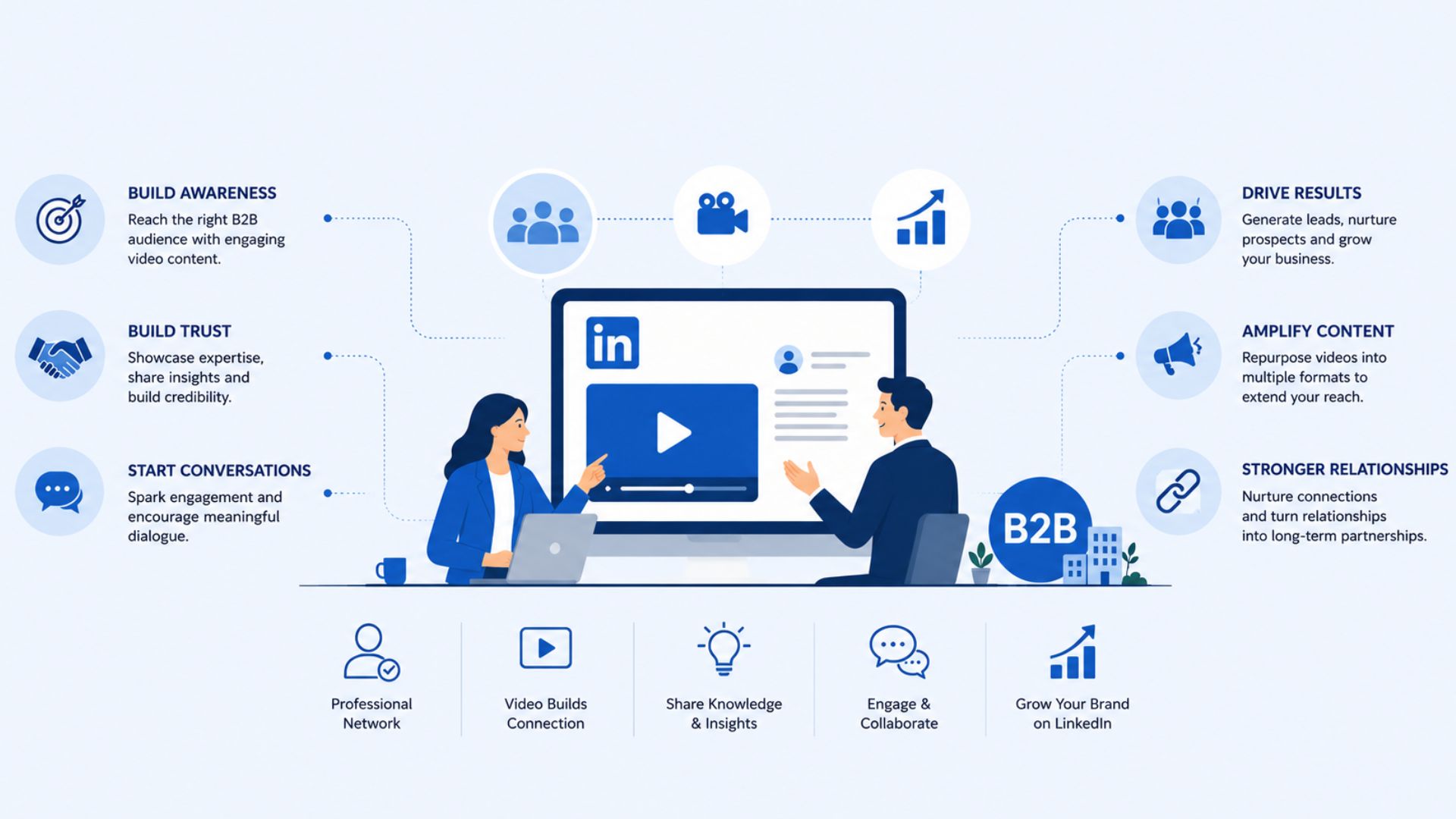
That's one of the reasons thought leadership matters in B2B. LinkedIn's own 2026 B2B marketing research highlights the growing importance of trusted human voices, noting that people increasingly buy from people rather than faceless companies.
What Should B2B Companies Actually Post on LinkedIn?
The good news is that you don't need an endless supply of complicated ideas.
Your business already has expertise.
The challenge is turning that expertise into content.
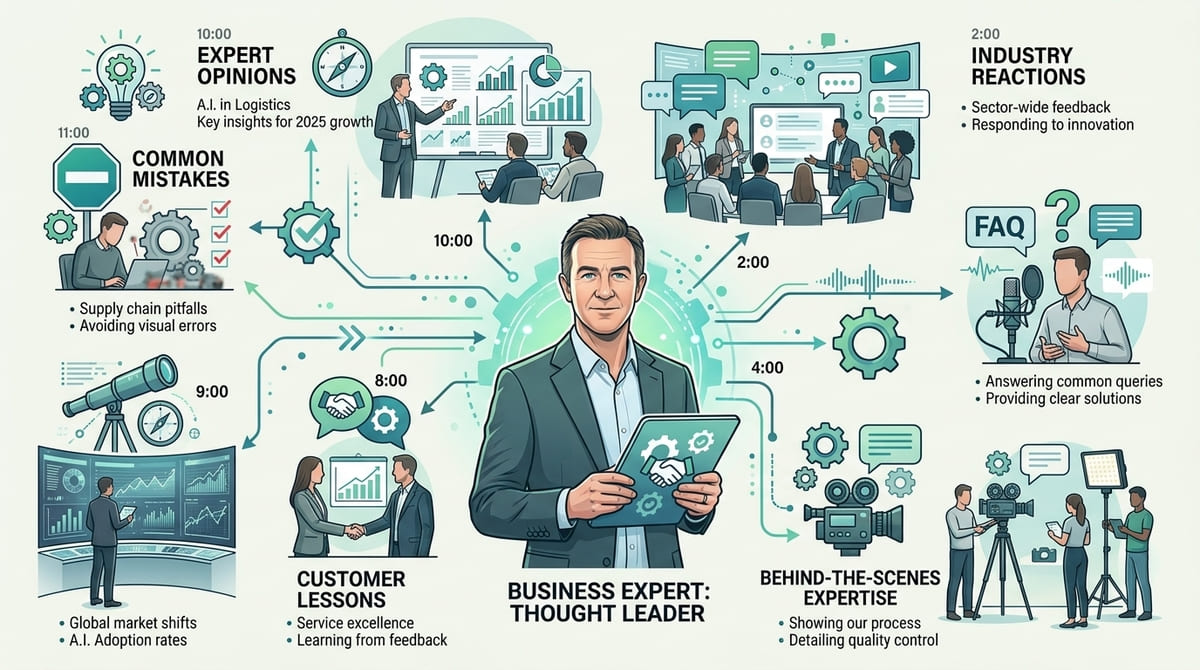
1. Expert Opinions
Ask someone in the business:
"What's happening in our industry that customers should be paying attention to?"
It could be a 45-second explanation.
It doesn't need a script.
The value comes from the person's knowledge and perspective.
For example:
"We're seeing more companies move towards X, but there's one problem they're overlooking..."
That's much more interesting than:
"We're delighted to announce our new X service."
2. Common Mistakes
Your customers probably make predictable mistakes.
You've seen them before.
Explain them.
For example:
"Three mistakes businesses make when planning a corporate video."
This type of content works because it starts with the audience's problem rather than the company's services.
3. "Here's What We're Seeing" Videos
These are particularly useful for companies with strong industry knowledge.
Talk about patterns you've noticed across projects or customers.
For example:
"After working with businesses on recruitment videos, we've noticed one thing that consistently makes them more effective..."
Now you're not just promoting your service.
You're demonstrating experience.
4. Customer Lessons
Customer stories don't always have to be full case studies.
A short video can focus on one useful lesson from a project.
For example:
"Our client originally wanted X, but after looking at the audience data, we recommended Y. Here's why."
That gives potential customers an insight into how you think.
5. Behind-the-Scenes Expertise
Behind-the-scenes content works best when there's a reason for showing it.
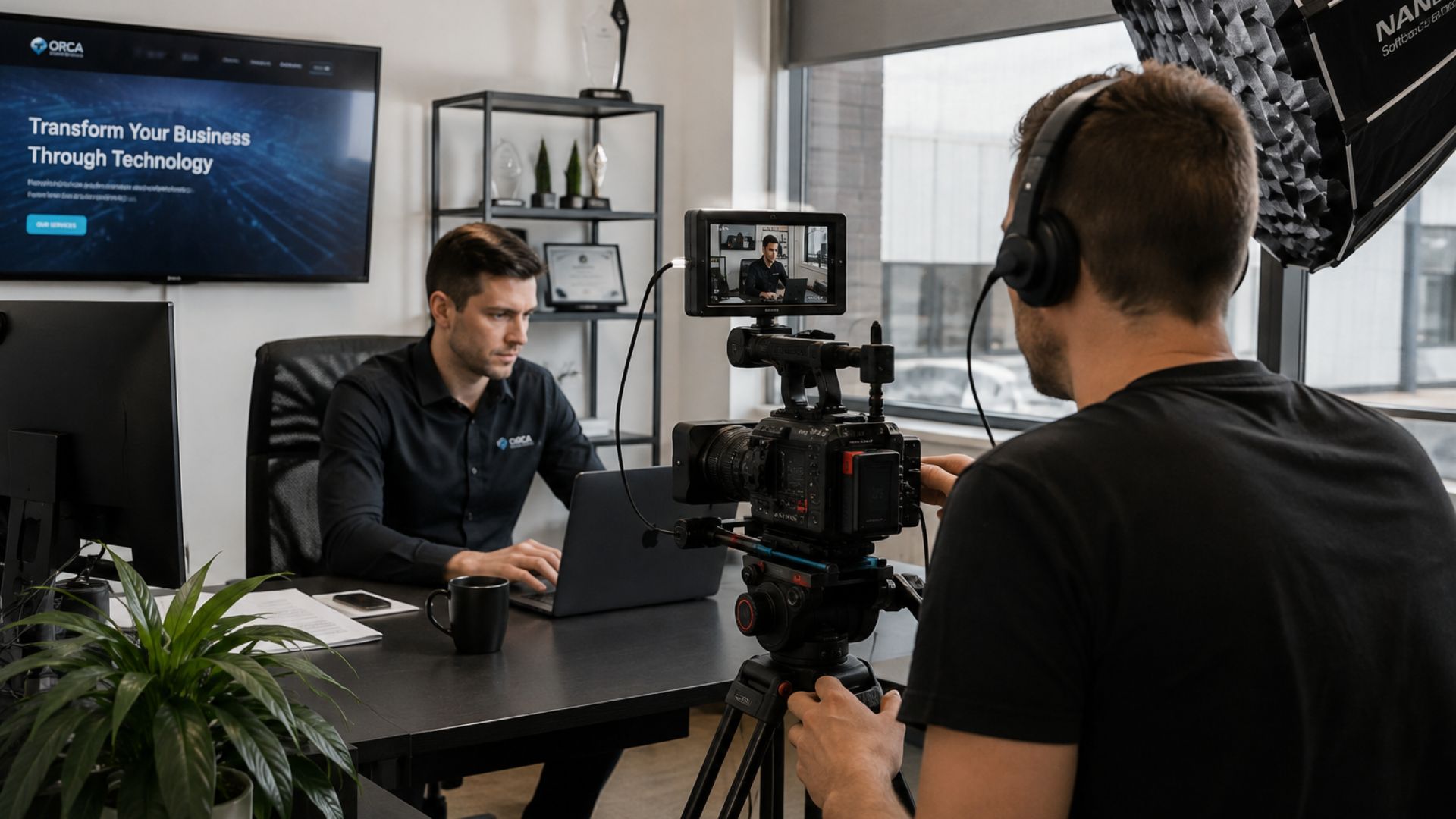
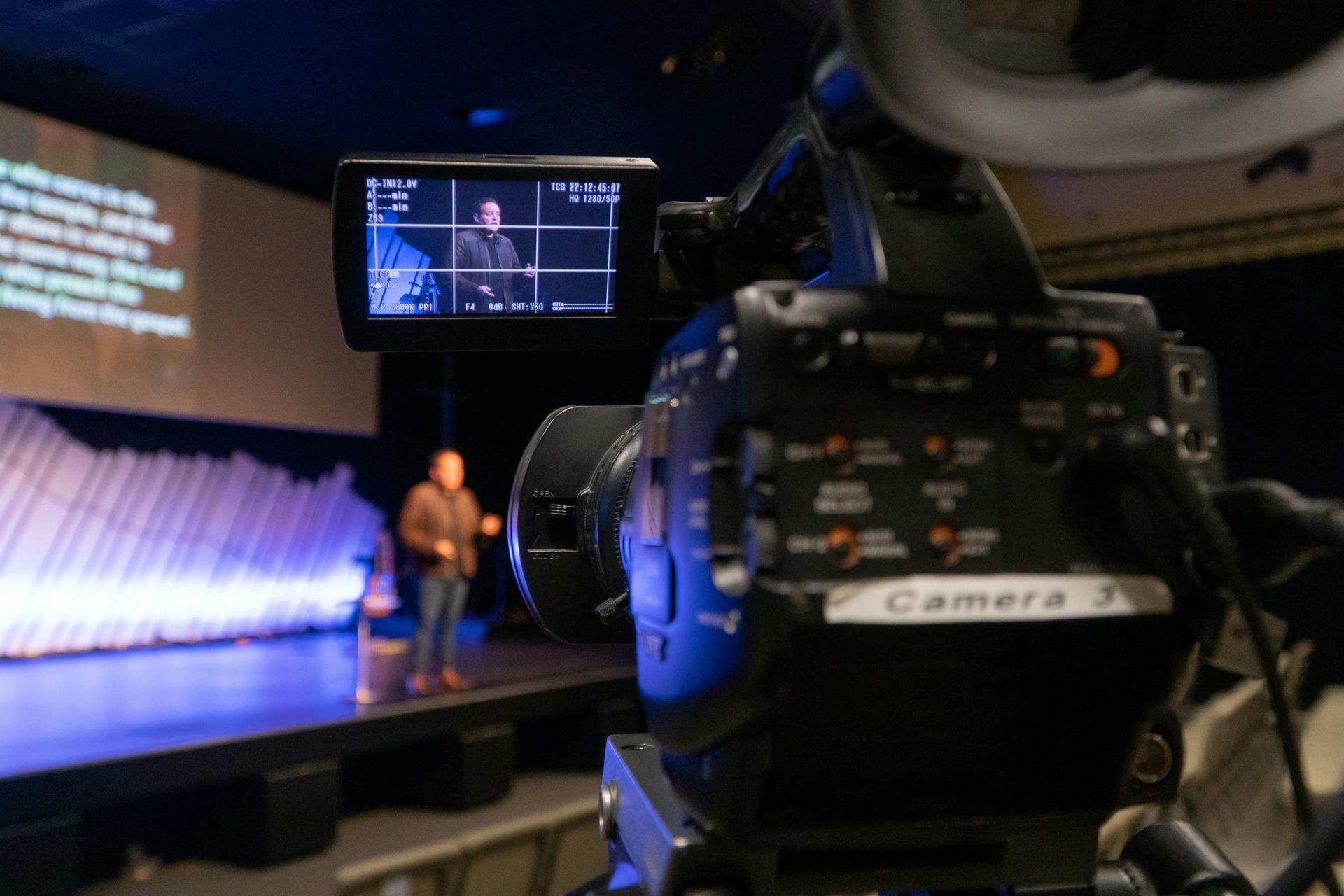
Don't simply show a camera being set up.
Explain what the team is doing and why.
For example:
"Here's why we're lighting this interview from this direction."
Now the behind-the-scenes footage is also educational.
6. Industry Reactions
When something relevant happens in your industry, give your perspective.
Don't simply repeat the news.
Explain what it means for customers.
That's where expertise becomes more valuable than information alone.
7. Frequently Asked Questions
Your sales team is sitting on a huge content resource.
Ask them:
"What question do prospects ask you all the time?"
Then answer it on camera.
One question can become one useful video.
Do that consistently and you start building a library of content based on actual buyer concerns rather than guesses.
Your People Are Part of the Content
One of the biggest advantages of B2B video is that it can put a human face on a business.
A website can explain what a company does.
A brochure can list its services.
But video can let potential customers see and hear the people who would actually be working with them.
That matters particularly in B2B.
Buyers aren't only choosing a product.
They're often choosing:
- A supplier
- A partner
- An agency
- A consultant
- A specialist
- A team they may work with for months or years
So don't automatically put every video through the corporate brand filter.
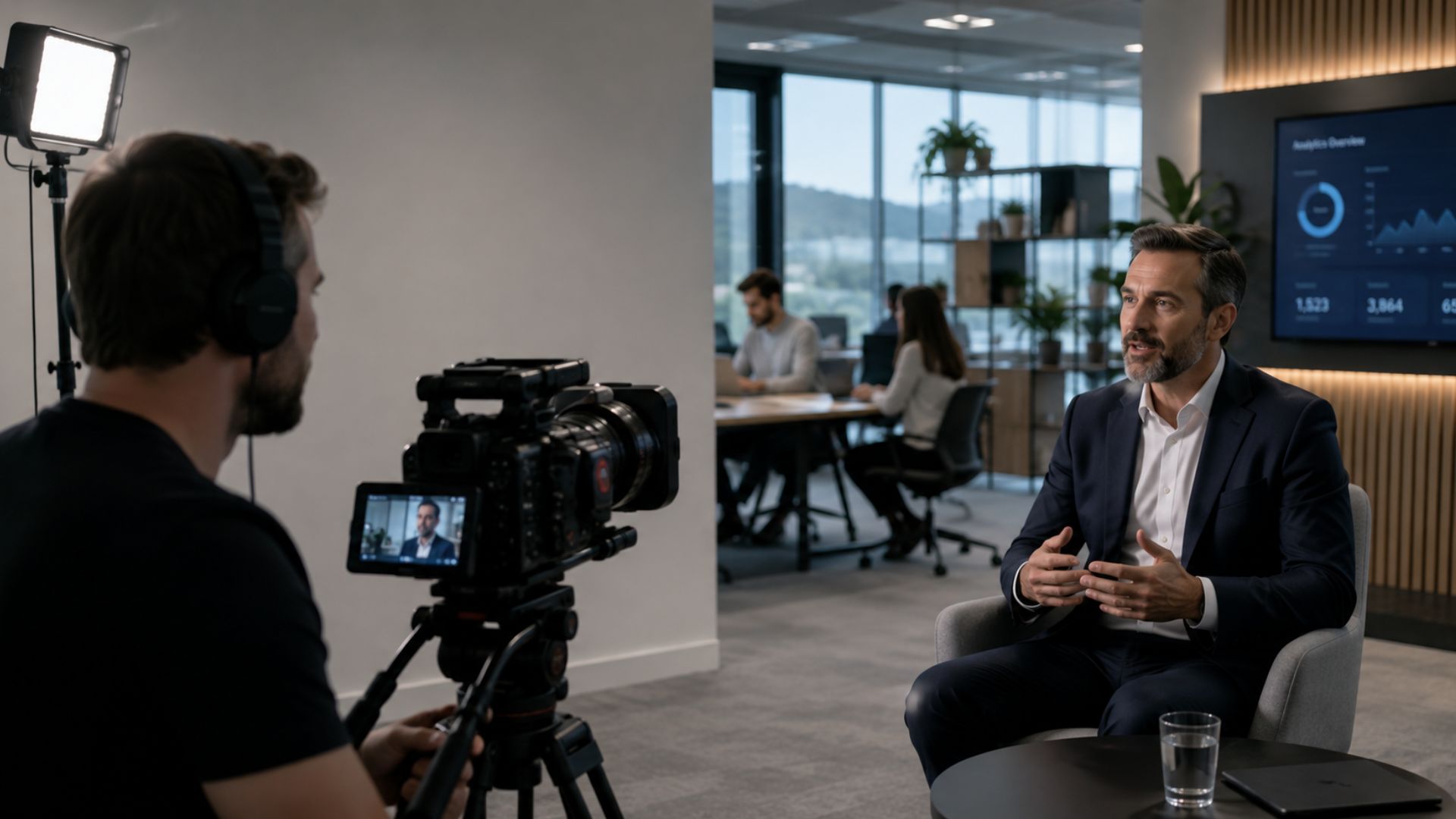
Sometimes the most effective person to put in front of the camera is the person who actually knows the subject best.
That might be the managing director.
It could be an engineer.
A project manager.
A salesperson.
A technical specialist.
Or a customer.
The key is expertise plus personality.
But Does Professional Production Still Matter?
Absolutely.
This is where the "TV advert" comparison can be misunderstood.
We're not saying B2B companies should abandon professional video production and film everything on a phone.
We're saying production quality and content purpose are two different things.
A LinkedIn video doesn't need to feel like a television commercial to benefit from professional production.
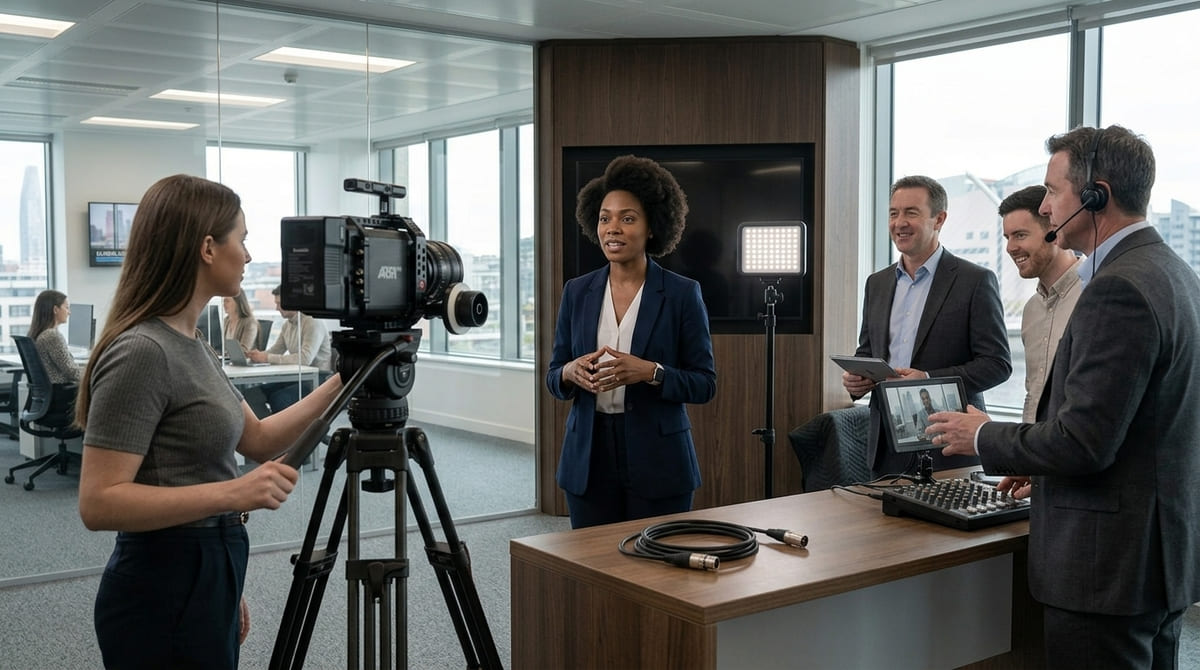
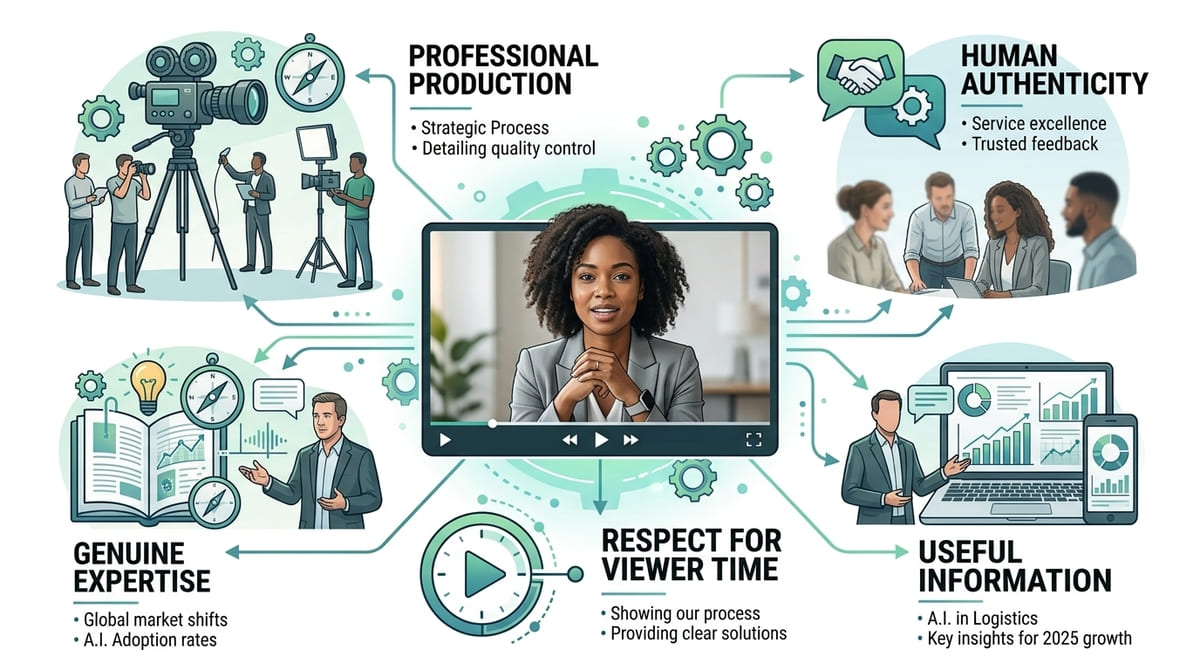
Good production can still provide:
- Clear, professional audio
- Strong lighting
- Consistent branding
- Multiple camera angles
- Better framing
- Professional interviews
- Product demonstrations
- Customer testimonials
- Supporting B-roll
- Efficient batch filming
The difference is that you're using that production quality to capture expertise, rather than simply creating one polished sales message.
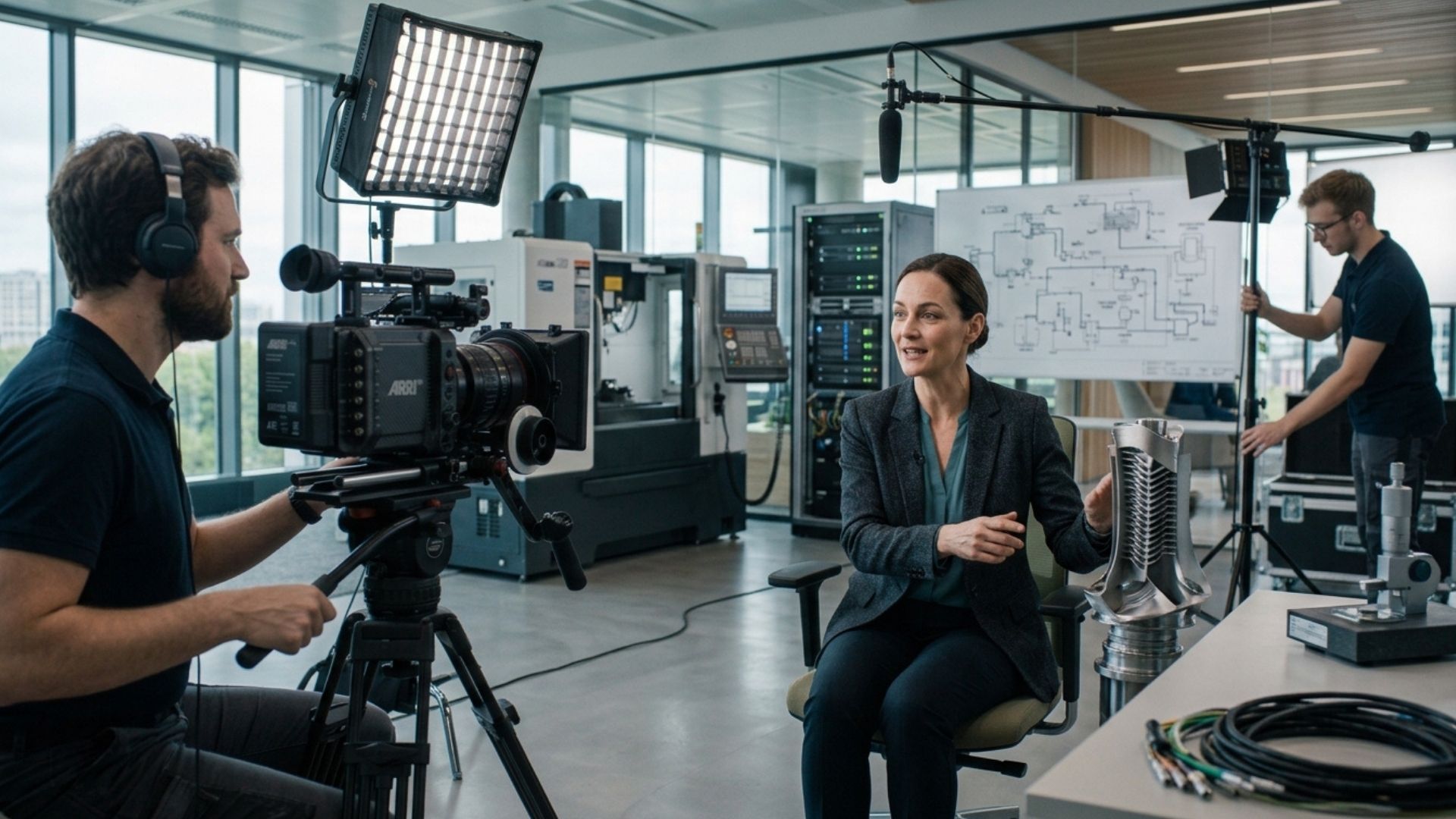
And this is where professional filming can become particularly valuable for LinkedIn.
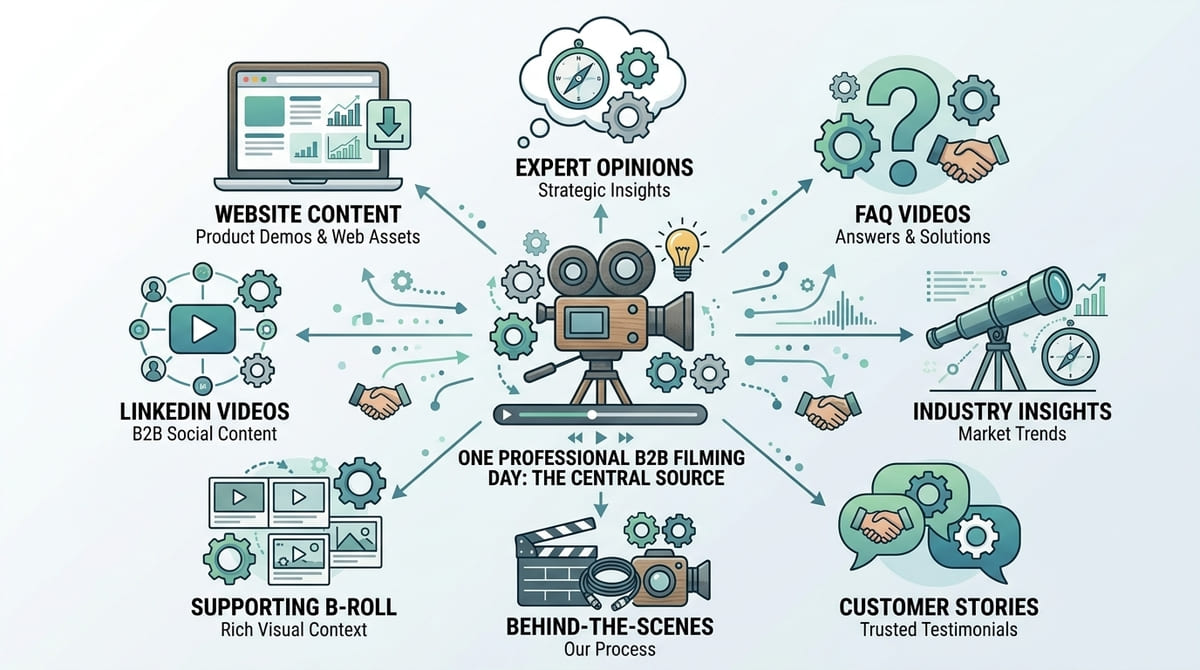
Instead of organising a shoot for one five-minute corporate video, a business could plan a filming day around several months of content.
One Shoot Can Create a Month of LinkedIn Content
Imagine your marketing team has identified 12 questions customers regularly ask.
Instead of filming 12 separate productions, you could bring several experts together for one structured filming session.
You might capture:
- 5 expert opinions
- 4 FAQ videos
- 3 industry insights
- 2 customer stories
- Behind-the-scenes footage
- Supporting B-roll
- Company culture footage
That's a much more strategic use of production time.
The finished videos can then be edited into different lengths and formats for LinkedIn, your website, sales conversations and other channels.
Mango's existing B2B video guidance already highlights short-form social video, expert content, customer stories and other formats as useful parts of a broader B2B strategy.
The important part is planning before the shoot.
If you know that one filming day needs to produce 20 useful assets, you can structure the interviews, framing, questions and supporting footage accordingly.
That's very different from finishing one corporate video and then asking:
"What can we post on LinkedIn this week?"
A Simple Test for Every LinkedIn Video
Before publishing a video, ask one question:
"Would someone who doesn't know our company still find this interesting?"
If the answer is yes, you're probably onto something.
If the answer is no, look at the opening.
For example:
Weak opening:
"Hi, I'm John from ABC Ltd, and today I'd like to tell you about our company's new service."
Stronger opening:
"Most businesses make this mistake when planning their first corporate video."
The second opening creates curiosity before asking the viewer to care about the company.
The same principle applies throughout the video.
Give people a reason to keep watching.
Then, if appropriate, give them a reason to learn more about you.
Common LinkedIn Video Mistakes
Starting With Your Company
If the first ten seconds are about who you are, the viewer has to decide why they should care before you've given them a reason.
Start with the problem, question or insight instead.
Making Every Video Promotional
If every video ends with a hard sales pitch, the feed quickly starts to feel like advertising.
Mix promotional content with genuinely useful content.
Overbranding the Video
Your brand should be recognisable.
It doesn't need to dominate every frame.
Let the person and the idea do some of the work.
Cutting Corporate Videos Into Random Clips
Not every interesting-looking moment makes a good standalone video.
Each clip should have its own point.
A viewer should be able to understand why it matters without needing to watch the original 10-minute film.
Writing Scripts That Sound Like Scripts
A perfectly polished script can sometimes make an expert sound less like an expert.
For thought leadership content, consider using questions or talking points instead.
Let the person explain the subject naturally.
Talking About What You Do Instead of What Buyers Need
This is probably the biggest mistake.
Compare:
"We provide high-quality video production services for businesses."
with:
"If you're planning a customer testimonial, don't start by asking the customer to describe your company. Ask them about the problem they had before they hired you."
The second statement demonstrates expertise.
And that's the point.
A Better B2B LinkedIn Video Strategy
You don't need to completely rebuild your marketing strategy.
Start with five simple steps.
Step 1: Ask sales what prospects want to know
Your sales team already hears the questions.
Use them.
Step 2: Find the experts inside your business
Who can answer those questions better than anyone else?
Step 3: Build a list of topics
Group them into:
- Advice
- Mistakes
- Opinions
- FAQs
- Industry insights
- Customer stories
- Behind-the-scenes expertise
Step 4: Batch your filming
Instead of constantly organising individual shoots, capture several pieces of content during the same production session.
Step 5: Create a consistent publishing rhythm
You don't need to post ten videos a week.
A smaller number of useful videos published consistently can give your audience repeated opportunities to encounter your expertise.
The goal isn't simply more video.
It's a more useful reason to remember your business.
What Should a B2B LinkedIn Video Actually Feel Like?
It doesn't need to feel like a TV advert.
It also doesn't need to feel like an unplanned selfie.
There's a useful middle ground.
Professional enough to represent the business.
Human enough to feel authentic.
Useful enough to earn attention.
Short enough to respect the viewer's time.
Specific enough to demonstrate genuine expertise.
That balance is particularly important for B2B companies.
You don't want your content to look careless.
But you also don't want every video to feel like it went through six rounds of corporate approval before someone was allowed to say anything interesting.
The Goal Isn't to Go Viral
It's easy to get distracted by views.
But for many B2B companies, a video being watched by 5,000 completely irrelevant people isn't necessarily more valuable than one being seen by 300 people in the right industry.
The better questions are:
- Did the right people watch?
- Did someone share it with a colleague?
- Did it start a conversation?
- Did a prospect mention it later?
- Did it demonstrate expertise?
- Did it help someone understand the business?
- Did it support a sales conversation?
- Did it contribute to brand familiarity?
LinkedIn's own B2B research increasingly frames video and thought leadership around trust and human influence rather than simply chasing attention.
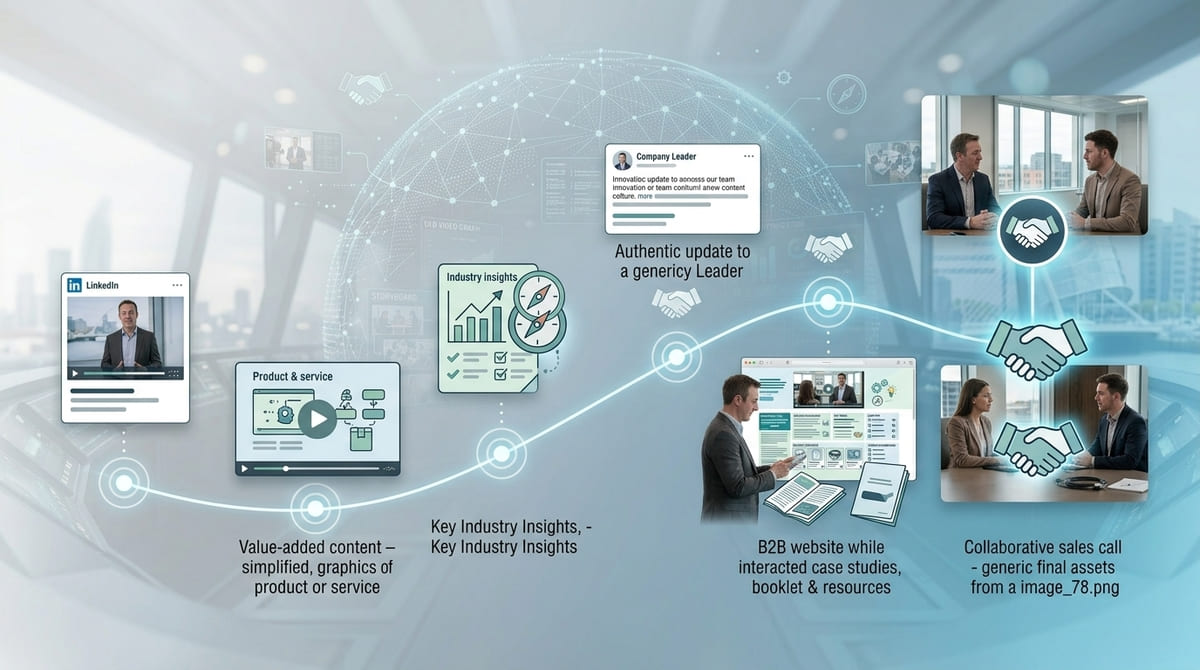
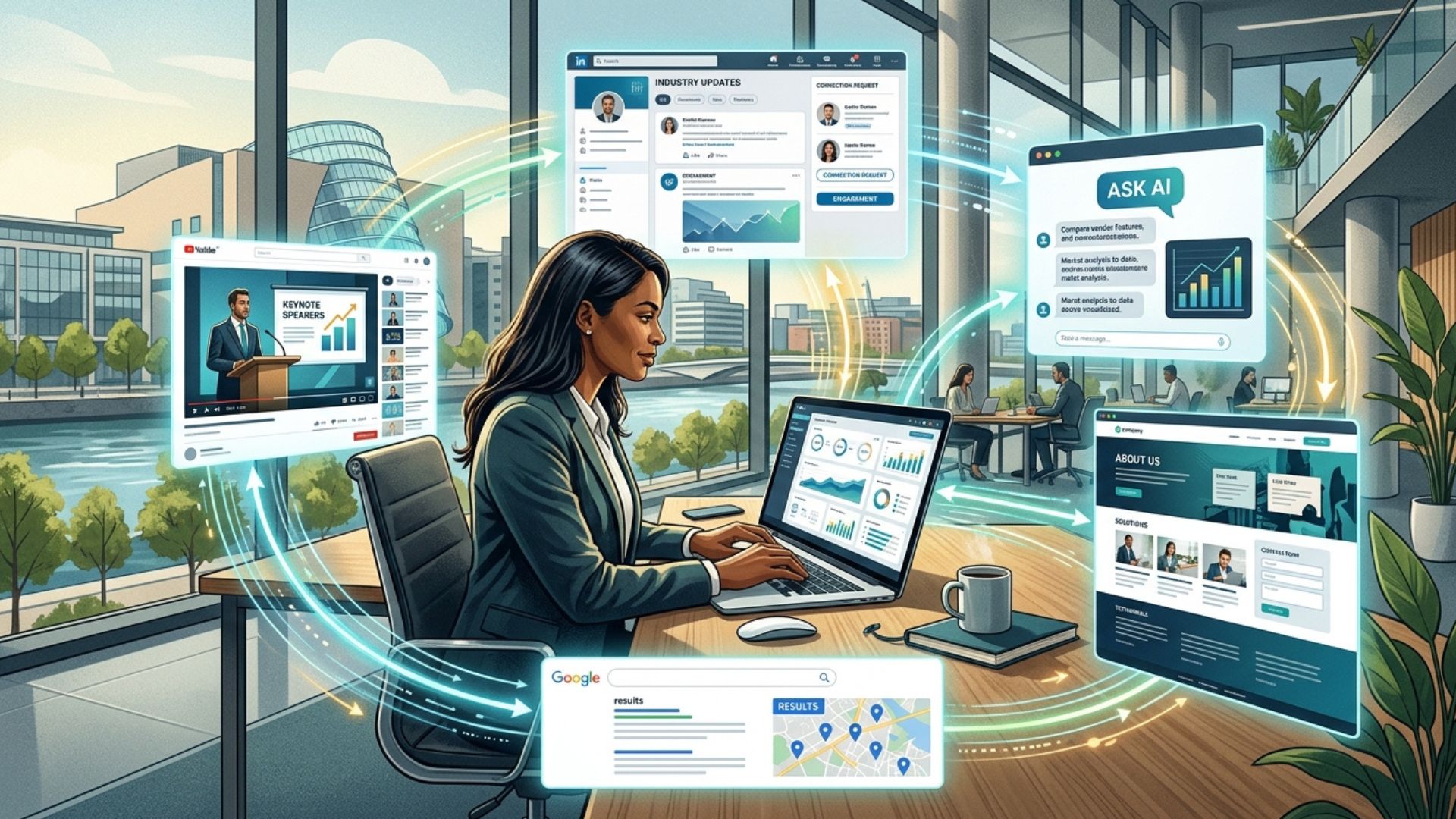
For a B2B business, the value of LinkedIn video can be cumulative.
Someone might watch one video today.
Another next month.
Then read a post from your managing director.
Then visit your website three months later.
The first video didn't necessarily generate the lead.
But it may have helped make the company familiar.
The Real Shift: From Advertising to Familiarity
This is the biggest change businesses should make.
Don't think of LinkedIn as another place to distribute your advertisements.
Think of it as a place where potential customers can get to know how your business thinks.
Your website tells them what you do.
Your case studies show what you've done.
Your sales team explains how you can help.
Your LinkedIn videos can show how you think about the problems your customers face.
That is a powerful distinction.
And it makes video much more useful than simply having another polished corporate asset sitting in your marketing folder.
From "What Should We Post?" to "What Should We Teach?"
The best LinkedIn video strategy doesn't start with a camera.
It starts with your customers' questions.
Find the things they want to understand, the mistakes they want to avoid and the decisions they need help making. Then turn the expertise already sitting inside your business into useful, watchable content.
That gives you something much more valuable than a collection of short adverts.
It gives potential customers a reason to keep coming back.
Conclusion
Your business probably already has months' worth of LinkedIn video ideas hiding in sales conversations, customer questions and the expertise of your team. The challenge is turning that knowledge into content that feels professional without feeling like an advert.
With the right planning, one filming session can give your business a library of expert-led videos for LinkedIn, your website, sales activity and more. Explore our video production services, you can also use the instant price calculator to get an initial idea of your project, or get in touch with Mango Media to discuss your next shoot.
Frequently Asked Questions
What type of LinkedIn videos work best for B2B companies?
Expert insights, industry commentary, customer stories, practical advice, FAQs and short educational videos are strong options for B2B LinkedIn. The key is to give viewers useful information rather than making every video a direct sales pitch.
Should B2B companies use professional video production for LinkedIn?
Yes, particularly for expert interviews, customer stories, thought leadership campaigns and content that will be reused across multiple channels. Professional production can improve sound, lighting, consistency and efficiency without making the content feel like a traditional advert.
How long should a B2B LinkedIn video be?
There isn't one perfect length. A video should be as long as it needs to communicate one useful idea without losing the viewer's attention. For many LinkedIn videos, keeping the message focused and relatively concise is more important than hitting a specific duration.
Similar blogs:




















![How to Write a Promo Video Script (Free Template Included) [2026 Guide]](https://cdn.prod.website-files.com/6226fcc37e2eb518b6e69a7f/69c3804c0b9ea78696bd89e0_covertab11.jpeg)



.jpg)
%20(1)%20(1).jpg)
.jpg)





We'd love to hear from you! Reach out to us today for a chat about our services, pricing, or just to say hello!


