
In today’s oversaturated inboxes, getting your email noticed — let alone opened — is no easy feat. In this article, we’ll explore the power of video in email campaigns, how to embed video content the right way, best practices to maximise performance, and how to track your results. Whether you’re a startup, marketer, or creative agency, using video in your emails can be a game-changer for audience retention and conversions.
Why Video Works So Well for Manufacturing Businesses
Manufacturing companies often have a marketing advantage hiding in plain sight: their work is highly visual.
Machines moving through a production cycle, automated systems operating at speed, skilled engineers solving problems, quality-control processes, finished products leaving the line — these are all things that are difficult to communicate through written content alone.
A potential customer may read that your business has advanced machinery, strict quality-control procedures or decades of experience.
A video can show them.
That distinction matters in B2B.
When a buyer is considering a manufacturing or engineering supplier, they are often assessing more than the final product. They want to know whether the company has the equipment, expertise, capacity, processes and people required to deliver consistently.
A well-planned video can bring those factors together in a few minutes.
It can show the scale of your operation, introduce the people behind it, demonstrate how a product works and provide evidence of the standards you claim to meet.
For technical businesses, this is particularly valuable because the subject itself can become part of the story.
You do not need to make manufacturing look like a consumer advert.
You need to make the quality of the work visible.
What Can Manufacturing & Technical Businesses Use Video For?
There is no single type of manufacturing video.
The right format depends on what the business needs the content to achieve.
A manufacturer trying to win new contracts may need a capabilities film. An engineering company launching a new piece of equipment may need a product demonstration. A business struggling to attract skilled employees may need a recruitment video.
Some projects can even combine several of these objectives.
Here are some of the most useful formats.
1. Manufacturing Company Profile Videos
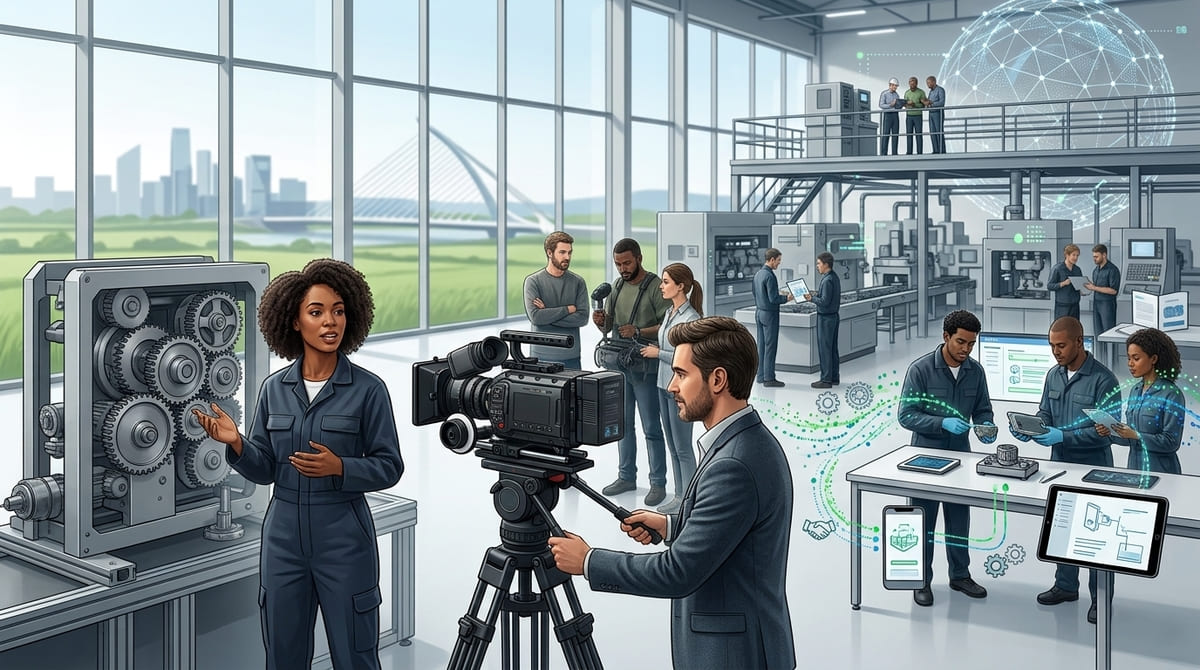
A company profile introduces the business, its capabilities, its people and what makes it different.
This can be particularly useful for manufacturers that need to establish credibility quickly with potential customers who may never visit the facility in person.
A strong company profile might show:
- The manufacturing facility
- Key machinery and equipment
- Production processes
- Quality-control procedures
- Employees and technical teams
- Leadership
- Products or finished work
- Company history or expertise
- The industries and customers served
The goal is not to list everything the company does.
It is to give the viewer a clear understanding of who you are, what you do and why they should trust you.
2. Factory and Facility Videos
Sometimes the facility itself is one of your strongest sales assets.
A factory walkthrough or facility video can demonstrate scale, organisation, equipment and production capability before a prospect ever steps through the door.
This can be especially useful for businesses selling to customers in other parts of Ireland, the UK or internationally.
Instead of simply saying:
"We have a modern manufacturing facility."
You can show the production floor, machinery, people and processes that make the statement credible.
Drone footage can also be useful when the scale of the site matters, particularly for large facilities, industrial estates or outdoor operations.
Image suggestion: Exterior aerial view of a manufacturing facility followed by an interior production-floor shot.
3. Product Demonstration Videos
Some technical products are difficult to understand until you see them operating.
A product video can demonstrate how equipment works, how it is installed, how it solves a particular problem or how it performs in a real environment.
For example, an engineering business might use video to show:
- How a machine operates
- How a component is installed
- How a product compares with an existing solution
- What happens during a particular process
- How users interact with the equipment
- The results the product delivers
This can reduce the amount of explanation required from sales teams.
Instead of sending a prospect a long technical document and hoping they understand it, sales can share a short video that demonstrates the product in context.
4. Manufacturing Process Videos
A manufacturing process can be fascinating to watch, but it also has commercial value.
A process video can take viewers behind the scenes and show how raw materials become finished products.
Depending on the business, that might include:
- Material preparation
- Machining or fabrication
- Assembly
- Inspection
- Testing
- Finishing
- Packaging
- Delivery
The important thing is not to film every stage simply because it exists.
Choose the stages that demonstrate something meaningful about the business.
Perhaps the process shows exceptional precision.
Perhaps automation allows you to produce at scale.
Perhaps your quality-control process is a major differentiator.
The video should make that difference visible.
5. Engineering and Technical Explainer Videos
Some products cannot be explained properly through footage alone.
This is where interviews, animation, motion graphics and visual demonstrations become useful.
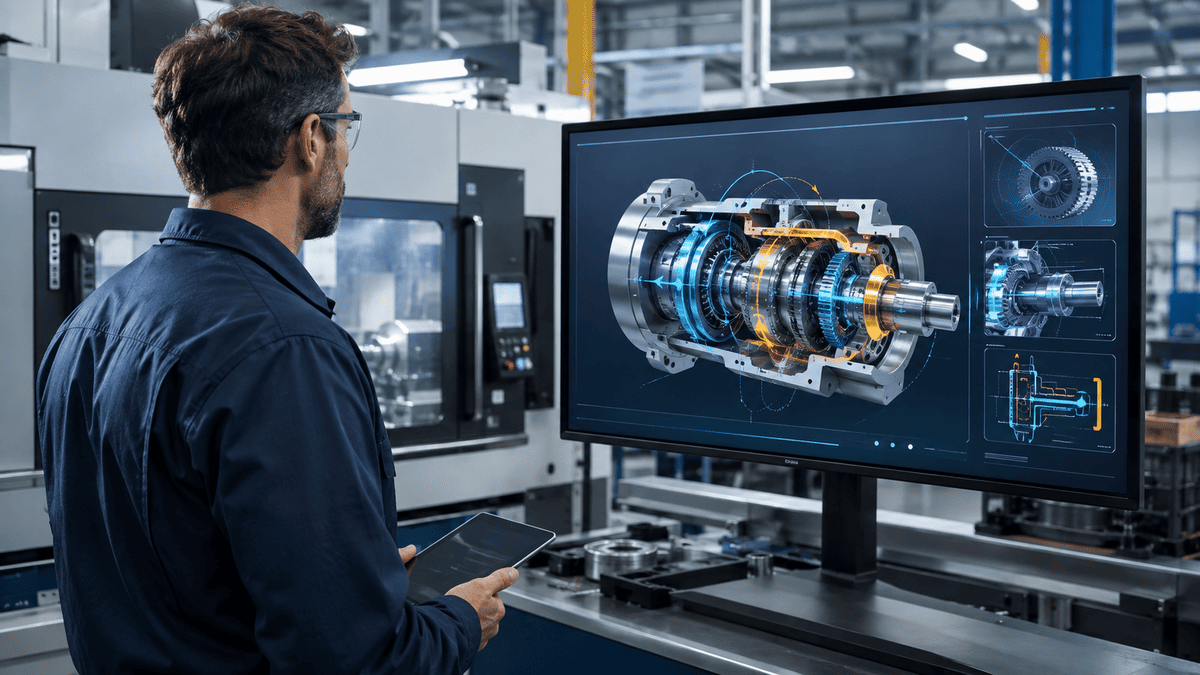
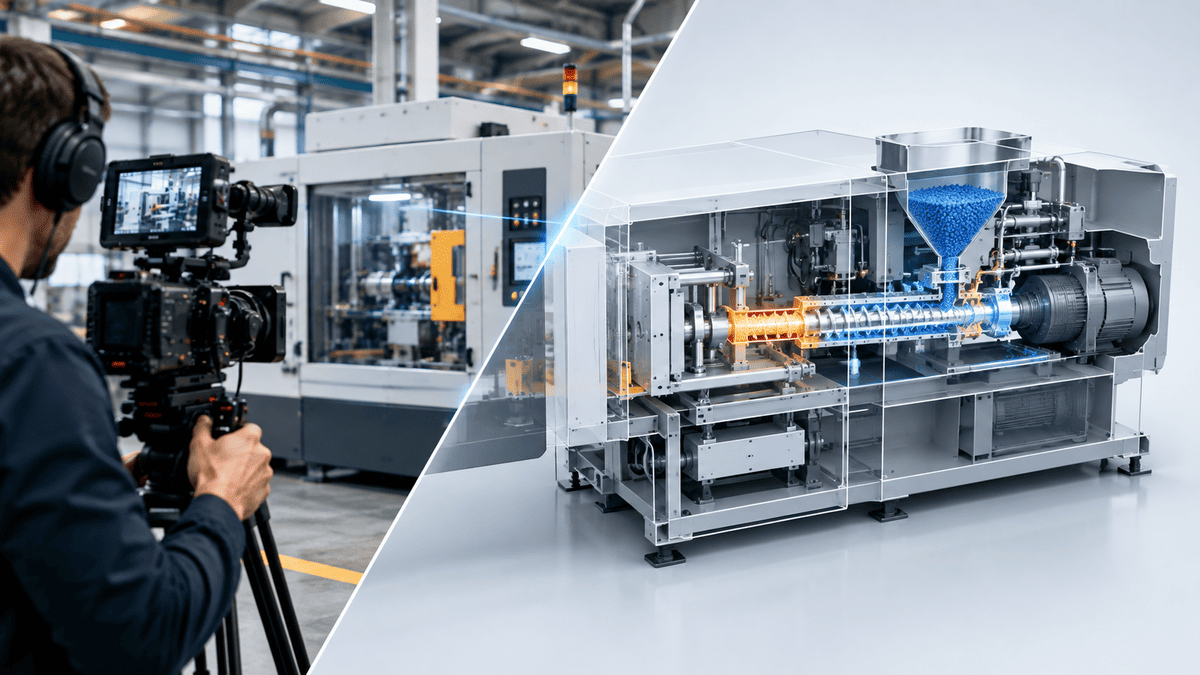
A technical explainer might show how a system works, explain an engineering principle or demonstrate what happens inside a machine where the viewer cannot physically see the process.
For example, if a manufacturer needs to explain an internal component, CGI or animation could show the mechanism operating inside the equipment.
This means you are not limited by what a camera can physically capture.
You can combine real footage with graphics to make difficult concepts easier to understand.
6. Customer Case Study Videos
For many manufacturing and technical businesses, one of the strongest things you can show is a real customer result.
A case study video combines the customer's experience with your own technical capability.
Instead of saying:
"Our solution improves efficiency."
You can show a customer explaining the problem they had, why they chose your company and what changed after implementation.
This is powerful because the story is no longer entirely about what you say about yourself.
The customer provides the proof.
A strong manufacturing case study can follow a simple structure:
Challenge → Solution → Implementation → Result
You can then use supporting footage of the product, facility, installation or manufacturing process to make the story more tangible.
For businesses with long sales cycles, this kind of content can help potential customers see how your solution works in a situation similar to their own.
7. Recruitment and Employer Brand Videos
Manufacturing businesses are not only selling products.
They are also competing for skilled people.
Engineers, technicians, operators, project managers and other specialist employees want to know what it is actually like to work for a company.
A recruitment video can show:
- The working environment
- The people behind the business
- Training and development
- The technology employees work with
- Company culture
- Different roles
- Career opportunities
- What makes the organisation different
This is much more informative than a careers page filled with generic phrases about being a "dynamic" or "innovative" workplace.
Let people see the environment for themselves.
The Most Important Part: Start With the Business Goal
One of the easiest mistakes in manufacturing video production is starting with the question:
"What should we film?"
Start with:
"What does this video need to achieve?"
The answer changes everything.
If the objective is generating sales enquiries, the video needs to communicate value and build confidence.
If the objective is recruitment, the focus should move towards people, culture and the employee experience.
If the objective is demonstrating a technical product, the production should prioritise clarity, demonstrations and useful explanations.
If the objective is supporting a trade show, the video may need to communicate the core message without relying on sound.
That is why production should begin with strategy rather than cameras.

Before filming, ask:
- Who is going to watch this?
- What do they already know?
- What do they need to understand?
- What problem are we helping them solve?
- What action should they take afterwards?
- Where will the video be used?
- Do we need one video or several versions?
The clearer these answers are, the more useful the final production becomes.
Don't Try to Explain Everything in One Video
Manufacturing companies often have a lot to say.
That can become a problem.
A company might want its video to cover its history, machinery, employees, certifications, products, facilities, technology, sustainability initiatives and every service it offers.
The result can become a five-minute information dump.
More information does not automatically make a video more persuasive.
Instead, give each video a clear job.
You might create:
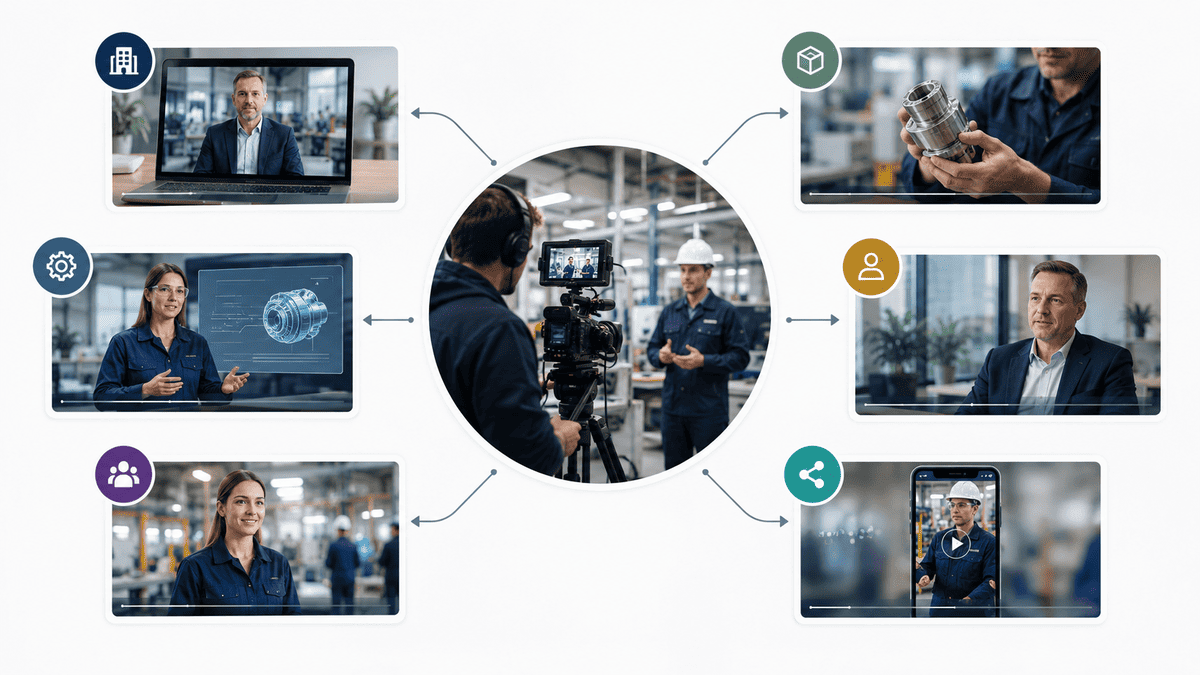
- One company overview
- One product demonstration
- Several short technical explainers
- Customer case studies
- Recruitment videos
- Short social clips
- Sales enablement videos
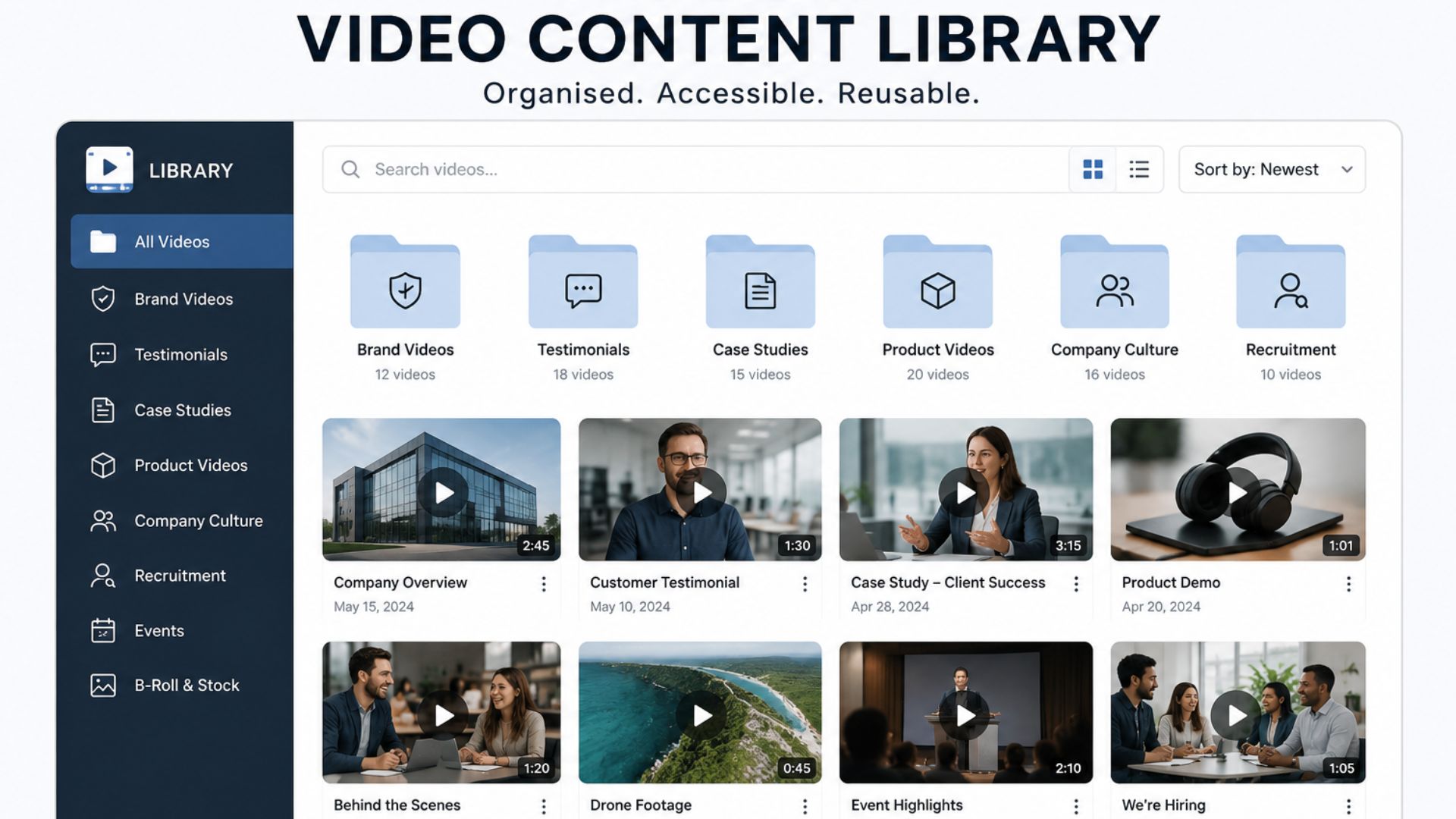
This creates a video library rather than one enormous corporate film trying to do everything.
It also means different audiences can receive the information most relevant to them.
A procurement manager may want to understand your capabilities.
An engineer may want to see technical detail.
A prospective employee may care more about the people and working environment.
The content should reflect those different needs.
How to Make Technical Video Easy to Understand
Technical audiences do not necessarily want less detail.
They want relevant detail.
The mistake is assuming that making a video accessible means removing the technical information.
It doesn't.
Instead, structure the information so the viewer understands why it matters.
A useful framework is:
Start with the problem
What is the customer trying to solve?
Explain the solution
What does your technology, process or expertise do differently?
Show it
Use real footage, demonstrations, diagrams, animation or B-roll.
Prove it
Use results, examples, customer experiences, testing or measurable outcomes where appropriate.
Give the viewer a takeaway
What should they understand or do next?
This approach allows you to keep technical credibility without forcing viewers through a long explanation before they understand the point.
Mango's recent guidance on turning technical expertise into video makes a similar distinction: the expertise itself is rarely the problem; the challenge is presenting it in a way that gives the viewer a reason to care.
Film the People, Not Just the Machinery
Machines look impressive.
But people create connection.
A manufacturing video made entirely of machinery can quickly start to feel like a catalogue.
The people operating those machines give the business context.
Film engineers discussing their work.
Show technicians solving problems.
Capture employees working naturally.
Interview leadership about the company's direction.
Show the people responsible for quality.
This also gives the audience something they can relate to.
Your technology demonstrates capability.
Your people demonstrate expertise.
Together, they tell a much stronger story.
For Irish businesses in particular, that human element can make technical brands feel more approachable without taking away from their professionalism. The strongest productions often balance impressive visuals with genuine conversations rather than making every shot feel staged.
B-Roll Is Especially Important for Manufacturing
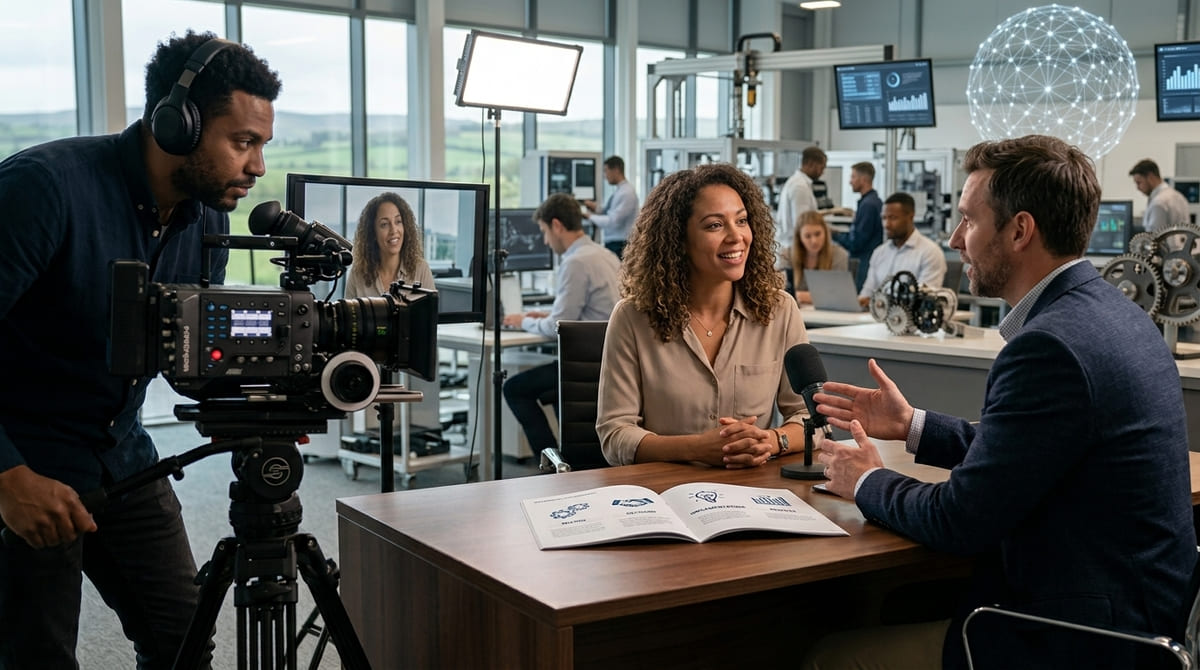
Interview footage can explain what a company does.
B-roll shows it.
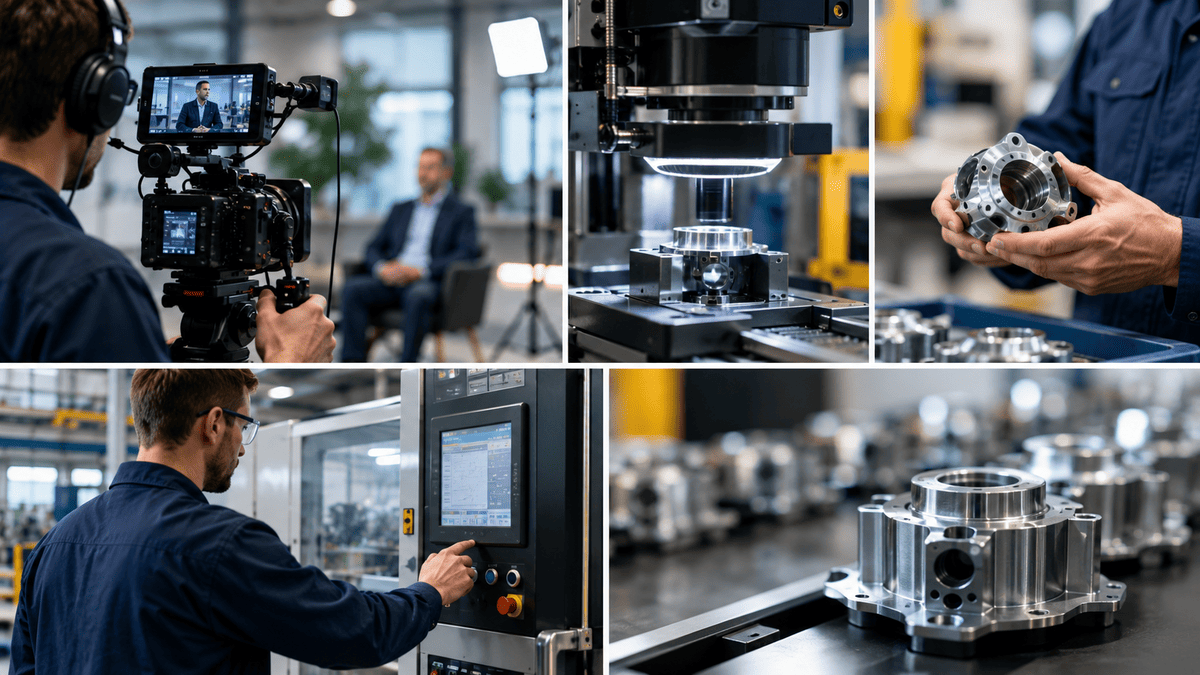
For manufacturing and engineering productions, useful B-roll could include:
- Machinery operating
- Close-ups of components
- Employees working
- Quality inspections
- Computer-controlled systems
- Materials moving through production
- Product assembly
- Packaging
- Testing
- Warehouse operations
- Finished products
- Exterior facility shots
- Drone footage
The more useful footage you capture during production, the more flexibility you have in the edit.
It also makes interviews much more engaging because you can cut away from a talking head and show the process being discussed.
For example, if an engineer says:
"We use automated inspection to identify defects before the product leaves the facility."
Don't leave the viewer looking at the engineer for the entire sentence.
Show the inspection system.
Show the product.
Show the process.
Let the visuals support the words.
Plan Carefully Around a Working Factory
Filming in a manufacturing environment is very different from filming in a meeting room.
Production schedules cannot always be interrupted for a camera crew.
There may be safety requirements, restricted areas, confidential information, PPE requirements, machinery that cannot be stopped and operations that happen only at particular times.
Good planning matters.
Before filming, establish:
- Site access requirements
- Health and safety procedures
- PPE requirements
- Restricted areas
- Confidential or sensitive information
- Production schedules
- Key machinery that needs to be operational
- Interview locations
- Noise levels
- Lighting conditions
- Staff availability
- Any required permissions
The production team should work around the business wherever possible.
You should not have to shut down an important production process just to get one shot.
Instead, plan the shoot around the operation.
If a particular machine runs only during a certain window, make sure that window is prioritised.
If a key employee is available for only 30 minutes, build the interview around their schedule.
This sounds simple, but proper pre-production can make the difference between an efficient shoot and a frustrating one.
Use Animation When the Camera Can't Show Enough
Real footage should usually be the foundation of a manufacturing video.
But sometimes it cannot tell the entire story.
Animation and motion graphics can help explain:
- Internal mechanisms
- Data flows
- Engineering concepts
- Product architecture
- Invisible processes
- Technical specifications
- Before-and-after comparisons
- Complex systems
- Step-by-step processes
You can also use simple graphics to highlight measurements, numbers or key features without interrupting the flow of the video.
The goal is not to add animation because it looks impressive.
It should solve a communication problem.
If a real camera can explain something clearly, film it.
If the important part happens inside a machine where the viewer cannot see it, animation may be the better option.
Think Beyond the Main Video
A manufacturing video should not necessarily end with one three-minute film.
A single well-planned shoot can create a much larger content library.
For example, one production could produce:
- A 2–3 minute company film
- A product demonstration
- Several short technical clips
- Interview snippets
- Recruitment content
- LinkedIn videos
- Website footage
- Sales presentation clips
- Trade show content
- Customer-facing process footage
This is where production planning becomes particularly valuable.
If you know you need several outputs before filming begins, you can capture the footage and interviews accordingly.
You may only need one production day to create content that supports the business for months.
That is a much better approach than producing one video and then starting from scratch every time another piece of content is needed.

Where Should Manufacturing Videos Be Used?
Creating the video is only part of the job.
It also needs to reach the people who matter.
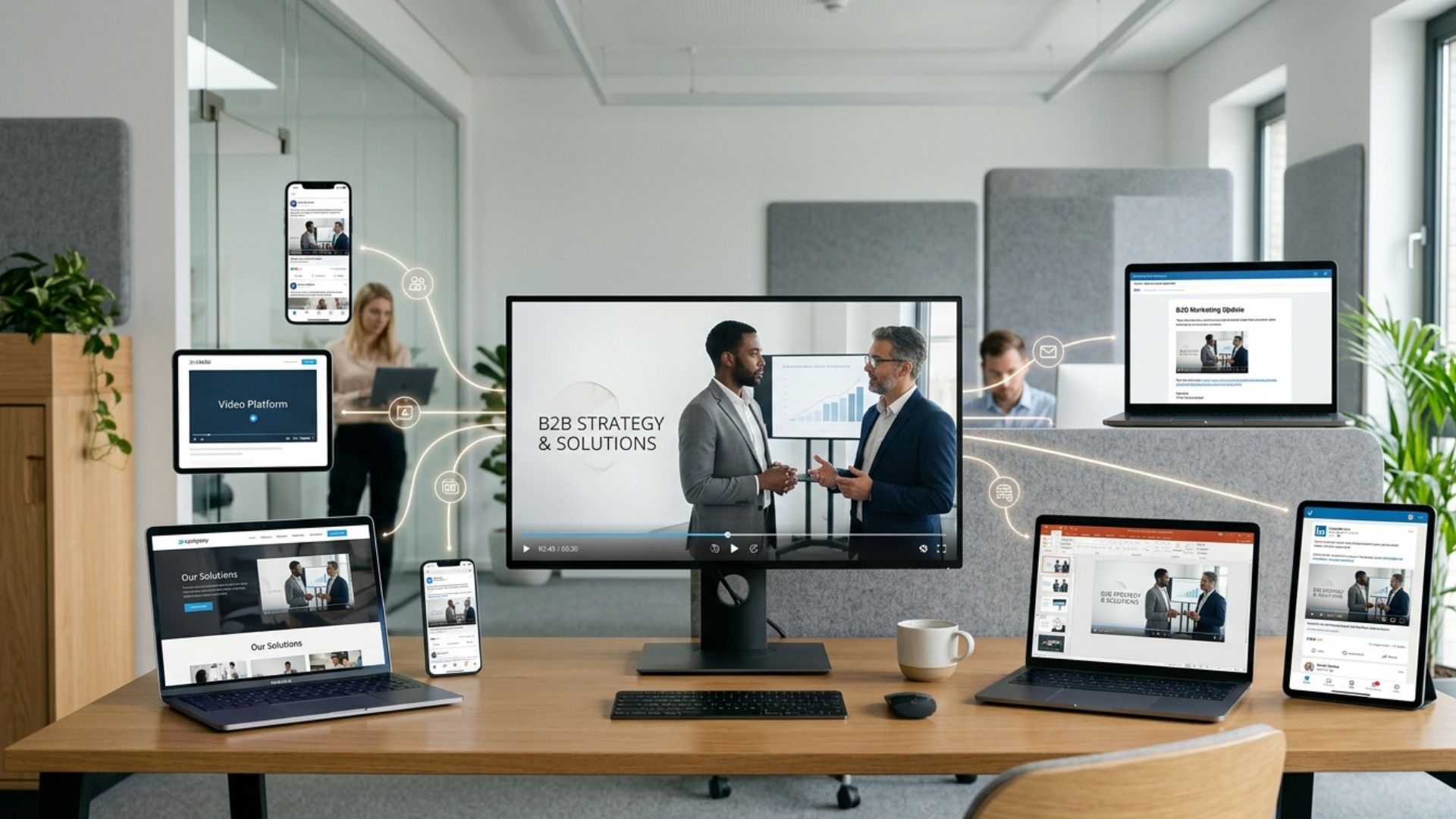
Manufacturing and technical businesses can use video across:
Your website
Place the most relevant video on the page where the viewer needs that information.
A company overview can support an About or homepage.
A product demonstration can sit directly on a product page.
A process video can support a manufacturing capabilities page.
Sales presentations
Give sales teams something more persuasive than a PowerPoint slide.
A short video can demonstrate equipment, explain a process or introduce the company before a meeting.
Shorter clips from a larger production can become regular content.
An engineer explaining one useful point can often make a stronger LinkedIn post than a generic company update.
Trade shows and exhibitions
Video can help attract attention in busy exhibition environments and communicate your capabilities to visitors who may only stop for a few seconds.
For trade shows, consider versions that work without sound, using captions and strong visual storytelling.
Recruitment
Use real footage of the workplace to give candidates a better idea of what joining the business actually looks like.
Email and outreach
A relevant product or case study video can support sales conversations and give prospects something useful to watch after a meeting.
The important thing is to think about distribution before production.
Knowing where the content will live should influence its length, format and structure.
What Makes Manufacturing Video Look Professional?
Professional production is not simply about using an expensive camera.
For manufacturing businesses, quality often comes from the details.
Strong lighting
Industrial spaces can have difficult lighting conditions, so interviews and important shots may need additional lighting.
Clean audio
Factories can be extremely loud.
Professional microphones and careful interview planning are essential if viewers need to hear technical explanations clearly.
Purposeful camera movement
Gimbals, sliders or controlled handheld movement can add energy without making the footage feel artificial.
Detailed B-roll
Close-ups of machinery, components, hands, controls and materials can make the production feel more immersive.
Consistent branding
Graphics, titles, colours and visual design should feel like part of the company's brand.
Good editing
The final edit should remove unnecessary information and keep the story moving.
A polished manufacturing video should feel professional without becoming overly cinematic for the sake of it.
The technology and people should remain the focus.
Common Manufacturing Video Mistakes
Making the video a company history lesson
Your history may matter, but it is rarely the reason a new prospect keeps watching.
Connect your history to what the business can deliver today.
Showing machinery without explaining why it matters
A machine may look impressive.
Explain what it enables.
Trying to speak to everyone
Choose a primary audience.
A procurement director, engineer, employee and investor may need very different information.
Using too much jargon
Technical language can demonstrate expertise, but unnecessary terminology can create distance.
Treating the shoot as a one-off
Plan for multiple outputs before production begins.
Ignoring audio
A beautiful factory shot with poor interview audio still feels unprofessional.
Filming without a clear story
A collection of attractive factory shots is not automatically a useful marketing video.
There needs to be a reason for the viewer to keep watching.
How to Plan a Manufacturing Video Production
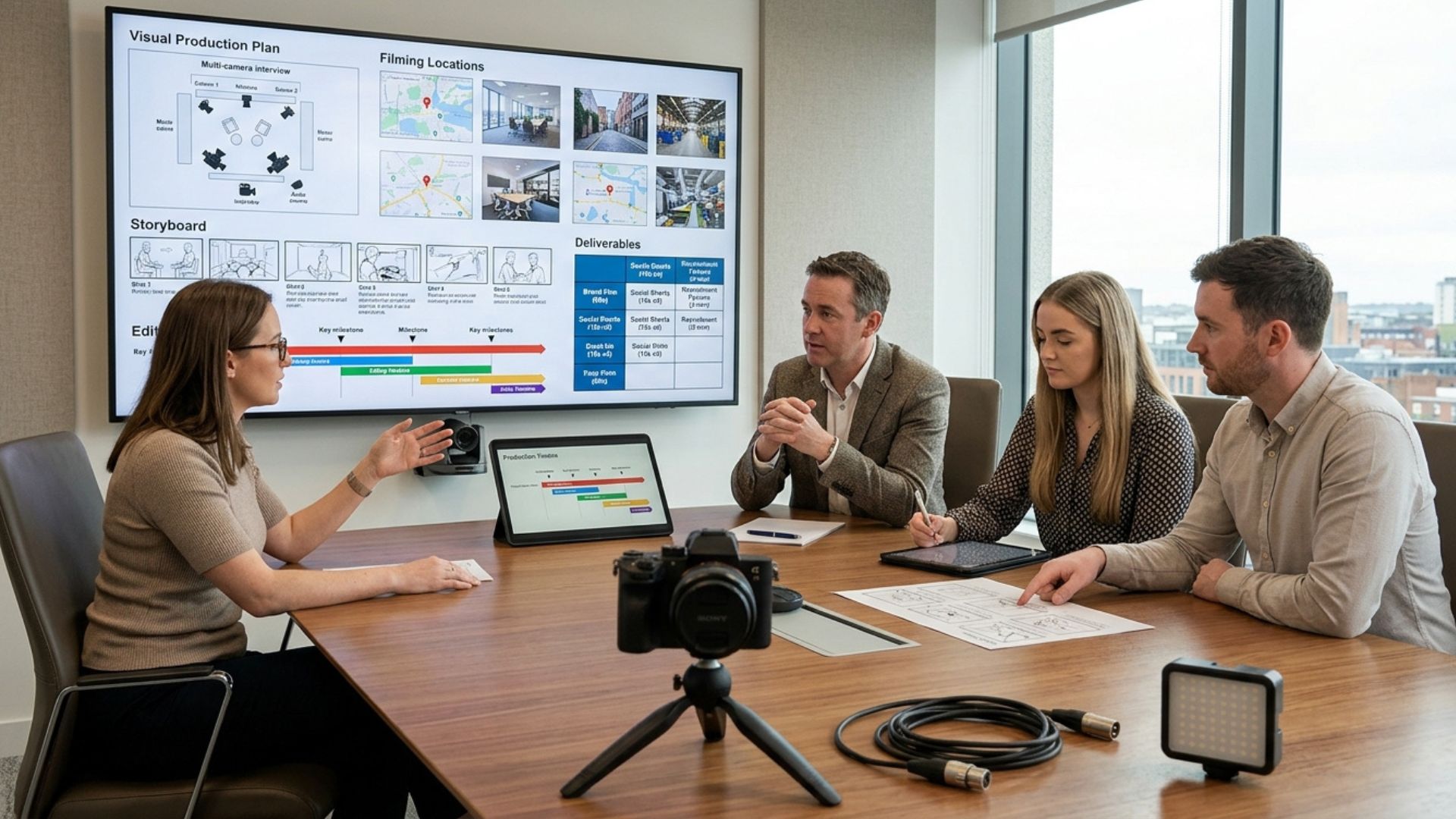
Before contacting a production company, you do not need a finished script.
You simply need a clear starting point.
Prepare these five things:
1. Your objective
What business problem should the video help solve?
2. Your audience
Who needs to watch it?
3. Your key message
What is the one thing you want the viewer to remember?
4. Your locations and processes
What should the production team see, and what cannot be filmed?
5. Your deliverables
Do you need one main video, several cut-downs, social clips, product demonstrations or multiple formats?
From there, the production company can help shape the concept, script, schedule and shot list.
Mango Media's broader production approach covers the same principle: the strongest productions begin with consultation and planning before moving through scripting, production, editing, colour grading, review and delivery.
The Best Manufacturing Videos Don't Feel Like Advertisements
This is perhaps the most important point.
Technical buyers are not necessarily looking for a flashy advertisement.
They want confidence.
Can you do the work?
Do you understand the problem?
Do you have the equipment?
Do you have the people?
Can you deliver consistently?
Can I trust you with this project?
The best manufacturing videos answer those questions without having to say them directly.
They show the facility.
They show the process.
They introduce the experts.
They demonstrate the product.
They provide evidence.
And they make a technically complex business easier to understand.
That is the real value of manufacturing video production.
From Factory Floor to Sales Asset
If your business already has impressive equipment, experienced engineers and processes worth explaining, you probably have more video content available than you realise.
The next step is not simply booking a camera crew and filming everything.
Start by identifying the business questions your customers need answered, then build the production around those questions. A single well-planned shoot can become a company film, product demonstrations, sales assets, recruitment content and a library of shorter videos that continue working long after filming ends.
Conclusion
The strongest manufacturing and technical videos do not try to make complex businesses look simple. They make them clear — showing the people, processes, technology and expertise that give customers a reason to trust the business. The key takeaway: don’t just tell potential customers what your manufacturing or engineering business can do — show them. A well-planned production can turn your factory floor and technical expertise into content that keeps supporting sales, marketing and recruitment long after the cameras leave.
If your business has a story worth showing, the next step is turning that capability into a production with a clear commercial purpose. Mango Media can help you plan and create content around the people, processes and expertise that make your business different. Explore our video production services, use the instant price calculator for an initial estimate, or get in touch to start a no-obligation conversation.
Frequently Asked Questions
How much does manufacturing video production cost?
Manufacturing video production costs vary depending on the scope of the project. Factors such as filming days, locations, crew size, equipment, interviews, animation, drone footage and the number of final videos can all affect the price. A simple factory video will cost less than a larger production covering multiple locations and deliverables.
What should a manufacturing company video include?
A manufacturing company video should show the people, processes, facilities, equipment and products that make the business different. It can also include customer results, technical expertise and interviews with key employees. The most important thing is to focus on what potential customers need to see and understand rather than trying to include everything.
How can manufacturing companies use video for marketing?
Manufacturing companies can use video across their website, LinkedIn, sales presentations, email campaigns, trade shows and recruitment channels. Popular formats include company videos, factory tours, product demonstrations, manufacturing process videos, technical explainers and customer case studies. One well-planned shoot can also produce multiple pieces of content for different marketing and sales needs.
Similar blogs:



















![How to Write a Promo Video Script (Free Template Included) [2026 Guide]](https://cdn.prod.website-files.com/6226fcc37e2eb518b6e69a7f/69c3804c0b9ea78696bd89e0_covertab11.jpeg)


.jpg)
%20(1)%20(1).jpg)
.jpg)






We'd love to hear from you! Reach out to us today for a chat about our services, pricing, or just to say hello!


