
In today’s oversaturated inboxes, getting your email noticed — let alone opened — is no easy feat. In this article, we’ll explore the power of video in email campaigns, how to embed video content the right way, best practices to maximise performance, and how to track your results. Whether you’re a startup, marketer, or creative agency, using video in your emails can be a game-changer for audience retention and conversions.
What Does "Ownership" Mean in Video Production?
When a business asks, "Do we own the video?", there are actually several questions behind it.
You might mean:
- Do we own the finished video?
- Do we own the raw footage?
- Can we edit the video ourselves?
- Can another production company edit it later?
- Can we use it for paid advertising?
- Can we reuse the footage in future campaigns?
- Can we use it internationally?
- Do we receive the editable project files?
- Can the production company use the video in its portfolio?
These questions involve different aspects of copyright, licensing, deliverables and contractual rights.
Receiving a finished video file does not necessarily answer all of them.
For businesses commissioning video production in Ireland, the safest approach is to establish the relevant rights and deliverables in writing before production begins.
Don't assume. Make the rights and deliverables clear before the cameras start rolling.
Do Businesses Automatically Own the Raw Footage?
Not necessarily.
One of the biggest misconceptions about commissioned video production is that paying for the production automatically means the client owns every piece of material created during the shoot.
In Ireland, copyright ownership can depend on the commissioning agreement. The Intellectual Property Office of Ireland (IPOI) explains that where a work is commissioned, ownership should be addressed in the contract. If copyright is being assigned, the assignment must be in writing and signed by or on behalf of the person assigning it.
A production agreement might therefore provide for:
- Copyright ownership or transfer
- A licence to use the finished video
- Delivery of raw footage
- Delivery of project files
- Rights to edit or repurpose the content
- Advertising and distribution rights
- Portfolio rights for the production company
The exact arrangement can vary between projects.
That's why the question isn't simply:
"Did we pay for the video?"
A better question is:
"What rights and deliverables are included in our agreement?"
What Is the Difference Between the Finished Video and Raw Footage?
This distinction is important because the finished video and the material captured during production are not the same thing.
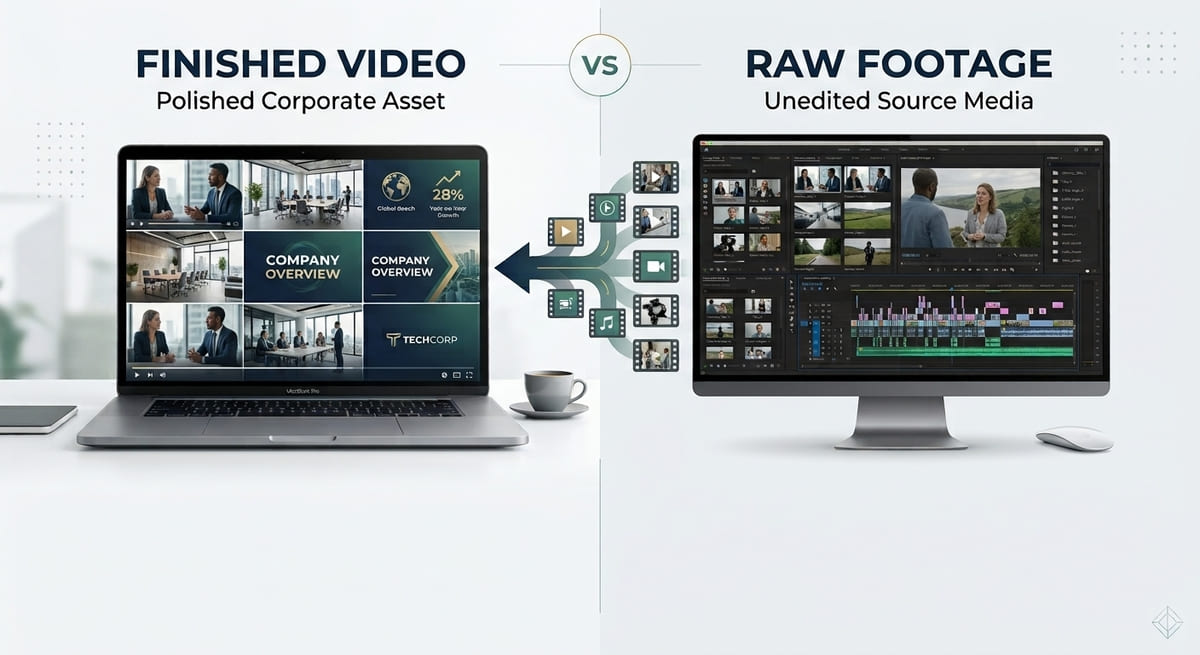
The Finished Video
The finished video is the edited, approved version delivered for use.
For example:
- A 90-second corporate video
- A product film
- A customer testimonial
- A recruitment video
- A brand film
This is usually the main deliverable a business expects.
Raw Footage
Raw footage is the unedited material captured during filming.
A single production day could include:
- Interviews
- Product demonstrations
- B-roll
- Establishing shots
- Multiple takes
- Alternative answers
- Different camera angles
- Behind-the-scenes footage
Much of this material may never appear in the final edit.
However, unused footage can still have future value. An interview answer that wasn't relevant to the original video might become a useful social clip six months later, for example.
The important distinction is:
Having access to raw footage is not necessarily the same as owning the copyright in that footage.
If raw footage matters to your long-term content strategy, clarify both what you receive and what you're allowed to do with it.
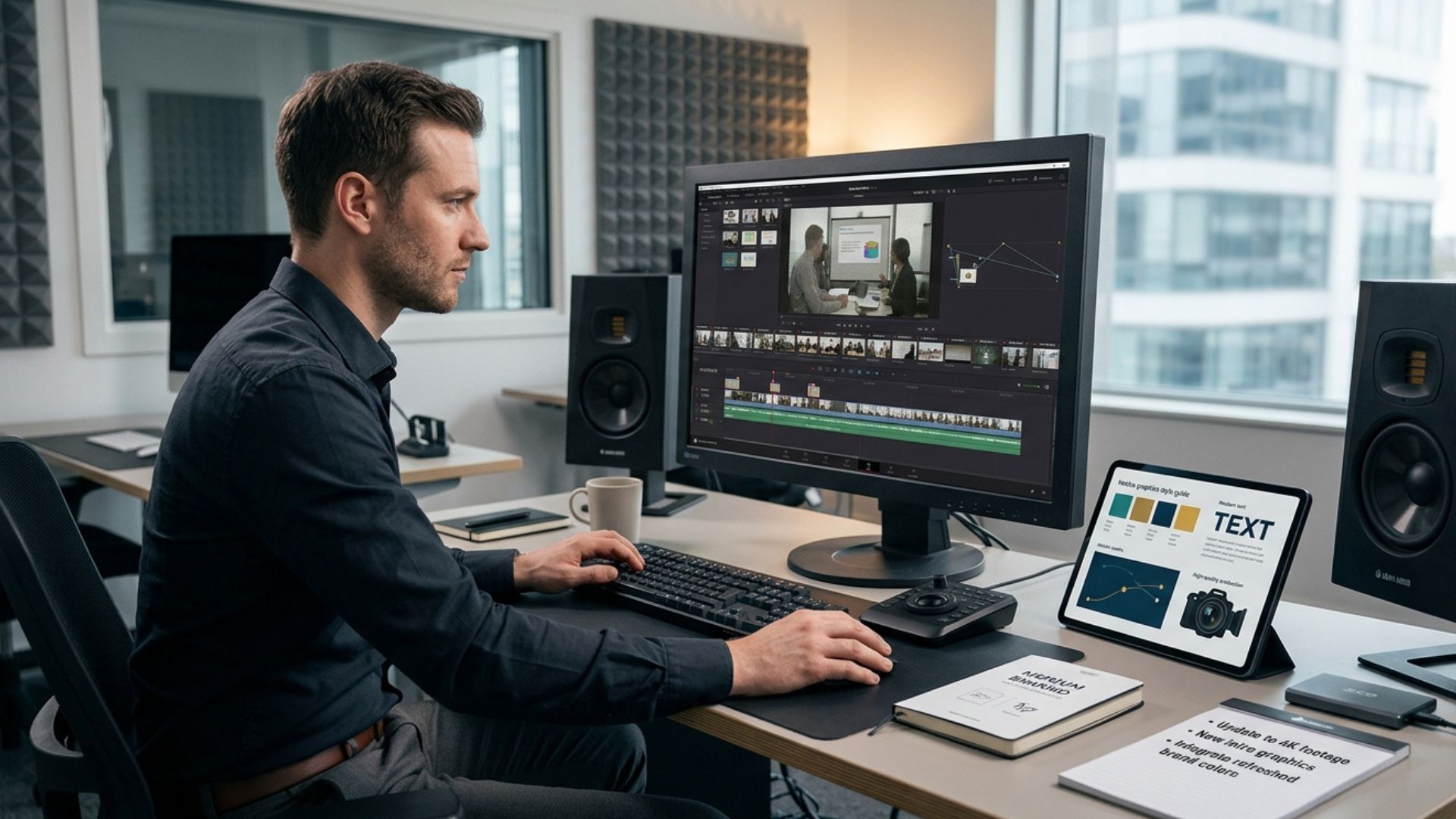
What About the Editing Project Files?
Businesses sometimes think about the finished video and raw footage but overlook the editable project files.
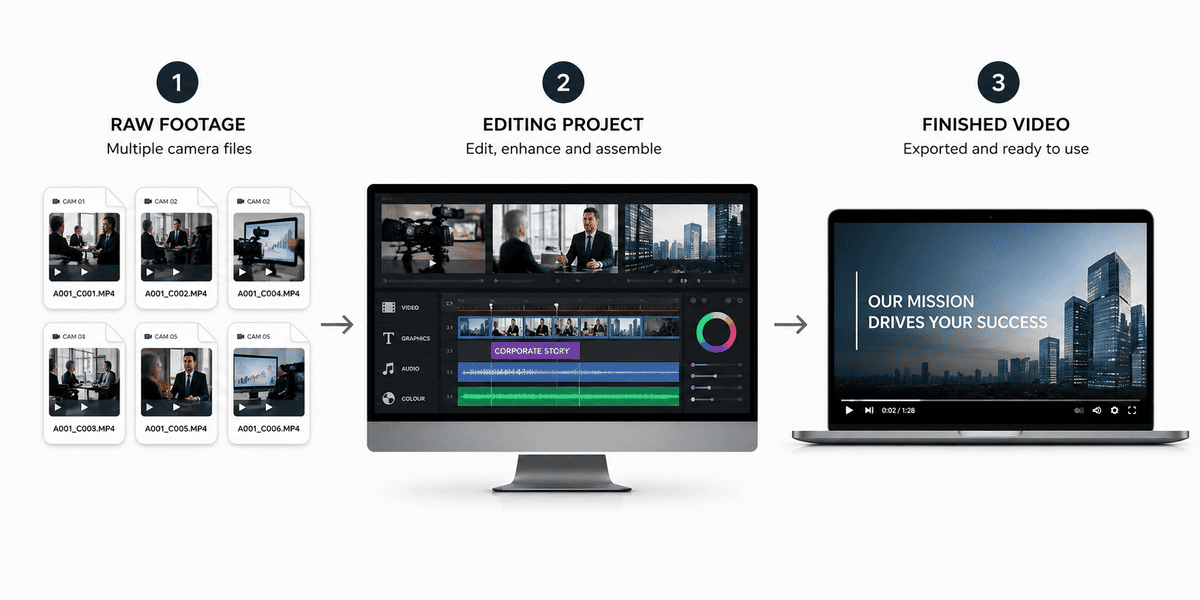
These are the working files used by the editor to create the final video. Depending on the production, they can contain:
- Video timelines
- Edited clips
- Graphics
- Motion elements
- Audio
- Colour adjustments
- Subtitles
- Project settings
The final MP4 is not the same thing as the editable project.
If you want another editor to modify the video later, having the project files may be useful.
For example, you might eventually need to update:
- Pricing
- Contact details
- Staff members
- Product features
- Branding
- Calls to action
- Service information
However, project files are not necessarily included in every production company's standard delivery.
If future editing matters to your business, ask:
"Are the editable project files included in the final delivery?"
What Rights Should a Business Clarify Before a Video Shoot?
Rather than focusing only on raw footage, businesses should consider the entire lifecycle of the video.
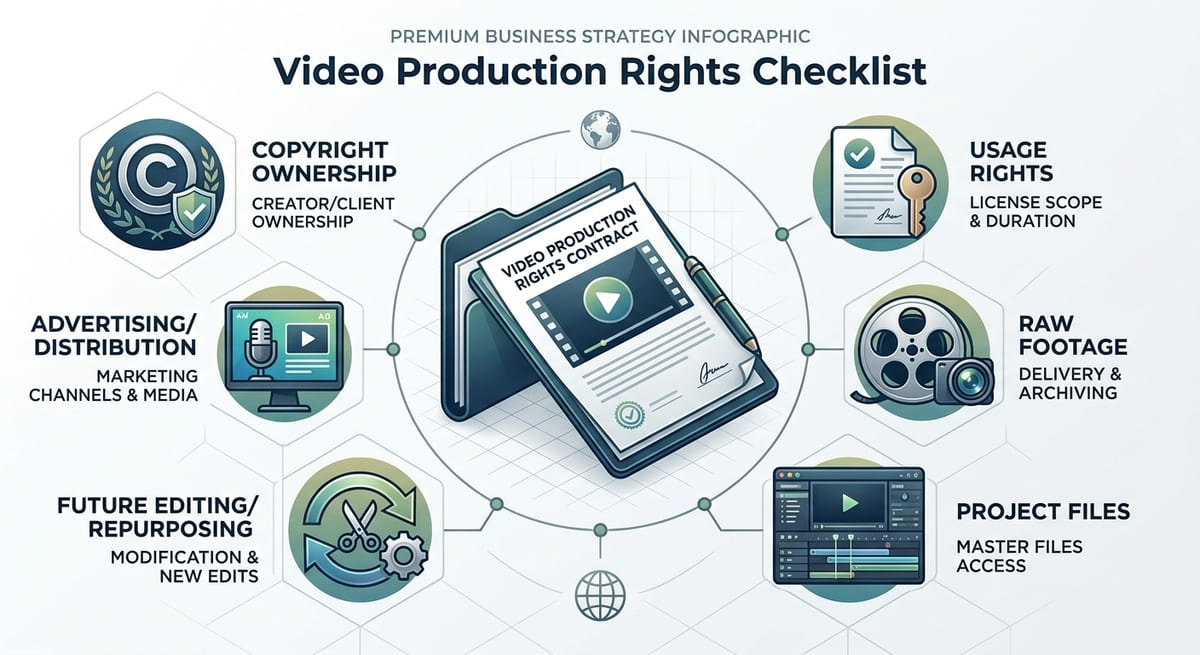
1. Copyright Ownership
Ask who owns the copyright in the finished work and, where relevant, the underlying footage.
If copyright ownership is being transferred to your business, make sure the agreement clearly reflects that.
If ownership isn't being transferred, your business may instead receive a licence allowing you to use the content under agreed terms.
2. Usage Rights
A licence can define what your business is permitted to do with the video.
This might include:
- Website use
- Social media
- YouTube
- Presentations
- Commercial marketing
- Paid advertising
- Future campaigns
- Different territories
A business can have broad usage rights without necessarily owning every underlying copyright involved in the production.
The important thing is that the rights match your intended use.
3. Raw Footage
If you want the raw footage, ask whether it is included.
Clarify:
- What footage will be delivered
- What format it will be supplied in
- Whether there is an additional charge
- Whether it is completely unedited
- Whether you can edit and repurpose it
- How long the footage will be retained
Don't assume that the production company will automatically hand over the entire shoot archive.
4. Project Files
If your business wants future editing flexibility, discuss editable project files separately from raw footage.
Ask whether they are included and, if not, whether they can be supplied under agreed terms.
5. Future Editing and Repurposing
Think beyond the first version of the video.
You may eventually want to:
- Cut a long video into short clips
- Create a different version for social media
- Update a call to action
- Produce a shorter sales version
- Adapt the content for a new campaign
Make sure your agreement gives you the rights and access required for the kind of future use you have in mind.
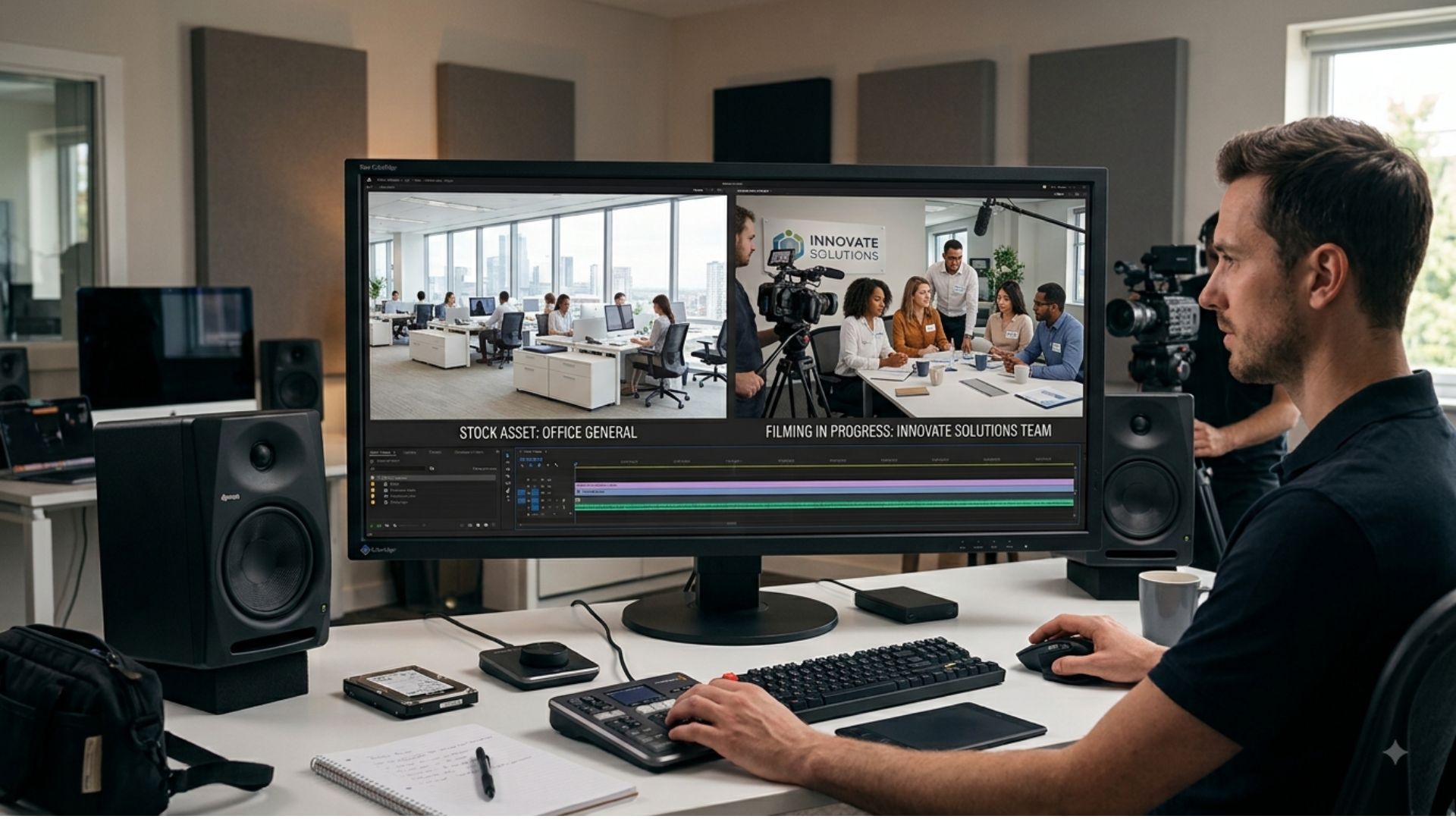
What About Music, Stock Footage and Other Third-Party Assets?
This is an area businesses should pay particular attention to.
Your video may contain material licensed from third parties, such as:
- Music
- Stock footage
- Stock photography
- Fonts
- Graphics
- Voiceovers
The fact that an asset appears inside your finished video does not necessarily mean your business owns the underlying rights.
For example, a music licence may have specific conditions relating to:
- Platform
- Territory
- Duration
- Commercial use
- Advertising
This becomes particularly important if you plan to take a video originally created for your website and later use it in paid advertising.
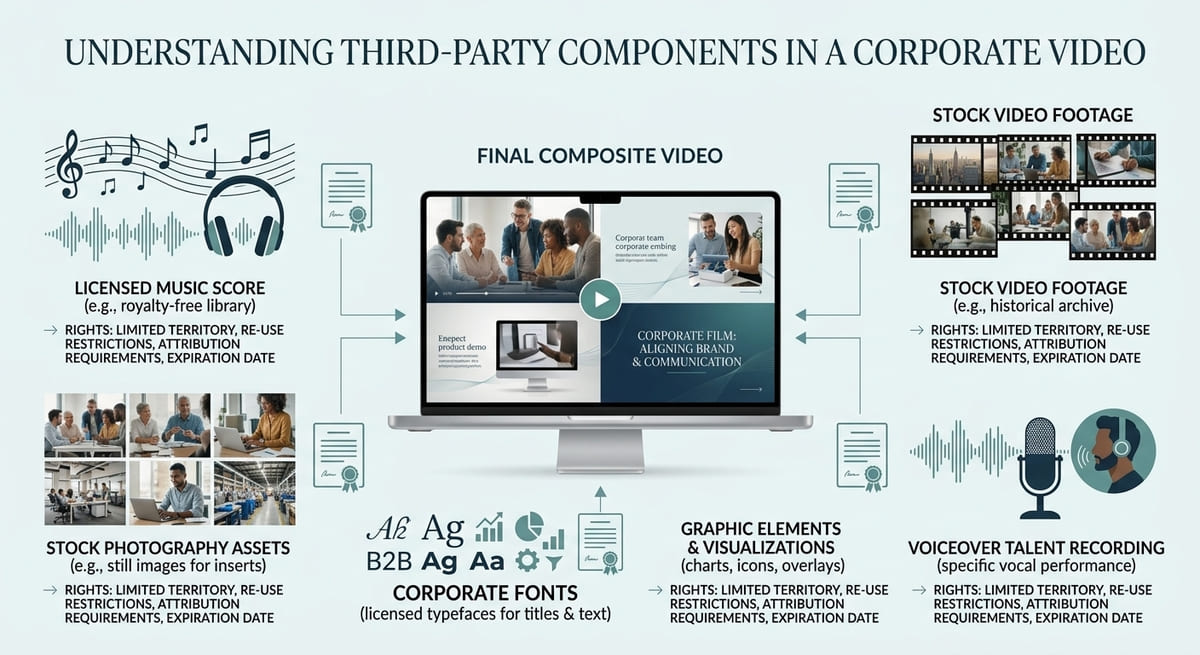
Before production, ask:
"Are the music and other third-party assets licensed for the ways we intend to use this video?"
This can help prevent problems when you start repurposing the content later.
Can You Use the Video for Paid Advertising?
If there is even a possibility that your video will eventually be used in paid advertising, mention it during the planning stage.
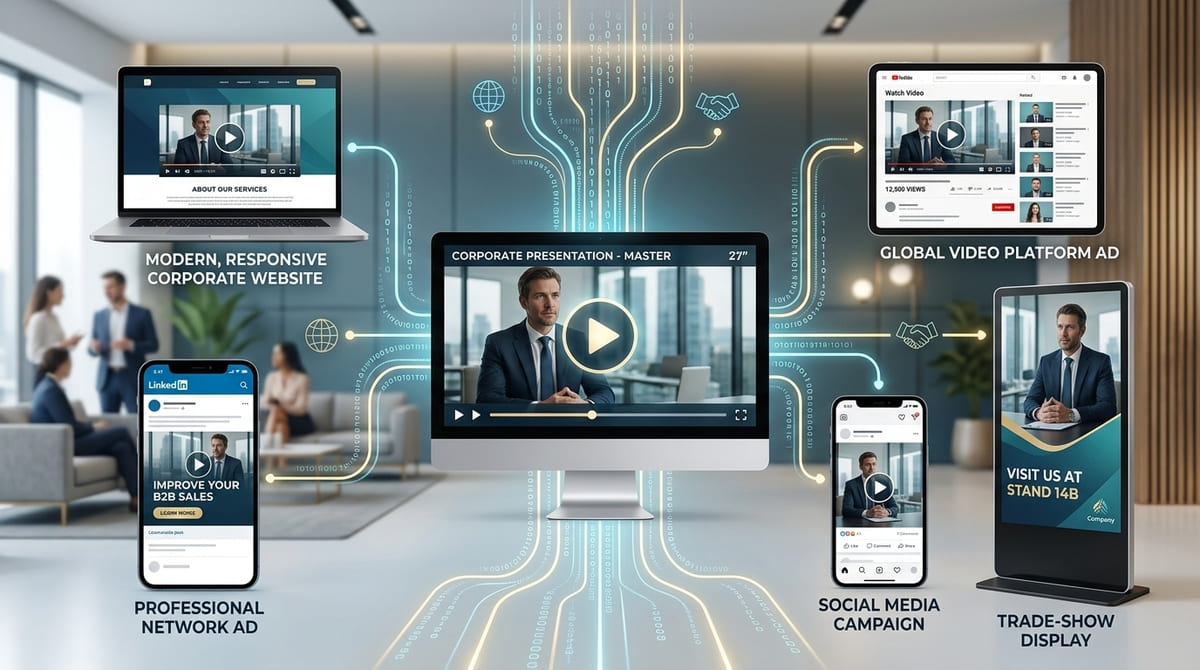
A project might begin as:
Website → Organic social
and later expand into:
LinkedIn Ads → YouTube Ads → Meta Ads → Trade-show screens
The intended distribution can affect licensing requirements for certain third-party materials.
Planning for those uses from the beginning is much easier than discovering a restriction after a campaign has already been produced.
Can You Use the Video Internationally?
The same principle applies to geography.
Your business might initially plan to use a video only in Ireland but later expand into:
- The UK
- Europe
- North America
- Other international markets
If your production includes licensed music, stock assets, talent or other third-party material, the relevant rights may need to cover those territories.
If international use is part of your strategy, tell your production company before production begins.
Can the Production Company Use Your Video in Its Portfolio?
There is another question worth clarifying:
Can the production company publicly showcase our project?
Production companies often want to feature completed work on:
- Their website
- Showreel
- Social media
- Case studies
- Pitch decks
- Awards submissions
For many businesses, that's perfectly fine.
But it may be different if the project involves:
- Confidential information
- An unreleased product
- A campaign that hasn't launched
- Sensitive business information
If confidentiality matters, agree on whether the work can be shown publicly and, importantly, when it can be shown.
For example, a product launch video may need to remain confidential until the official launch date.
What About the People Appearing in the Video?
Copyright isn't the only consideration when producing a business video.
Your project may feature:
- Employees
- Customers
- Directors
- Presenters
- Experts
- Actors
Depending on the production, appropriate permissions or releases may be required.
Businesses should understand who is responsible for securing those permissions and how the resulting footage can be used.
This is particularly relevant for customer testimonials and other videos featuring people outside your organisation.
It's better to clarify these arrangements before filming rather than discovering a problem after the video has already been produced.
What Should Your Video Production Agreement Cover?
Before approving a project, make sure the agreement clearly addresses the important rights and deliverables.
A useful checklist includes:
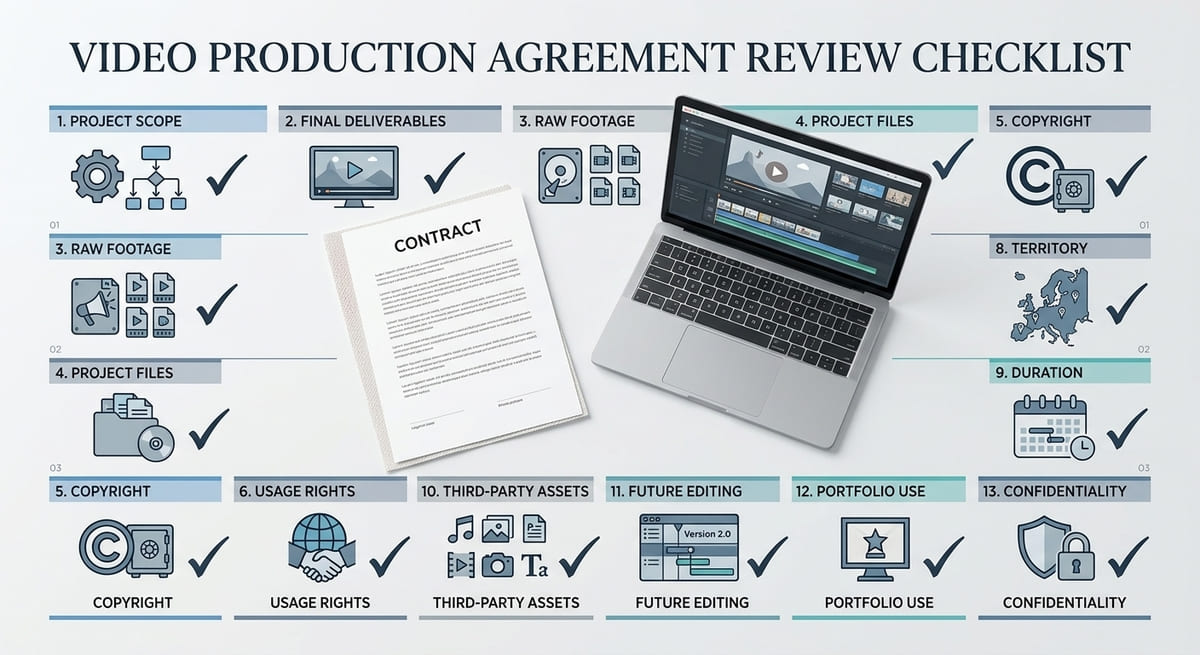
Project scope
What exactly is being produced?
Final deliverables
Which finished videos and versions will you receive?
Raw footage
Is the unedited footage included, and in what format?
Project files
Will editable files be supplied?
Copyright
Who owns the copyright?
Usage rights
Where and how can the business use the finished content?
Advertising
Can the video be used in paid campaigns?
Territory
Are there geographic restrictions?
Duration
Are any usage rights time-limited?
Third-party assets
How are music, stock footage and other licensed materials handled?
Future editing
Can the content be modified or repurposed?
Portfolio use
Can the production company showcase the project?
Confidentiality
Are there restrictions on public use?
The exact terms will depend on the project, but the goal is simple:
Both sides should know what is being delivered and what each party is permitted to do with it.
Should You Always Ask for the Raw Footage?
No.
Raw footage can be extremely useful, but that doesn't mean every business needs to receive hours of unedited material after every shoot.
It makes sense to request it if you plan to:
- Create future edits
- Repurpose interviews
- Produce additional social clips
- Build a content library
- Work with another editor
- Archive footage for future campaigns
But if your business only needs a finished corporate video, raw footage may create additional storage and management requirements without providing much practical value.
Instead of asking:
"Should we get the raw footage?"
ask:
"What are we actually going to do with it?"
If you already have a content strategy that involves repurposing the footage over the next year or two, it may be a valuable asset.
If you're requesting it simply because you assume you should have it, it may not be necessary.
The right production arrangement is the one that supports your actual business and content strategy.

What If You Want Another Production Company to Edit the Footage Later?
This is another reason to clarify your rights and deliverables upfront.
You may eventually want:
- Your internal marketing team to make edits
- Another production company to create new versions
- A freelancer to produce social clips
- A different agency to repurpose the footage
If that flexibility matters, establish:
- Whether you receive the raw footage
- Whether you receive project files
- Whether you can modify the work
- Whether another company can work with the material
- Whether third-party assets can be reused
Otherwise, you could discover months later that you have the footage but don't have everything required to legally or practically create the new content you want.
A Simple Video Rights Checklist for Businesses
Before signing a video production agreement, ask:
☐ Who owns the copyright?
☐ What final video files will we receive?
☐ Is the raw footage included?
☐ Will editable project files be supplied?
☐ Can we edit and repurpose the content?
☐ Can we use the video for paid advertising?
☐ Are there geographic or time restrictions?
☐ Are music and stock assets properly licensed for our intended use?
☐ Can another editor or production company work with the footage?
☐ Can the production company use the project in its portfolio?
☐ Are there confidentiality restrictions?
☐ Who is responsible for permissions from people appearing in the video?
If these questions are answered before production begins, there is much less room for confusion later.
Why Clear Rights Matter for Your Long-Term Video Strategy
A professionally produced video doesn't have to be a one-off asset.
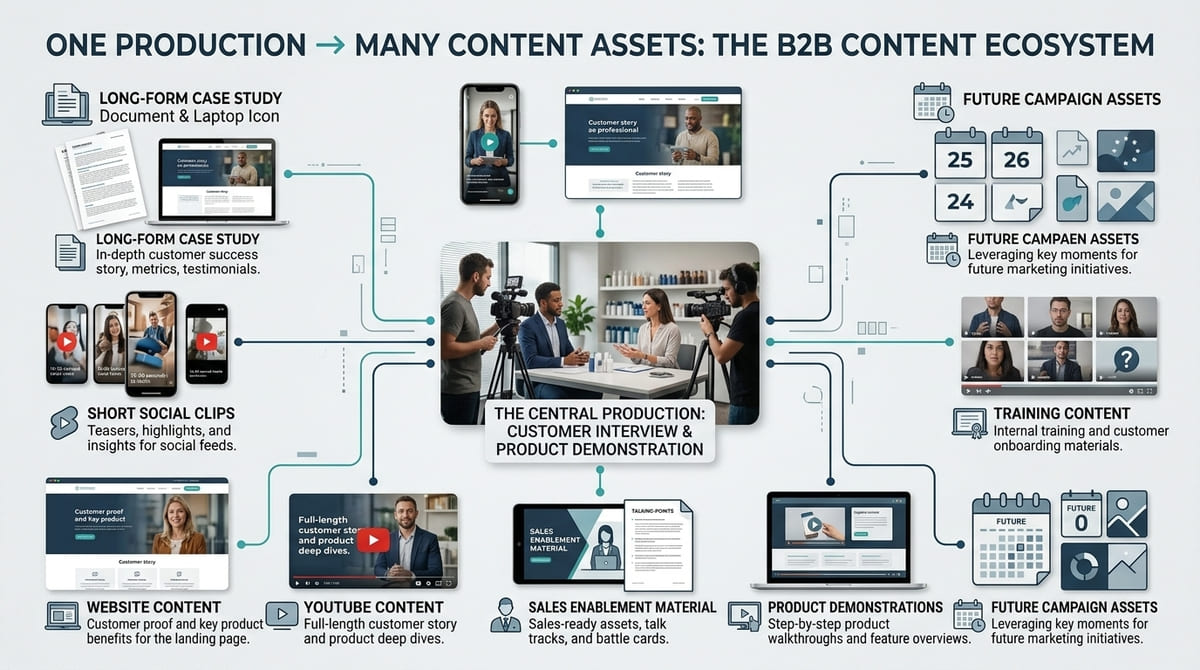
A single production can potentially support multiple business objectives.
A customer interview could become:
- A full case study
- Short social clips
- Website content
- Sales enablement material
A product shoot could produce:
- A product video
- Demonstration clips
- Website footage
- Training content
- Future campaign assets
An expert interview could become:
- A YouTube video
- LinkedIn clips
- FAQ content
- Blog material
- Sales content
This is why ownership and usage rights become more important when you're thinking strategically about video.
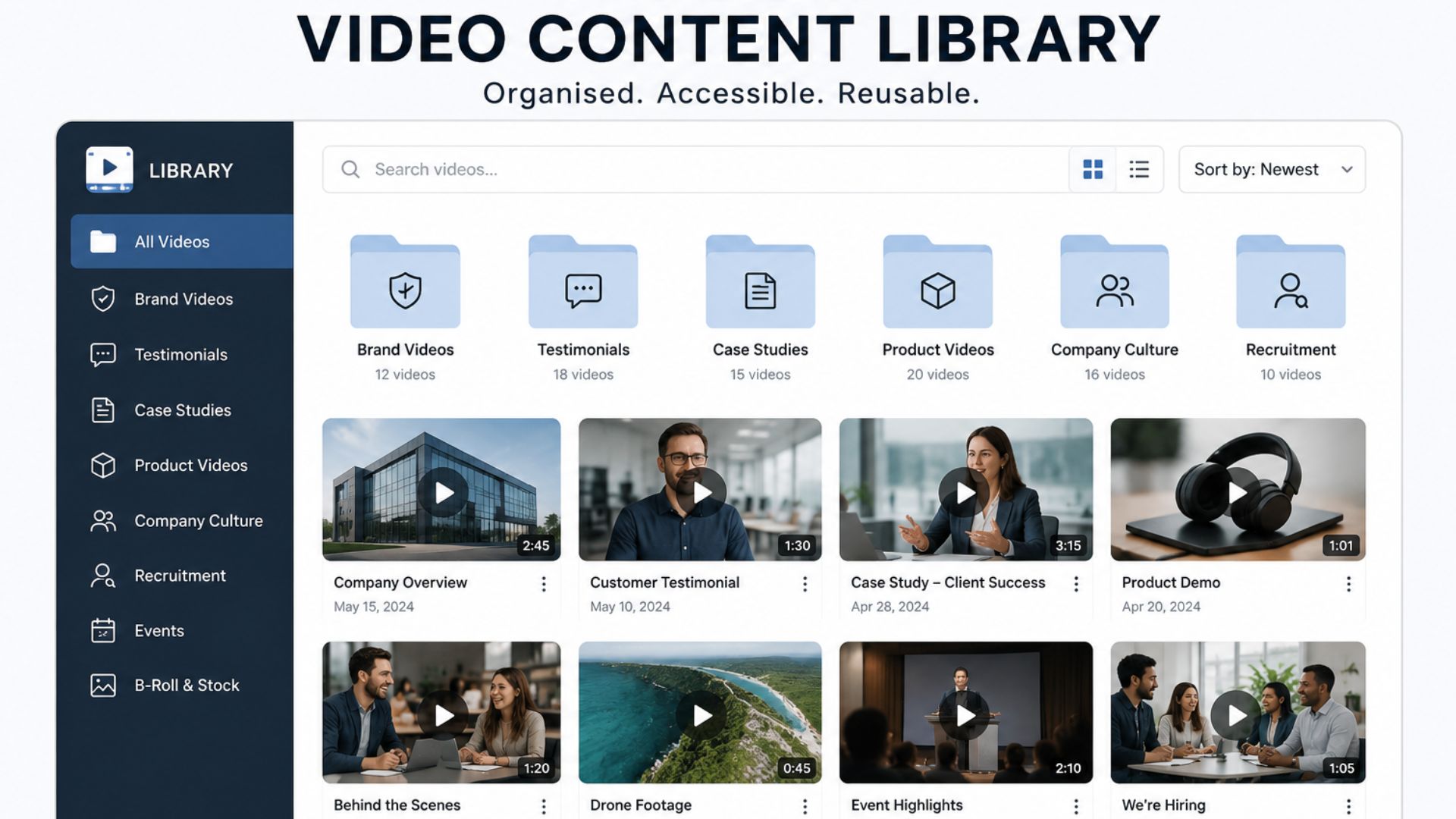
If you intend to build a long-term video content library, discuss that before filming.
The goal isn't simply to receive a finished MP4.
It's to make sure the production gives your business the content, flexibility and rights it needs to get maximum value from the investment.
What Businesses Should Clarify Before Hiring a Video Production Company
Ownership shouldn't be an afterthought.
It should be part of the conversation when you're comparing production companies and reviewing quotes.
A good production partner should be able to explain:
- What is included
- What you will receive
- How the content can be used
- What happens to raw footage
- How third-party assets are handled
- What rights are included
- What additional requirements could affect the project
This is also why comparing video production quotes involves more than looking at the final price.
A lower quote may not include the same deliverables, usage rights or production requirements as another proposal.
Likewise, a higher quote isn't automatically better.
The better question is:
Does the scope, quality, delivery and rights match what our business actually needs?
From Understanding to Planning
If you're planning a video project, this is the point where it's worth moving beyond simply asking, "Who owns the footage?" Think about what you actually want the production to give your business — the finished videos, future content opportunities, editing flexibility and the rights needed to use everything effectively. Defining those requirements before filming can make the production smoother and help you get more value from the investment.
Final Thoughts
The best time to clarify video ownership and usage rights is before the cameras start rolling — not after the final edit is delivered. Know what you're receiving, who owns it, where you can use it and what you can do with it later.
Because a great video shouldn't just work today. It should give your business the freedom to keep using, adapting and getting value from your investment long after the shoot is over.
Whether you're creating a corporate film, customer story, product video or wider content campaign, explore our video production services, use our instant price calculator for an initial estimate, or get in touch to discuss your project.
Frequently Asked Questions
Who owns the raw footage from a video production?
It depends on the agreement between the business and the production company. For commissioned work in Ireland, copyright ownership should be addressed in the contract, so businesses should not assume that paying for production automatically gives them ownership of all raw footage.
Do I own the video if I paid a production company to make it?
Not necessarily. Paying for video production and owning the copyright are separate issues. Your agreement may transfer copyright to your business or provide you with specific rights to use the finished video under a license.
Should I ask for the raw footage from a video production company?
If you plan to create future edits, repurpose interviews, produce social content or work with another editor, raw footage can be valuable. However, not every business needs it, so consider how you intend to use the footage before making it part of your production requirements.
Similar blogs:



















![How to Write a Promo Video Script (Free Template Included) [2026 Guide]](https://cdn.prod.website-files.com/6226fcc37e2eb518b6e69a7f/69c3804c0b9ea78696bd89e0_covertab11.jpeg)


.jpg)
%20(1)%20(1).jpg)
.jpg)






We'd love to hear from you! Reach out to us today for a chat about our services, pricing, or just to say hello!


