
In today’s oversaturated inboxes, getting your email noticed — let alone opened — is no easy feat. In this article, we’ll explore the power of video in email campaigns, how to embed video content the right way, best practices to maximise performance, and how to track your results. Whether you’re a startup, marketer, or creative agency, using video in your emails can be a game-changer for audience retention and conversions.
What Is a B2B Thought Leadership Video?
A B2B thought leadership video uses the knowledge, experience and perspective of someone inside a business to give an audience something genuinely useful to think about.
It might explain an industry trend, challenge a common assumption, answer a difficult customer question or offer an expert perspective on where an industry is heading.
The important part is that it is not primarily a sales pitch.
A promotional video might say:
"Here's what our company does."
A thought leadership video is more likely to say:
"Here's something you should know about the problem you're trying to solve."
That distinction matters.
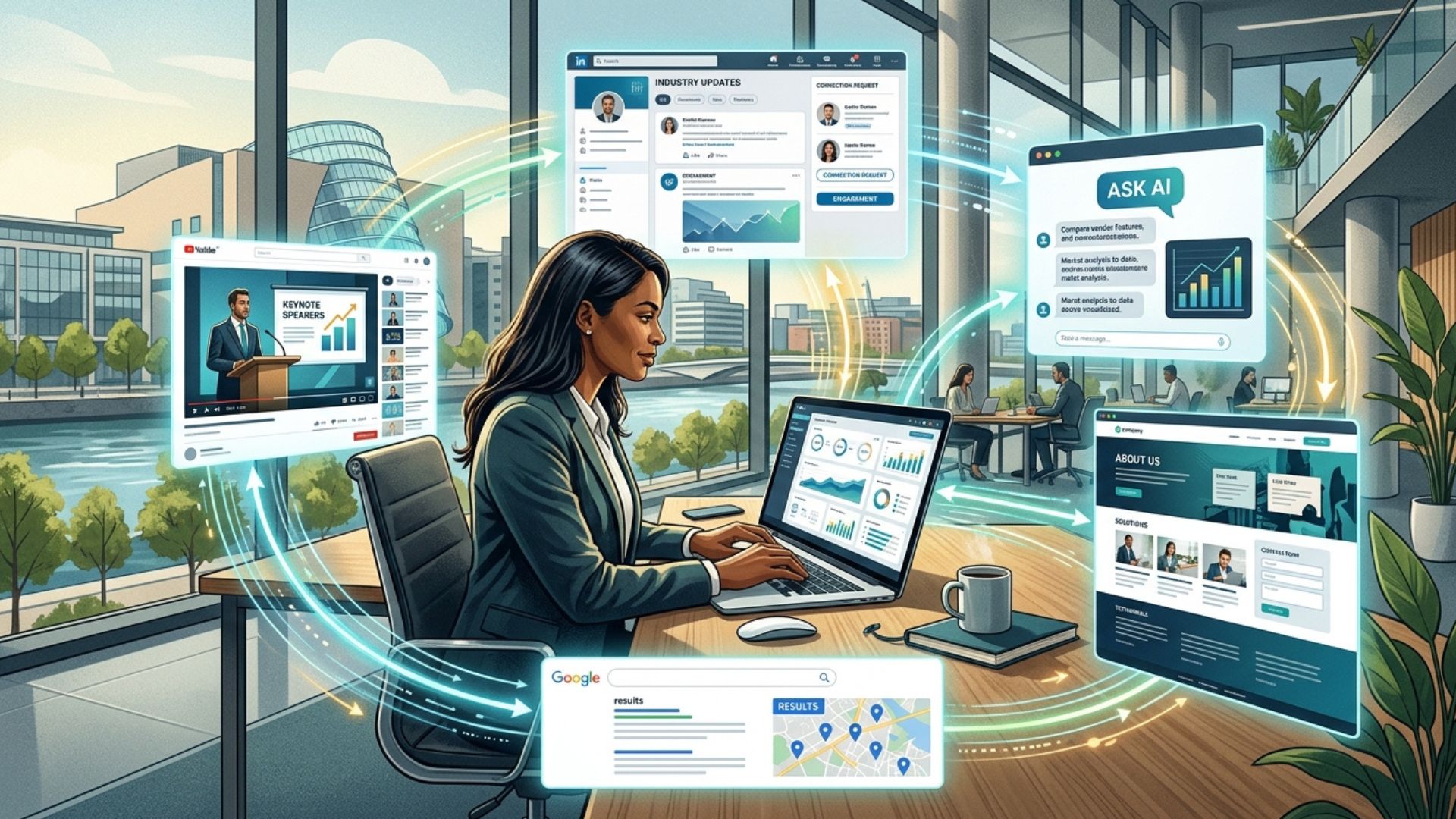
B2B buyers can research businesses long before they speak to sales. They may watch an expert on YouTube, see their posts on LinkedIn, read articles and encounter customer stories before ever filling in a contact form.
Thought leadership gives your business another way to enter that research process.
Instead of only appearing when someone is ready to buy, you can become useful while they are still figuring out what they need.

Why Does Thought Leadership Matter in B2B?
B2B purchases can involve considerable risk.
A buyer may be choosing a supplier for a project that affects their budget, reputation, customers or internal operations.
They therefore want more than a list of services.
They want confidence.
Does this company understand the problem?
Do its people know what they are talking about?
Have they dealt with situations like ours?
Can they see potential problems before we do?
Will they give us useful advice rather than simply try to sell us something?
Thought leadership can help answer those questions by letting potential customers experience your expertise before they become customers.
That can be particularly valuable in industries where the product or service is complex.
A manufacturing company might have an engineer explain a common production mistake.
A technology company might discuss a change affecting its customers.
A professional services firm might explain a regulatory development.
A construction company might discuss an issue that regularly causes projects to run over budget.
The subject itself becomes evidence of expertise.
Thought Leadership Is Not the Same as Advertising
This is where many businesses go wrong.
They hear "thought leadership" and produce a video that looks like an advertisement with a slightly more educational script.
It might start by introducing the company, explain its services and finish with a call to get in touch.
That is not really thought leadership.
The content should lead with the audience's problem or question, not the company's desire to promote itself.
Compare:
Promotional:
"We help businesses transform their digital infrastructure with innovative technology solutions."
Thought leadership:
"Most businesses don't have a technology problem. They have a visibility problem — and here's why."
The second creates curiosity and gives the viewer a reason to keep watching.
Your company can still benefit commercially from the content, but the value comes first.
Choose the Right Expert and the Right Topic
You don't necessarily need the CEO.
You need the person who has something interesting to say.
That could be:
- A founder
- Managing director
- Technical director
- Engineer
- Consultant
- Sales leader
- Project manager
- Product specialist
- Industry specialist
- Customer success leader
The best speaker is usually someone with first-hand experience of the subject.
They have seen the problem, formed opinions about it and can give examples.
A thoughtful engineer with ten years of experience may produce far more useful content than a senior executive reading a script they did not write.
Once you have the right person, the next question is what they should talk about.
Start with questions.
Ask your customers what they are already asking your team.
Ask salespeople what objections they hear.
Ask technical staff what mistakes they see repeatedly.
Ask leadership what changes they think will affect the industry.
Ask customer-facing teams which misconceptions they have to correct.
You can also look at:
Customer questions
- What should I look for when choosing a supplier?
- What does this process actually involve?
- What causes this problem?
- What are businesses usually getting wrong?
Industry changes
- What is changing in our industry?
- What technology is actually worth paying attention to?
- What trend is being overhyped?
- What will customers expect over the next few years?
Expert opinions
- What would you do differently if you were starting again?
- What is the biggest misconception about our industry?
- What advice would you give someone about to make this decision?
- What is the mistake you see most often?
These questions are much more likely to produce useful material than simply asking someone to "talk about the company".

Give the Audience a Genuine Point of View
Information alone does not necessarily make something thought leadership.
Your audience can find basic information almost anywhere.
The stronger opportunity is to provide a point of view based on experience.
For example:
Instead of:
"Video marketing is becoming increasingly important for B2B businesses."
Try:
"Most B2B businesses don't have a video problem. They have a distribution problem."
Instead of:
"Businesses should invest in cybersecurity."
Try:
"One of the biggest cybersecurity mistakes we see is treating security as an IT issue rather than a business risk."
The second versions give the viewer something to consider.
They create a conversation and make the speaker more memorable.
You do not need to be controversial for the sake of attention. You simply need to have a genuine perspective you can explain and defend.
That expertise already exists inside most businesses.
Think about the conversations your experts are having every week.
They might be:
- Advising customers
- Reviewing projects
- Solving technical problems
- Analysing industry changes
- Answering difficult questions
- Fixing common mistakes
- Comparing solutions
- Planning new approaches
Those conversations contain content.
The job is to identify the parts that would be useful to a wider audience.
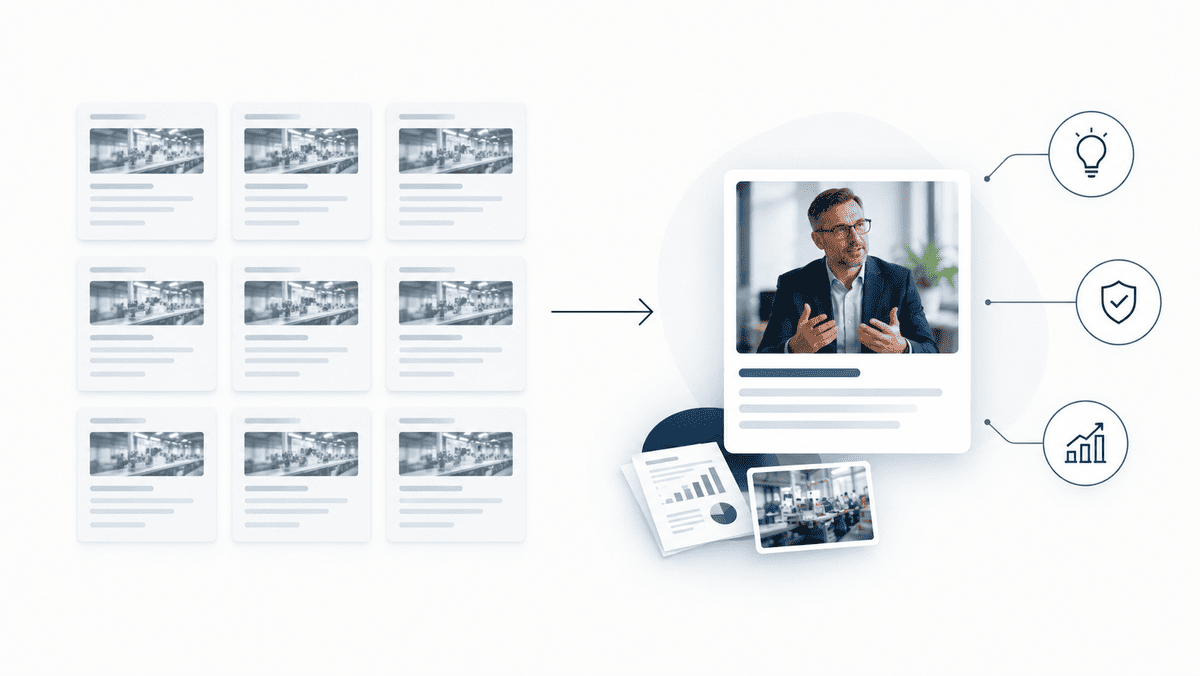
Should Thought Leadership Videos Be Scripted?
Not necessarily.
For some subjects, a script is useful. For others, it can make the speaker sound unnatural.
If someone is genuinely knowledgeable, you may get a better result by giving them:
- The question
- The key points
- A few examples
- The intended audience
- The desired takeaway
Then let them explain the idea naturally.
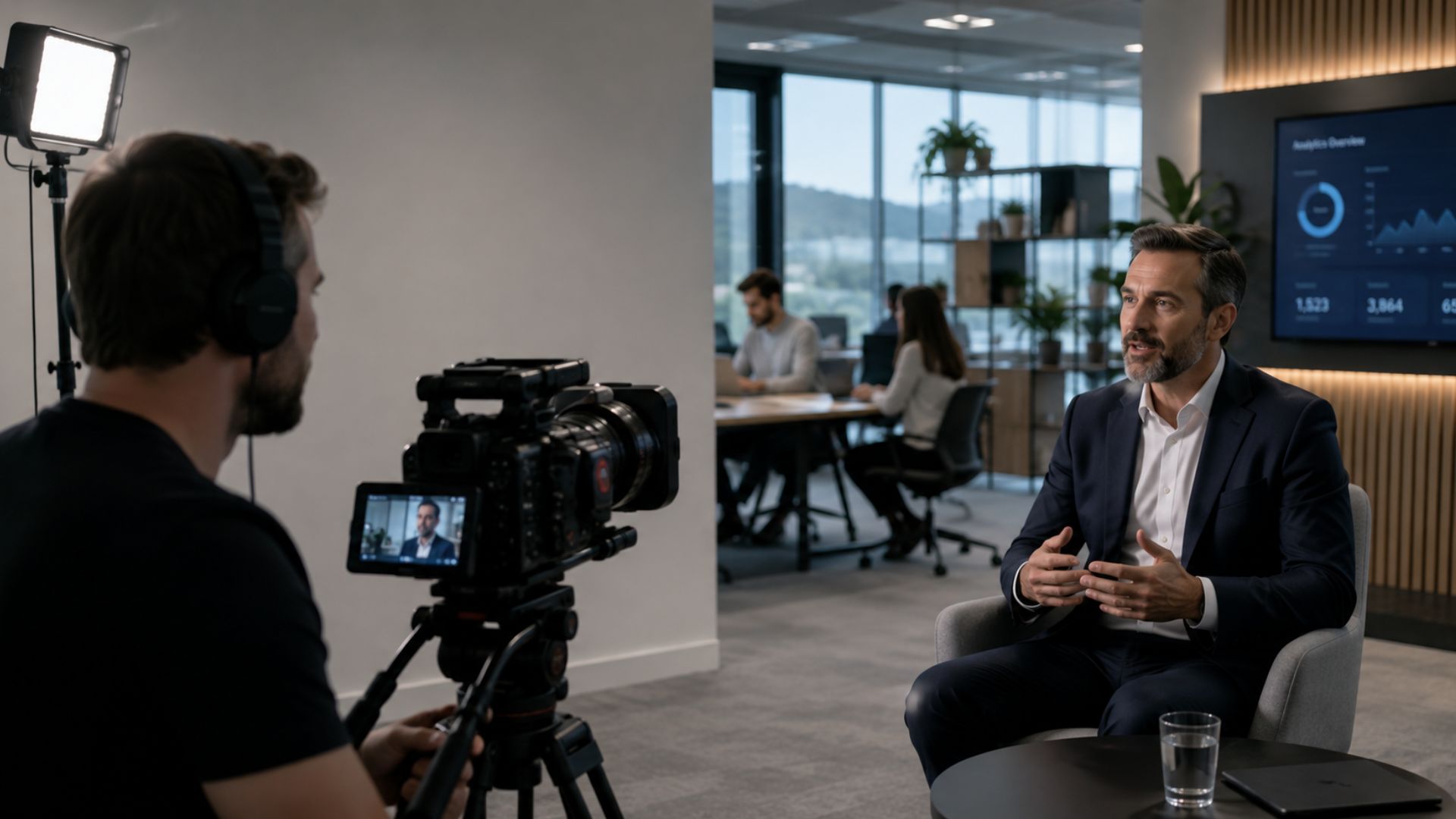
An interview-led approach can be particularly effective.
Instead of asking:
"Can you explain your company's approach?"
Ask:
"What do businesses usually misunderstand about this?"
Instead of:
"Tell us about your expertise."
Ask:
"What is the first thing you would check if a customer came to you with this problem?"
Specific questions produce specific answers.
And specific answers are much more useful than corporate statements.

How to Make Thought Leadership Videos Feel Authentic
Authenticity does not mean pointing a phone at someone and pressing record.
Professional production can still feel natural.
The key is to avoid making the person sound like they are delivering a television advertisement.
Let them speak in their own language.
Don't force every sentence into marketing terminology.
Don't make every answer perfectly polished.
And don't ask someone to memorise a paragraph when they could simply explain the idea in their own words.
For Irish businesses we've worked with, we've found that the strongest expert-led content often comes from giving knowledgeable people enough structure to stay focused while still allowing their own personality and experience to come through.
That balance matters.
The production should make the expert look and sound credible without making them feel like an actor.
Use Visuals to Support the Expertise
A person talking to camera can communicate a lot, but they do not need to carry the entire video.
Supporting visuals can make complex ideas easier to understand and the finished video easier to watch.
Depending on the subject, you could use:
- B-roll of the expert working
- Product footage
- Screen recordings
- Charts
- Diagrams
- Motion graphics
- Customer footage
- Behind-the-scenes material
- Relevant locations
- Demonstrations
- On-screen quotes
- Examples from real projects
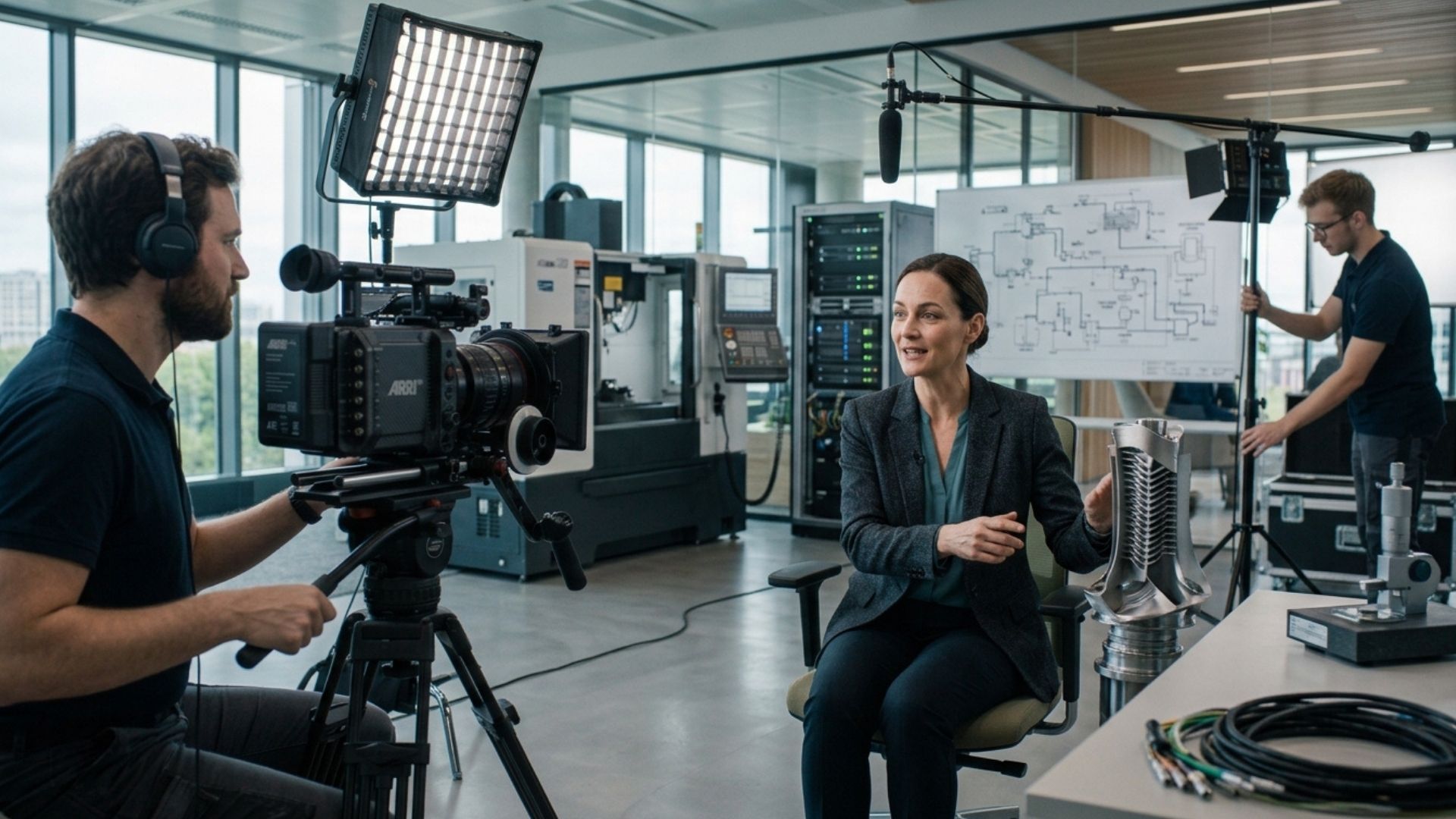
An engineer explaining a production problem could be shown beside the machinery involved.
A consultant discussing a process could use a simple diagram.
A technology expert could demonstrate the software while explaining the issue.
The visual should support the idea.
It should not simply fill empty space.

Thought Leadership Should Not Feel Like a Sales Pitch
Your company doesn't need to be mentioned constantly.
If an expert spends three minutes explaining something genuinely useful and the viewer remembers that person's name and company afterwards, the content has done its job.
You don't need:
"At Mango Media, we..."
or:
"Our team specialises in..."
every 30 seconds.
Let the expertise do the branding.
Your company becomes associated with the knowledge being shared, which can be more powerful than repeatedly explaining what you sell.
The strongest thought leadership changes the role of the business from seller to useful source of information.
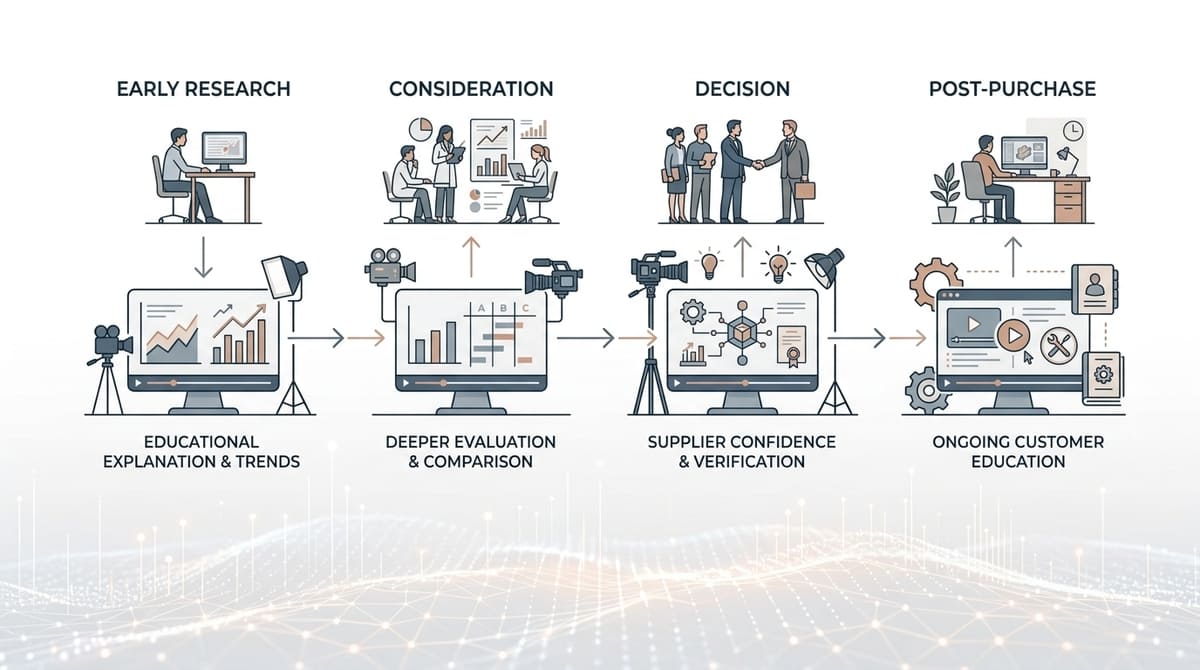
Thought Leadership Works Across the B2B Buyer Journey
Thought leadership is particularly useful because it can reach buyers before they are ready to make contact.
Early research
Someone has identified a problem but doesn't know what to do about it.
An educational expert video can help them understand the issue.
Consideration
The buyer understands the problem and is comparing approaches.
A deeper expert discussion can help them evaluate their options.
Decision
The buyer is choosing between suppliers.
Your expert content can reinforce the impression that your business understands the subject and can guide the customer effectively.
Post-purchase
Expert content can continue supporting existing customers with advice, education and useful information.
This means thought leadership is not simply a top-of-funnel tactic. It can support the relationship at several stages.
Where Should You Publish Thought Leadership Videos?
Choose channels based on where your audience researches and how they consume information.
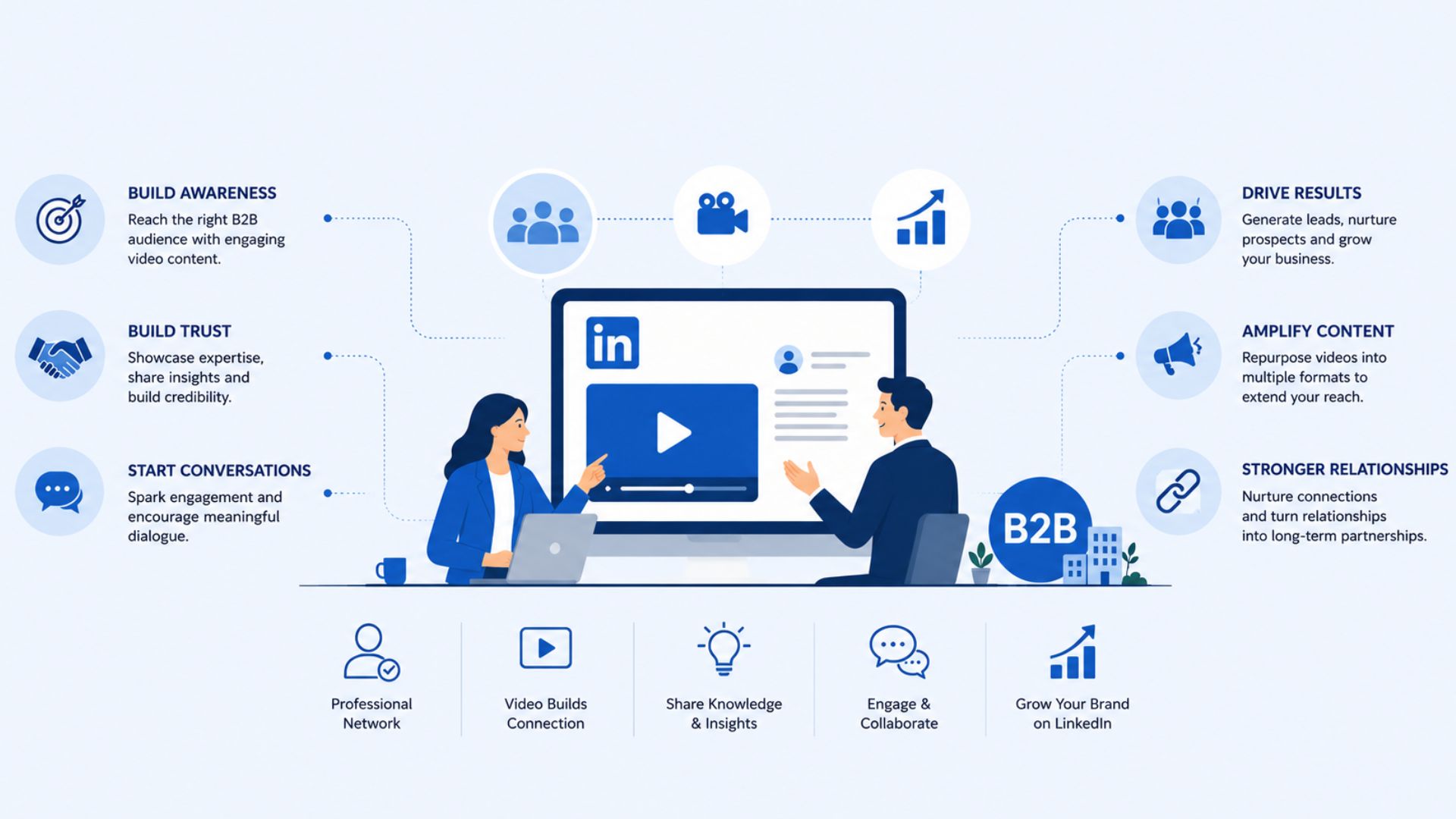
LinkedIn is a natural home for B2B thought leadership because people are already there to follow businesses, professionals and industry conversations.
Short expert clips can work particularly well. A useful insight can become a standalone post rather than requiring the audience to watch a long video.
LinkedIn's own guidance highlights the role of credible people and useful insights in B2B thought leadership, rather than relying solely on polished brand messaging.
YouTube
YouTube can provide a longer-form home for deeper explanations, interviews, tutorials and industry discussions.
It can also become a searchable library of your company's expertise.
Your website
Your website gives the content more context.
An expert video can support a service page, resource article or industry-specific landing page.
If you have an audience that already knows your business, useful expert content can be included in newsletters or targeted campaigns.
Sales conversations
Sales teams can use specific thought leadership videos when a prospect has a question or concern related to the subject.
You don't need to publish everywhere simply because you can.
The important thing is to make the content easy to find when the right audience is looking for it.
Turn One Expert Interview Into a Content Series
You don't necessarily need a new shoot for every video.
A well-planned interview can produce a large amount of useful material.

Imagine interviewing a managing director for 45 minutes.
You could potentially extract:
- One longer thought leadership video
- Five short expert clips
- Three LinkedIn posts
- Several quotes
- A website article
- Sales snippets
- FAQ videos
- A newsletter topic
The important part is planning for those outputs before filming.
Ask broader questions first.
Then go deeper.
If the expert gives an interesting answer, follow it.
Ask:
"Can you give us an example?"
"Why does that happen?"
"What should businesses do instead?"
"What would you tell someone dealing with this today?"
Those follow-up questions often produce the strongest material.
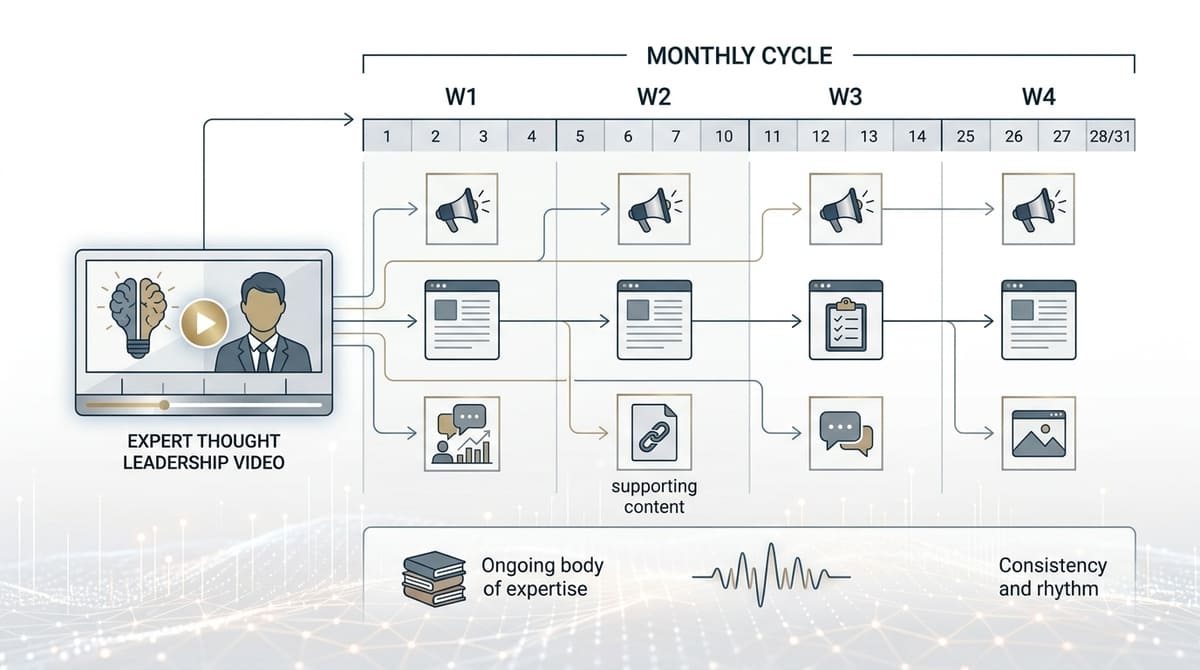
How Often Should You Publish Thought Leadership?
Consistency matters more than volume.
You don't need to publish an expert video every day.
A realistic programme might be:
- One substantial expert video each month
- Several short clips from each recording
- Written posts based on the same ideas
- Occasional responses to industry developments
- Customer stories and other supporting content
The objective is to build a recognisable body of expertise.
Over time, potential customers should be able to look at your content and understand:
These people know their industry.
That is more valuable than chasing one viral video.
Common Thought Leadership Video Mistakes
Making the content too promotional
If every insight leads back to your services, the audience will notice.
Choosing topics nobody cares about
Your expertise needs to intersect with customer interest.
Being afraid to have an opinion
Safe, generic statements are easy to forget.
Making the expert read a script
Over-scripted delivery can remove the personality that makes thought leadership valuable.
Starting with a company introduction
Give the audience a reason to watch before explaining who you are.
Using too much jargon
Expertise should create clarity, not confusion.
Publishing without a plan
A good video deserves a clear distribution strategy.
Focusing on views alone
A niche video watched by the right decision-makers can be more valuable than a widely viewed video with no commercial relevance.
How Do You Know If Thought Leadership Is Working?
Thought leadership is not always designed to generate an immediate enquiry.
Its impact can appear in other ways.
Look at:
- Watch time
- Completion rate
- Engagement
- Comments
- Shares
- Website visits
- Returning visitors
- Direct enquiries
- Sales conversations
- Content-assisted opportunities
- Feedback from customers and prospects
You can also listen for something less measurable:
Are people starting to reference your ideas?
If a prospect says:
"I saw your video about..."
that is a strong signal.
Your content has entered the conversation before the sales call.
That is where thought leadership can become commercially valuable.
Build Credibility With the Right Audience
You don't need thousands of followers to benefit from thought leadership.
In B2B, the audience may be relatively small.
But if those viewers include the people who make purchasing decisions, influence suppliers or shape projects, the content can have significant commercial value.
Imagine a 90-second video being seen by 300 people.
If most are completely irrelevant, the reach is not particularly useful.
Now imagine the same video is watched by 300 people within your target industry, including several potential customers.
The second outcome may be far more valuable.
The goal isn't necessarily to become famous.
It is to become credible to the right people.
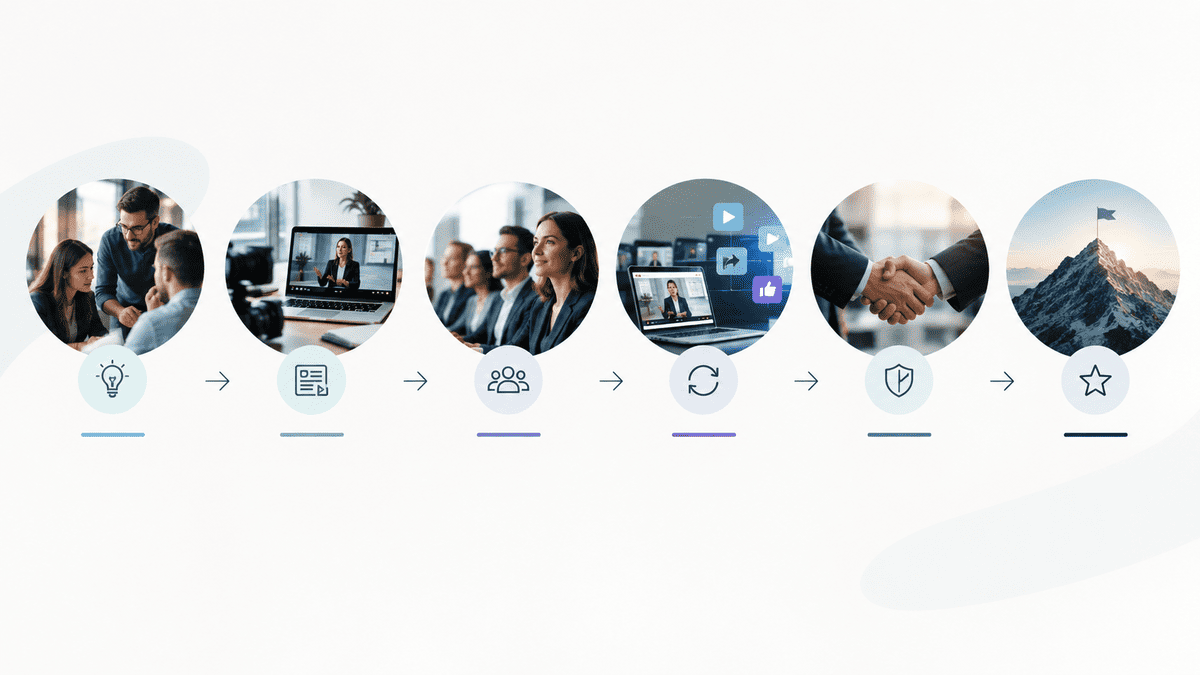
From Expertise to a Content Strategy
Your next thought leadership video does not need to start with a blank page.
Start with your existing expertise.
Ask your sales team what customers want to know.
Ask your technical team what people misunderstand.
Ask leadership what changes they are watching.
Ask your customer-facing staff which questions keep coming up.
Then choose the ideas with the strongest overlap between what your business knows and what your customers need to know.
That is where useful thought leadership lives.
Ready to Turn Expertise Into Content?
If your business has people with valuable knowledge, the next step is to identify which of that knowledge is worth putting in front of potential customers. Start with the questions your audience is already asking, then build a production around the experts, examples and ideas that can answer them clearly.
A strong thought leadership video doesn't need to make your business sound impressive. It needs to make your expertise useful — and give the right audience a reason to come back for more.
Conclusion
The strongest B2B thought leadership videos don't try to make a company look like an industry authority. They give people a reason to see the company that way. By putting real expertise, experience and opinions on camera, you can create content that helps potential customers understand difficult subjects, discover your perspective and build trust before a sales conversation ever begins.
If your team has knowledge worth sharing, it may be time to turn that expertise into a content series rather than another one-off corporate video. Mango Media can help you shape the ideas, interviews and production around what your audience actually wants to know. Explore our video production services, use the instant price calculator for an initial estimate, or get in touch for a no-obligation conversation.
Frequently Asked Questions
What is a B2B thought leadership video?
A B2B thought leadership video uses the knowledge, experience and perspective of an industry expert to provide useful insights to a professional audience. Rather than directly promoting a product or service, it focuses on answering questions, explaining challenges, sharing opinions or discussing industry developments.
How do you create a thought leadership video?
Start with a genuine question or problem your target audience cares about. Choose an expert who has first-hand experience, prepare focused questions and give them room to explain the subject naturally. Use relevant examples, B-roll, graphics and demonstrations to make the information easier to understand, then distribute the finished content where your audience already researches.
What are good thought leadership video topics?
Good topics usually come from customer questions, common industry problems, emerging trends, misconceptions, expert opinions and lessons from real-world experience. Questions such as "What are businesses getting wrong?", "What should buyers consider before choosing a supplier?" or "What is changing in our industry?" can all lead to useful thought leadership content.
Similar blogs:
































![How to Write a Promo Video Script (Free Template Included) [2026 Guide]](https://cdn.prod.website-files.com/6226fcc37e2eb518b6e69a7f/69c3804c0b9ea78696bd89e0_covertab11.jpeg)





.jpg)
%20(1)%20(1).jpg)
.jpg)






We'd love to hear from you! Reach out to us today for a chat about our services, pricing, or just to say hello!


