
In today’s oversaturated inboxes, getting your email noticed — let alone opened — is no easy feat. In this article, we’ll explore the power of video in email campaigns, how to embed video content the right way, best practices to maximise performance, and how to track your results. Whether you’re a startup, marketer, or creative agency, using video in your emails can be a game-changer for audience retention and conversions.
AI Has Changed the Question
For years, the question was:
"Can we afford to produce enough video?"
Now, for many businesses, the question is becoming:
"Do we actually need to film this?"
That's a very different question.
AI tools can now help businesses generate visuals, create animations, produce voiceovers, assist with editing, create variations and even generate complete video sequences. The technology is developing quickly, and businesses are already using AI to increase the amount of video they can produce.
That doesn't mean professional production has become irrelevant.
In fact, it makes the distinction between content that needs to be real and content that can be generated much more important.
A business doesn't necessarily need a camera crew for every social post.
But there are certain things where putting a real camera in a real place, with real people, still creates something AI cannot easily replace.
Here's where professional filming continues to make sense.
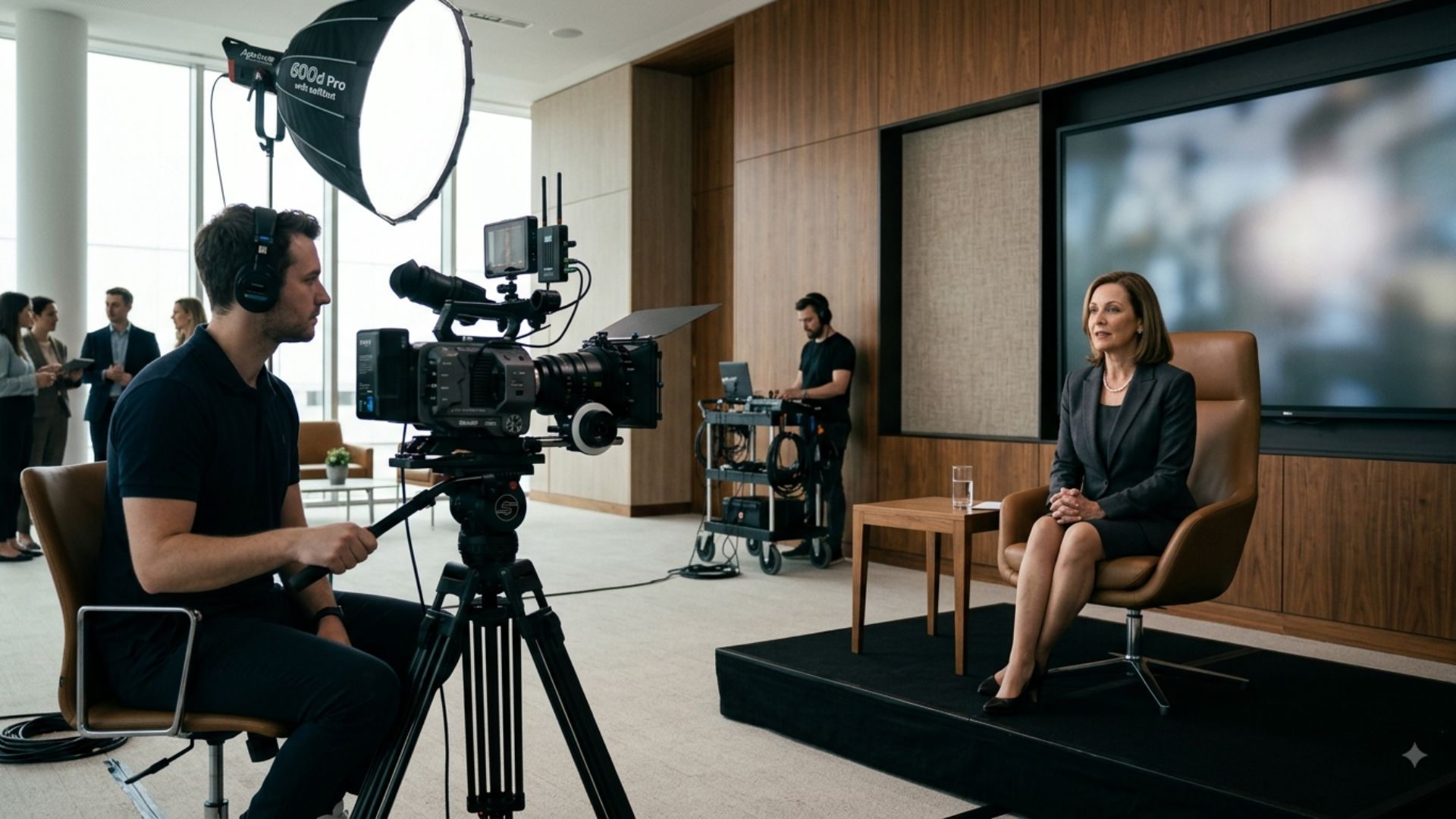
1. Your People
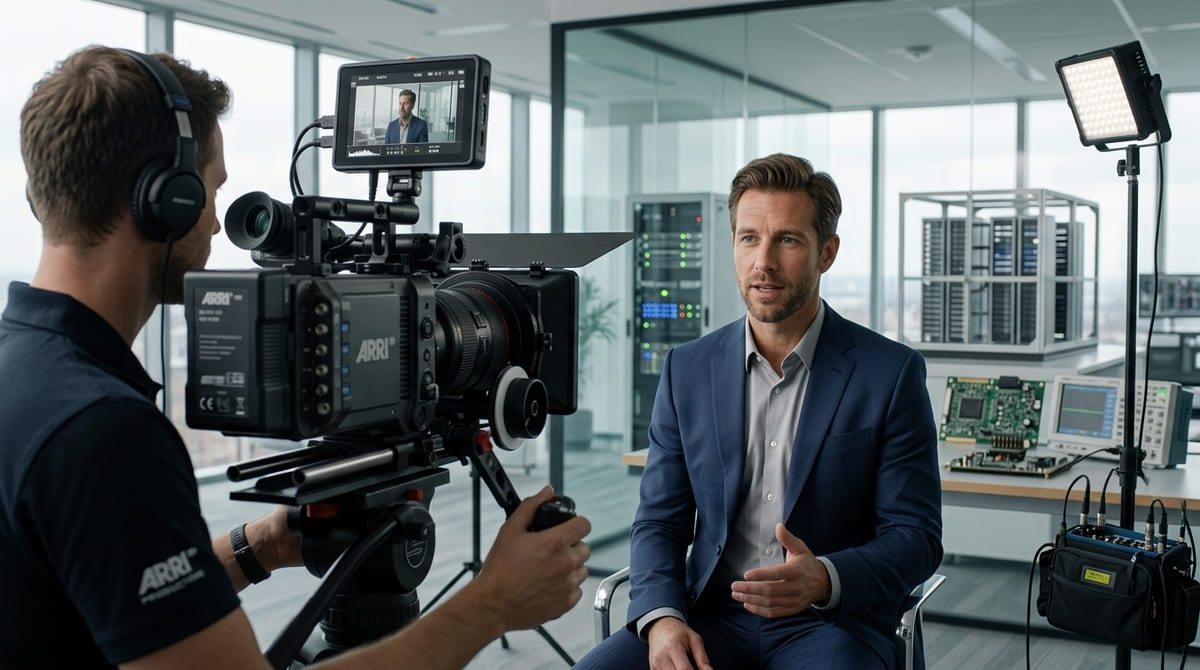
If your business is built around people, film the people.
Your CEO.
Your engineers.
Your consultants.
Your designers.
Your technicians.
Your sales team.
Your employees.
These are the people who give your company its personality and expertise.
An AI avatar can deliver a script.
It cannot give customers the same connection to the actual person behind your business.
This matters particularly in B2B, where customers are often buying expertise, reliability and confidence as much as they are buying a product or service.
If someone is choosing an engineering consultancy, professional services firm or technology partner, seeing the actual people who will be doing the work can carry far more weight than a synthetic presenter.
And that doesn't mean the video needs to be overly polished.
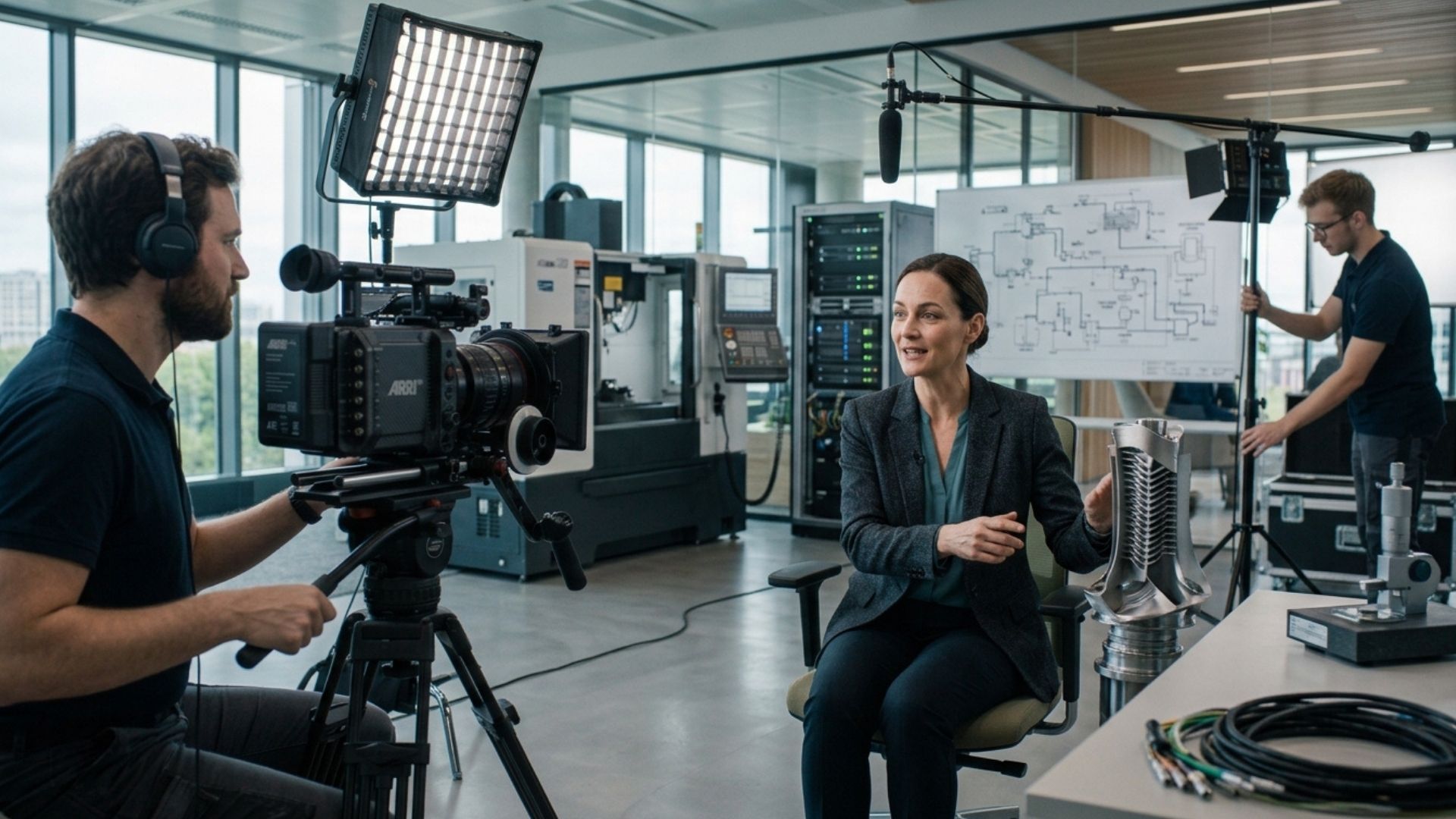
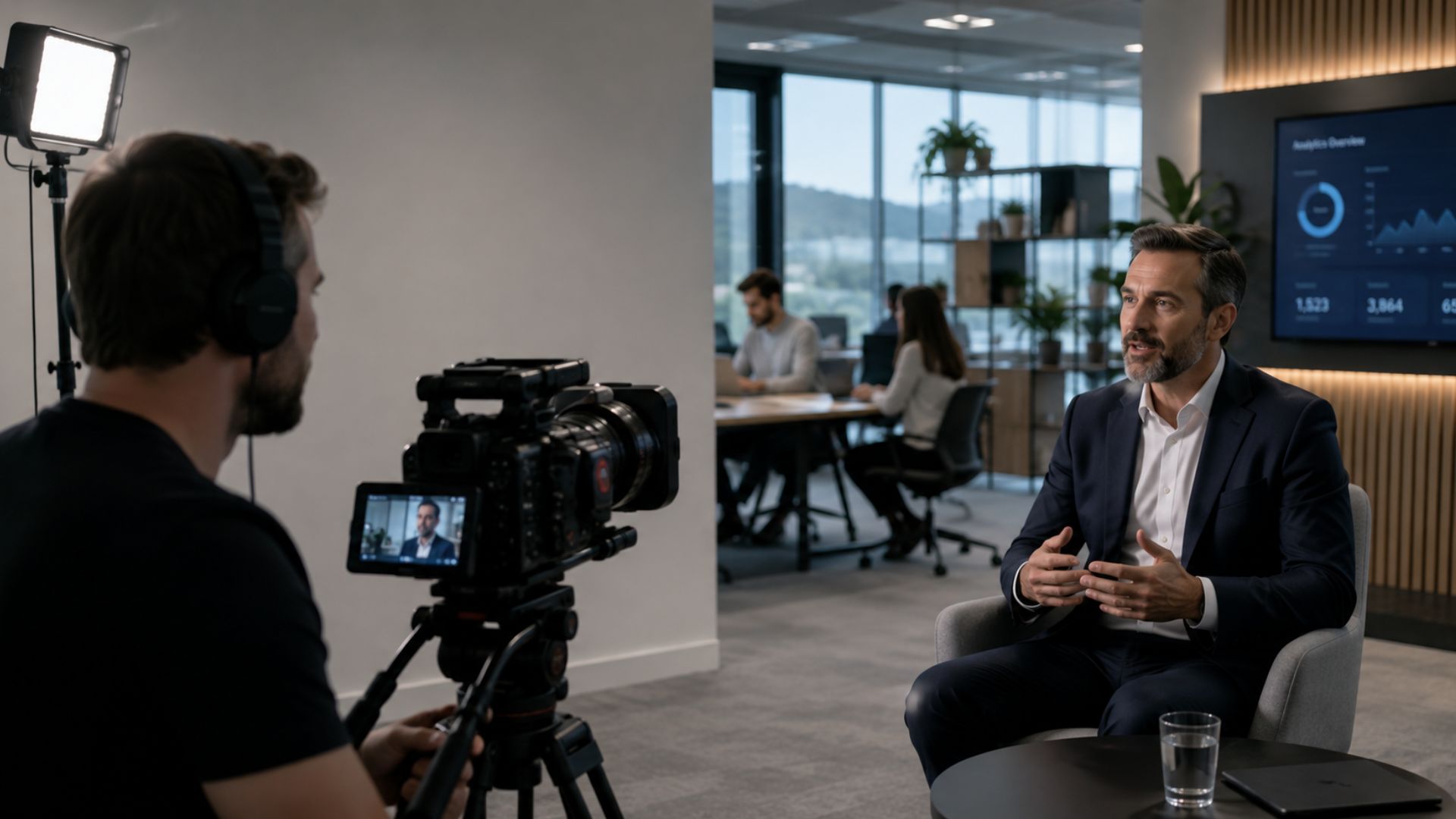
Sometimes the most effective approach is simply a well-lit, well-recorded conversation with someone who genuinely knows what they're talking about.
If the person is part of the reason customers should trust you, film the person.
2. Your Experts
AI can explain almost anything.
That doesn't mean it has your company's experience.
Think about the knowledge sitting inside your organisation.
Your engineer knows what tends to go wrong.
Your project manager knows what causes delays.
Your technical director knows where customers make mistakes.
Your CEO knows where the industry is heading.
Your sales team knows the objections buyers raise.
That expertise is valuable precisely because it comes from experience.
Put those people in front of a camera and ask them useful questions.
For example:
"What is the biggest mistake companies make when implementing this system?"
"What should a customer check before choosing a supplier?"
"What do businesses usually underestimate about this type of project?"
These are questions that can produce genuinely differentiated content.
AI can help you structure the interview, create clips and repurpose the answers afterwards.
But the expertise should come from the expert.
3. Customer Testimonials
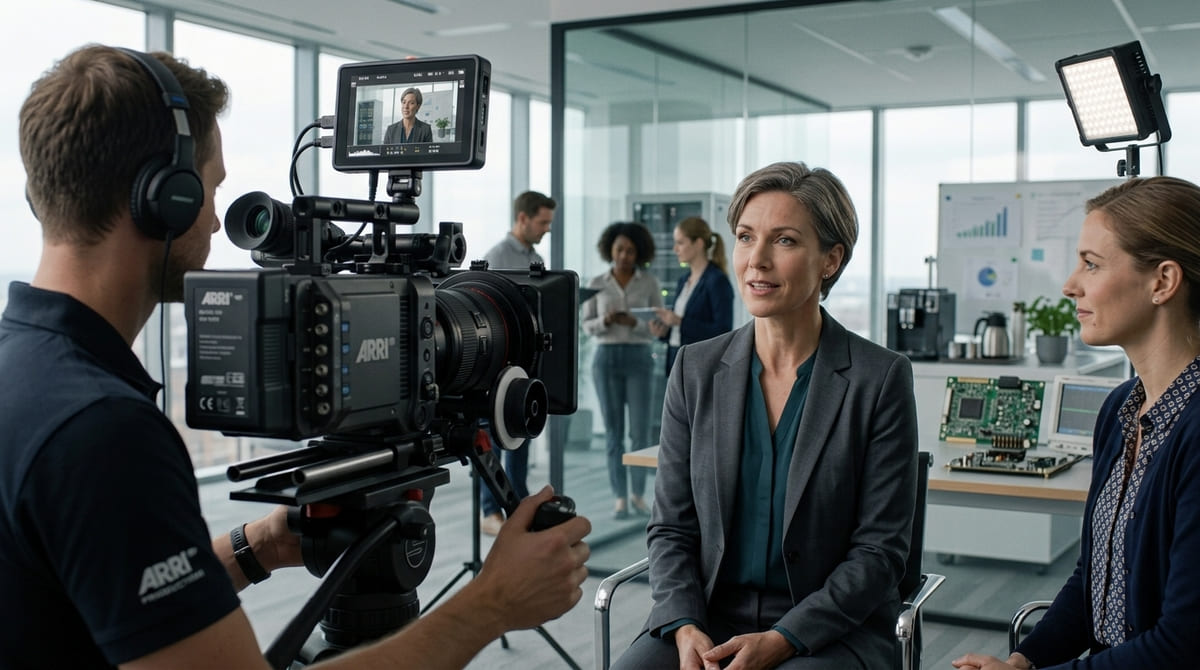
This is one area where I'd be particularly cautious about replacing real footage with AI.
A customer saying:
"We worked with this company and here's what happened..."
has something fundamentally different from a generated testimonial.
The value isn't just in the words.
It's in the fact that a real customer is willing to put their name and reputation behind the story.
That makes customer testimonials particularly valuable for:
- professional services
- technology companies
- construction
- engineering
- financial services
- manufacturing
- healthcare
- recruitment
- B2B services
A professionally filmed customer story can capture:
- the customer's environment
- the people involved
- the original problem
- the solution
- the process
- the outcome
- the customer's reaction
That's evidence.
And evidence is difficult to manufacture convincingly.
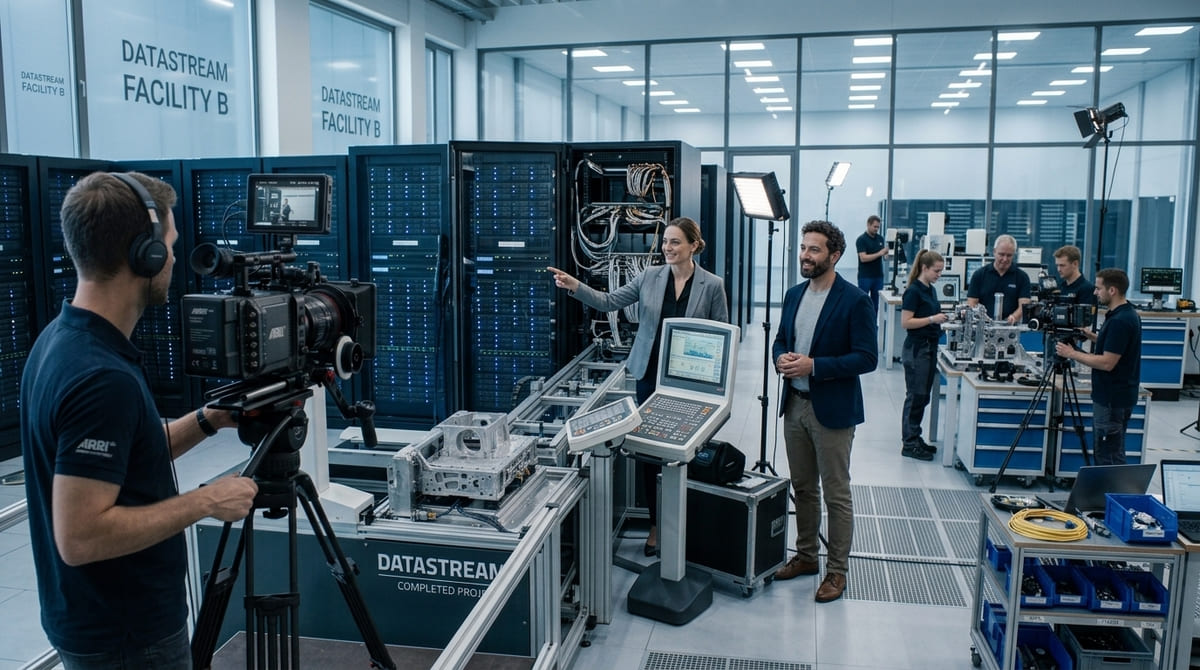
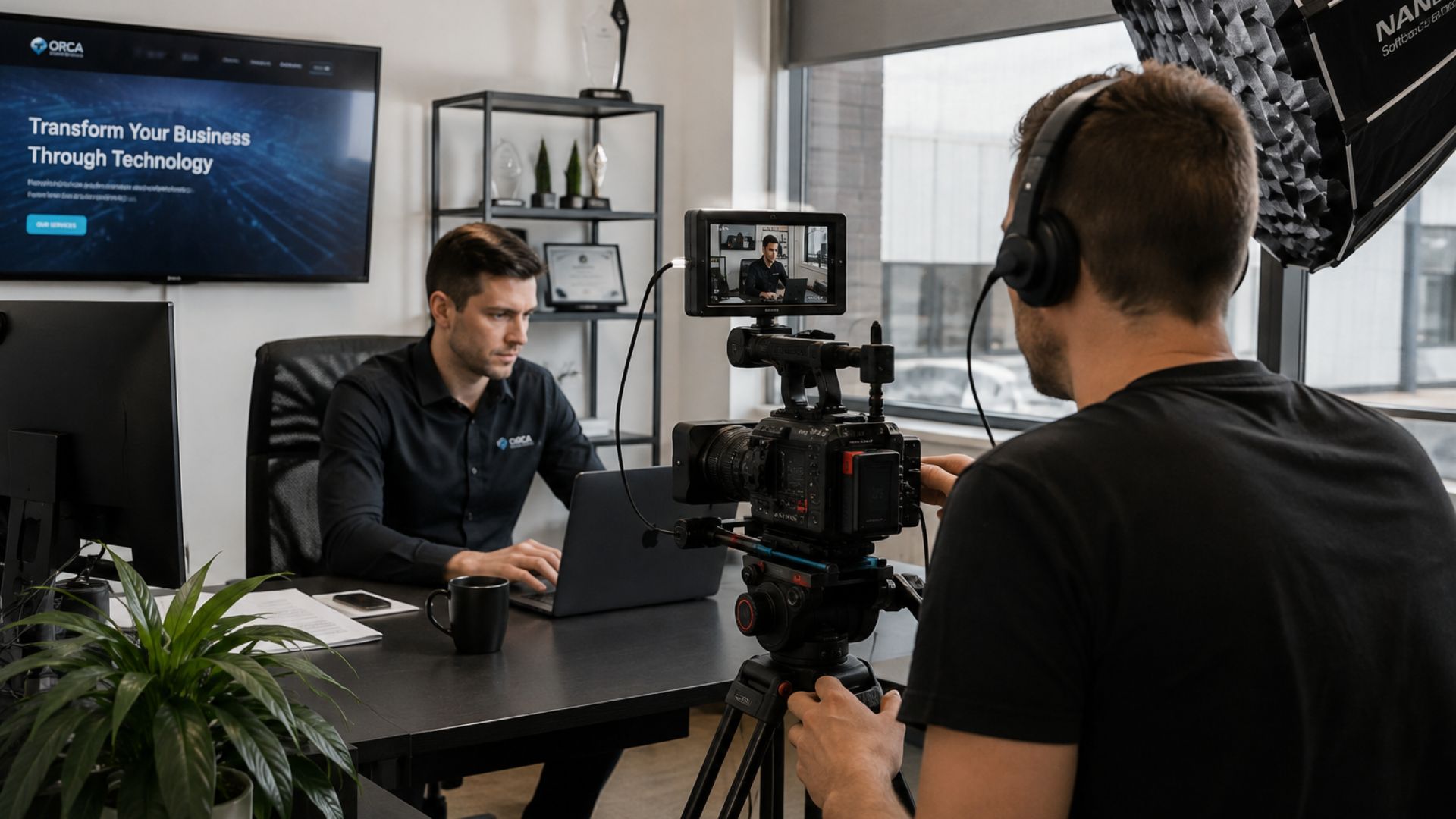
4. Your Workplace
If your physical environment says something about your business, show it.
A factory.
A laboratory.
A construction site.
A hotel.
A warehouse.
A restaurant.
An office.
A studio.
A research facility.
A manufacturing floor.
These environments communicate information that a paragraph often can't.
They show:
- scale
- capability
- equipment
- culture
- processes
- quality
- professionalism
- working conditions
For some companies, the physical environment is actually part of the product.
A potential customer may want to know:
"What does this company actually look like?"
Professional filming gives them the answer.
And unlike a generated background, it's the real environment in which your business operates.
5. Your Products
If your business makes or sells something physical, there is still tremendous value in filming the real thing.
Especially when the product is:
- technical
- expensive
- complex
- custom-built
- industrial
- physical
- visually distinctive
A generated product video can be useful for visualising an idea.
But when you're trying to convince a customer that a product exists, works and performs as promised, showing the real product is powerful.
Film it from different angles.
Show it operating.
Show how it's assembled.
Show how it's installed.
Show someone using it.
Show what happens before and after.
If the physical product is part of your competitive advantage, let people see it.
6. Complex Processes
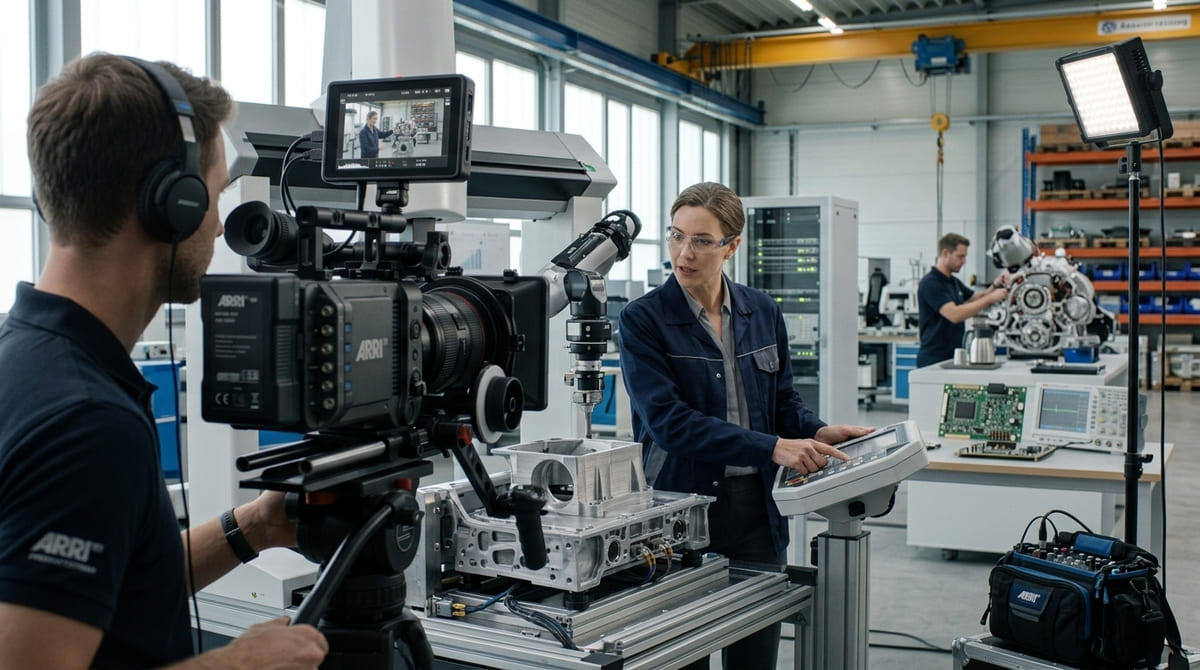
Some things are simply easier to understand when you see them happening.
Think about:
- manufacturing
- engineering
- construction
- logistics
- food production
- medical technology
- laboratory processes
- installation
- repair
- product testing
A company might spend 500 words explaining a process that could be understood in 60 seconds of footage.
Professional filming is particularly useful when the real-world process is visually interesting or difficult to recreate accurately.
This is one of the strongest cases for keeping a camera involved.
Don't generate what you can demonstrate.
7. Real Projects and Case Studies
Your completed work is proof.
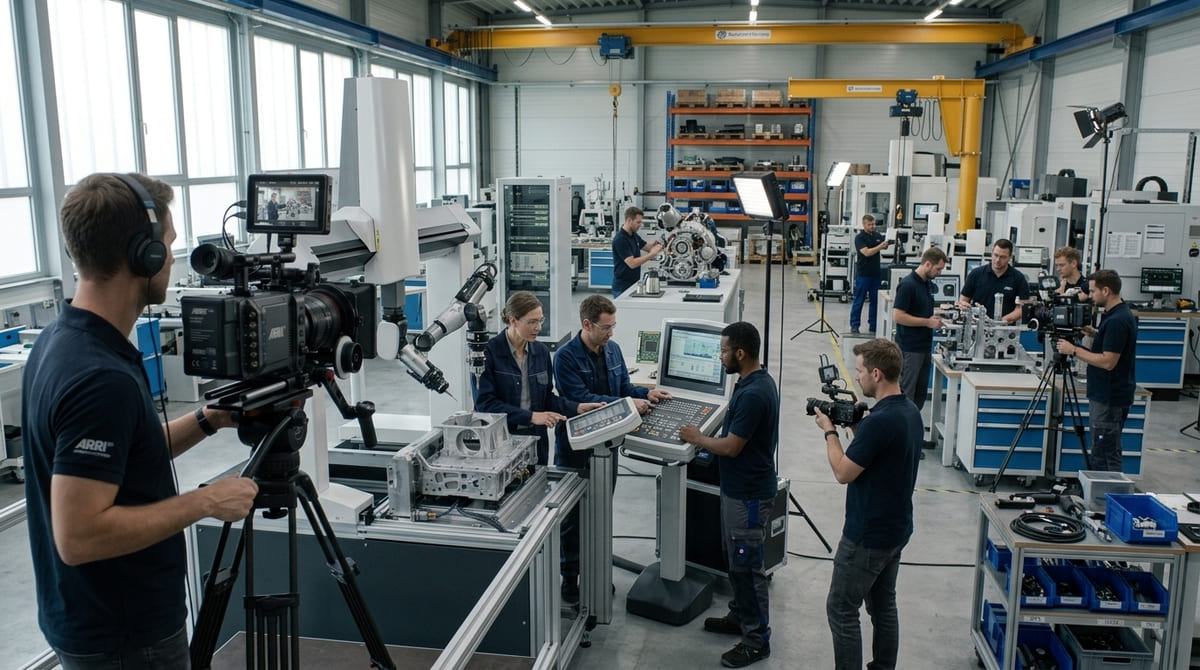
If you've built something, installed something, transformed something or delivered a major project, capture it.
Show the finished result.
Show the process.
Show the people involved.
Show the customer.
Show the details.
A case study video can turn an abstract claim into something tangible.
Instead of saying:
"We deliver complex projects for major clients."
you can show one.
That's a much stronger story.
And the footage can continue working long after the project is finished—on your website, in sales presentations, on LinkedIn, at events and across future campaigns.
8. Events and Moments That Actually Happened
Some things can't be recreated after the fact.
A product launch.
A company anniversary.
An industry event.
A major milestone.
A conference.
An award.
A new facility opening.
A charity initiative.
A customer event.
An important announcement.
These are moments in your company's history.
Capture them while they're happening.
AI can help you create promotional assets around an event, but it can't recreate the atmosphere, reactions and people who were genuinely there.
And sometimes the value of the footage increases with time because it becomes part of the company's story.
9. Leadership and Thought Leadership
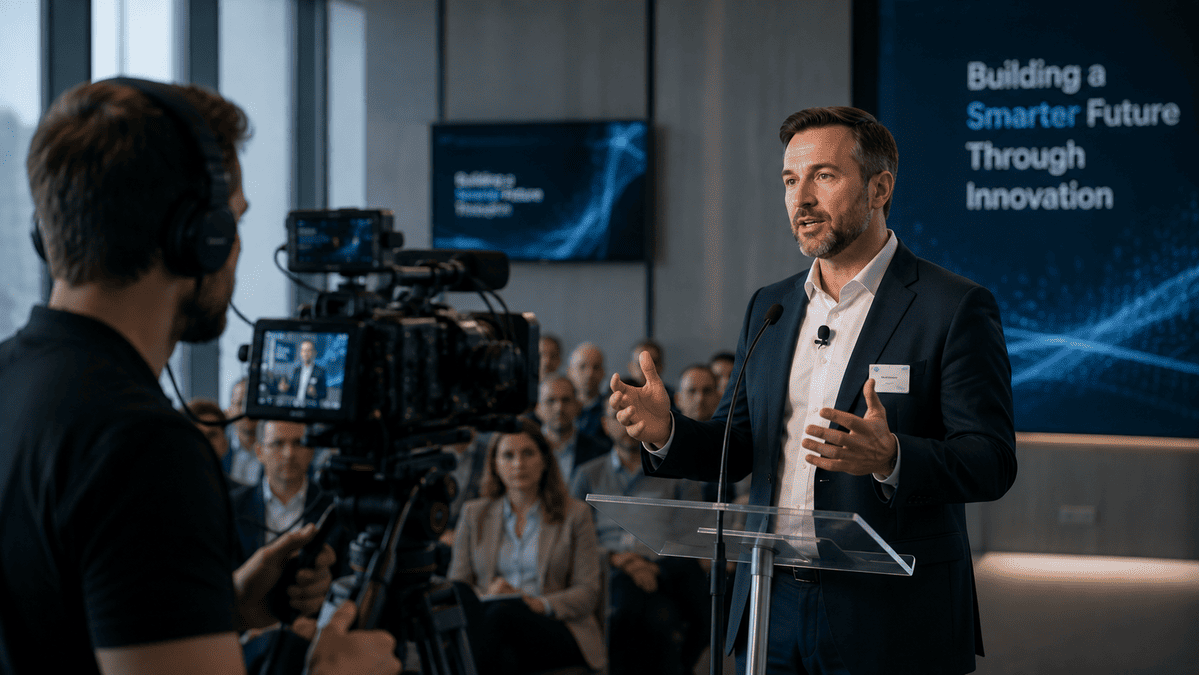
AI can generate an impressive-looking spokesperson.
But if your CEO has something genuinely interesting to say, why would you replace them?
A strong leadership video doesn't need to be a polished corporate speech.
It could be:
"Three things changing our industry this year."
"What we're seeing customers struggle with."
"Where we think the market is heading."
"What we learned from our biggest project this year."
The value comes from the person's perspective.
The camera simply captures it.
This is particularly useful for businesses trying to build authority in crowded B2B markets.
Your executives don't need to become influencers.
They need to become recognisable experts.
10. Your Brand Story
Some stories should come from the people who actually lived them.
Why was the company founded?
What problem were you trying to solve?
What has changed since then?
What does the business believe?
What makes the team different?
What does the company want to achieve?
A brand film can combine interviews, locations, archive footage, customer stories and cinematic visuals to tell that story.
AI can certainly help with concepts, visuals and creative development.
But if the story is about your actual business, there's value in showing the actual business.
That is what makes it yours.
11. Recruitment and Employer Branding
If you're trying to attract employees, authenticity matters.
Candidates want to know what a workplace actually feels like.
Not what the marketing department says it feels like.
Show them.
Film employees talking naturally.
Show the workplace.
Show the day-to-day environment.
Show the people they'll potentially work with.
Show the projects.
Show the culture.
A generated office full of smiling employees may look perfect.
It also tells a candidate almost nothing about what it is actually like to work for you.
Real footage gives prospective employees something much more useful:
a glimpse of reality.

12. Anything Where Trust Is the Product
This may be the simplest way to decide whether professional filming is worthwhile.
Ask:
"Is trust one of the things we're actually selling?"
If the answer is yes, real footage becomes much more valuable.
Consider:
- accountants
- solicitors
- financial advisers
- consultants
- healthcare providers
- engineering firms
- technology companies
- recruitment companies
- construction businesses
- professional services
In these industries, customers are often making decisions based on confidence.
Who are these people?
Do they know what they're doing?
Can I trust them?
Will they deliver?
What are they actually like to work with?
Professional video can help answer those questions because it gives customers something tangible to connect with.
13. When the Visual Detail Matters
AI-generated video is improving rapidly.
But real-world accuracy still matters for many businesses.
Imagine trying to demonstrate:
- a complex machine
- a specialist medical device
- a manufacturing process
- an architectural project
- a construction technique
- a technical installation
Small inaccuracies can undermine the entire video.
If the machine doesn't behave correctly, the building isn't accurate or the process doesn't actually work that way, the viewer may notice.
When physical accuracy matters, filming the real thing can be the safer and more credible option.
14. Your Most Important Content
Not every piece of content deserves the same investment.
A business might use AI to create a quick social clip explaining a simple idea.
That's perfectly reasonable.
But what about the video that sits on your homepage for the next three years?
Or the customer case study your sales team sends to every major prospect?
Or the brand film that introduces your company?
Or the recruitment video that thousands of potential employees might see?
Or the video explaining your flagship product?
Those assets have a much longer lifespan.
They deserve more thought.
And often, they deserve real production.
Use your production budget where the content has the greatest commercial value.
Where AI Video Actually Makes Sense
None of this means businesses should ignore AI.
Quite the opposite.
AI can be incredibly useful throughout the production process.
For example, it can help with:
- brainstorming concepts
- generating initial scripts
- creating storyboards
- visualising ideas
- creating simple animations
- editing assistance
- removing repetitive tasks
- subtitles
- translations
- localisation
- creating multiple versions
- social-media variations
- testing different creative approaches
Mango's current view of the market is similar: AI is increasingly becoming an accelerator for production workflows rather than simply a replacement for production teams.
And that distinction matters.
You don't have to choose between:
AI
or
professional production.
The better question is:
Where can AI make professional production faster, smarter or more scalable?
The Future Is Probably Hybrid
The most practical model for businesses isn't going to be:
"Everything must be filmed."
Nor is it:
"Everything should be generated by AI."
It's somewhere in the middle.
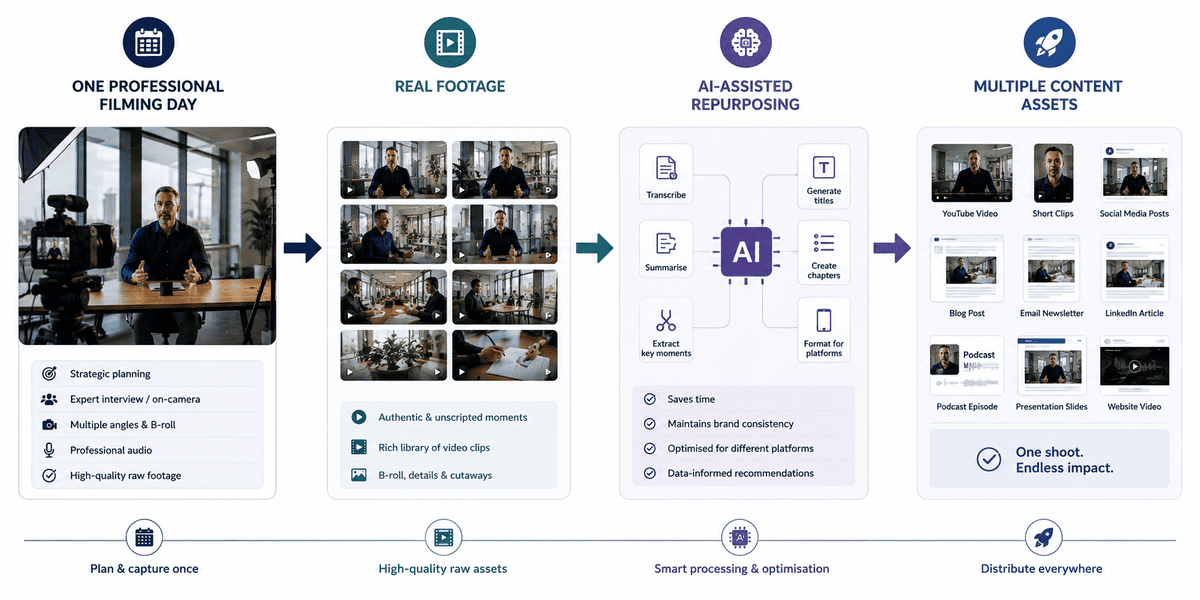
Imagine a company spends one day filming with its CEO, engineers, customers and products.
That footage becomes the real foundation.
AI can then help transform that foundation into dozens of assets:
- long-form videos
- short clips
- social versions
- translated versions
- subtitles
- animated sequences
- different aspect ratios
- sales assets
- educational content
This is where the economics become interesting.
Instead of using AI to replace the real footage, you use AI to get more value from it.
And that could be one of the biggest changes in business video over the next few years.
A Simple Rule: Film What You Can't Fake
If you're unsure whether something needs professional filming, ask a simple question:
Could this information be more valuable because it is real?
If yes, consider filming it.
Real people? Film them.
Real customers? Film them.
Real products? Film them.
Real locations? Film them.
Real projects? Film them.
Real expertise? Film it.
Real events? Film them.
Real demonstrations? Film them.
If the content is primarily illustrative, repetitive, highly scalable or experimental, AI may be the better tool.
The goal isn't to reject AI.
It's to stop treating every video as if it needs the same production approach.
The Real Value of Professional Video Is Changing
Professional video used to be associated primarily with production quality.
Good cameras.
Good lighting.
Good sound.
Good editing.
Those things still matter.
But the bigger value increasingly comes from what you're capturing.
A beautifully shot video of nothing particularly interesting isn't necessarily valuable.
A well-produced conversation with the right expert can be.
A cinematic shot of an empty office can look great.
A real customer explaining how your company solved a £500,000 problem can be commercially powerful.
The camera is the tool.
The reality behind the camera is the asset.
And as AI makes synthetic content easier and cheaper to produce, the value of genuinely original footage may actually increase.
We're already seeing signs of this tension. Platforms and creators are increasingly debating how to distinguish useful AI-assisted work from low-quality mass-generated content, while some audiences are pushing back against synthetic or undisclosed AI content.
That makes authenticity more than a creative preference.
For some brands, it becomes a competitive advantage.
What Should Your Business Film Next?
Instead of asking:
"What video should we make?"
try asking:
"What do we have that nobody else can film?"
Maybe it's your founder explaining how the company started.
Maybe it's an engineer demonstrating a process.
Maybe it's a customer talking about a transformation.
Maybe it's your team working on a difficult project.
Maybe it's a facility that took years to build.
Maybe it's a product that took years to develop.
Maybe it's simply the people who make your business what it is.
Those are the things AI can't simply reproduce from a prompt.
And those are the things worth capturing.
From Research to Your Next Shoot
The goal isn't to decide whether your business should use AI or professional video. It's to work out which parts of your story are worth keeping real and where AI can help you create more from what you capture.
Start by looking at the people, products, customers, places and expertise that make your business different. Those are your most valuable raw materials—and once they're filmed properly, they can keep working across your website, social channels, sales content and customer communications.
Conclusion
Your business already has stories, people and expertise that AI can't genuinely recreate. The opportunity is to capture those real moments professionally, then use the technology available today to get more value from every shoot.
Ready to put it into practice? Mango Media can help, explore our video production services, use our instant price calculator for a quick estimate, or get in touch for a free consultation.
Frequently Asked Questions
Is professional video production still worth it with AI?
Yes, especially when the video needs to show real people, products, customers, locations, expertise or experiences. AI can reduce production time and cost for many tasks, but professional filming remains valuable when authenticity, trust and real-world accuracy matter.
What types of videos should businesses use AI for?
AI can be useful for content that needs to be produced quickly or at scale, including simple social videos, animations, localisation, subtitles, creative concepts and different versions of existing content. It can also support professional productions by speeding up repetitive production tasks.
Will AI replace professional video production?
AI is likely to change how professional video is produced, but it is unlikely to eliminate the need to capture real people, places, products, events and expertise. The more useful question is how businesses can combine professional filming with AI to create better content more efficiently.
Similar blogs:
















![How to Write a Promo Video Script (Free Template Included) [2026 Guide]](https://cdn.prod.website-files.com/6226fcc37e2eb518b6e69a7f/69c3804c0b9ea78696bd89e0_covertab11.jpeg)


.jpg)
%20(1)%20(1).jpg)
.jpg)





We'd love to hear from you! Reach out to us today for a chat about our services, pricing, or just to say hello!


