
In today’s oversaturated inboxes, getting your email noticed — let alone opened — is no easy feat. In this article, we’ll explore the power of video in email campaigns, how to embed video content the right way, best practices to maximise performance, and how to track your results. Whether you’re a startup, marketer, or creative agency, using video in your emails can be a game-changer for audience retention and conversions.
What Is In-House Video Production?
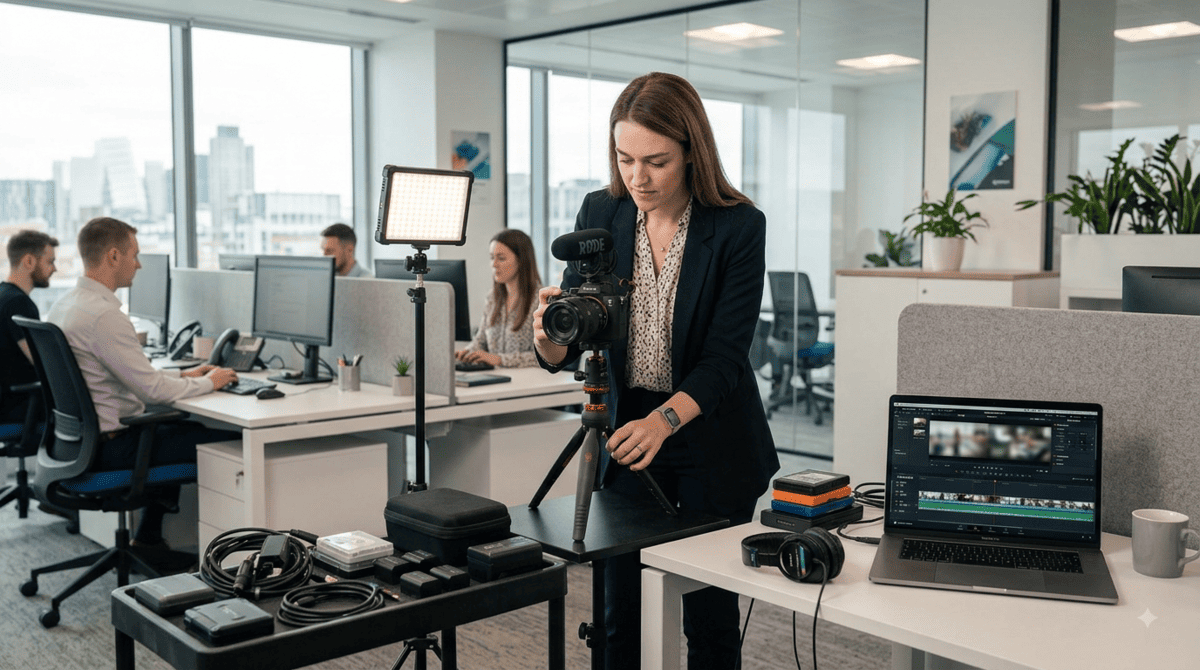
In-house video production means your business handles some or all of the video creation process internally. This could be as simple as a marketing employee recording social content on a smartphone, or as developed as a dedicated internal team managing filming, editing and post-production.
The investment varies depending on what you produce. An internal setup may require:
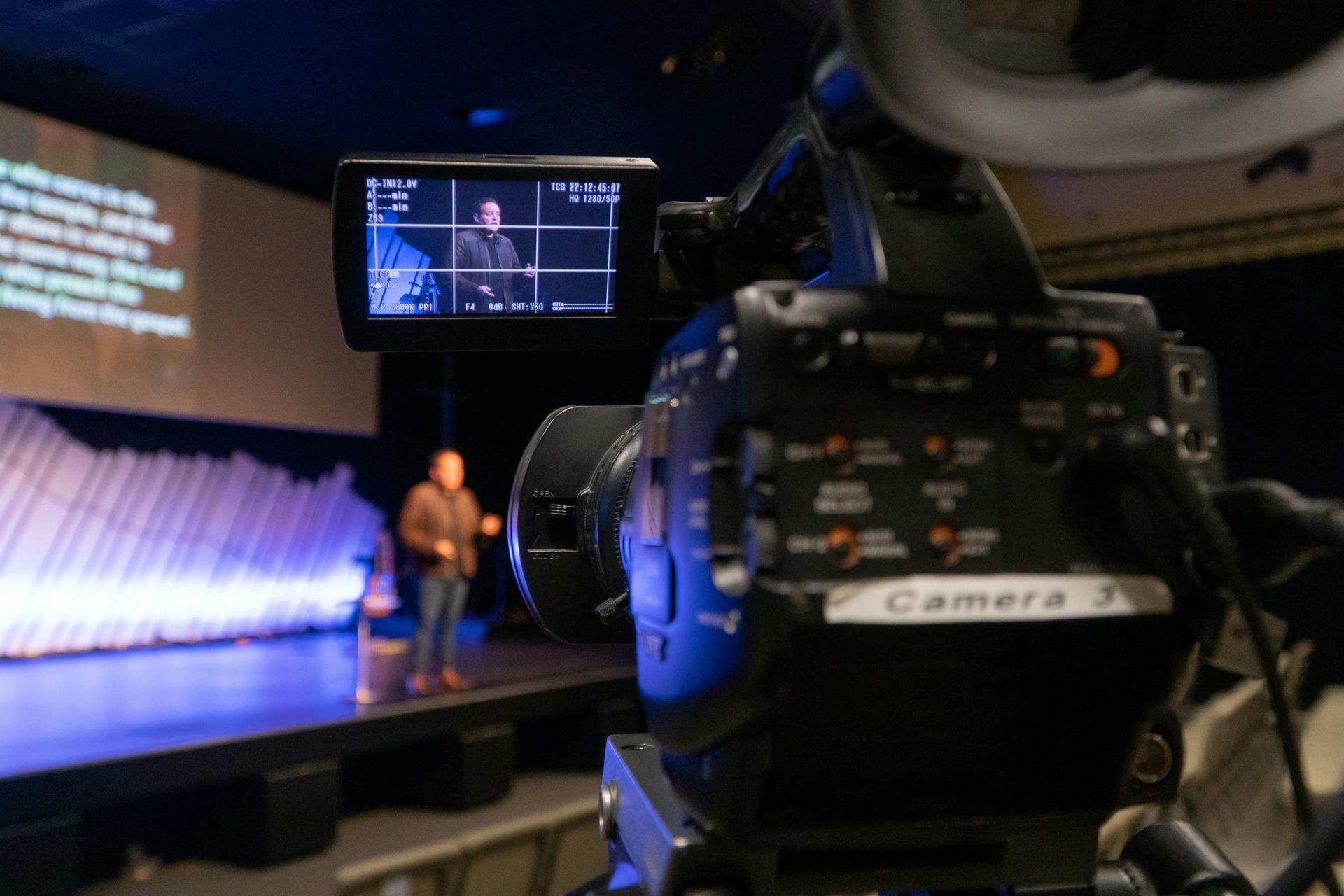
- Cameras and lenses
- Lighting and audio equipment
- Tripods and accessories
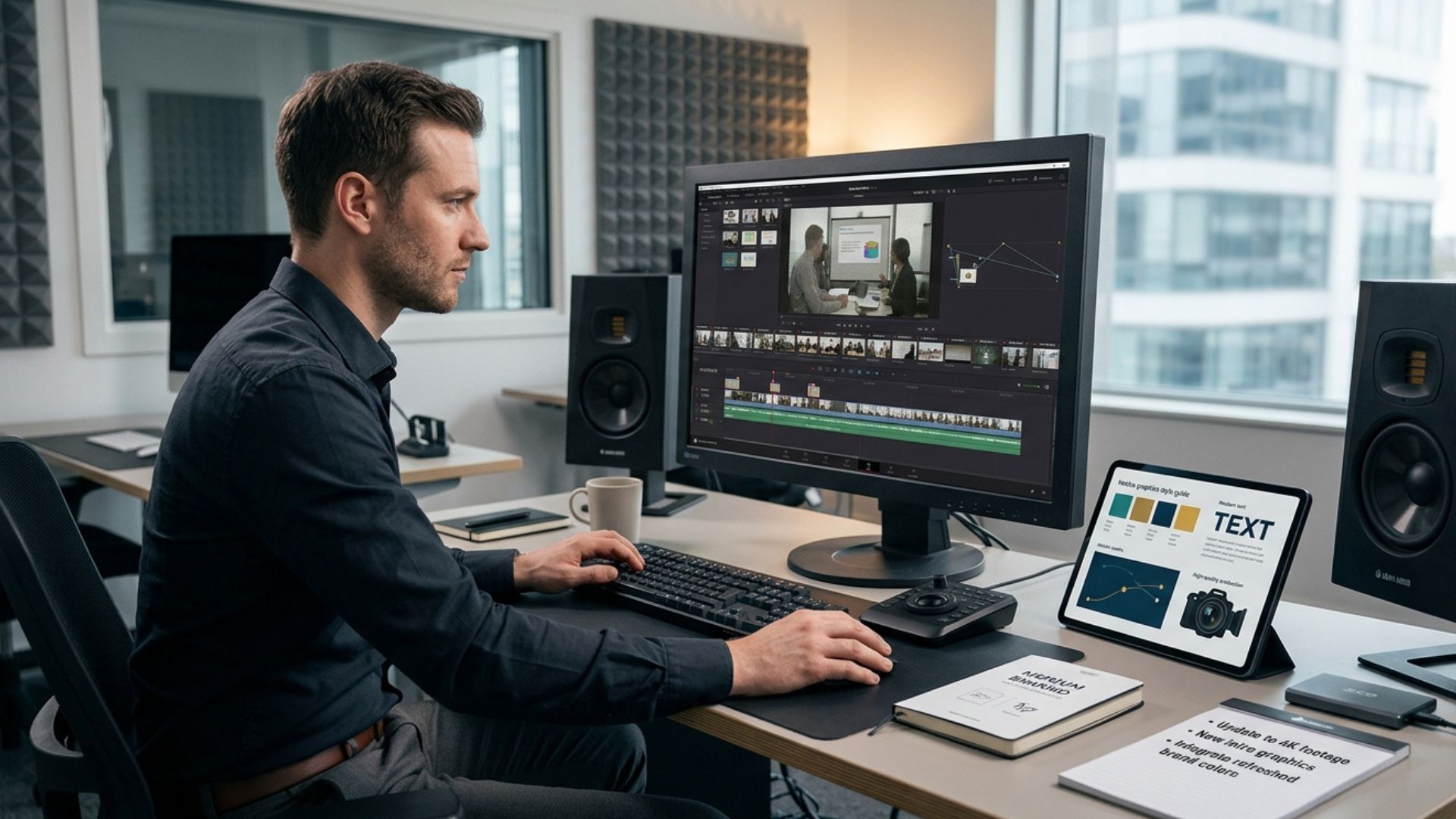
- Editing software and hardware
- Storage and backup
- Staff time
- Training and production planning
For simple, frequent content, this can be a practical investment. The more ambitious the videos become, however, the more skills, equipment and time are likely to be required.
What Is Outsourced Video Production?

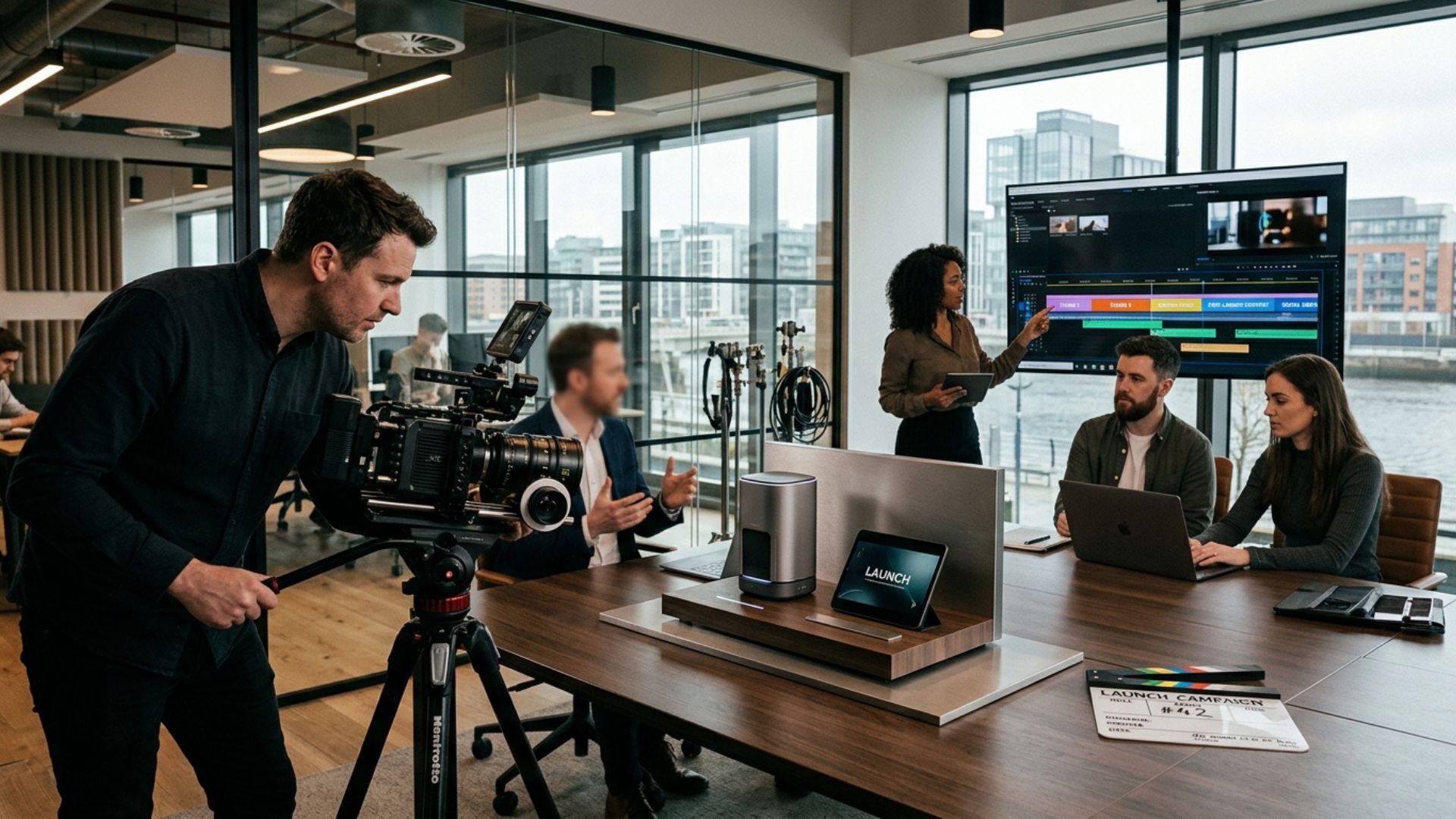
Outsourced video production means hiring an external freelancer, specialist or video production company to create some or all of your content.
Instead of maintaining every production resource internally, you bring in the expertise you need for a particular project. Depending on the brief, a professional production team may handle:
- Creative development and scripting
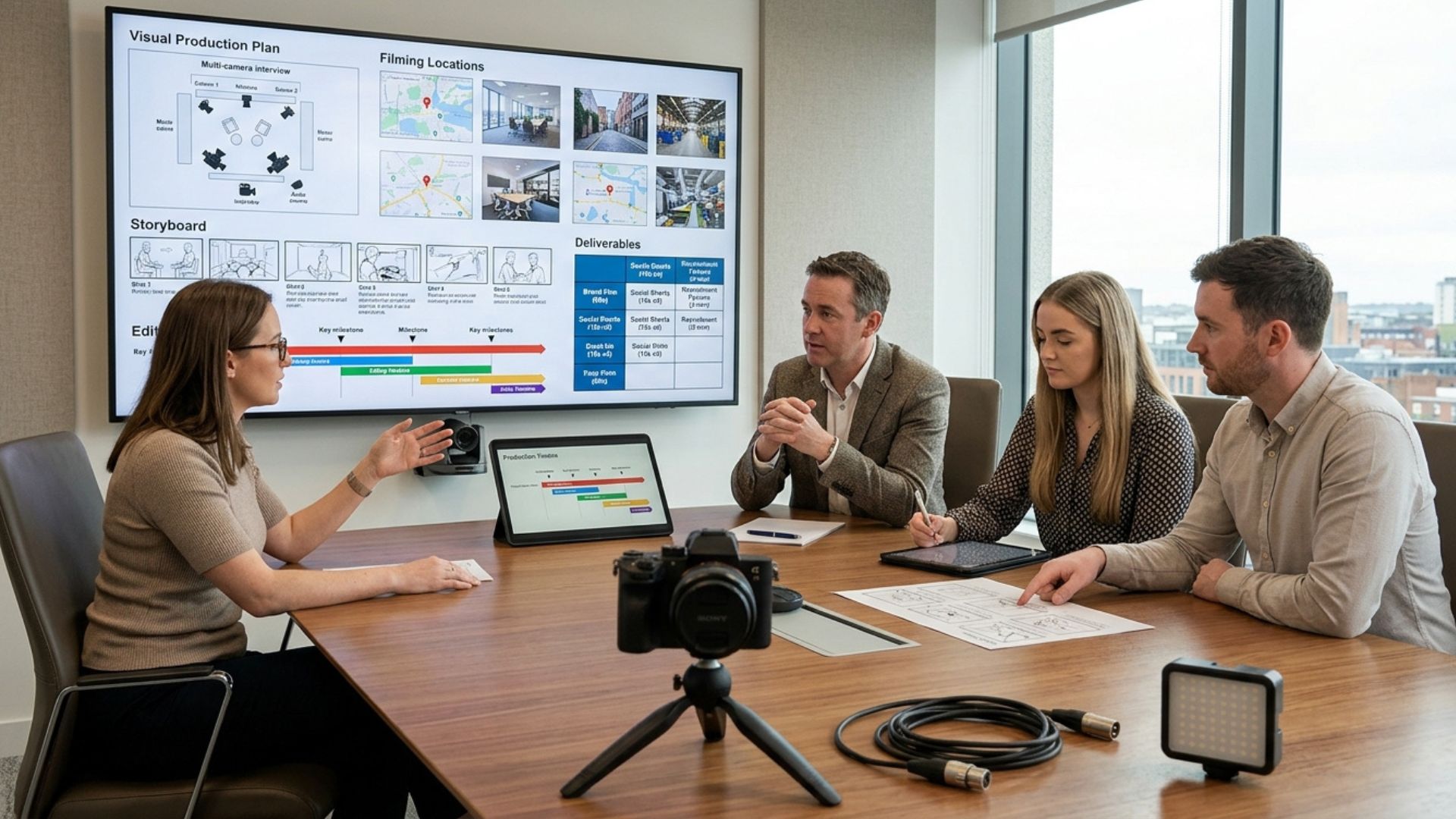
- Storyboarding and pre-production
- Location and shoot planning
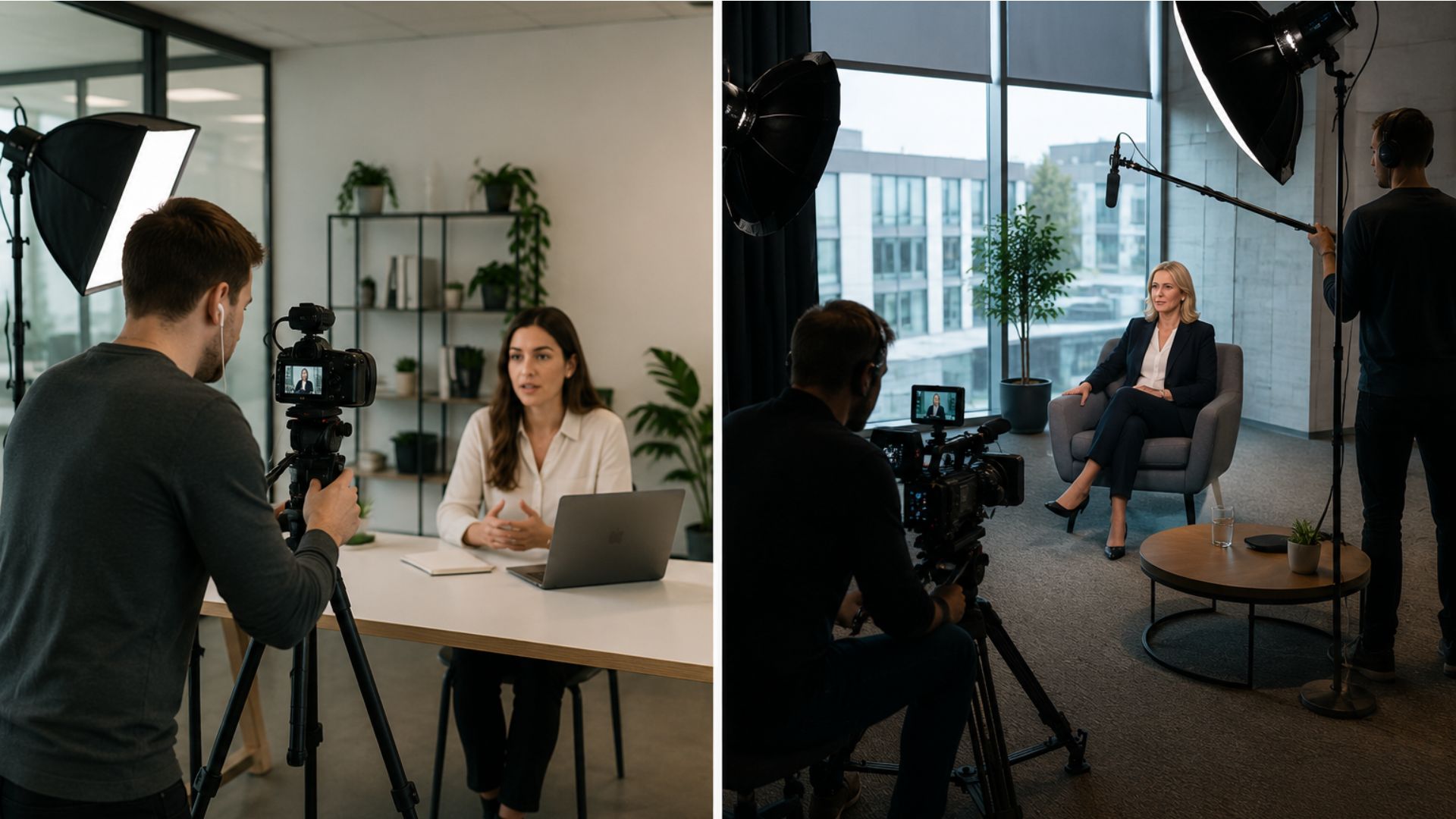
- Filming, lighting and sound
- Editing and colour grading
- Motion graphics or animation
- Music, voiceover and subtitles
- Final delivery
This gives businesses access to specialist skills and equipment without having to build a complete production department themselves. It can be particularly useful for corporate videos, advertising campaigns, recruitment content, brand films and other projects where production quality and planning matter.
In-House vs Outsourced Video Production: The Key Differences
The decision should not be based only on the price of a camera or the quote from a production company. You need to consider the total cost, quality, expertise, time, flexibility, consistency and scalability of each approach.
In-house video production
Best suited to:
- Frequent short-form content
- Social media updates
- Internal communications
- Quick announcements
- Informal interviews and behind-the-scenes content
- Businesses with existing creative staff
Advantages:
- Immediate access to your team
- Strong day-to-day control
- Familiarity with your brand and internal processes
- No external booking required for every small video
- Potentially lower cost per video when production volume is consistently high
Challenges:
- Equipment and software costs
- Staff time
- Training requirements
- Limited specialist capacity
- Maintaining consistent quality
- Managing the full production workflow internally
Outsourced video production
Best suited to:
- Corporate and brand videos
- Advertising campaigns
- Product launches
- Recruitment campaigns
- Customer testimonials
- Event videos
- Projects requiring specialist equipment or production skills
Advantages:
- Access to specialist expertise
- Professional equipment
- Dedicated production resources
- Structured planning and production
- Ability to scale the team around the project
- Less pressure on internal marketing staff
Challenges:
- Higher upfront project cost
- External scheduling
- Communication and briefing requirements
- Finding the right production partner
Neither option automatically wins. The better choice depends on the type of video you need and the resources you already have.
The Real Cost of In-House Video Production
In-house production can look cheaper because you are not receiving an external production invoice. But the real cost includes more than equipment.
Equipment and software
Professional-looking video can require cameras, lenses, lighting, microphones, stabilisation, storage and editing hardware. Depending on your workflow, you may also need software subscriptions, music licensing, stock footage, cloud storage, backup systems and collaboration tools.
These costs can be reasonable if your business produces video regularly. They are harder to justify if you only need a few major productions each year.
Staff time
Staff time is often the biggest hidden cost.
If a marketing manager spends two days planning, filming and editing a video, those two days still have a business value. In our experience working with Irish businesses, this is an important trade-off: time spent producing video internally can take attention away from campaigns, lead generation, strategy, reporting and other marketing work.
That does not make in-house production inefficient. It simply means the time should be included when comparing the two approaches.
Training and expertise
Good video production involves more than operating a camera. Depending on your ambitions, employees may need skills in lighting, sound, framing, storytelling, editing, colour correction and production planning.
If video is a core part of your marketing strategy, developing those skills internally can make sense. If you only produce a small number of significant videos, maintaining that expertise may be less practical.
The Real Cost of Outsourcing Video Production
Outsourcing can appear more expensive because you pay a project fee. However, that fee covers more than filming.
You are typically paying for a combination of:
- Equipment
- Production experience
- Creative expertise
- Planning and project management
- Crew and specialist roles
- Editing and post-production
- Time and resources
A larger production may need a producer, camera operator, sound specialist, editor, motion graphics artist and other creative support. Hiring those roles permanently would be difficult to justify for many businesses that only need major video projects occasionally.
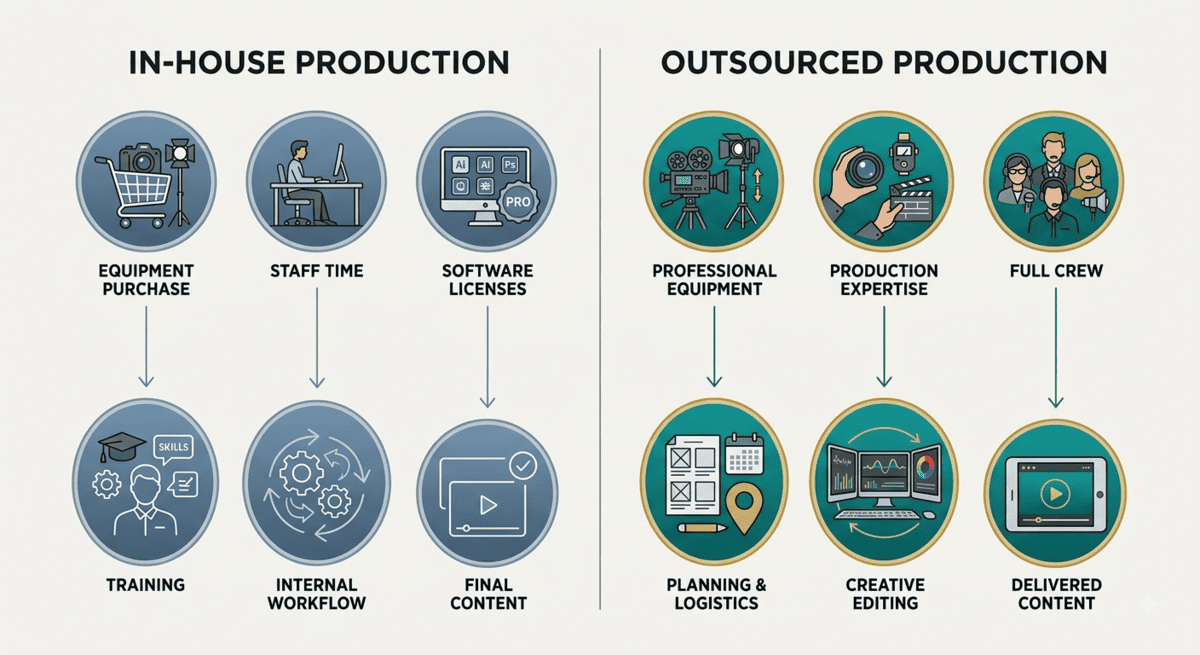
The more useful comparison is therefore not “What does the production company charge?” but “What would it cost us to achieve the same result internally?”
Which Option Gives You Better Video Quality?
Quality is not determined by whether a video is made in-house or outsourced. A skilled internal team can produce excellent work, while an external supplier is only as good as the team and process behind the project.
The difference is that professional production teams work with video every day. They have experience controlling lighting, capturing clean audio, structuring interviews, creating visual variety and managing the production process.
That expertise becomes more important when the video is highly visible.
A quick internal announcement may work perfectly well as a simple smartphone recording. A homepage video, major campaign, recruitment film or customer-facing brand piece has different requirements because the finished video contributes to how people perceive the business.
The production approach should therefore match the importance of the asset.
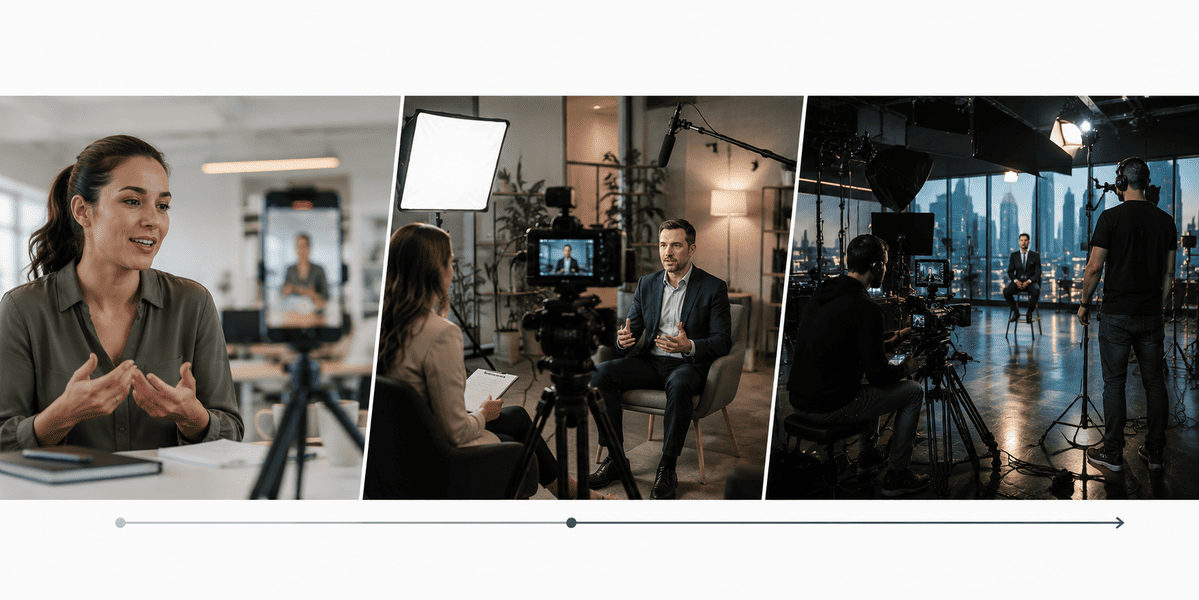
When Does In-House Video Production Make More Sense?
In-house production is often the practical choice when speed, frequency and flexibility matter more than high production value.
You need content frequently
If your business creates video every day or several times a week, outsourcing every small piece can become inefficient. Short social clips, quick updates and internal communications are often easier to produce internally.
The content needs to feel immediate
Some content works because it feels spontaneous. Behind-the-scenes footage, quick announcements and informal social posts do not necessarily benefit from a full production crew.
You already have the expertise
If you already employ a capable videographer, editor or content creator, you have an internal resource that can handle many projects without external support.
You need immediate control
An internal team can make changes, film another take or publish quickly without coordinating an external shoot. This can be useful for fast-moving content.
When Is Outsourcing Video Production the Better Choice?
Professional production becomes more attractive when the project is important, complex or outside your team's existing capabilities.
You need a high-production-value video
Consider professional production for projects such as:
- Brand films
- Corporate videos
- Advertising
- Product launches
- Recruitment campaigns
- Customer testimonials
- Event coverage
- Sales or presentation videos
These projects can benefit from professional planning, filming and post-production.
You do not have specialist skills internally
Your marketing team may understand your audience, brand and objectives without having specialist production expertise. Outsourcing fills that gap without requiring your marketers to become filmmakers.
The project is complex
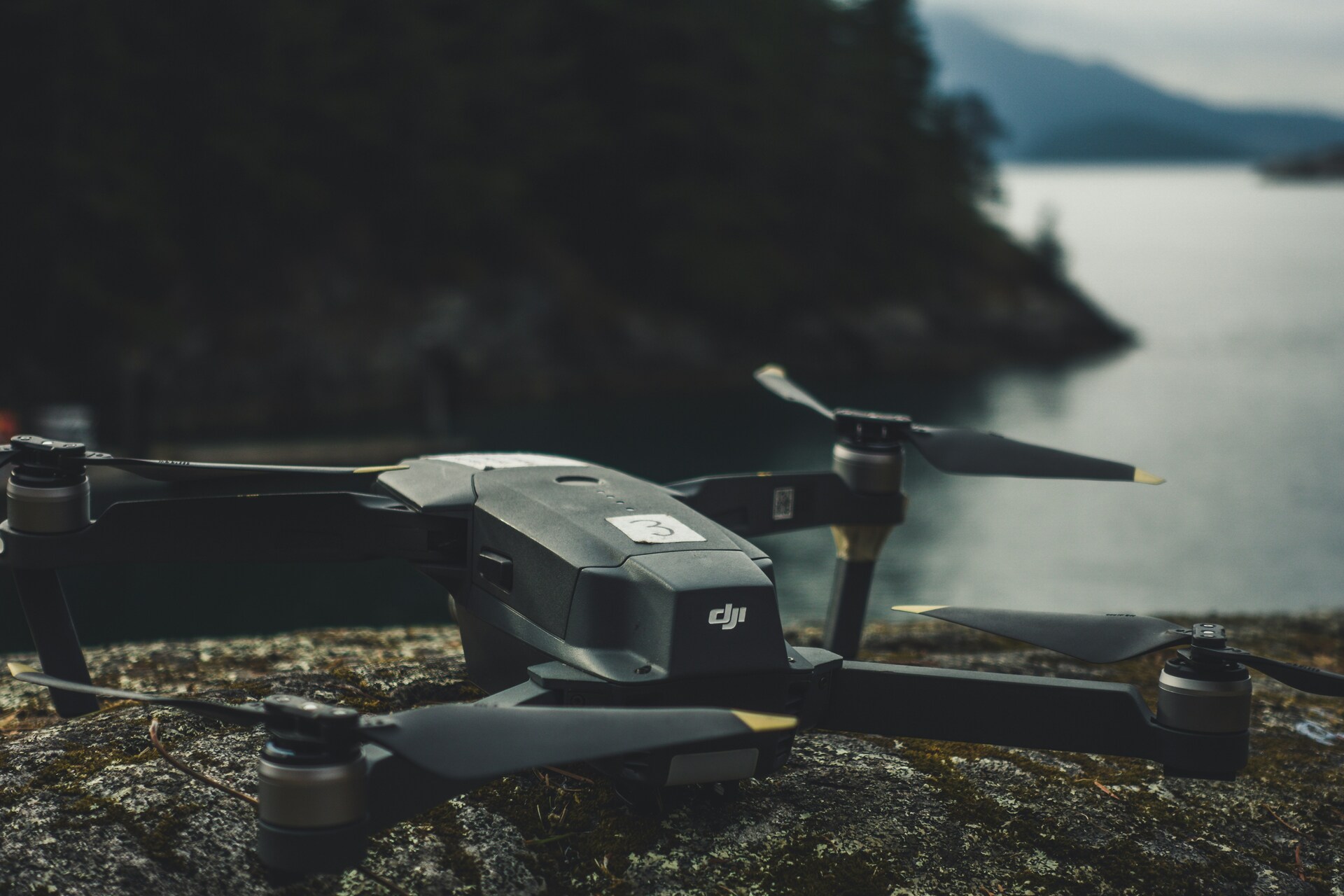
Multiple locations, interviewees, animation, drone footage, voiceovers or detailed post-production can make a project difficult to manage internally. An experienced production team can coordinate these requirements as part of one workflow.
Your marketing team is already stretched
This is often a practical deciding factor. If your team is already managing campaigns, social media, email, events, websites and reporting, adding filming and editing can create another major workload.
Outsourcing lets the internal team stay focused on its core responsibilities while specialists manage production.
What About Speed?
In-house production is not always faster, although it can be for simple content.
If you need a quick social clip tomorrow, an employee may be able to record and publish it immediately. Larger projects are different. Without a clear production process, time can be lost on unclear briefs, reshoots, editing and repeated revisions.
A professional production process usually includes:
- Brief and objectives
- Concept development
- Script or interview planning
- Pre-production
- Filming
- Editing
- Review and revisions
- Final delivery
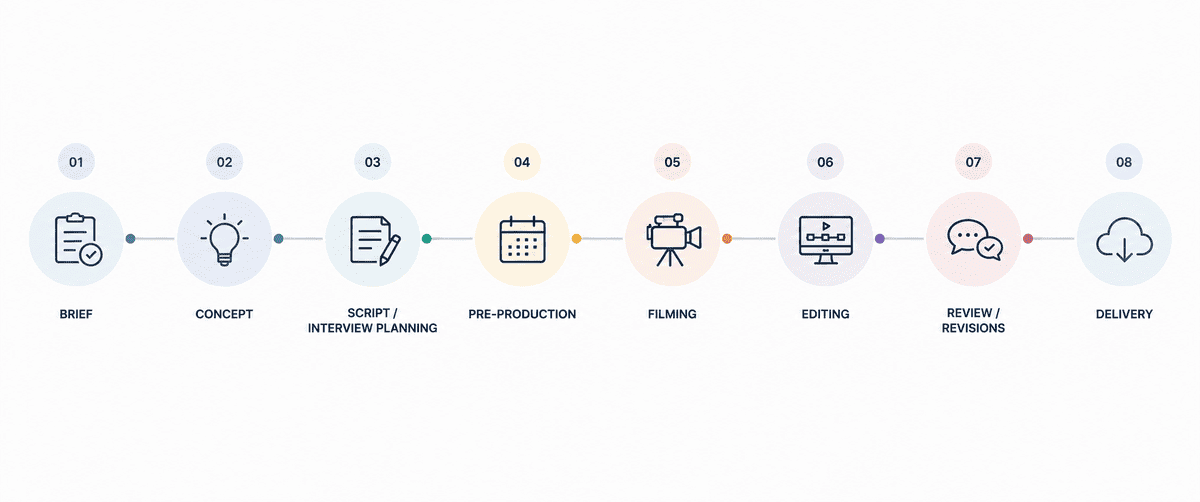
For a major project, this structure can make the overall process more efficient because the decisions are made before filming begins.
The useful question is not simply “Who can film this fastest?” It is “Who can take this from idea to effective final video most efficiently?”
The Hybrid Approach: You Do Not Have to Choose Just One
For many businesses, the best answer is both.
A hybrid strategy allows your internal team to handle simple, frequent content while using professional production support for projects that need more expertise or production value.
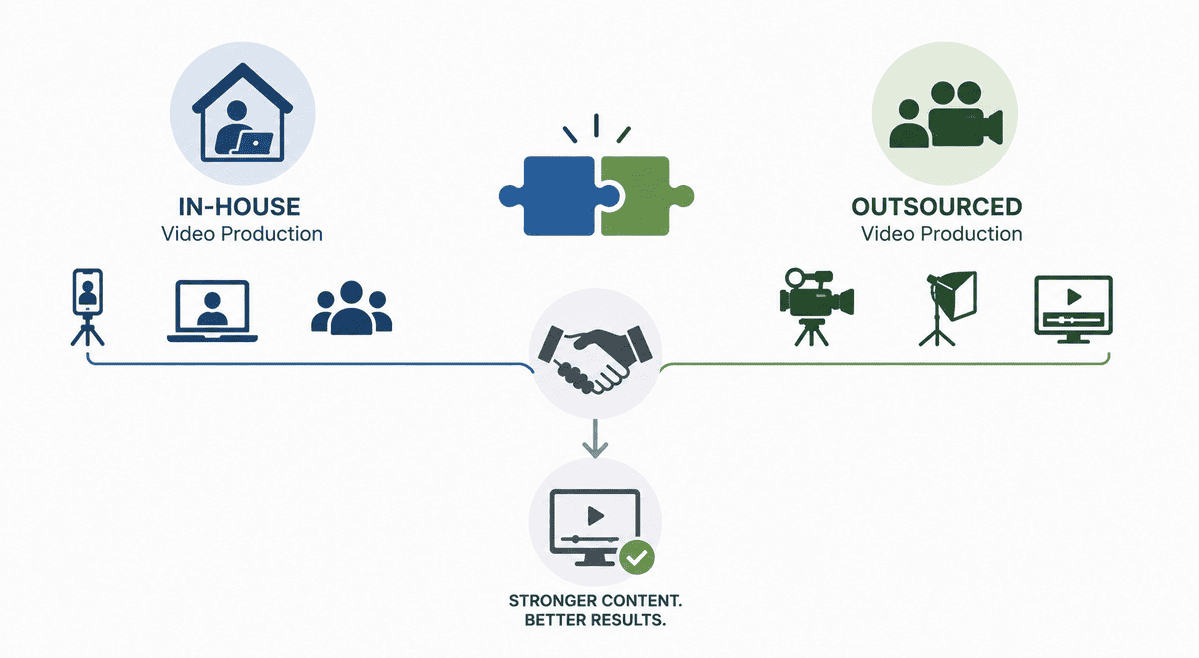
Your internal team could handle:
- LinkedIn videos
- Quick updates
- Behind-the-scenes content
- Internal communications
- Short social clips
- Informal educational content
A professional production company could handle:
- Brand videos
- Corporate films
- Recruitment campaigns
- Advertising
- Product launches
- Customer testimonials
- Event production
This approach keeps everyday content flexible while allowing the business to invest professional production budget in the videos where quality and execution matter most.
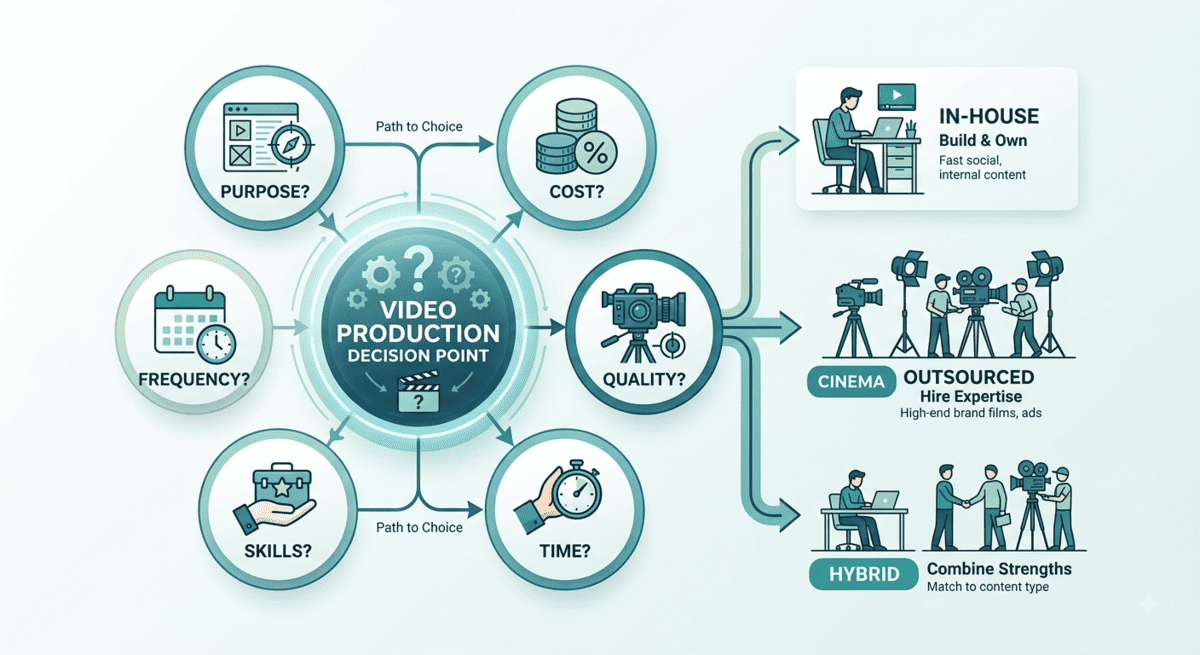
A Simple Decision Framework
Before deciding, ask these six questions:
1. What is the purpose?
A quick social post has different production needs from a major brand asset.
2. How often will you create it?
Hundreds of simple videos may justify internal capability; a few major productions may favour outsourcing.
3. What skills do you already have?
Can your team confidently handle filming, sound, lighting and editing, or would they be learning as they go?
4. What is the total cost?
Include equipment, software, staff time, training and project management — not just the external quote.
5. How important is production quality?
Match the production approach to the importance and visibility of the final asset.
6. How much internal time is available?
If production takes your marketing team away from higher-value work, outsourcing may offer better value.
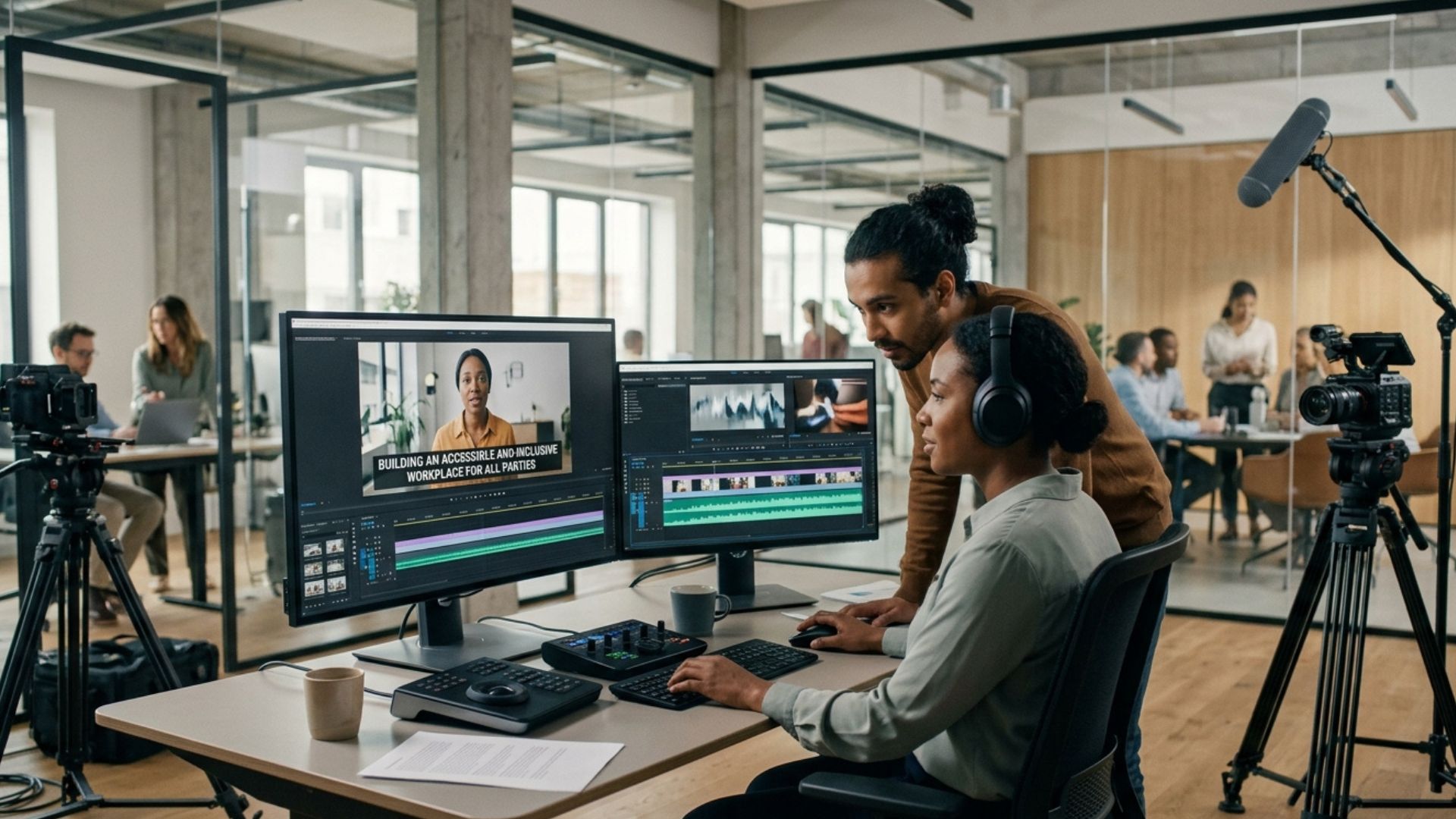
How Professional Video Production Can Take Pressure Off Your Marketing Team
One of the biggest benefits of outsourcing is not the camera equipment. It is that your marketing team does not have to manage every stage of production themselves.
A professional production company can take a brief and turn it into a structured plan covering the creative approach, filming and post-production. At Mango Media, for example, the process can include consultation, planning, scripting and storyboarding, production, editing, colour grading, enhancements, client review and delivery.
This can be useful when your team knows what the business needs to communicate but does not have the time or specialist skills to determine how that message should be produced visually.
Professional production is therefore less about handing over control and more about bringing in expertise where it adds value.
How Much Does Professional Video Production Cost?
There is no single price for outsourced video production because scope varies significantly. Costs can be affected by:
- Filming locations and days
- Crew size and people on camera
- Equipment requirements
- Scriptwriting, animation and motion graphics
- Drone footage, voiceover and music licensing
- Editing, deliverables and revisions
Mango Media's guide to corporate video costs in Ireland gives indicative ranges from around €800–€1,500 for simple talking-head or interview videos to €7,500–€15,000+ for higher-end productions involving elements such as scripting, drone footage and larger production requirements. These are indicative ranges, not a universal price list.
The useful comparison is the cost against what the video needs to achieve. Different production budgets can be appropriate for different business objectives.
The Biggest Mistake: Choosing Based on Price Alone
Price is important, but the cheapest production method is not necessarily the most cost-effective.
A poorly planned video can lead to additional filming, more editing, repeated revisions or even a reshoot. At the same time, an employee spending several days producing a video has a cost even if there is no external invoice.
A better question is:
Which approach gives us the best result for the time, money and resources we are investing?
That takes the decision beyond the initial price and towards the actual business value of the finished video.
So, Which Is Better for Your Business?
The answer largely comes down to the type and volume of video you produce.
Choose in-house production if:
- You need video content very frequently.
- Most videos are short and simple.
- You already have skilled creative staff.
- Your content benefits from spontaneity.
- You need immediate control.
- You have the time and resources to maintain the workflow.
Choose outsourced production if:
- You need high-quality brand or corporate content.
- The project is strategically important.
- You do not have specialist production skills internally.
- Your marketing team is already stretched.
- The project involves multiple locations, crew or specialist requirements.
- You need professional creative direction.
- You want one team to manage the process from concept through delivery.
Choose a hybrid approach if:
- You produce frequent social content and occasional major campaigns.
- You have internal creative capability but need specialist support for larger projects.
- You want everyday content to remain flexible while key brand assets receive professional production.
For many businesses, the hybrid model offers a practical balance between control, frequency and production quality.
Before You Decide, Start With the Business Goal
The most useful way to approach the in-house vs outsourced question is to work backwards from the outcome.
Do not start with:
“Should we buy a camera?”
Start with:
“What do we need this video to achieve?”
If the answer is regular, informal social content, an internal setup may be exactly what you need. If the answer is to reposition your brand, support a major launch, attract employees or communicate your value to customers, professional production may provide more value.
The production method should follow the objective — not the other way around.
When Outsourcing Is the Smarter Investment
There are projects where bringing in a professional production company is not simply an additional expense. It can be the most efficient way to use your internal resources.
If the project matters to your brand, requires specialist skills and needs a polished result, outsourcing allows your team to focus on the business while experienced professionals manage production.
The right production partner should not simply make your business look good on camera. They should understand why the video is being made and where it fits within your wider marketing strategy.
Ready to Turn Your Video Plans Into Action?
Once you know what your video needs to achieve, the next step is to work out what type of production support will get you there. If the project is important to your brand, moving from comparing options to defining the right production approach can make the next decision much easier.
Conclusion
There is no single winner between in-house video production and outsourcing. The right choice depends on your goals, budget, internal resources and the level of production your video needs.
If you’re ready to explore your options, view our video production services, use our instant price calculator for a quick estimate, or get in touch for a no-obligation conversation.
Frequently Asked Questions
Is it cheaper to make videos in-house or outsource them?
Not necessarily. In-house production can be more cost-effective when a business creates a high volume of simple content and already has the necessary skills and equipment. However, equipment, software, staff time, training and maintenance all contribute to the real cost.
Should I hire a video production company or do it in-house?
It depends on the type and volume of video you need. In-house production can work well for frequent, simple content, while a video production company can be a better fit for complex, high-value or brand-critical projects that require specialist skills and equipment.
How much does it cost to outsource video production?
The cost varies depending on the scope of the project, including filming locations, crew size, equipment, scripting, animation, editing and the number of final deliverables. A professional quote should reflect the production requirements and the business objective rather than simply the number of hours spent filming.
Similar blogs:








































![How to Write a Promo Video Script (Free Template Included) [2026 Guide]](https://cdn.prod.website-files.com/6226fcc37e2eb518b6e69a7f/69c3804c0b9ea78696bd89e0_covertab11.jpeg)





.jpg)
%20(1)%20(1).jpg)
.jpg)






We'd love to hear from you! Reach out to us today for a chat about our services, pricing, or just to say hello!


