
In today’s oversaturated inboxes, getting your email noticed — let alone opened — is no easy feat. In this article, we’ll explore the power of video in email campaigns, how to embed video content the right way, best practices to maximise performance, and how to track your results. Whether you’re a startup, marketer, or creative agency, using video in your emails can be a game-changer for audience retention and conversions.
What Is a B2B Case Study Video?
A B2B case study video tells the story of a real customer who used your product or service to solve a problem, improve a process or achieve a meaningful result.
Rather than simply saying that your business delivers great results, you show what happened when a customer actually worked with you.
Most case studies follow a straightforward structure:
The challenge → The solution → The result
For example, a technology company might feature a customer that was struggling with an inefficient manual process. The customer can explain what wasn't working, why they needed a new solution, how implementation went and how much time the new system saved.
A professional services firm could take the same approach, showing what problem the client faced, why specialist support was needed and what changed after the project.
This matters because B2B buyers often research extensively before contacting a sales team. They want to know whether your solution works in the real world, whether you understand businesses like theirs and what working with you might actually involve.
A well-produced case study can answer all three.
Why Are B2B Case Study Videos So Effective?
B2B purchases can involve significant budgets, multiple decision-makers and considerable perceived risk. Your website can explain your services, but your own claims can only go so far.
A customer telling the story provides a different kind of evidence.
They provide genuine social proof
Compare:
"Our team delivers excellent results for our clients."
with:
"Before the project, this process was taking our team two days every week. Now it takes a few hours."
The second statement is more persuasive because the audience can understand exactly what changed.
A real customer provides context that a company's own sales copy often can't.
They make complex services easier to understand
Many B2B products and services are difficult to explain through website copy alone.
A customer case study video gives the audience a real situation to follow. Instead of listing every feature or capability, you can demonstrate how those capabilities solved a specific problem.
That makes an unfamiliar product, service or process much easier to visualise.
They reduce uncertainty
Before buying, a prospect may be wondering:
- Have they solved this problem before?
- Do they understand businesses like ours?
- What is the process actually like?
- Will the solution work in our situation?
- Can they deliver the results they promise?
A relevant customer story can answer these questions without turning the video into a sales pitch.
They support the sales process
A case study doesn't have to live only on your website.
Sales teams can use customer success videos after discovery calls, in proposals, presentations, follow-up emails and conversations with additional decision-makers.
That makes a good case study both a marketing asset and a practical sales enablement tool.
Case Study Video vs Testimonial: What's the Difference?
The terms are often used interchangeably, but there is an important distinction.
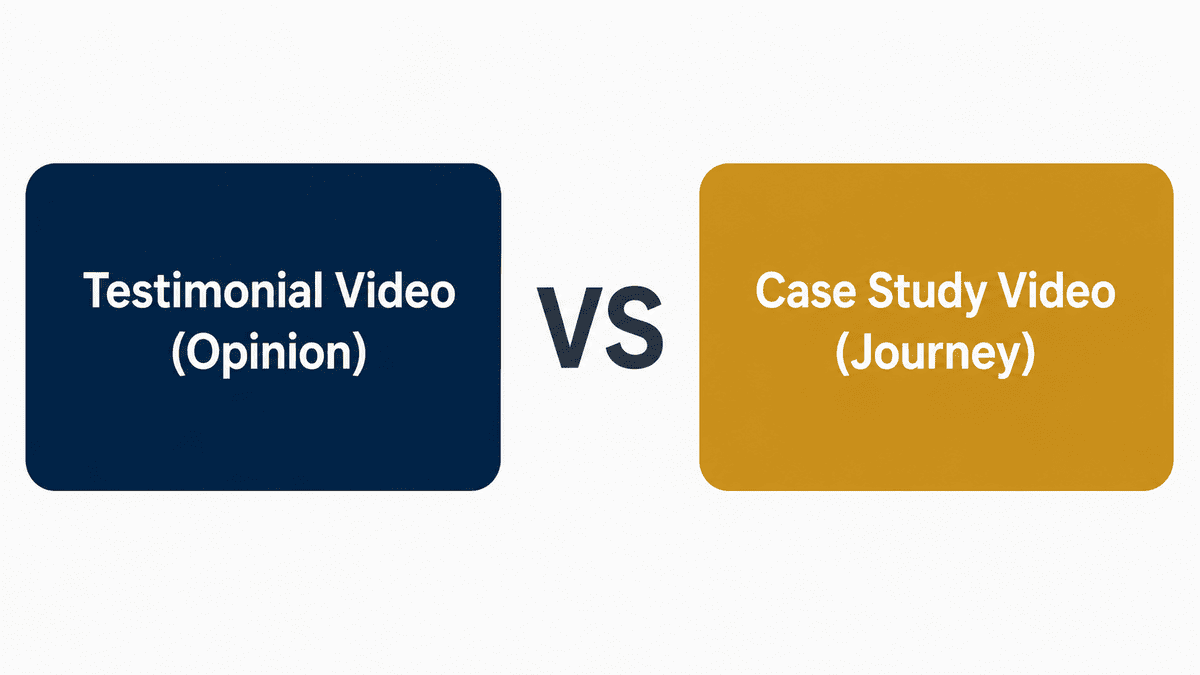
A testimonial video generally focuses on what a customer thinks about your business. It might cover what they liked, how the experience was and whether they would recommend you.
A case study video tells a broader story. It explores the customer's situation before working with you, what they needed, why they chose a solution, what happened during the project and what changed afterwards.
In simple terms:
Testimonial = opinion
Case study = story + evidence
Neither is necessarily better. A short testimonial can be ideal for a landing page or social media. A detailed video case study can be more useful when a prospect needs to understand how your solution works in practice.
The strongest case studies often combine the authenticity of a testimonial with the structure and evidence of a customer story.
How to Choose the Right Customer for a Case Study
Not every satisfied customer will make a good case study.
The best customer stories usually have a clear problem, an interesting journey and a meaningful outcome.
Look for customers who:
- Had a recognisable business problem
- Faced a meaningful challenge
- Used your product or service in an interesting way
- Achieved a clear outcome
- Can explain their experience naturally
- Are comfortable appearing on camera
- Represent the type of customer you want more of
That last point is particularly important.
Your case study isn't only showing what you can do. It is also showing who you can help.
If you want to attract more technology companies, a strong technology client story may be more valuable than a generic success story. If you want to work with larger organisations, a project involving multiple stakeholders, departments or locations could demonstrate that capability.
From working with Irish businesses, the strongest customer stories are rarely the ones filled with impressive marketing language. They're the ones where the problem, process and outcome are specific enough for another business to recognise itself.
That's what you should look for when choosing your customer.

What Should a B2B Case Study Video Include?
There isn't one mandatory formula, but a strong B2B customer story video will usually cover five stages.
1. The original problem
Start with the customer's situation before your business became involved.
What wasn't working? What was taking too much time? What opportunity were they missing?
Without a clear problem, the audience has little reason to care about the solution.
2. What the customer needed
Explain what they were looking for.
That might be:
- A new system
- Specialist expertise
- Increased capacity
- A more efficient process
- Better customer experience
- Technical support
- Reduced costs
- A way to scale
This gives context to the buying decision.
3. Why they chose your business
Let the customer explain why they chose you wherever possible.
Perhaps you had relevant experience, understood their industry, offered a particular capability or had delivered similar projects.
Hearing that reasoning from the customer is more credible than simply making the claim yourself.
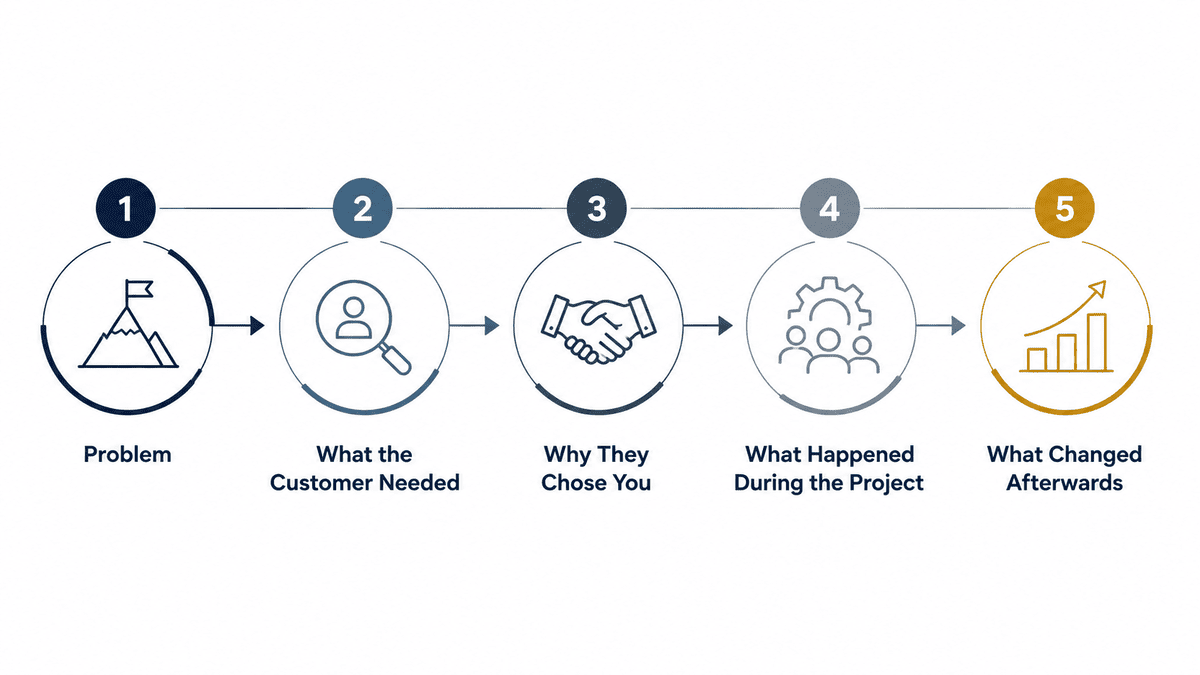
4. What happened during the project
Show the process.
What did implementation involve? How did your team work with the customer? Were there challenges? What did the customer experience?
This is particularly valuable for prospects who are considering buying from you because they get an idea of what working with your business might actually feel like.
5. What changed afterwards
Finish with the result.
What improved? What changed for the customer? What can they do now that they couldn't do before?
Where possible, use specific evidence such as:
- Revenue growth
- Time saved
- Reduced costs
- Faster processes
- Increased capacity
- More leads
- Fewer errors
- Improved customer satisfaction
Not every result needs to be a percentage. A practical change can be just as compelling when it's specific and relevant.
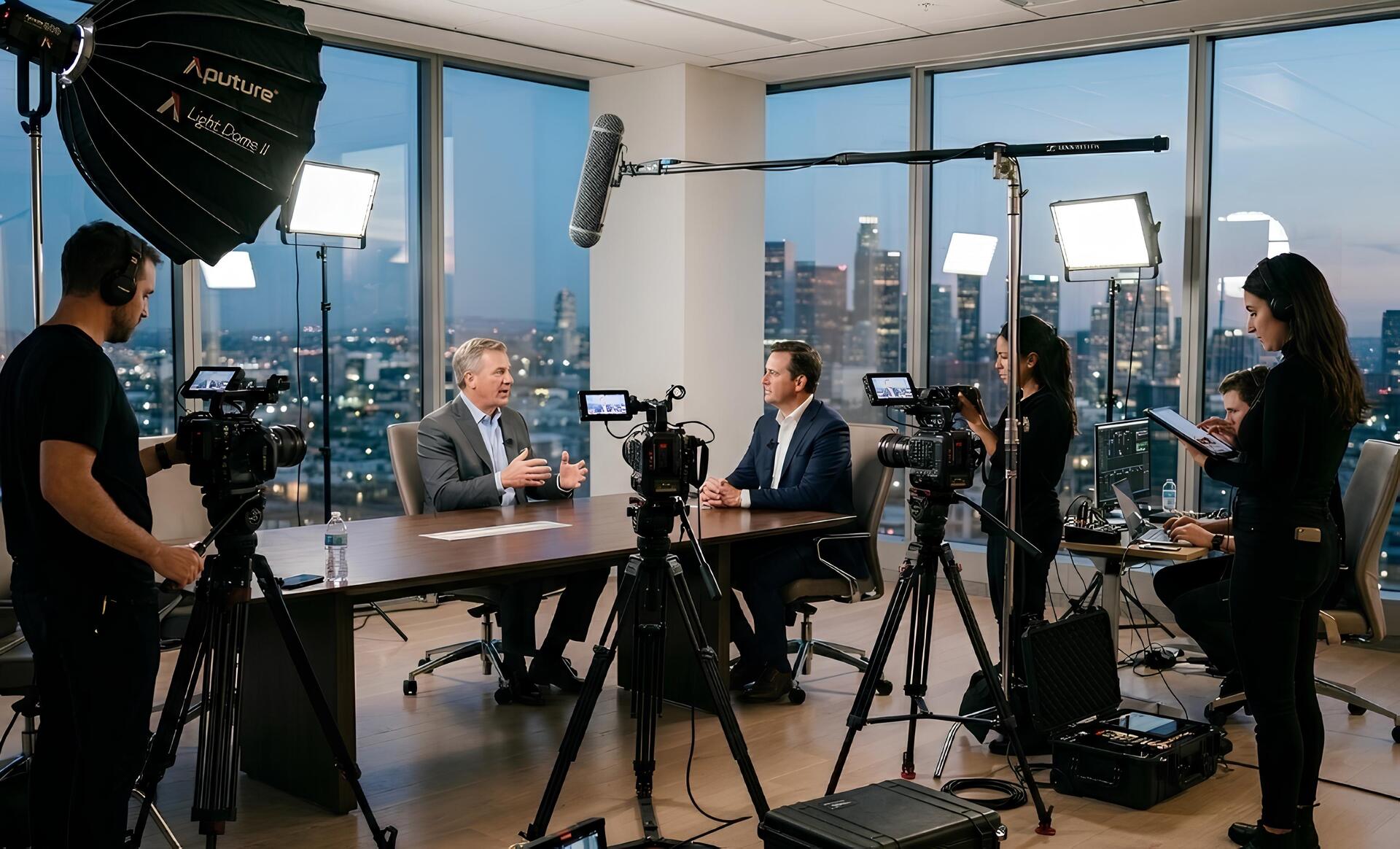
How to Interview a Customer for a Case Study Video
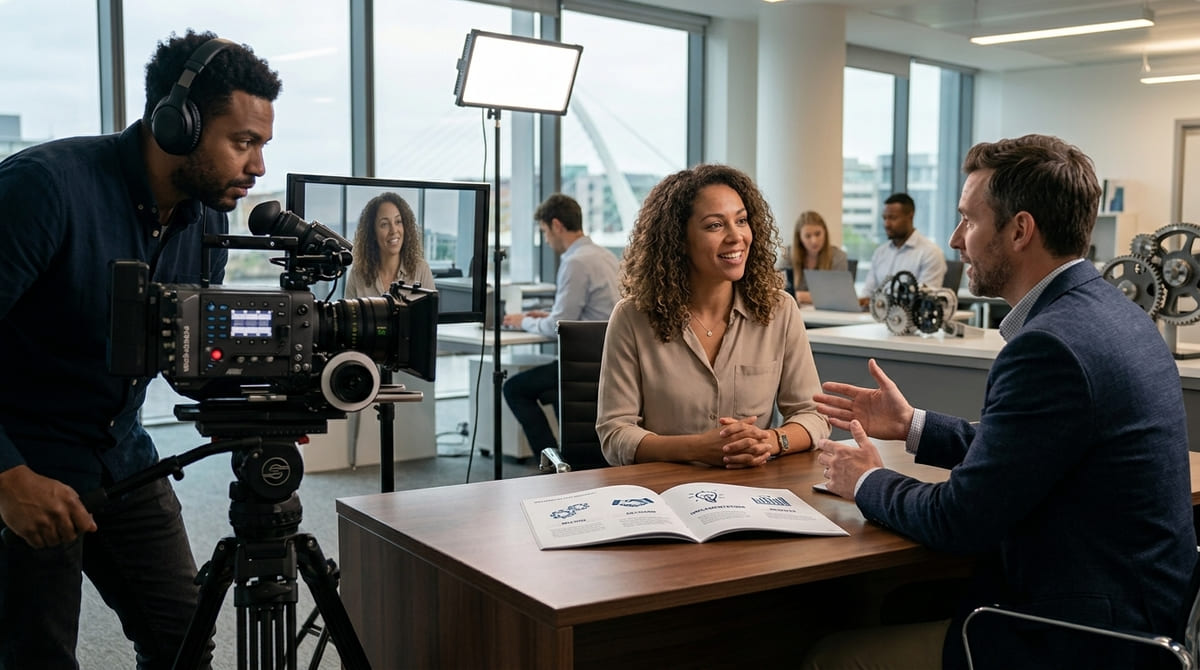
The quality of the interview can determine the quality of the entire video.
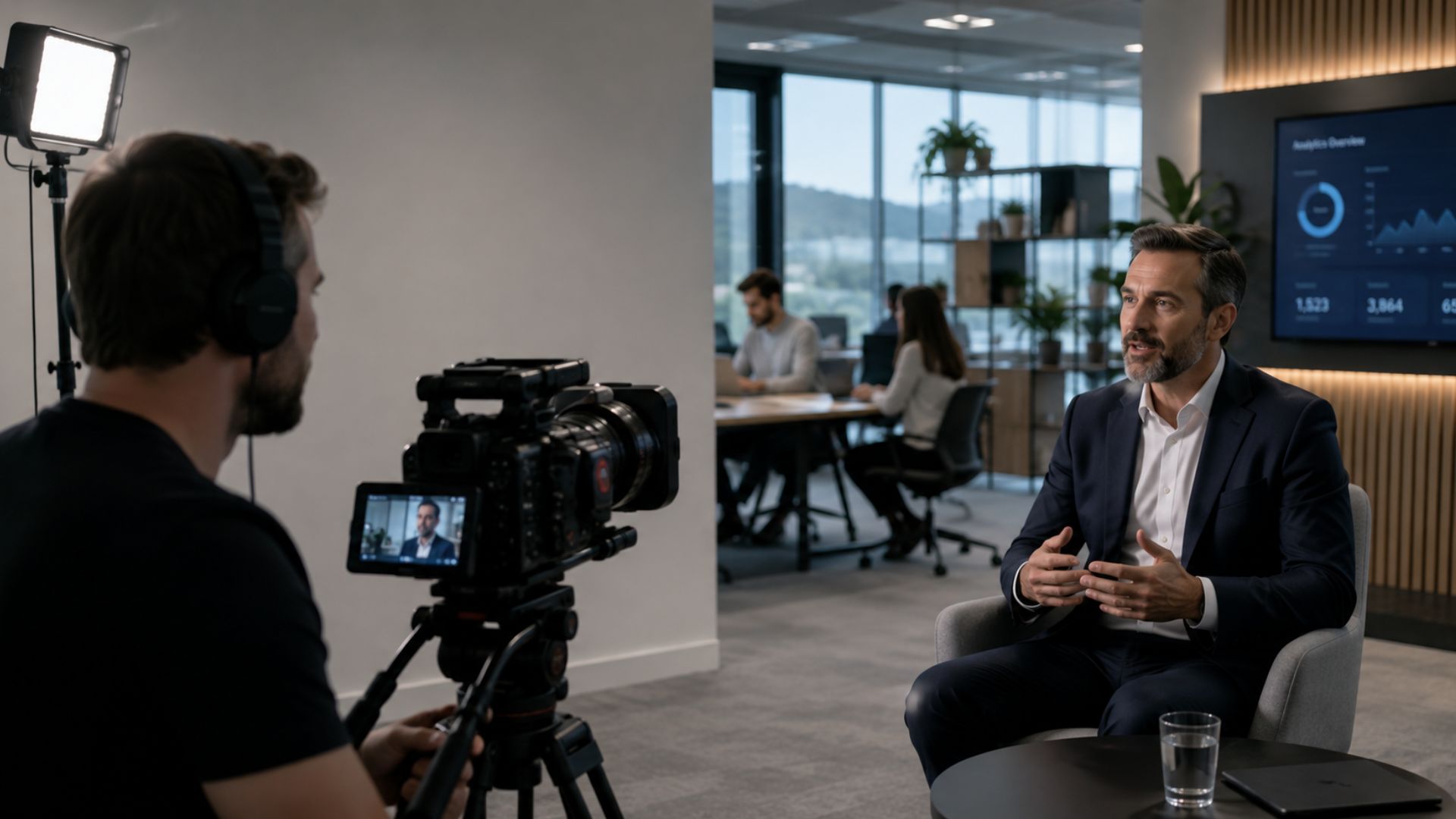
The goal isn't to make the customer repeat your marketing copy. It's to help them tell their story naturally.
Start with broad questions, then use follow-ups to uncover specific details.
Before the project
Ask:
- What problem were you trying to solve?
- What was happening before?
- How was that affecting the business?
- Why did you decide to address it?
- What were you looking for in a solution?
During the decision
Ask:
- What made you consider working with us?
- Why did you choose us?
- Did you have any concerns before starting?
- What stood out during the decision process?
During implementation
Ask:
- What was the process like?
- How did the team work with you?
- What did you find particularly useful?
- Was there anything that surprised you?
After the project
Ask:
- What changed after implementation?
- What results have you seen?
- How has the solution affected your team?
- What can you do now that you couldn't do before?
- Would you recommend the solution to another business?
The most useful answers often come from follow-up questions.
If someone says, "It saved us a lot of time," don't immediately move on.
Ask:
"How much time were you spending before?"
Then:
"What does that allow your team to do now?"
Those additional questions can turn a generic statement into a compelling piece of evidence.
Should You Script a Customer Case Study?
Generally, you should structure the interview rather than script the customer's answers word for word.
Over-scripted interviews can sound unnatural. Customers aren't professional actors, and they don't need to be.
Give them the topics you want to cover and explain the purpose of the interview. Then allow them to describe their experience using their own language.
That doesn't mean the production should be unplanned.
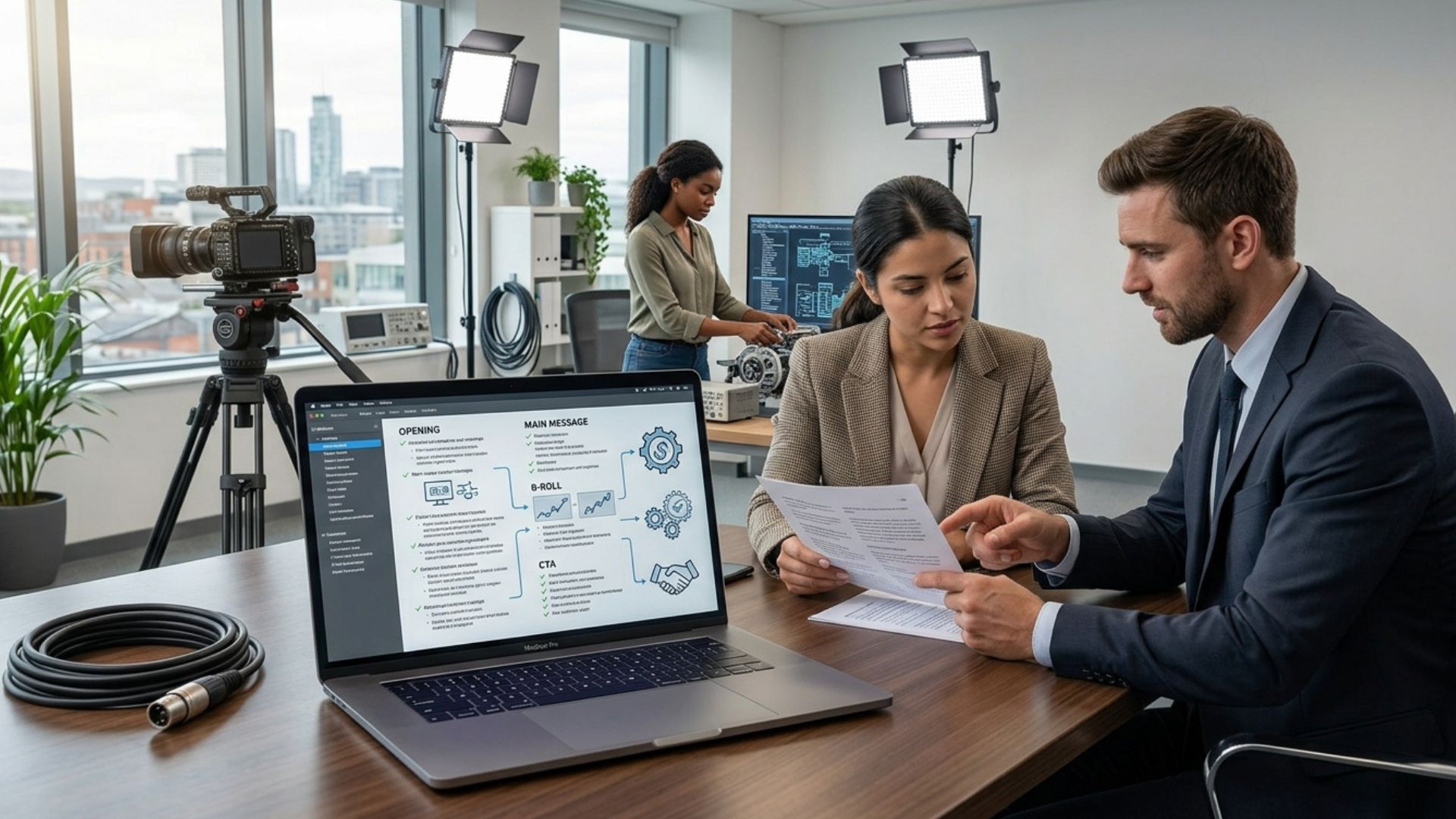
The more carefully you prepare your questions, story structure and filming requirements, the more freedom you can give the customer to speak naturally.
A skilled interviewer can guide the conversation towards the details that matter without making the answers sound rehearsed.
Use B-Roll to Show the Story
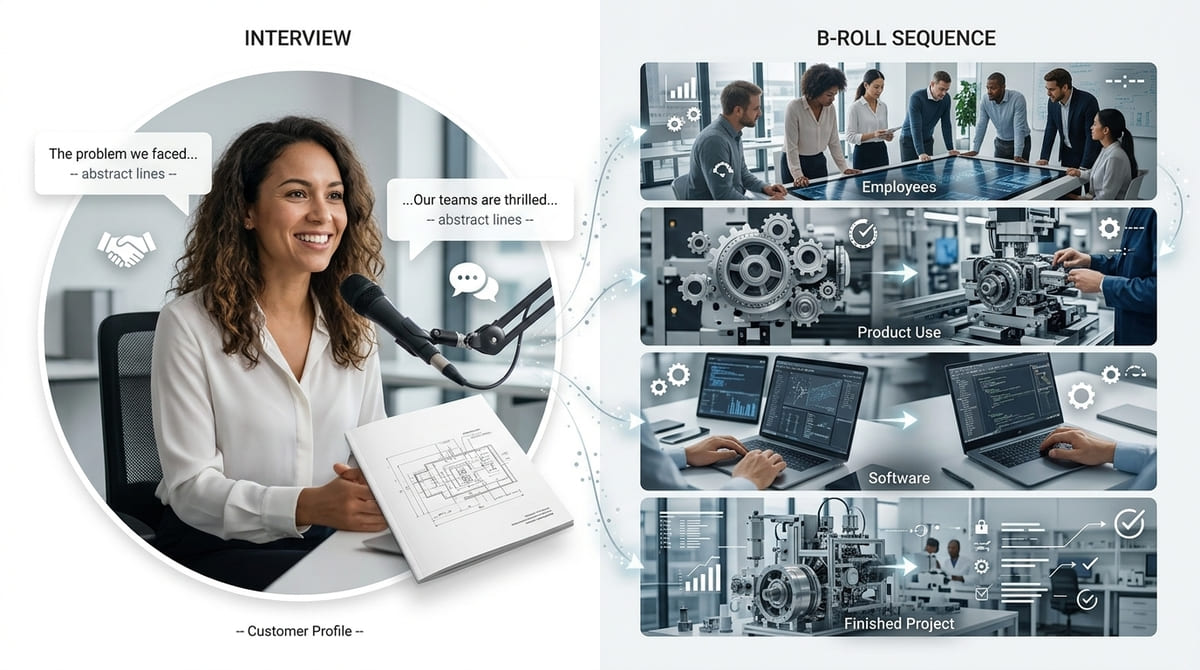
A customer talking to camera can tell you what happened.
B-roll helps the audience see it.
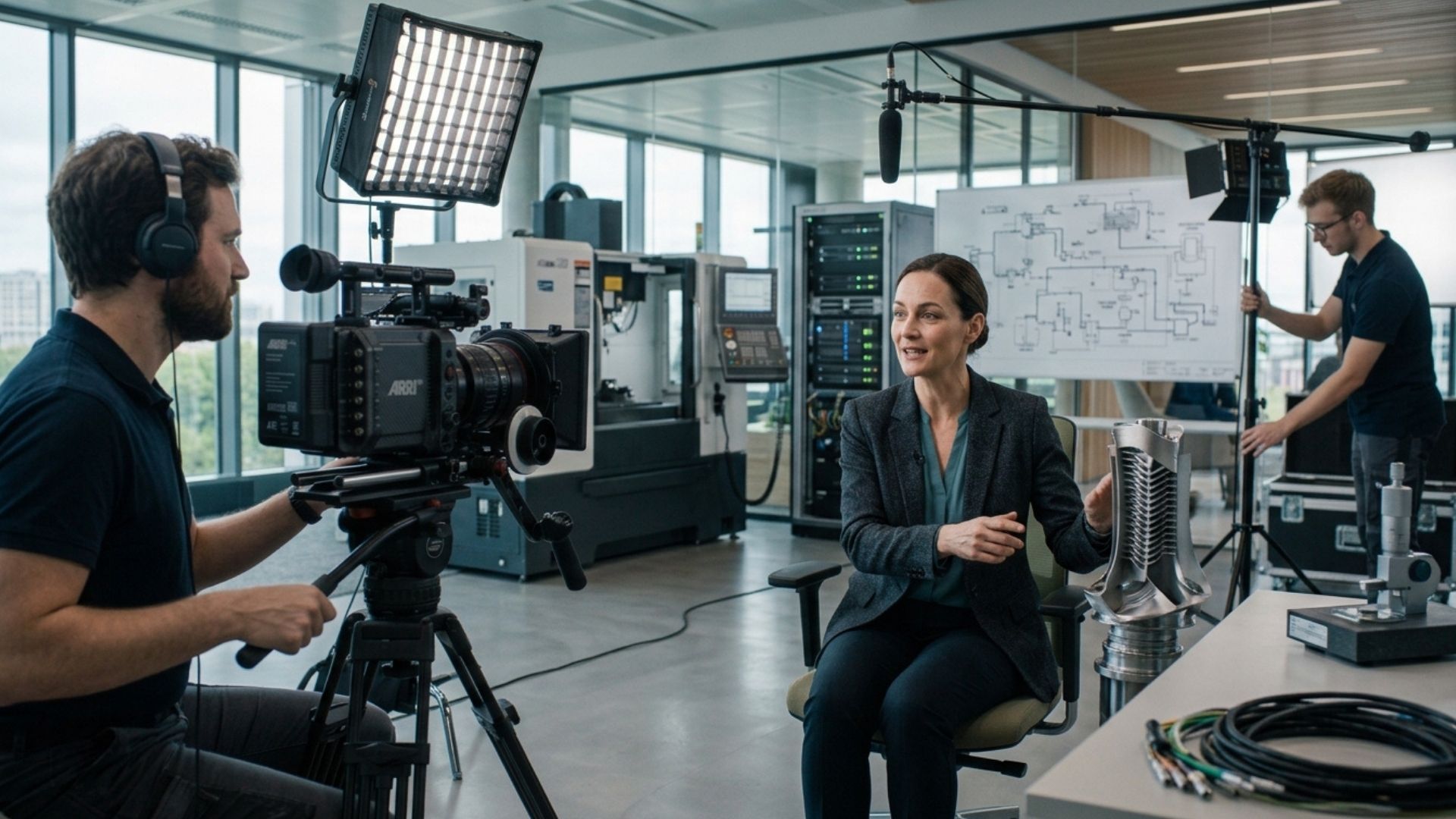
If a customer discusses a manufacturing process, show the production floor. If they talk about software, show the platform being used. If the project involved a physical installation, show the finished work in its real environment.
Capture employees working, products being used, processes taking place and details that reinforce what the customer is saying.
A useful question during pre-production is:
"What could we show while the customer is talking about this?"
That question should influence your filming plan.
You may need workplace footage, product demonstrations, screen recordings, wide establishing shots, close-up details or additional interviews.
The interview tells the story. The B-roll makes it tangible.
How Long Should a B2B Case Study Video Be?
There is no universal ideal length.
A short customer story might work well at around 60–90 seconds, while a more detailed B2B case study might run for two to three minutes. More complex projects may justify a longer version.
The important thing is that every section earns its place.
Don't stretch a two-minute story into five minutes simply because you have the footage.
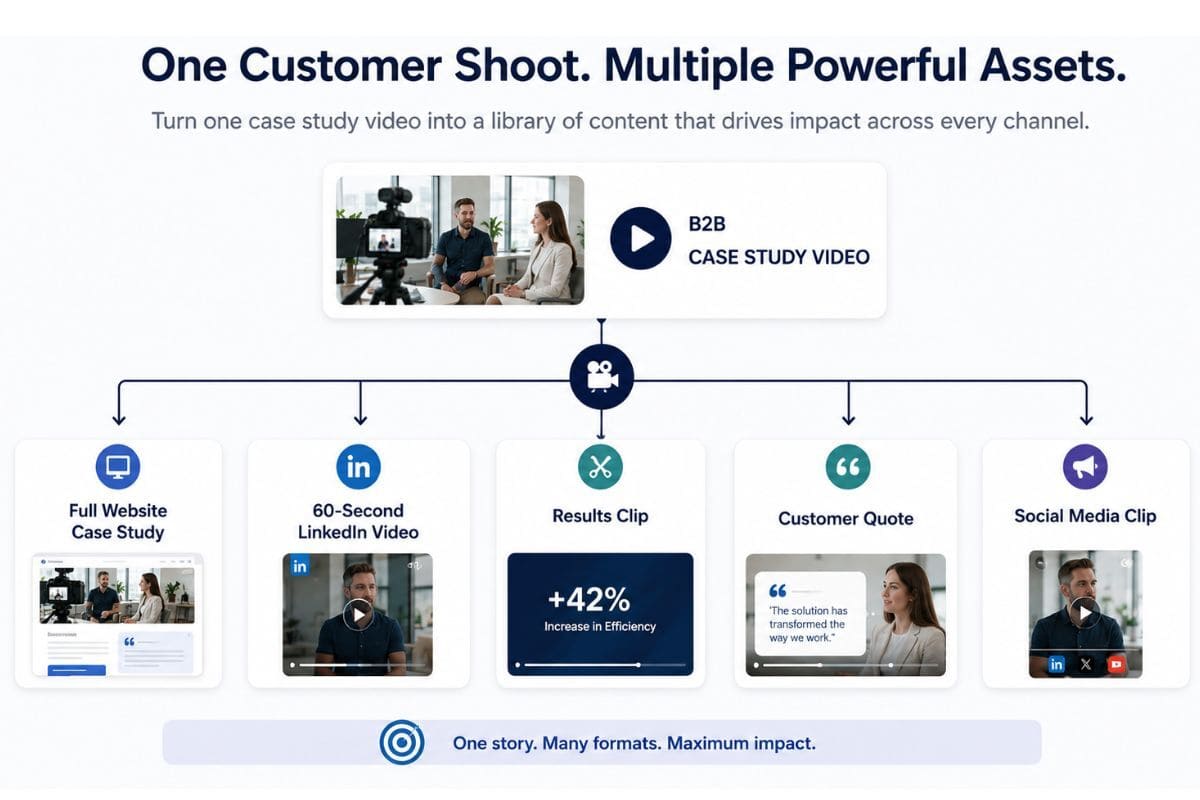
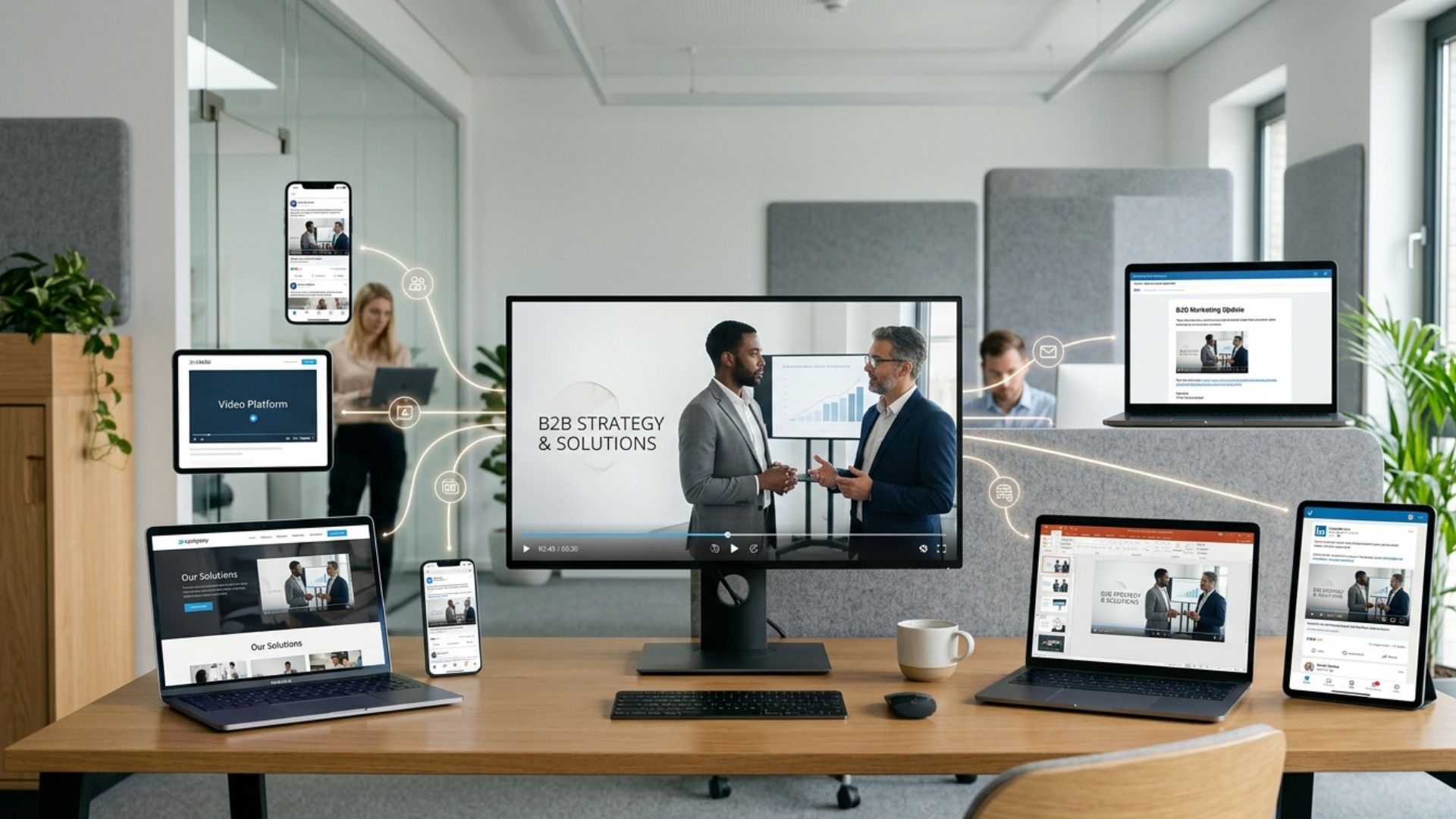
Instead, consider creating multiple versions from the same production:
- Full case study for your website
- 60-second version for LinkedIn
- Results-focused clip for sales
- Short customer quote for social media
- Individual clips answering buyer questions
One well-planned production can therefore create considerably more content than one finished video.
How to Make a Case Study Video More Credible
Specificity creates credibility.
If a customer says, "The solution made a massive difference," the viewer has to decide what that means.
If they say, "We reduced the process from two days to four hours," the impact is immediately clear.
Look for opportunities to include:
- Numbers
- Timeframes
- Before-and-after comparisons
- Concrete examples
- Operational improvements
- Customer outcomes
However, don't force statistics into the story.
If a result can't be measured reliably, don't invent a number simply because it sounds impressive. A credible case study is more valuable than an exaggerated one.
The goal is for viewers to think:
"That sounds like a situation we have."
Not:
"That sounds like an advert."

Where Should You Use a Case Study Video?
Creating the video is only half the job. You also need to put it in front of the people who need to see it.
On your website
Place relevant case studies near the services or solutions they demonstrate. Someone researching a particular service should be able to find evidence of similar work.
In sales presentations and proposals
A relevant customer story can provide proof immediately after you've explained your solution.
In email follow-ups
Sales teams can send a specific customer story after a discovery call when the prospect has identified a similar problem.
On LinkedIn
Short clips from the interview can become useful social content without requiring an entirely new production.
In paid campaigns
Short customer-result clips can provide social proof for prospects who are already considering a solution.
At events
A customer story can demonstrate the real-world application of your solution during presentations or industry events.
The key is to decide how the video will be used before filming. That decision can influence the framing, interview questions, supporting footage and final edits.
How to Get More Content From One Case Study Shoot
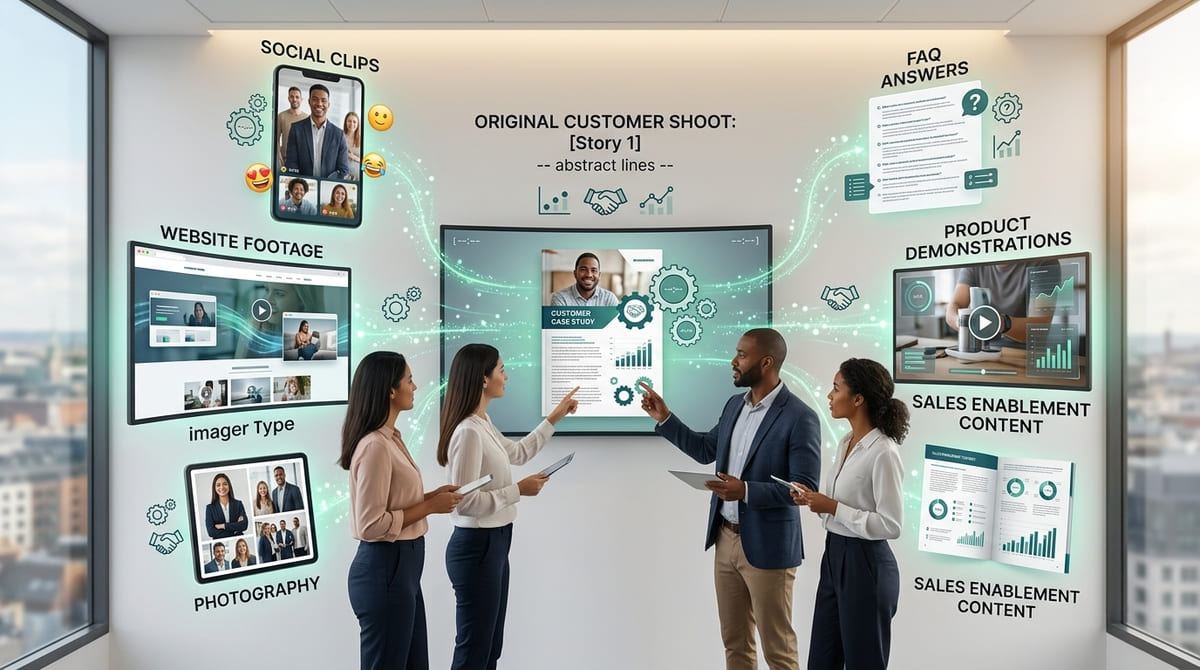
A good case study production shouldn't necessarily result in just one video.
Alongside the main case study, you may be able to capture:
- Short customer quotes
- Vertical social clips
- Product demonstrations
- Workplace B-roll
- Behind-the-scenes footage
- FAQ answers
- Sales enablement clips
- Website footage
- Photography
This is particularly valuable when the customer, location and production team are already together.
Instead of treating the shoot as a one-off project, think about the wider content opportunity. You can build a collection of assets around the same customer story and create material for different stages of the buyer journey.
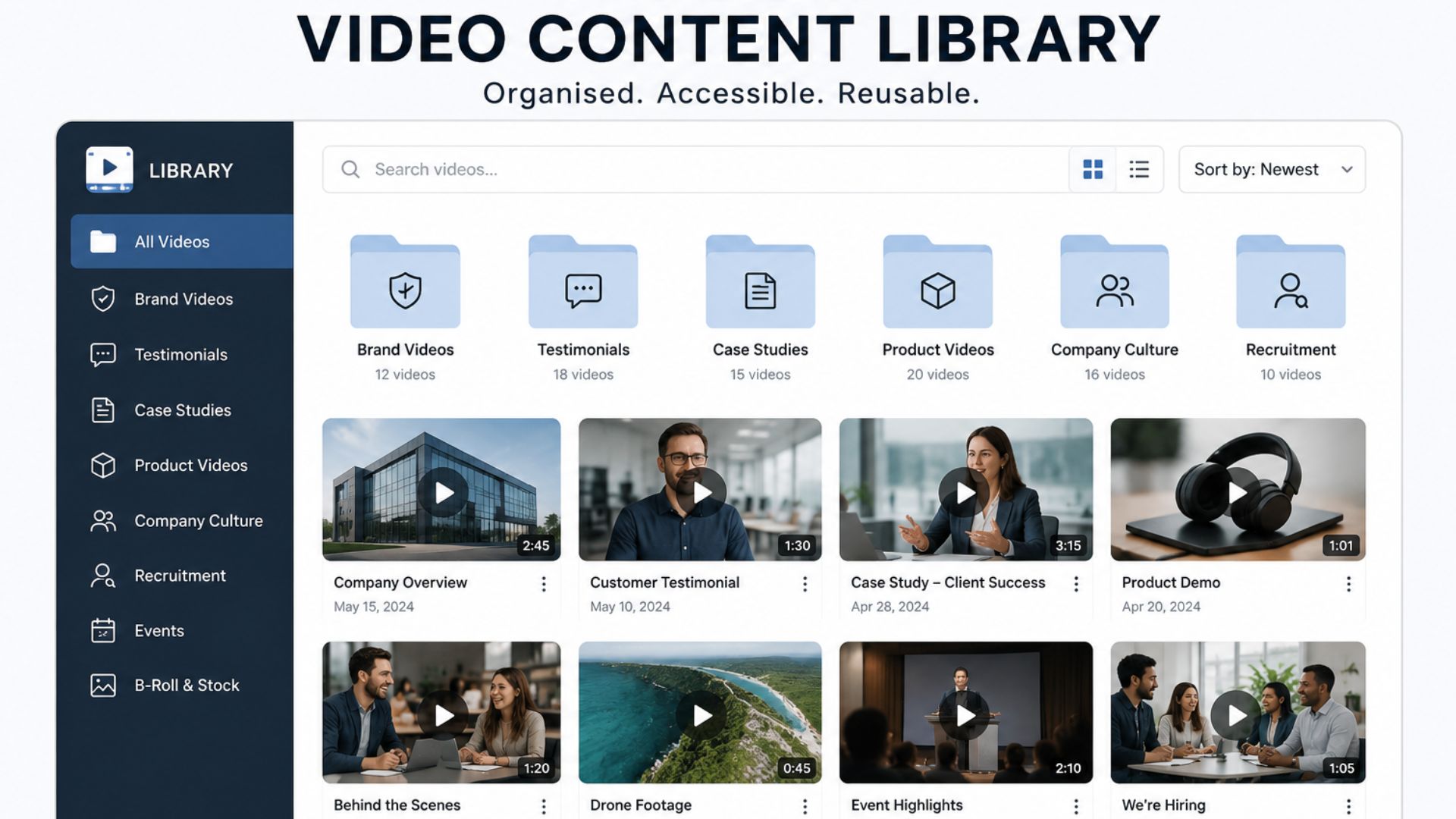
That gives your production a better return and helps build a broader video content library over time.
Common B2B Case Study Video Mistakes
Making your company the main character
The customer should be at the centre of the story. Your business is the solution that helped them move from one situation to another.
Asking only generic questions
"How was your experience?" is unlikely to produce a memorable story.
Ask about the problem, decision, process and result.
Making the customer sound scripted
Their own words are part of the value. Don't remove all personality in an attempt to make the video sound overly polished.
Focusing only on the result
The journey makes the result meaningful. Show what the customer was dealing with before and how the solution changed it.
Forgetting proof
Where reliable numbers or specific outcomes exist, include them.
Not capturing enough B-roll
A strong interview can still become visually repetitive without enough supporting footage.
Turning the video into an advert
A case study should demonstrate value through the customer's experience. It shouldn't feel like a two-minute sales pitch.
How to Plan a Professional Case Study Video
A successful case study video production starts before anyone turns on a camera.
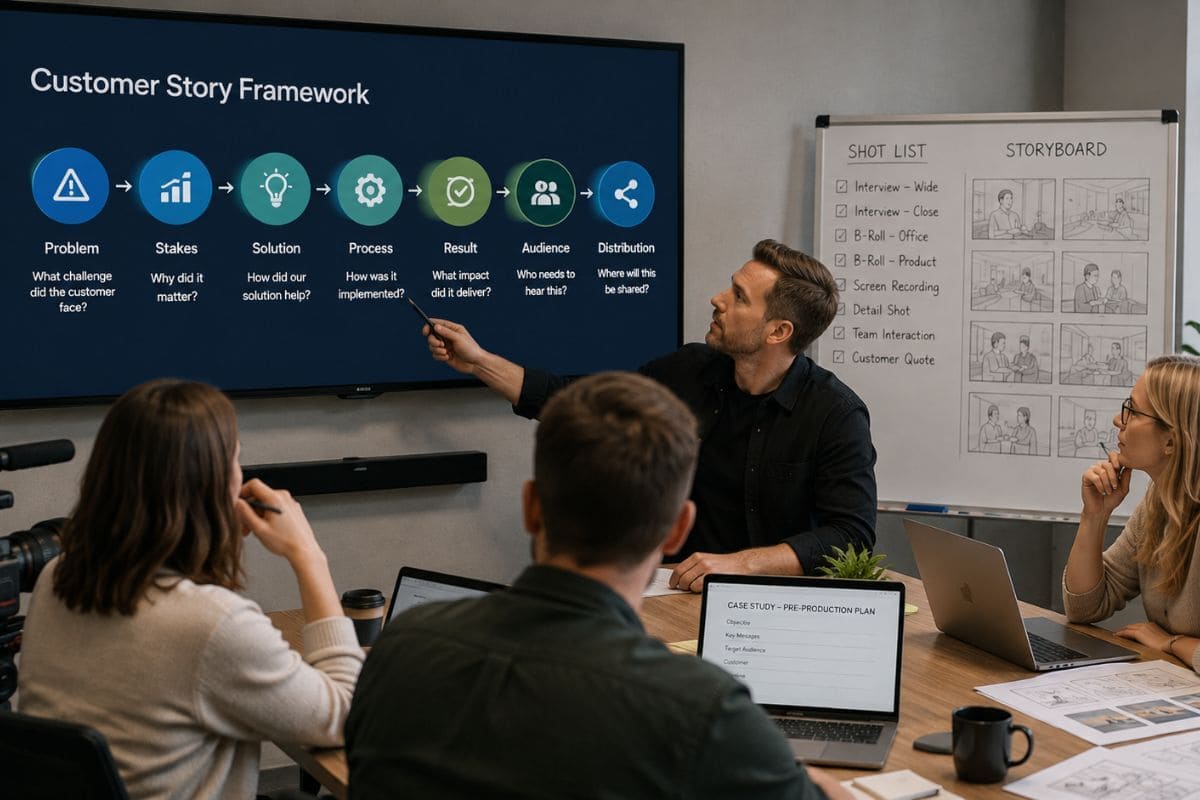
Begin by identifying the customer and defining the central story.
Ask:
The problem: What was wrong?
The stakes: Why did it matter?
The solution: What did you provide?
The process: What happened?
The result: What changed?
The audience: Who should see this?
The distribution: Where will it be used?
This framework gives everyone a clear understanding of what the production needs to achieve.
It also helps determine which locations, people, products, processes and supporting footage need to be captured.
The result is a more focused production and a stronger final story without forcing the customer into a rigid script.
Build a Library of Customer Stories
One case study can be powerful.
A collection of relevant case studies can become an even stronger trust-building asset.
As your business grows, create customer stories that represent different:
- Industries
- Company sizes
- Services
- Business challenges
- Use cases
- Customer outcomes
This gives your sales and marketing teams more relevant proof to work with.
A manufacturing prospect can see how you helped another manufacturing business. A technology company can see a similar technology project. An enterprise prospect can see evidence that you've managed comparable complexity.
Over time, these stories become more than individual videos.
They become a library of proof that supports your entire customer journey.
The Real Value of a B2B Case Study Video
A good case study does more than show that a customer was happy.
It answers the questions a potential customer is already asking:
Have you solved this problem before?
Do you understand businesses like ours?
What would working with you actually look like?
What kind of results can we realistically expect?
Can I trust you to deliver?
That's why case study videos can be particularly valuable for complex B2B purchases.
They don't ask the viewer to simply take your word for it. They show what happened.
And when the story is specific, authentic and supported by real evidence, that can be far more persuasive than another list of claims on a service page.
Ready to Turn a Customer Result Into a Story?
If you already have customers who have achieved meaningful results, you may have some of your strongest marketing material sitting in your client list.
The next step is to identify the stories worth telling, decide what evidence will make them compelling and plan the production around the customer rather than around a sales script.
Conclusion
A strong B2B case study video does more than show a happy customer. It shows potential buyers the problem you solved, how you solved it and what changed as a result. With an authentic interview, real results and relevant B-roll, you can create an asset that builds trust and gives prospects confidence. The key takeaway: don’t just tell people what you can do — show them what you’ve already done. And unlike a one-off sales pitch, a good case study can keep working across your website, sales conversations, LinkedIn and future campaigns.
If you have a customer story worth telling, Mango Media can help you turn it into a professional video built around real people, real challenges and real results. Explore our video production services, use our instant price calculator for an initial estimate, or get in touch with Mango Media to discuss your next project.
Frequently Asked Questions
What is a B2B case study video?
A B2B case study video tells the story of how a real customer used a company's product or service to solve a problem or achieve a specific result. It usually covers the customer's challenge, the solution, the experience and the outcome.
How do you make a B2B case study video?
Start by choosing a customer with a clear story and meaningful results. Plan interview questions around their problem, decision, experience and outcome, then capture supporting B-roll that shows the product, service or process in action. Finally, edit the footage into a clear problem–solution–result story.
How long should a B2B case study video be?
There is no fixed ideal length. A short case study may work well at around 60–90 seconds, while a more detailed customer story may take two to three minutes. The best length depends on the complexity of the story and where the video will be used.
Similar blogs:






















![How to Write a Promo Video Script (Free Template Included) [2026 Guide]](https://cdn.prod.website-files.com/6226fcc37e2eb518b6e69a7f/69c3804c0b9ea78696bd89e0_covertab11.jpeg)




.jpg)
%20(1)%20(1).jpg)
.jpg)






We'd love to hear from you! Reach out to us today for a chat about our services, pricing, or just to say hello!


