
In today’s oversaturated inboxes, getting your email noticed — let alone opened — is no easy feat. In this article, we’ll explore the power of video in email campaigns, how to embed video content the right way, best practices to maximise performance, and how to track your results. Whether you’re a startup, marketer, or creative agency, using video in your emails can be a game-changer for audience retention and conversions.
Why Video Works for Product and Service Launches
A new product or service often requires more explanation than an established offering.
Your audience may need to understand:
- What the new product or service is
- What problem it solves
- Who it is for
- How it works
- What makes it different
- Why they should consider it
- What they need to do next
Video can bring these elements together through visuals, interviews, demonstrations, animation, voiceover and storytelling.
For products, video can show the offering in use rather than simply describing its features. For services, it can make an intangible offering easier to understand by showing the process, people and outcomes behind it.
This is particularly useful when a business is introducing something unfamiliar to its audience.
However, the most effective launch campaigns do not rely on one video. They use different pieces of content for different stages of the launch.
Start With the Launch Goal
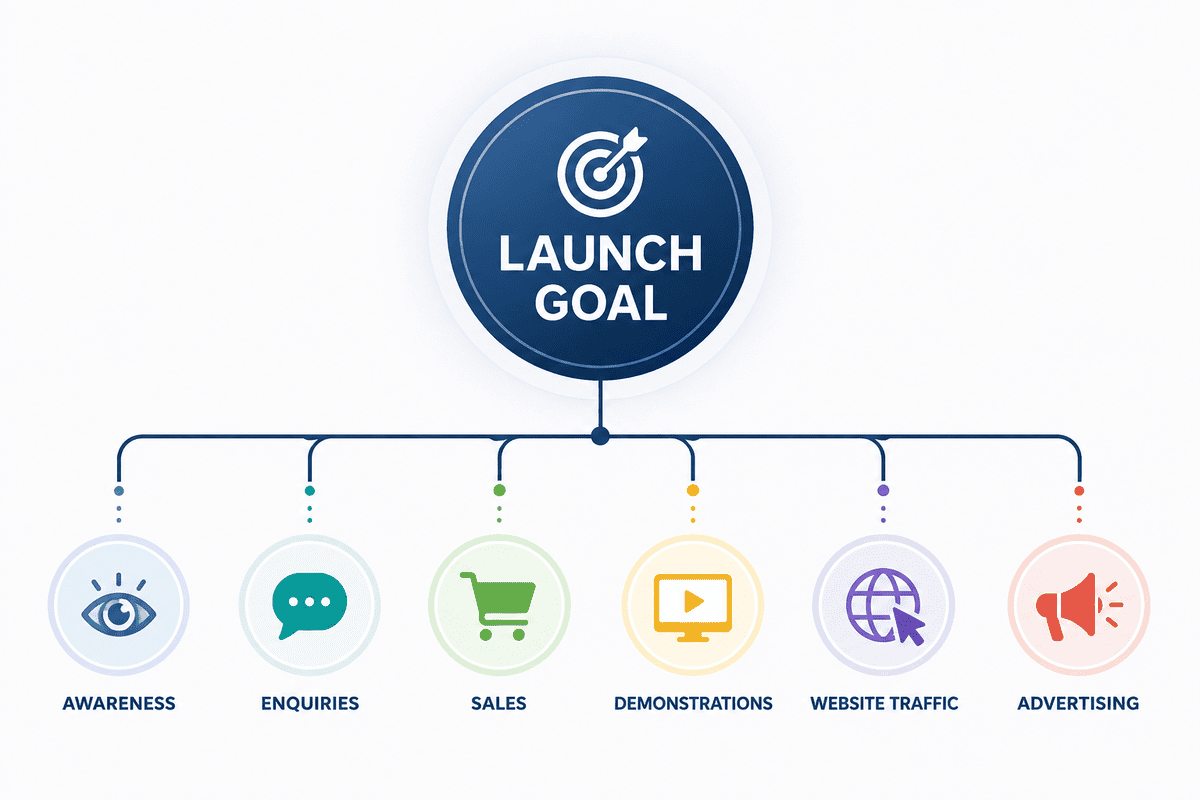
Before deciding what videos to produce, establish what the launch actually needs to achieve.
A launch campaign might be designed to:
- Generate awareness
- Introduce a new product to an existing audience
- Explain a new service
- Generate enquiries or sales
- Drive traffic to a landing page
- Encourage product trials or demonstrations
- Support a wider advertising campaign
- Reposition the business around a new offering
Your goal should influence the type of video you create, the message it communicates and where it will be distributed.
For example, a business launching a complex professional service may need educational and explainer content before launch, while a consumer brand introducing a visually distinctive product may benefit more from teaser and demonstration content.
The important thing is to avoid creating video simply because a launch is taking place.
Every video should have a job to do.
Using Video Before the Launch
The period before launch is about building awareness and interest.
You do not necessarily need to reveal everything immediately. Instead, consider how video can gradually introduce the problem, idea or opportunity behind the new offering.
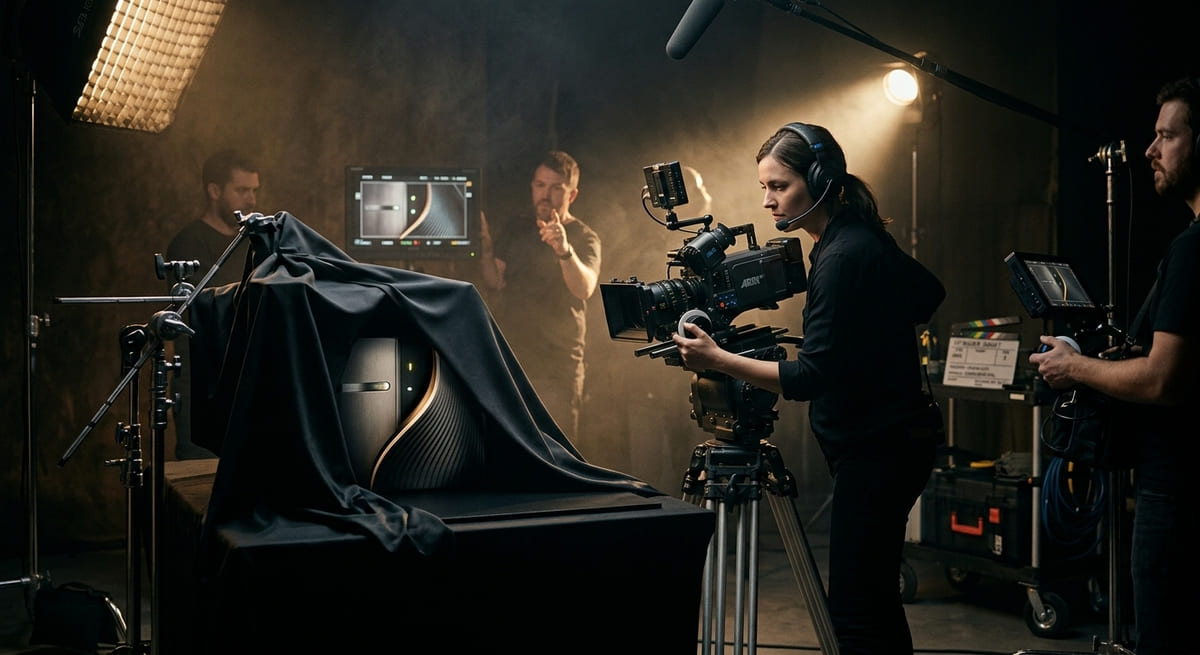
1. Create Teaser Videos
A teaser video can introduce the upcoming launch without revealing every detail.
The purpose is to create curiosity.
Depending on the business, this could include:
- A short preview of the product
- Close-up footage that reveals selected details
- A brief glimpse behind the scenes
- A founder or team announcement
- A countdown to launch
- A question that highlights the problem the new offering addresses
A teaser does not need to explain everything. Its job is to give your audience a reason to pay attention to what comes next.
The best teaser content leaves viewers curious without leaving them confused.
2. Explain the Problem Before Revealing the Solution
One of the most useful approaches for a service launch is to start with the problem.
Before asking people to care about a new service, explain why the problem matters.
For example, rather than immediately saying:
"We're launching a new service."
you could create a short video exploring:
"Why are businesses struggling with X?"
This gives your audience context before introducing the solution.
It can also make the eventual launch announcement feel more relevant because viewers already understand the problem the new offering is designed to solve.
This approach works particularly well for professional and B2B services where the audience may need more education before they are ready to enquire.
3. Introduce the People Behind the Launch
For businesses launching a new service, the people delivering it may be just as important as the service itself.
A short founder or team video can explain:
- Why the service was created
- What gap the business identified
- What customers were asking for
- What the team wanted to improve
- What the new offering is designed to achieve
This can make the launch feel more personal and give the audience a reason to trust the people behind the new offering.
It also gives potential customers an opportunity to understand the thinking behind the launch, rather than simply being presented with another sales message.
4. Build a Content Bank Before Launch Day
Do not wait until launch day to start filming everything.
If possible, plan your production so you capture footage that can support the campaign before and after launch.
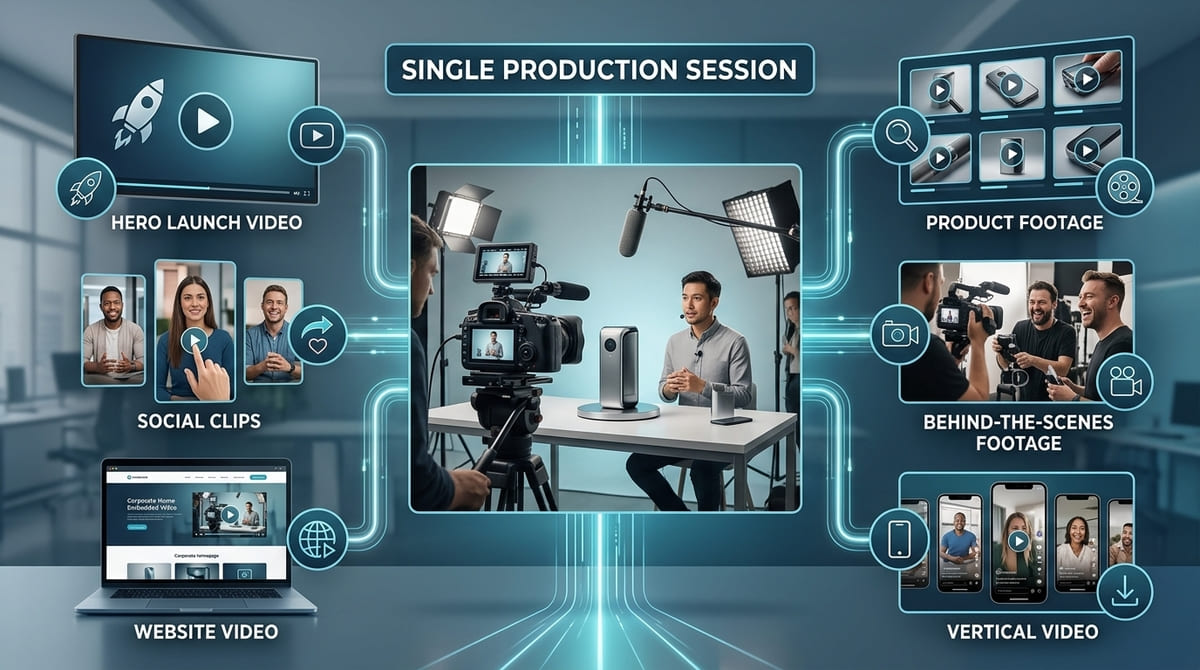
For example, one production session could capture:
- Product footage
- Interviews
- Demonstrations
- Behind-the-scenes footage
- Founder commentary
- Supporting B-roll
- Vertical social footage
- Website footage
This gives the marketing team more flexibility when creating launch content.
The aim is not to create unnecessary content. It is to make sure the production itself is planned around the wider campaign rather than one isolated deliverable.
Using Video During the Launch
Once the product or service is officially available, your videos need to move from generating curiosity to helping people understand and act.
5. Create a Main Launch Video
The main launch video can act as the central piece of the campaign.
Depending on the offering, it might:
- Introduce the new product or service
- Explain the problem it solves
- Demonstrate how it works
- Highlight key benefits
- Show the people behind it
- Communicate what makes it different
- End with a clear call to action
The exact format will depend on the business.
A product launch may rely heavily on demonstrations and visual storytelling, while a professional service launch may benefit from interviews, real-world scenarios and a clear explanation of the customer problem.
The important thing is to make the value proposition clear.
The viewer should not finish the video wondering:
"What exactly are they launching?"
or:
"Why should I care?"
6. Show the Product or Service in Action
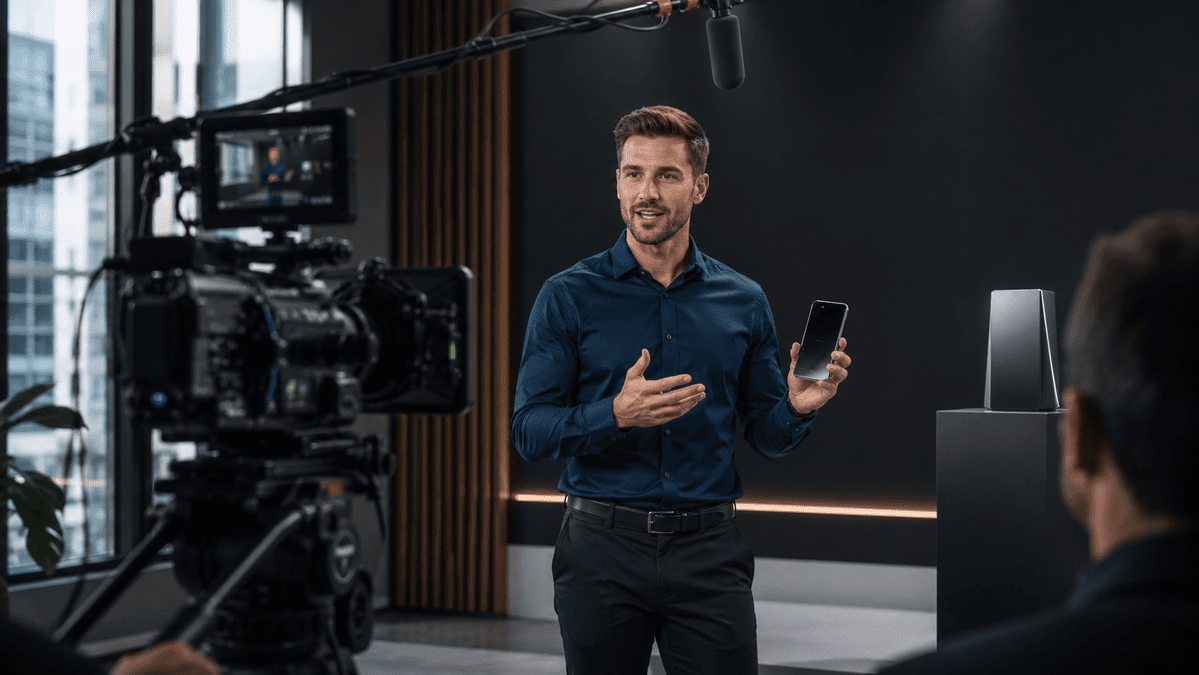
People often understand an offering more easily when they can see it being used.
For physical products, this might mean demonstrating:
- How it works
- Key features
- Different use cases
- Setup
- Before-and-after results
- Practical applications
For services, you could show:
- What the process looks like
- How customers interact with the business
- What happens behind the scenes
- How the service solves a particular problem
- What the customer experience looks like
Visual demonstrations can make complex information easier to process than a long written explanation.
For a service that is difficult to visualise, production techniques such as animation, motion graphics, screen recordings or carefully planned B-roll can also help turn abstract ideas into something tangible.
7. Create Short Launch Content for Social Media
Your main launch video should not necessarily be the only piece of content published during launch week.
Short-form videos can highlight individual elements of the launch.
For example:
Video 1: What is being launched?
Video 2: What problem does it solve?
Video 3: How does it work?
Video 4: What makes it different?
Video 5: Who is it for?
Video 6: A founder or expert explanation
Video 7: A demonstration or use case
The goal is not simply to publish the same video repeatedly.
Each piece should answer a different question or communicate a different reason to pay attention.
This also allows the campaign to adapt content for different channels while maintaining a consistent core message.
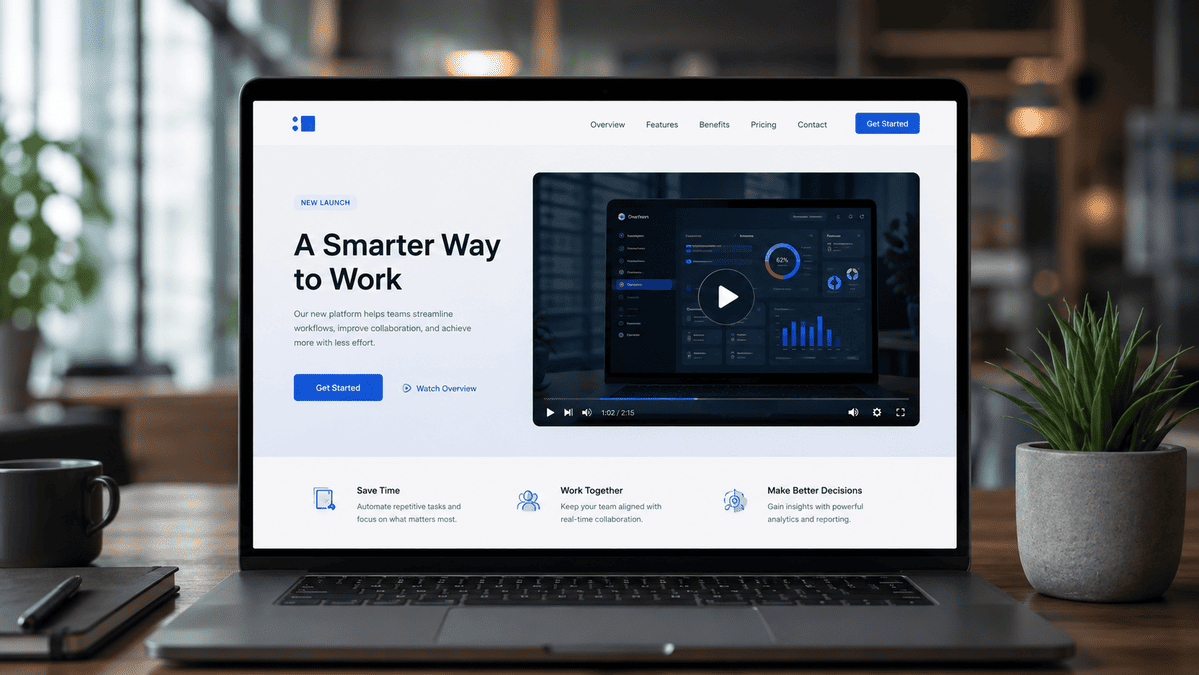
8. Use Video on the Launch Landing Page
Social media may attract attention, but your website or landing page is often where the next stage of the decision takes place.
A launch video can help visitors quickly understand the new offering when they arrive on the page.
Depending on the campaign, you might use:
- A short overview video
- Product demonstration
- Service explainer
- Founder message
- Customer story
- FAQ video
The video should support the page rather than replace important written information.
Make the next step obvious as well.
That could be:
- Request a consultation
- Book a demonstration
- Start a trial
- Purchase the product
- Register for an event
- Contact the team
A launch video without a clear next step can generate attention without helping the business move people towards action.
Using Video After the Launch
Launch day is not the end of the campaign.
In many cases, the period after launch is where video can help answer questions, overcome objections and provide evidence that the new offering delivers what it promises.
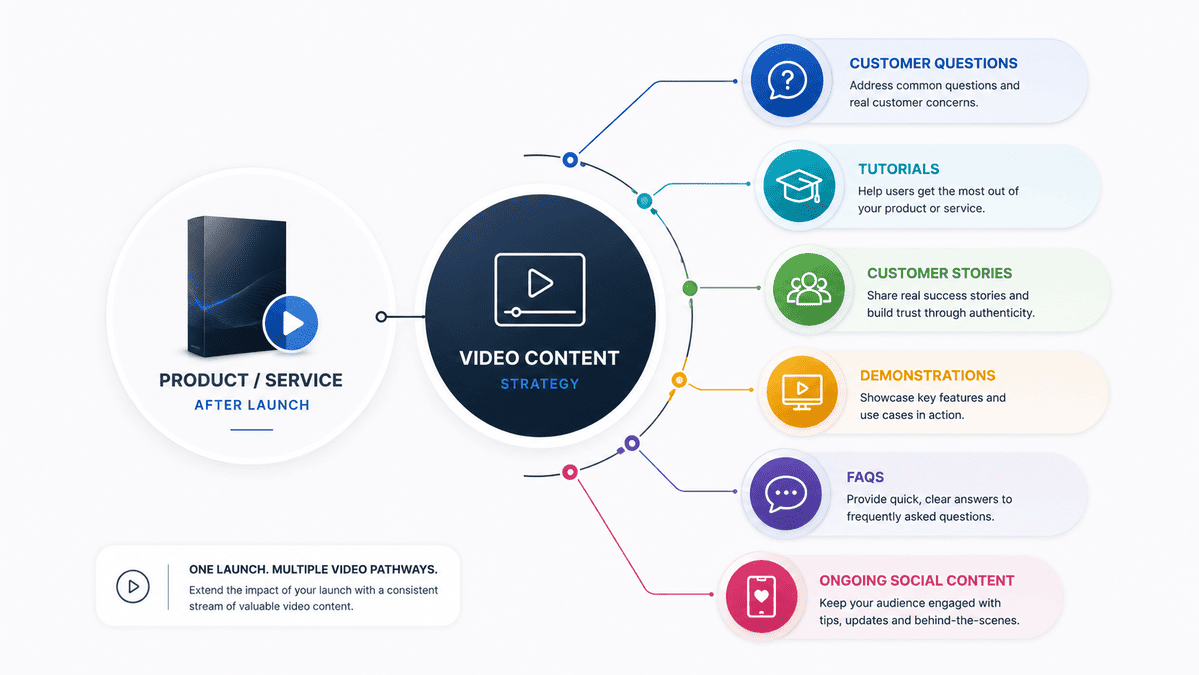
9. Answer the Questions Customers Are Asking
Once people start interacting with the new product or service, you will quickly learn which questions come up most often.
Turn those questions into useful video content.
For example:
- How does it work?
- Who is it for?
- How do I get started?
- What is included?
- How long does the process take?
- What makes it different?
- What happens after I sign up?
- What are the most common mistakes to avoid?
These videos can support your sales and customer service teams while continuing to educate potential customers.
They can also become useful evergreen content rather than assets that are relevant only during launch week.
10. Turn Early Customer Experiences Into Content
Once customers begin using the new offering, their experiences can provide valuable marketing material.
Customer stories can demonstrate:
- The problem they had
- Why they chose the new offering
- How they used it
- What changed afterwards
- What results they achieved
The key is to focus on the customer's experience rather than simply asking them to say that the product or service is "great".
Specific experiences and measurable outcomes are generally more useful to prospective customers.
For a new offering, early customer stories can also provide an important form of social proof once the initial launch excitement has passed.
11. Keep the Launch Message Working Beyond Launch Week
A common mistake is treating launch content as disposable.
A well-produced launch campaign can continue supporting the business after the initial announcement.
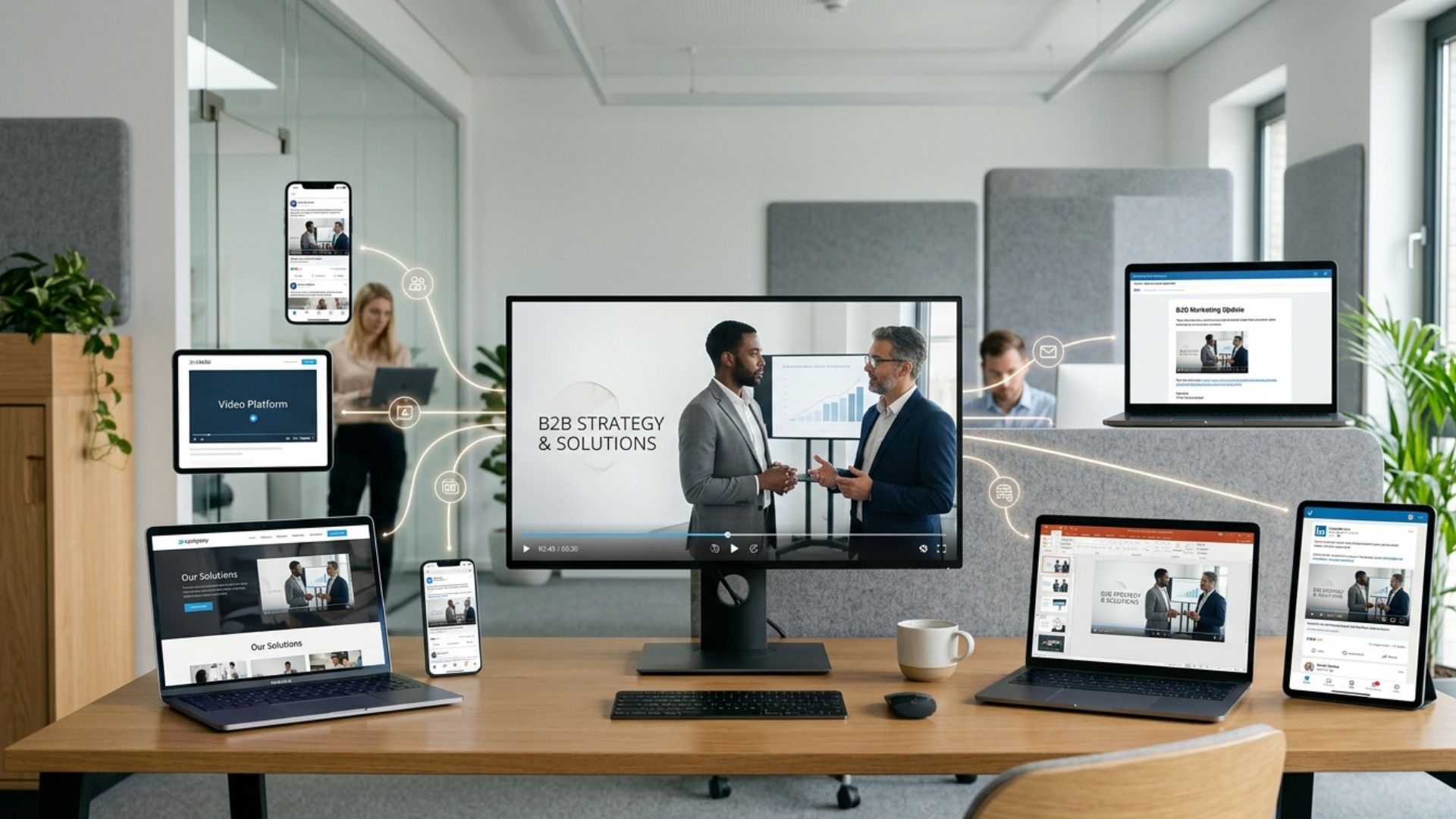
For example, footage can potentially be used across:
- Website pages
- Sales presentations
- Email campaigns
- Social media
- Paid advertising
- Landing pages
- Internal presentations
- Trade shows and events
- Customer onboarding
This does not mean every piece should be published everywhere unchanged.
Each platform and audience may require a different version or edit.
But planning for multiple uses from the beginning can make the original production investment more valuable over time.
How to Plan Your Product or Service Launch Video Strategy
A successful launch does not necessarily require dozens of videos.
It requires the right assets for the right moments.
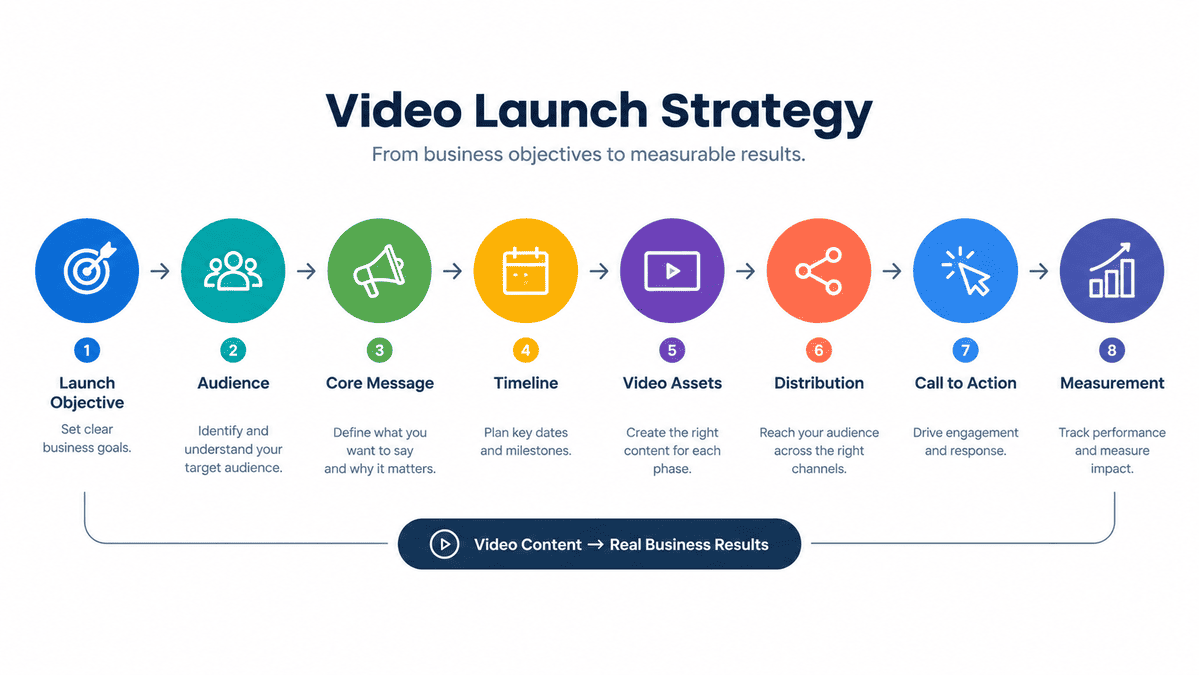
A simple framework is:
1. Define the launch objective
What does the business need the campaign to achieve?
2. Identify the audience
Who needs to understand or act on the new offering?
3. Define the core message
What is the most important thing you want people to remember?
4. Map the launch timeline
Decide what people need to know:
Before launch → During launch → After launch
5. Choose the necessary video assets
Only create videos that support a specific purpose.
6. Plan production around multiple deliverables
Consider which footage, interviews and visual assets can support the wider campaign.
7. Decide where each video will be used
Think about:
- Website
- YouTube
- Paid advertising
- Sales presentations
8. Define the call to action
Every important launch asset should help move the audience towards an appropriate next step.
9. Measure performance
Look beyond views alone.
Depending on the campaign objective, useful measures may include:
- Website traffic
- Video engagement
- Landing-page activity
- Enquiries
- Demo requests
- Registrations
- Trials
- Sales
The most useful metric is the one connected to the original business objective.
Should You Produce One Launch Video or Multiple Videos?
There is no universal answer.
A smaller launch with a clearly defined audience may only require a few carefully planned assets.
A larger campaign may need a combination of:
- Main launch video
- Teaser content
- Demonstrations
- Social clips
- Website video
- Paid advertising
- Educational content
- Customer stories
The right approach depends on the product or service, audience, campaign duration, budget and distribution channels.
What matters most is that the production plan is decided before filming begins.
If the business knows that it will need a hero video, several social clips, website footage and advertising variations, those requirements can influence the script, shot list, interview questions and filming schedule.
That is far more efficient than finishing one video and only afterwards realising that additional content is needed.
Common Video Launch Mistakes to Avoid
Creating a video without a clear objective
A visually impressive video is not automatically an effective launch asset.
Know what the video is supposed to achieve.
Trying to explain everything in one video
Your launch campaign can contain multiple pieces of content. Do not force every feature, benefit and detail into a single video.
Focusing on features instead of customer value
People want to understand what the new offering can do for them.
Lead with the problem, benefit or outcome where appropriate.
Waiting until launch day to start creating content
A successful campaign often requires preparation weeks in advance.
Build your video plan alongside the wider launch strategy.
Treating launch day as the finish line
Continue creating useful content after launch to answer questions, demonstrate value and build confidence.
Forgetting about distribution
Producing the video is only part of the process.
Consider where the audience will see it, how it will be promoted and what action you want them to take.
Make Your Launch Video Work Harder
A product or service launch is rarely about creating one perfect video.
The stronger approach is to build a collection of purposeful video assets that support the campaign at different stages.
Before launch, video can create awareness and anticipation.
During launch, it can explain the new offering, demonstrate its value and encourage action.
After launch, it can answer questions, provide proof and keep the conversation going.
The most effective campaigns start planning this system before production begins. That gives the production team a clearer understanding of the story, audience, deliverables and distribution requirements — and gives the business more opportunities to get value from the finished footage.
Planning Your Launch Video Production
Once you have mapped out your launch and identified the video content you need, the next step is turning those ideas into a practical production plan. That means deciding what needs to be filmed, how the content will be used, and how the production can fit your timeline and budget.
Conclusion
A successful launch needs more than a video that looks good. It needs the right story, the right assets and a production plan that supports what you want the launch to achieve — from building anticipation before launch to explaining the offer, driving action and keeping the momentum going afterwards.
If you’re preparing to launch a new product or service, explore Mango Media’s video production services or use our instant price calculator to get an idea of what your project could involve. If you already have a launch in mind, get in touch with the Mango Media team for a free consultation.
Frequently Asked Questions
What type of video is best for a product launch?
There is no single format that works for every launch. A main launch video, product demonstration, explainer, teaser or short-form social video can each serve a different purpose. The right combination depends on the product, audience, campaign objective and where the videos will be used.
When should you start creating videos for a product launch?
Video planning should ideally begin alongside the wider launch strategy, rather than just before launch day. Starting early gives you time to define the message, plan production and create the assets needed before, during and after the launch.
How many videos do you need for a product launch?
There is no fixed number. A smaller launch may only need a few carefully planned assets, while a larger campaign could use a main launch video alongside teasers, demonstrations, social clips, website content and post-launch videos. The priority should be creating the videos that support specific campaign objectives, rather than producing content simply for the sake of volume.
Similar blogs:
































![How to Write a Promo Video Script (Free Template Included) [2026 Guide]](https://cdn.prod.website-files.com/6226fcc37e2eb518b6e69a7f/69c3804c0b9ea78696bd89e0_covertab11.jpeg)



.jpg)
%20(1)%20(1).jpg)
.jpg)





We'd love to hear from you! Reach out to us today for a chat about our services, pricing, or just to say hello!


